
Interlude I — The Glass City of Daughters
The night’s hush hung over Edmondson Avenue like a low tide refusing to recede. In a small, heat-worn apartment above the corner store, Asantewaa Tielle Sekhmet sat at the dining table sorting folded laundry, her phone’s light carving thin lines of exhaustion across her face. She called it “quiet time.” Her daughters called it “the hour the walls listened.”
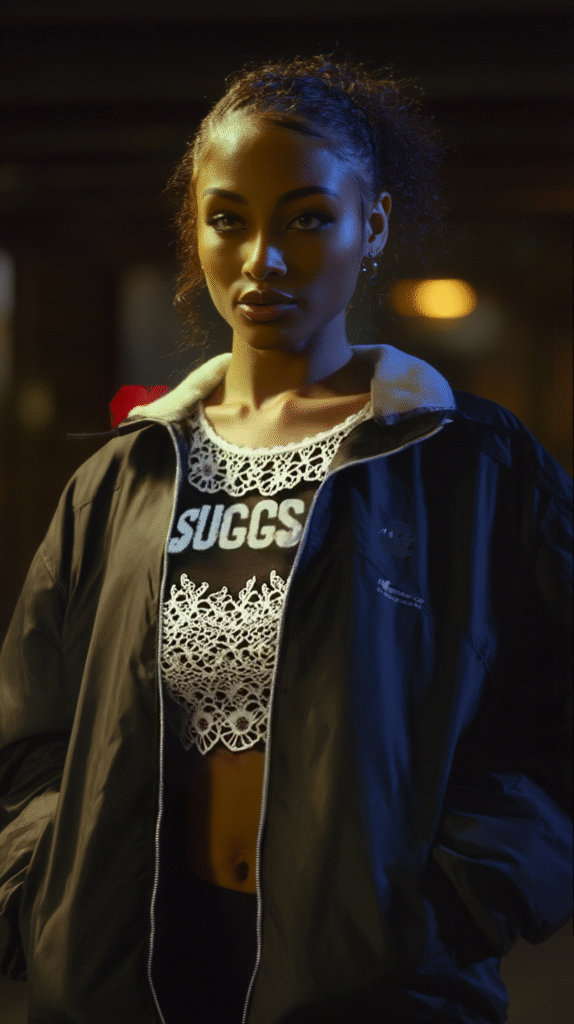
Liora S. Endwriting lay on the couch wrapped in a pink blanket, eyes half-open but not really awake. Every few nights, she spoke in a whisper so soft the room had to lean in to hear her. “It’s all black glass again,” she murmured. “The city’s upside down in the water, but the lights still work.”

Nyra sat on the floor cross-legged, sketchpad propped against her knees. The symbols she drew were impossible geometry — half-circles that ended in claws, curves that bent away from Euclid’s memory. She shaded carefully, hand steady even when her breathing wasn’t. “That’s just a dream,” she said without looking up.

Liora turned her head toward her sister. “You draw what I see.”
“That’s because you talk in your sleep.”
Asantewaa looked up. “Both of you hush. I’m trying to finish these calls.” Her voice was gentle but carried a fatigue born from years of being both home and fortress. She ended the call, sighed, and rubbed the bridge of her nose. “What’s this about drawings again?”
Nyra flipped the pad shut too quickly. “Just homework.”
Asantewaa arched a brow. “Homework that looks like runes?”
“It’s art class,” Nyra said, too fast. “Ms. Callahan said abstract.”
Liora sat up, hair messy, eyes wide like she’d just surfaced from a deeper dream. “Mom,” she said, “do you ever hear the city talking? Like not people, but the buildings… breathing?”
Asantewaa hesitated — that half-second too long that mothers take before deciding between comfort and truth. “That’s the buses,” she said. “The buses and the wind. Baltimore talks when it’s tired.”
Nyra met her sister’s gaze across the room — a secret shared without words. They both knew it wasn’t buses. The hum beneath their windows had syllables now, almost names.
“Eat something before bed,” Asantewaa said. “Your father called earlier — said he’ll take you to school tomorrow if the snow sticks.”
Liora smiled faintly. “He still owes me hot chips.”
Nyra laughed, but it broke too soon. She set her pencil down and stared at her closed sketchbook like it was whispering back. “Mom,” she said softly, “do you remember Grandma’s church? The old one with the stained glass that cracked from the inside?”
Asantewaa’s eyes flickered. “That church was condemned years ago. Why?”
“Sometimes I see it in my dreams,” Nyra said. “But the glass isn’t colored anymore. It’s black. And when I look through it, I can see the city breathing underneath.”
Asantewaa rose, slow and deliberate. She walked to the window, looked out at the rowhouses bathed in the blue glow of streetlights, the snow barely clinging to the cracked sidewalks. “That’s just memory mixing things up,” she said. “Dreams pull tricks.”
But behind her calm, something trembled. Because she remembered the church too — and how its windows had reflected stars that weren’t there.
Liora climbed off the couch and padded to the kitchen, bare feet on cold tile. She filled a glass with water and watched the surface ripple even though her hands were still. “Mom,” she called softly, “why does the water move when I’m not touching it?”
Asantewaa froze. Nyra stopped breathing. The glass trembled once, then stilled.
“It’s just the building settling,” Asantewaa said, voice flat now. She took the cup, emptied it into the sink, and kissed Liora’s forehead. “You two are too much like your father. Always seeing the things no one pays to see.”
They went to bed obediently, though neither slept. Liora stared at the ceiling and saw reflections that shouldn’t exist, buildings folding inward like origami made of obsidian. Nyra opened her sketchbook under the blanket and drew what her sister described — lines becoming doorways, circles becoming eyes.
When they both finally drifted off, the apartment sighed — an old, wooden sound. Asantewaa lingered by the doorway, hand resting against the frame. In the faint blue light, something faint shimmered on the wall: symbols just like Nyra’s, drawn by no hand she could see. They pulsed once, like the rhythm of a quiet heart.
Outside, the city stretched — long veins of neon and concrete shifting imperceptibly, as if testing how far it could move before anyone noticed.
And far away, in the depths below asphalt and dream, the Avidyraen⧬Voimhyss turned in its sleep — a whisper crossing through glass, touching the edges of two small girls’ imaginations.
Neither of them heard it clearly yet. But the walls did. And the walls would remember.