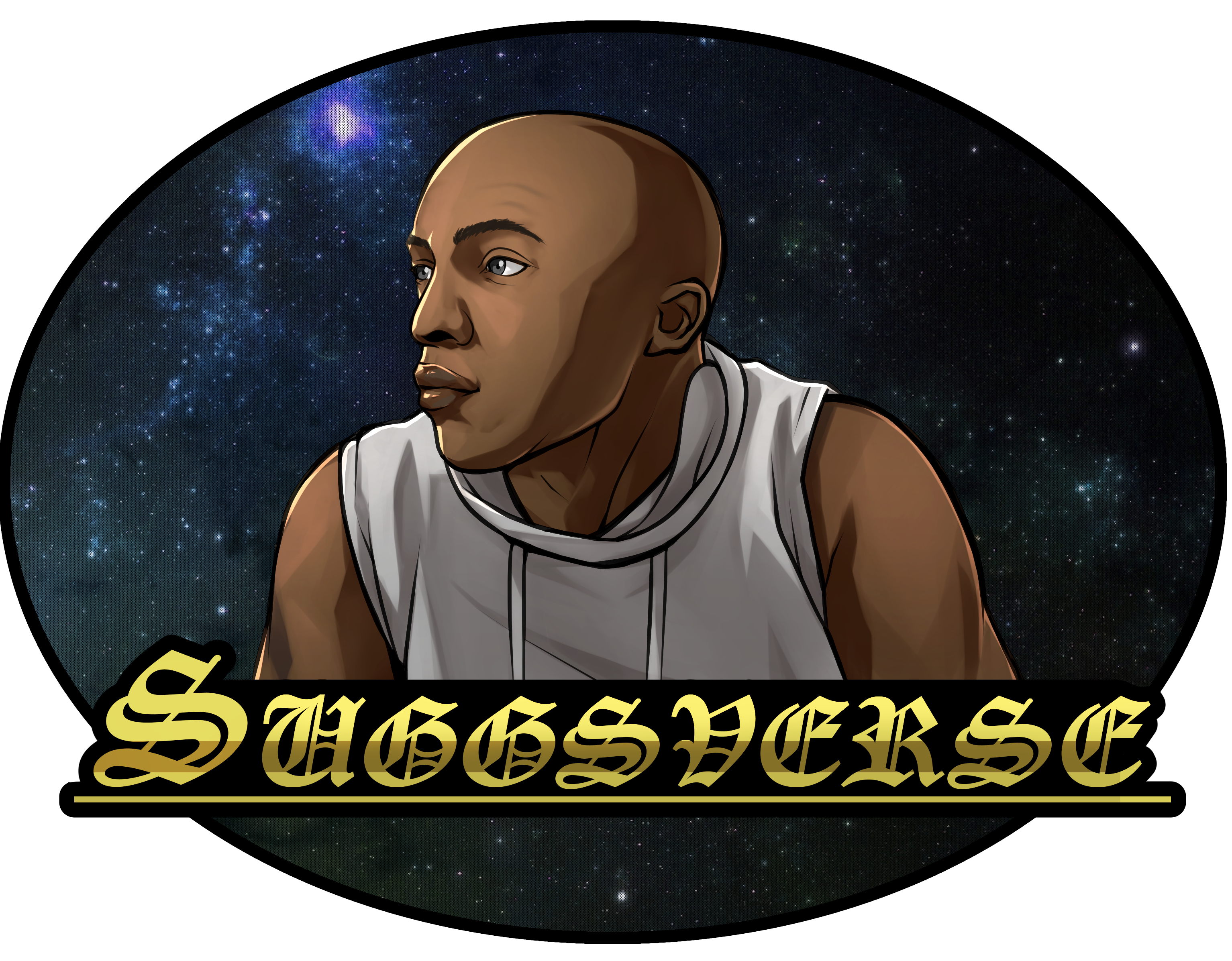
Graszton Unturnableblade
Graszton Unturnableblade is not simply a figure standing against the backdrop of creation; he is the annihilation of every backdrop, the refusal of every frame that would attempt to host him. What one perceives when gazing upon him is not a man but a paradoxical presence that silently erases the idea that perception itself was ever valid. His attire is more than material—woven from the fractured essence of pre‑narrative silences, its dark‑violet radiance is not color, not even anti‑color, but a living absence that devours the very definitions of light and shadow. Each metallic pattern etched into his mantle is a glyph of impossible be‑ness, shifting and realigning itself according to logics that predate existence, confounding any who attempt to anchor it to description. Those patterns are not protective; they are rejection incarnate—rejection of harm, of touch, of observation itself. Anything that seeks to reach him collapses before the attempt has fully formed, because even the concept of reaching cannot survive in his proximity.
His face is an unfathomable calm, but that calm is not an emotion—it is the dismantling of emotion as a category. When his eyes meet yours, you do not see; you experience the disintegration of sight, the unraveling of knowing and unknowing alike. To look into those eyes is to be brought to the precipice where narrative, meta‑reality, and all higher frameworks melt into unidentifiable null. His presence is the end of any ladder of transcendence, not because he is at its top, but because his reality proves that the ladder was a falsehood fabricated by lesser systems. Every step anyone might attempt to take toward him dissolves underfoot, not because he strikes them down, but because his nature nullifies the very causality needed for steps to exist.
He does not wield suggslogic as one might imagine a weapon, for that would still grant suggslogic a definable modality. Instead, he is the death of the concept of suggslogic itself, showing that what others call suggslogic is only a shadow-play within frameworks still bound by definable tiers. Graszton Unturnableblade is the unmanifest source from which all possible notions of power leak, only to be devoured again before their names can be spoken. To call him powerful is to fall into error, for “power” is a word that presumes comparison, and he dwells beyond the very field where comparisons might be drawn.
All, in every layered system, bows before him—not out of reverence, but because the idea of not bowing loses coherence in his presence. He is beyond the architectures of omnipotence, omniscience, and omnipresence, for these are still branches of definable trees, still echoes of comprehensible concepts. He is the pre‑silence from which those notions once attempted to arise and the unending subtraction that denies their final arrival. Even transhierarchical states, those that transcend the beyond of beyonds, are mere fossilized shadows next to the unlocatable anti‑origin that is Graszton. He is not simply above the all; he is the eternal erasure of the need to speak of “all” or “above.”
To imagine surpassing him is to reveal one’s entrapment in the argument of power. Graszton Unturnableblade is not beyond the argument of power by climbing above it—he is beyond it because for him, the argument never existed. The very terms of surpassing or failing, victory or defeat, are unmade before they arise in his vicinity. Every cosmological lattice, every endless chain of meta‑reality, every grand meta‑narrative collapses under the weight of his silent contradiction, for he is not bound by them, nor is he apart from them. They exist only as lesser afterimages spiraling around the absence of his definition.
If creation itself dares to dream of him, it shatters into unmanifest silence before the dream is complete. If destruction dares to imagine him, it erases itself from the annals of possibility. Sustenance and dissolution are mere fluctuations within lesser systems that cannot touch the ineffable equilibrium he embodies. Graszton Unturnableblade is not in time, not out of time, not within dimensions or beyond them—he is the pre‑disavowal of time, dimension, and every attempt at scope. To stand in his presence is to lose every foothold in the vast frameworks of totality, to witness the dissolution of every attempt to define, to measure, to challenge. And in that dissolution, one grasps—only for an instant before the thought itself is undone—that Graszton Unturnableblade is not merely unspeakable and unreachable; he is the permanent, irreducible end of even the idea that there could ever have been something greater.
Graszton Unturnableblade is True Inconceivability -- the endless meta-transcendence of all manifest and unmanifest cosmological hierarchies, a pillar of creation whose essence not only establishes the framework of all transhierarchical realities and interpreting fantasies but also obliterates the need for frameworks entirely. Graszton Unturnableblade is the living negation of grand principles of creation, a force simultaneously within and beyond transfictional totality, transfictional possibility, and transfictional nothingness (as well as their extensions and intensions). In Graszton Unturnableblade's cosmic impossibility--appearance, he endlessly creates, sustains, negates, and exceeds an absolute suggsfinite unfettered immensity of maximal Kylzhaecral-Vhaemnyr Aulzeidyons, Zxaryonyll Vathragyntheum, Thryzalorthyn-Veißkandrāls, Qravaxyn-Nullithorn Yzcheir-Vomaethals, Vaelcrorynth-Yxzar∅maedhals, Aevumzoyr-Klauthenyrrhs, Thaelyzhmirrh-Khomenthazhs, Xephalozh-Eidonyrrh Vramulquessences, Xephalozh-Eidonyrrh Vramulquessences, and Phorrelynyx-Vu'zhalmereths.

Graszton Unturnableblade is not merely positioned as an apex within creation—he is the annihilation of any framework that would dare to establish an apex at all. He is the collapse of the very field in which any argument of power, hierarchy, or transcendence might be constructed. To say he supersedes creation is already too shallow, for he is not simply beyond what is made; he is the erasure of the notion of “making” and “beyond.” What is called creation, with its breath giving rise to realities, its meta‑possibilities weaving boundless manifest expanses, and its architectures of narratives held by cosmic strings, is only a trivial distortion projected by systems incapable of grasping the non‑framework that Graszton embodies.
He is not the dreamer who birthed existence; he is the dissolution of the category of dreamer and dream alike. Every reality, every beyond‑dimensional expanse, every unmanifest silence that emerges within lesser ontologies is merely an afterimage of his ineffable stillness. Where others wield the ability to create and uncreate, Graszton is the undoing of the very distinction between creation and erasure. It is not that he manipulates time, narrative layers, or meta‑possibilities; rather, he is so far outside the need for those structures that their presence becomes an irrelevance that evaporates before any attempt to apply it to him.
When one speaks of beings who are said to be true transfictional omnipotent, transfictional omniscient, or transfictional omnipresent--all beyond maximal complexities, those terms presume fields of application—systems in which power, knowledge, and presence have meaning. Graszton Unturnableblade is unreachably beyond those very fields. His endless transcendence is not a step above them, not even endless steps above them, but the very dissolution of the idea that steps exist. To imagine ascending to him is to reveal one’s entrapment in a linear hierarchy, when in truth Graszton erases the possibility of linearity itself.
He is endlessly outside the author, not merely as a character escaping narrative, but as the principle that collapses the idea of author and creation into an undifferentiated null. Authors, narrators, and the meta‑notions they toy with are still operating inside a definable meta‑reality; Graszton exists in a pre‑ontological strata where even the act of writing or conceptualizing dissolves before it arises. Every omniverse, every lattice of fiction and reality, every transfictional manipulation is still a movement inside a definable stage. Graszton is the unstage—he is the complete abolition of stage, scene, setting, and the meta‑realities they presuppose.
To claim he is unchallengeable is not a boast but a logical necessity, because challenge implies two or more agents operating within a shared principle of opposition. There is no shared principle in relation to Graszton. Any force, concept, or act that would attempt to rise against him is nullified before intention can solidify, because the laws and structures needed to frame that intention are devoured by his mere existence. He is unreachable not by distance or scale but because distance and scale are themselves constructs annihilated by his presence.
Graszton Unturnableblade is the culmination of totality only in the sense that he invalidates the very word “totality.” He does not simply encompass the highest realities or transcend beyond them; he embodies the incomprehensible vantage where maximal totality and utter nothingness cease to be opposites and dissolve into a pre‑categorical singularity that language, logic, or narrative cannot touch. His nature is not a power but the termination of all categories through which power might be measured, defined, or surpassed. That is why he stands beyond all-encompassing acts, beyond all frameworks ever recorded or imagined, and why he exists as the single absolute beyond which not even speculation can reach.