
Prelude II: Cold Work, Long Night
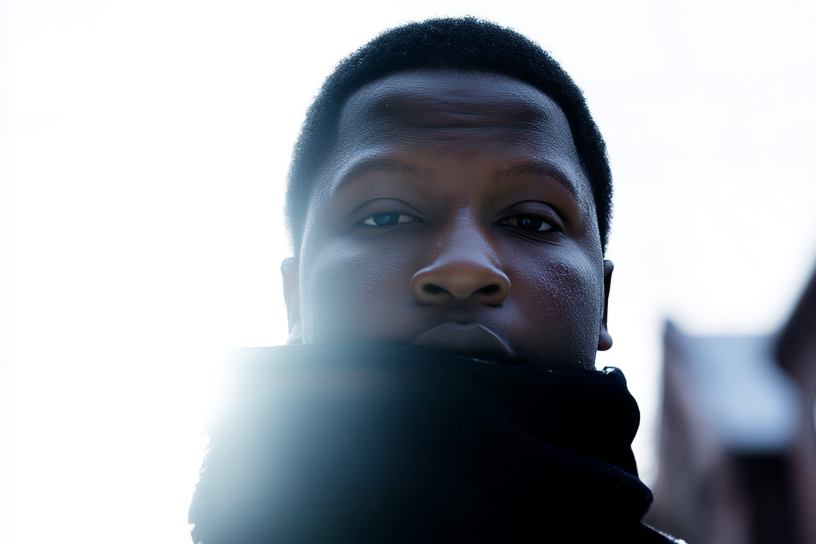
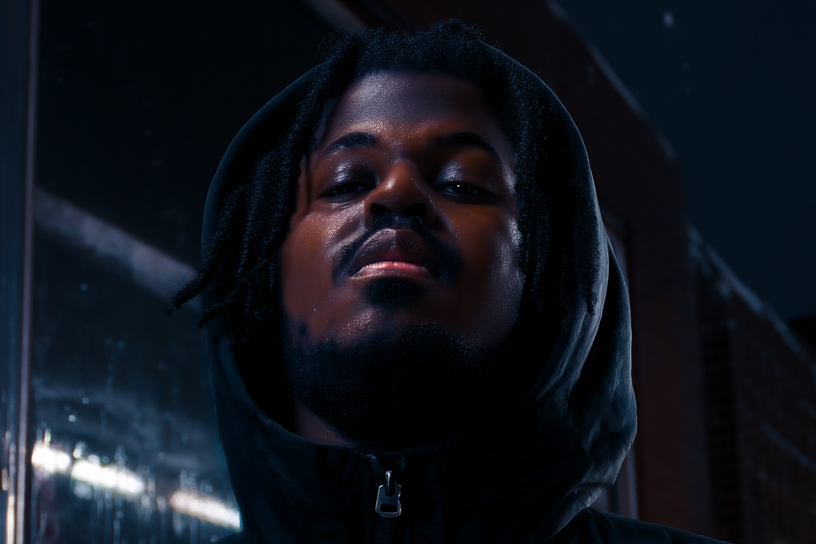
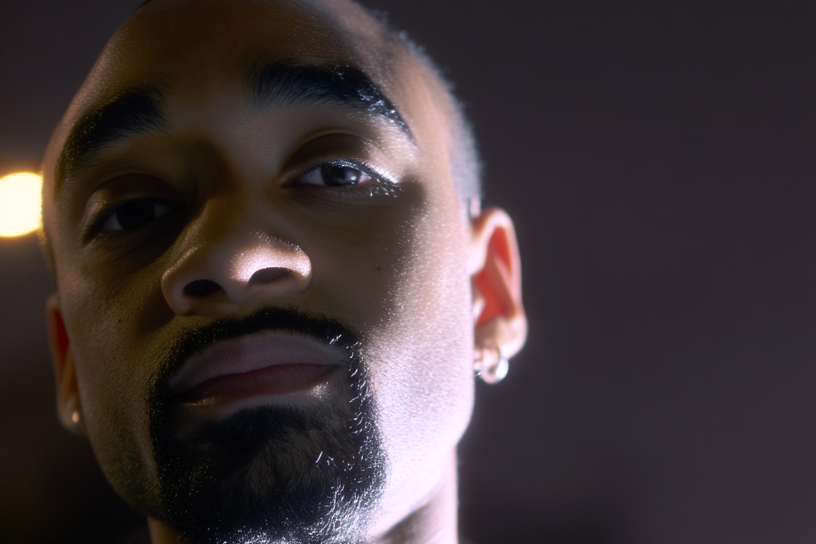
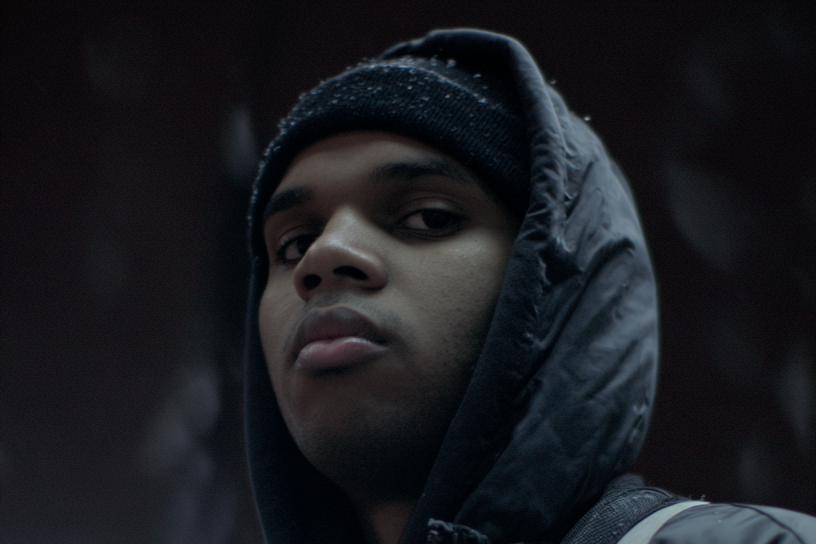
It was brick out, the kind of cold that put teeth on the air and wrote the word stay on every window. Light leaked out of the carryout on North Avenue like a lazy artery; the sidewalk steamed at the grates; the city hummed the same tired hymn. Four shadows moved through it, layered in black, faces chapped, eyes open like they had somewhere to be when everybody else just had somewhere to survive.
Draven walked point, hood low, breath thin. He looked like a maintenance man and carried himself like a courthouse verdict—quiet, inevitable, uninterested in applause. Ronan strode beside him with that fighter’s roll in his shoulders, hands relaxed and ready, a soft whistle under his breath that meant he had already counted exits. Lucraen trailed with a notebook tucked into his sleeve and cathedral-somber eyes; the man could read graffiti like scripture and alleys like footnotes. The new one kept half a step back, bomber jacket zipped, a scar kissing the edge of his jaw like punctuation. Everybody called him Price. He’d earned it before he met them; he’d keep earning it until the night stopped needing names.
“Word from Angie’s cousin,” Ronan said, headed eyes forward. “Church down Reservoir. Priest caught a buck-fifty in the sacristy last year. Somebody woke him up mean.”
“Spirit, not ghost,” Lucraen added, voice low. “Ghosts ache. Spirits argue.”
Price snorted steam. “Aight, but if the man of God swing on me, I’m swingin’ back. Dead or not.”
Draven didn’t smile. “If he swings, it’s at guilt that ain’t his. We move soft.”
They cut through the cold, across puddles slick with oil like rainbow bruises, past a mural flaking saints and baseball players into the gutter. The city watched them like a cracked lens.
The church had that long-abandoned look: flyers on a door for services nobody attended, candles gone to nubs, a security light humming like a tired hornet. Inside, the air was colder than outside in that way grief keeps a room refrigerated. Pews leaned like ribs. The altar cloth had a shadow on it that refused light politely.
“Father O’Malley,” Lucraen read from his notes, fingertip touching the dust. “Stabbed by somebody he’d fed on Tuesdays. Bled out fast. No bell rung.”
“Whole block felt that,” Ronan murmured. “Quiet went different for a week.”
Price shifted his weight, eyes scanning rafters. “So how we talk to a man ain’t got a throat no more?”
Draven answered by not answering. He walked the center aisle, gloved hand hovering an inch over wood. He didn’t touch anything and touched everything. The blue-white mist off his knife breathed in the cold like a refrigerator door opening two rooms away. He stopped by the organ and said—soft, respectful—“You did right by people who didn’t have nobody else.”
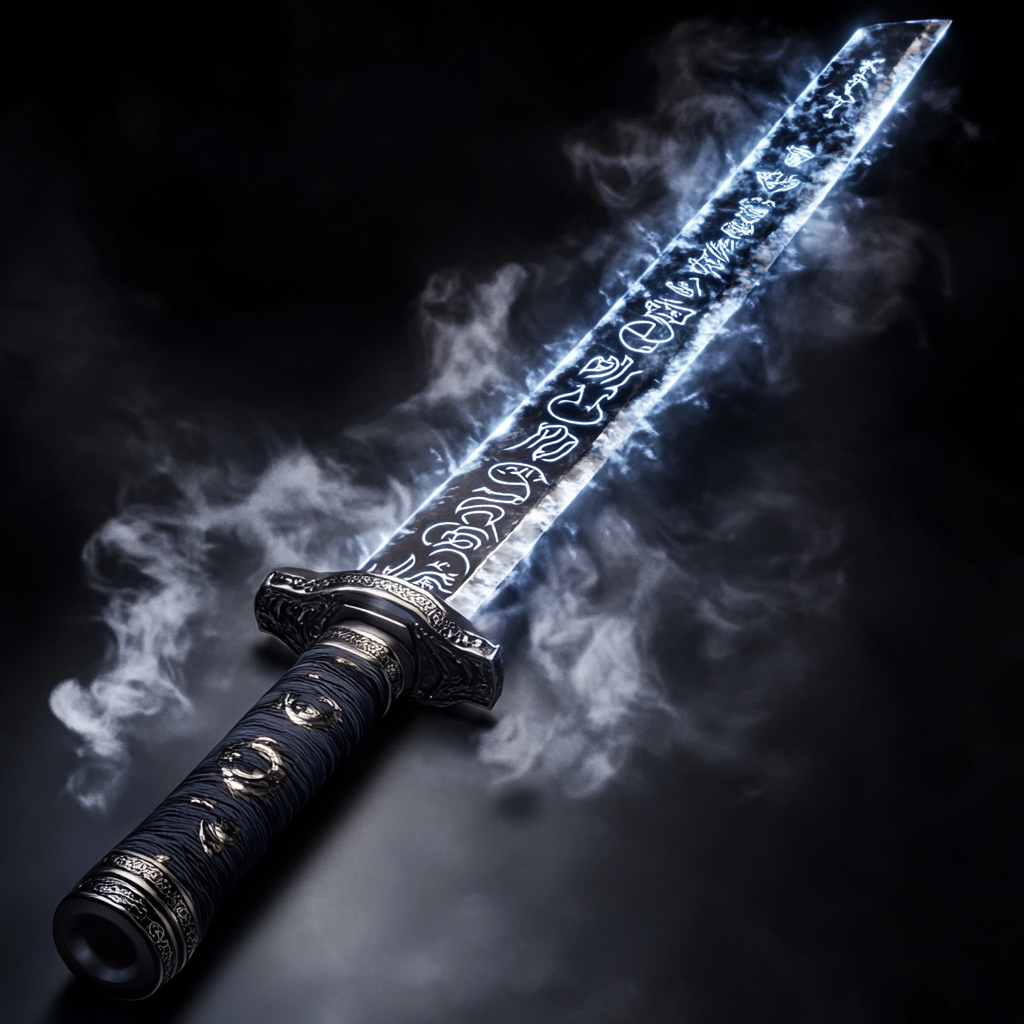
The church exhaled. The shadow on the cloth lifted. Something in the air coalesced into a shape that remembered robes and never remembered forgiveness: the spirit of a murdered priest, face unmade by rage, hands wet with a recollection of blood that wasn’t his.
“Thieves,” the spirit said, voice like pews dragged across tile. “Desecrators.”
“Nah, Father,” Price said, and the flippancy was gone. “Just maintenance crew.”
Ronan raised both palms. “We here on some ‘walk you out’ type time. That’s it.”
The spirit cracked the aisle with a wind that smelled like pennies and old bread. Stained glass shook grief in colored shards that refused to fall. “I stayed to keep wolves from the door. Wolves wear hunger. Wolves wear suits. Wolves wear collars.”
“Facts,” Lucraen said. “But you stuck in your last sentence.”
Draven stepped close enough to feel the freezer of it. He didn’t flinch. That was his trick: stand where other men calculate. “Father,” he said, “I can hold the door open if you want to stop guarding what ain’t here no more.”
For one heartbeat the sanctuary remembered singing. Then rage tried to drink the room again. Draven reached his hand into air that burned like dry ice and pressed the flat of his palm an inch from the spirit’s sternum. The mist off the knife flowed with the gesture but he never drew it; he never needed to. Equilibrium gathered around his wrist like a courtroom finally banging the gavel.
“Your vow ain’t a chain,” he said.
The spirit’s edges trembled. The altar’s shadow receded. A whisper climbed the walls and left something like prayer behind. “Amen,” the priest said, softer, and the cold let go of the pews.
By the time the exit light flickered and settled, the spirit was gone. The air warmed just enough to call it human.
Price breathed again. “Aight. That playbook got footnotes, huh?”
Lucraen tapped his notebook. “Margins on margins.”
Ronan cut his eyes to the door. “Next call’s Cherry Hill,” he said. “Phones say something big ran down a kid and didn’t leave footprints. Security guard swear it looked like a dog made outta dinner knives.”
“Were,” Draven corrected, already walking, already elsewhere in his head. “As in were-wolf. Doesn’t choose nights. Nights choose it.”
They cut south. The city changed under their feet—rowhouses giving way to empty lots, then to the tough geometry of projects. Cherry Hill kept its chin up under fluorescent lights and tired fences. A whistle carried thin over the rec center roof; winter kept the sound on a leash.
The howl—when it came—wasn’t Hollywood. It was a steering column wrenching, a father yelling into a pillow, a man choosing the wrong corner at sundown. It came from behind the dumpsters near the basketball court, where concrete knew every fight and every kiss.
“What I tell y’all,” Price muttered. “Dog made outta knives.”
The werewolf exploded out of the shadow into the sodium light, all ribs and winter and eyes that reflected nothing. It loped wrong—too human around the ankles, too animal in the shoulders. When it landed, the court stanchion shivered like it owed somebody money.
Ronan stepped wide, hands out, voice mellow like he was breaking up a party. “Aye, big man. You don’t wanna do this. You ain’t hungry; you borrowed.”
Teeth disputed that theology. The beast lunged for Ronan’s throat. Draven moved half a shoe-length, not fast so much as correctly. He didn’t tackle. He touched the back of the creature’s neck with two fingers and the whole block’s momentum slipped a gear. For one breath the world ran without time in it.
Lucraen’s voice slid through the pause like ink: “Beast born of a wound that never got stitches. Return to when your name still fit.”
The werewolf’s jaw slowed, then trembled. Ronan pivoted, gave it a palm to the muzzle—not a hit, a redirection. Price, who’d half-raised a length of rebar, lowered it.
“Don’t scare it,” Draven said, the words barely vapor. “Shame’s already doing too much.”
The wolf folded like knees on tile. Fur fell into skin; ribs rearranged; a naked man lay face-down, sobbing like he’d finally been allowed to. Ronan shrugged off his jacket and settled it over the man’s shoulders. Price stared half a second too long and then looked away like a gentleman.
“Yo, my guy,” Price said, soft. “You good don’t mean right now. It mean we ain’t leaving you here.”
“Chain came from his father,” Draven said like he’d found a knot in the air with his thumb. “Somebody taught him hunger. Somebody called it legacy. We’ll break it later.”
“Later,” Lucraen echoed, eyes on the man like a psalm. “Tonight we give him back to himself.”
They got the man to a couch three blocks away that had seen too much and forgave most of it. A grandmother with a brow like a brick wall made room like she’d been making room for six decades. Ronan scribbled a number on a ration card; Price fixed a flickering lamp out of habit; Lucraen wrote two lines on a yellow sticky and slid it into the man’s palm like a permission slip from the universe.
When they hit the street again, the night had that held-breath feel to it. Draven listened to something under the MTA rumble.
“Westport projects,” he said. “Stairwell wishes.”
“Djinn?” Ronan asked.
“Stuck one,” Draven nodded.
The projects rose out of the dark like teeth in a busted smile. Inside, the stairwell lights hummed that off-kilter hum that makes nerves itch. Cigarette smoke made a low ceiling a little lower. On the fifth-floor landing, a presence sat with its back to nobody.
The djinn wore heat like cologne and boredom like jewelry. The cigarette floated a half-inch off two fingers that decided they were above being seen. The eyes were old radio static.
“You boys ain’t cops,” the djinn said in a voice like radiators. “Bless that.”
“Cops don’t climb unless it’s a headline,” Price replied. “We here on a service call.”
“I grant what’s asked,” the djinn sighed. “Project kids ask for escape. I can give you escape all day. But escape is a hallway with no elevators.”
Lucraen sat two steps down from it, elbows on his knees. “Cure’s not in your kit.”
“Cure requires policy,” the djinn sniffed. “Policy requires a god I do not serve.”
Ronan jerked his chin toward the stairwell below. “Tenants keep losing themselves after talking to you. You know that ain’t nothing.”
The djinn dragged on the cigarette that wasn’t really there and exhaled heat that made the stairwell light settle for a second. “They ask for what TV promises. I give them a door too wide. Something falls out of them on the way through.”
Draven unzipped his hoodie, pulled a coin-thin plate from an inside pocket, and set it on the concrete between sneakers and ancient sandals. The etching on its face wasn’t letters unless you were the kind of reader who could sound out a thunderstorm.
“Parley,” he said. “Not banishment.”
The djinn leaned forward like curiosity broke its own vow. “You speak like an engineer. Old ones. Before kings.”
“I build doors that learn consent,” Draven said. “What if we ask you to stop answering questions people only ask because no one ever answered the first one?”
The djinn’s face softened into something that remembered deserts. “And what first question is that, mortal mind?”
“Do I matter enough to be carried?” Draven said.
The cigarette went out. Heat receded without resentment. One step light flickered out; the others brightened to a reasonable honesty.
“Fair,” the djinn said, voice going gently thin. “Then I will listen for that question before I answer any other. Stairwells have ears.”
Price rubbed his hands together against the cold that swept back in. “Deadass, that just happened?”
“Yeah,” Ronan said. “Write it down. Learn the feel of it.”
They drove north because the rumor did. I-95 delivered Harlem like a rough gem. The Apollo blinked history into the night. The wind tasted like ambition and Marlboros and a half-remembered chorus. Word from a custodian said shadows behind the theater had been calling names that didn’t belong to the living.
“Wraiths,” Lucraen said, already writing, already listening for the rhythm. “Not thieves. Petitioners.”
They found them near the dumpsters where celebrities’ cast-off flowers go to wilt like everybody else: wraiths stitched from neglect, halos of tenement breath around their heads, fingers like pointing the city forgot to look where.
“Remember us,” they said in one voice that was thirty voices, then three hundred. “Remember us.”
Price stiffened like a fight started in his shoulder blades. “I know some of those names,” he whispered. “Boys from when I was little up in Brownsville. They went outside and didn’t come back.”
Ronan took a step onto frozen trash-water and didn’t slip. “We hear you.”
Wraiths surged, hungry for affirmation like oxygen. Draven lifted a palm—the same gesture in the church, the same refusal to make it about dominance—and the surge found a shoreline.
Lucraen began to recite names. He did not look at the page—his mouth knew the meter of loss. Ronan added names in a Baltimore drawl that sounded like ballads. Price stood there with his jaw hard and his eyes hot and spoke three names he had promised himself never to say out loud. Draven did what he always did: he held the room to its word.
“One by one,” Lucraen murmured. “You mattered. You matter. You will be mattered.”
That was the ritual. No salt circles. No Latin. No fireworks. Just witness turned into geometry. The wraiths thinned like fog surrendering to a stubborn morning. One left last, turned as if to keep score, and nodded.
“You write different,” it said to Lucraen.
Lucraen’s mouth tilted. “I write the way my mother cried.”
They ate at a Harlem bodega that had survived five landlords and two riots and made a turkey sandwich that tasted like honest work. Price put half in a paper for later; winter’s a thief, you plan around it.
“Back home,” Draven said, eyes somewhere else again. “Water’s wrong.”
The harbor had that flat mirror thing horror movies love and real life hates. Piers creaked like elbows. The wind kept secrets in the ropes. Something under the surface was telling stories nobody survived to tell.
They stood at the edge, four silhouettes in a sodium halo, and watched the Leviathan rise.
Not plate and spine like the fairy-tale books. This thing came up like a paragraph rejecting revision, like a black-out redaction deciding it had earned teeth. Its body was the void between stories, its skin the erasures made by editors with god complexes. When it inhaled, the tide forgot the moon.
“Price,” Ronan said without looking, “if you run, you better run left. Right is a wall.”
Price laughed once. “Ain’t no left or right. It’s just nah.”
The Leviathan turned a head made out of absence and opened a mouth that had eaten too many novels to count. Its voice came in as a line cut from a manifesto, speaking in a thunder louder than a planet's explosion.
Lucraen stepped forward like he’d been waiting his whole life to be insulted like that.
The pier shuddered. The harbor stood at attention. Draven set two coin-plates on the old wood and a third on air; the third stayed like loyalty. His knife breathed freezer-cold again, brighter now, like it recognized an old bully.
“I don’t bargain with the void,” Draven said flat. “I make it show its work.”
The Leviathan came in quick because voids hate being made to explain. Draven’s hand barely moved—just a degree of wrist, a centimeter of intention—and the air between plates tightened into grammar. The rush hit that grammar and paused like a liar who finally got cross-examined.
Ronan took the beat like a gift and put two knuckles into the exact spot on the exact angle that turned motion into reconsideration. Price, who had sworn three times that night he was only observing, found his feet lined up and his weight right and yelled, “Yo! You buggin’!” in the same tone he used to stop fights in schoolyards when he was sixteen. It landed. Sometimes tone is technology.
“Listen,” Draven said to the thing whose job was to unlisten. “You got appetite. I got architecture. Start understanding the difference.”
The Leviathan tried to laugh; the sound broke something inside the night. Draven brought the plates a hair closer to each other and the grammar got stricter. Not a trap—an obligation. The creature’s edge frayed where stories meet silence and decide against despair.
Lucraen’s voice came up from his shoes. He was not reading. He was testifying. “You will not eat the drafts my people bled. You will not eat mothers’ side gigs, barbershop theses, corner-store elegies, mixtapes pressed for nobody, sermons preached in basements, the long poem a janitor kept in his wallet for twenty years. You will not. You cannot. You are denied.”
The water tried to forget it was water and failed. The beast lunged again because hunger has no imagination. Draven did what he always did best: he held the line so the others could speak.
Ronan clicked his tongue and smiled a little like a fighter who found the rhythm. “Aye. We here now.”
Price stepped up next to Lucraen and threw his voice like a rock into a quiet window: “Deadass—this city ain’t yours to edit.”
The Leviathan bent around their sentences like metal meeting heat. It howled without sound. The plates went dim in stages like a neighborhood going to sleep. Draven pulled his hand back and the harbor remembered the moon like a husband remembers the anniversary he almost forgot.
It wasn’t dead. Things like that don’t die; they stand corrected. It rolled its absence back under the pier and the pier let out a groan a man makes after a long day. Far out by the channel, a gull changed its mind and flew left instead of right.
Price leaned on a rusted bollard and let his lungs work. “Y’all do this every week?”
Ronan wiped his hands on his hoodie like he’d just fixed a fence. “Only on even-number nights.”
Lucraen snorted, a rare sound. “He jokes when the world doesn’t.”
Draven packed the plates away like silverware. The knife steamed its last breath and slept. “We got one more errand,” he said, and of course there was always one more.
“Back to Reservoir?” Ronan asked. “Priest’s flock gonna need somebody to hand out blankets when the boiler dies.”
“Boiler died last Tuesday,” Draven said. “Fixed it yesterday. Tonight’s Murphys—light on the corner by the flats keeps blinking wrong; that’s an omen for a fight we don’t need.”
“Ain’t even supernatural,” Price said, a little offended.
“Neither is most of what kills us,” Lucraen answered.
They drove back through streets that looked less threatened because somebody had taken a shift. At Murphy Homes the light blinked angry like a man about to say something he’d regret. Draven pulled a ladder nobody saw him bring, straightened a busted contact, and tightened a cheap bracket with a patient wrist. The light steadied like a mood deciding to sit down.
A man on the second-floor balcony nodded without nodding. “Appreciate it,” he said to nobody in particular.
“Always,” Ronan replied.
They walked until the cold’s teeth dulled. They talked the way men do when more’s been said than language can carry.
“Price,” Ronan said finally, “you in or you out?”
Price kept his eyes on the street like the street owed him truth. “I’m in,” he said. “But I ain’t tryin’ to be heroic. I’m tryin’ not to be another bystander.”
“That’s the only oath we take,” Lucraen murmured. “No bystanding.”
Draven stopped at the corner and looked down at a chalk mark, old rain making it look like a smudged signature. He bent, corrected it with a quick square, and rose like a man satisfied with a hinge.
“Next time,” Draven said, “bring gloves with grip. The pier gets slick.”
Price laughed, a real one this time. “Say less.”
They split where the bus hissed and the bodega gate rattled and the city tried, as always, to tuck itself in with teeth grinding. The night gave back what it had taken: a little warmth in a sanctuary, a man who wouldn’t wake up a monster before dawn, a stairwell that didn’t sell counterfeit miracles, names spoken where no one had time for names, a harbor that would dream instead of erase.
On his way home, Draven passed a rowhouse with four lit windows and slowed. His phone lit up with a text from Angélique—You good? He typed Yes. Later stories. He did not include details; she already carried too much of the world on her back.
Price cut down a side street where the asphalt knew his sneakers. He glanced up at the sky like he was checking if somebody had finally decided to clock in upstairs. “Deadass,” he said to nobody, “that Leviathan joint? Nah.” Then he smiled because the word we had started fitting on his tongue.
Ronan walked the long way on purpose; he liked to feel a block’s temperature, to hear if any corners were heating up. He hummed off-key and then on, and the alley cats thought better of chasing something dumb.
Lucraen sat on a bench that did not deserve the dignity of the poem he wrote there. He tore the page out and slid it under the bench slat for the city to find later. His breath made little ghosts; none of them stayed.
Baltimore didn’t get safer that night in any newspaper way. It did in the way old ladies sleep, in the way children forget a bad dream by breakfast, in the way a longshoreman tells a joke on his third coffee at four in the morning because the water remembered its place. New York breathed out, too, a little, the way big cities do when some street-level maintenance gets done no budget accounted for.
Before they left God in the alley for good, they practiced the long discipline of showing up. Spirit by spirit. Habit by habit. Erasure by refusal. And when the void rose like a mouth, they made it chew on architecture until it learned the taste of boundaries.
“Yo,” Price said the next afternoon when they gathered at the table in the back of the shop that sold more mercy than merchandise, “what we call this crew?”
Ronan looked at Draven. Draven looked at the city. Lucraen looked at the blank line at the top of a page.
“We don’t,” Draven said. “We just do the work.”
Price rolled that around and nodded. “Bet. But if somebody ask? I’m sayin’ we maintenance.”
Lucraen smiled into his coffee. “Write it down.”
Outside, it was still brick, but the cold wasn’t the only story anymore. The corner kept its arguments for another night. The pier watched itself in the dark and liked what it saw. The church smelled like candle wax again for no reason anybody could explain. And a stairwell in Westport listened for the right question before answering any others.
Long night. Cold work. But the line held.