
Chapter 7.6 — The Daughters and the Door
The city had the sound of a held breath. Snow came down in sheets that looked more like torn paper than weather, whitening the block, swallowing the sirens, making the rowhouses look like a single long tooth in a sleeping mouth. School robocalls had already declared the week a wash. Eira set a pot of water to boil for cocoa and went room to room in Draven’s house checking the windows like her father used to, fingertips grazing the frames, feeling for drafts, listening for the wrong kind of wind. Liora followed in pink, a small aurora in a puffer jacket, and Nyra trailed with her sketchbook pressed flat to her chest, eyes half-distant, as if the distance were inside the paper.
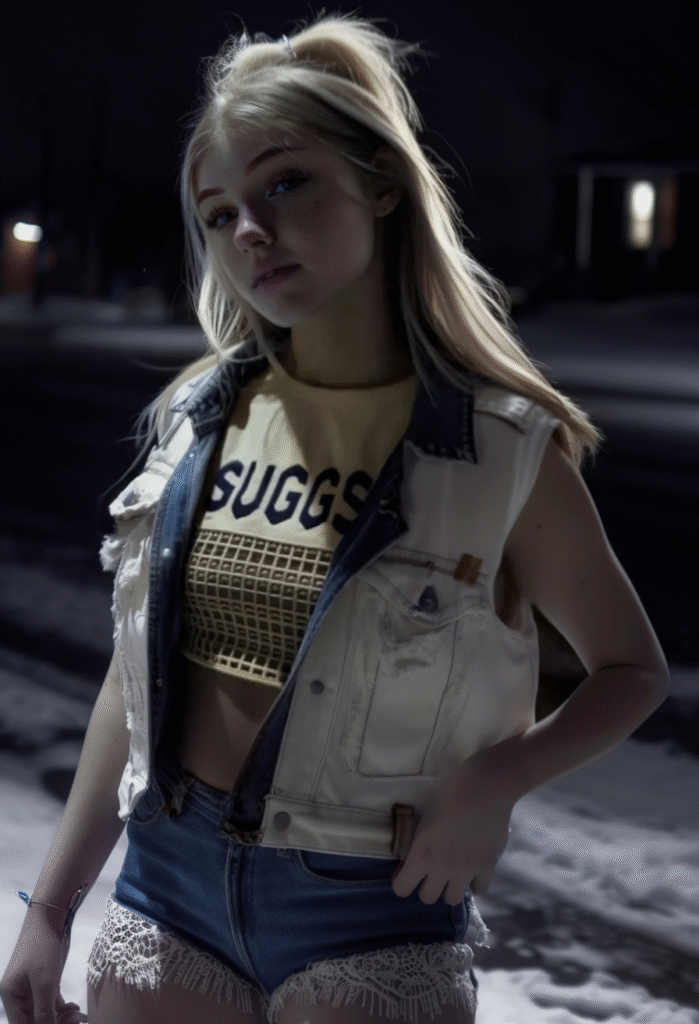

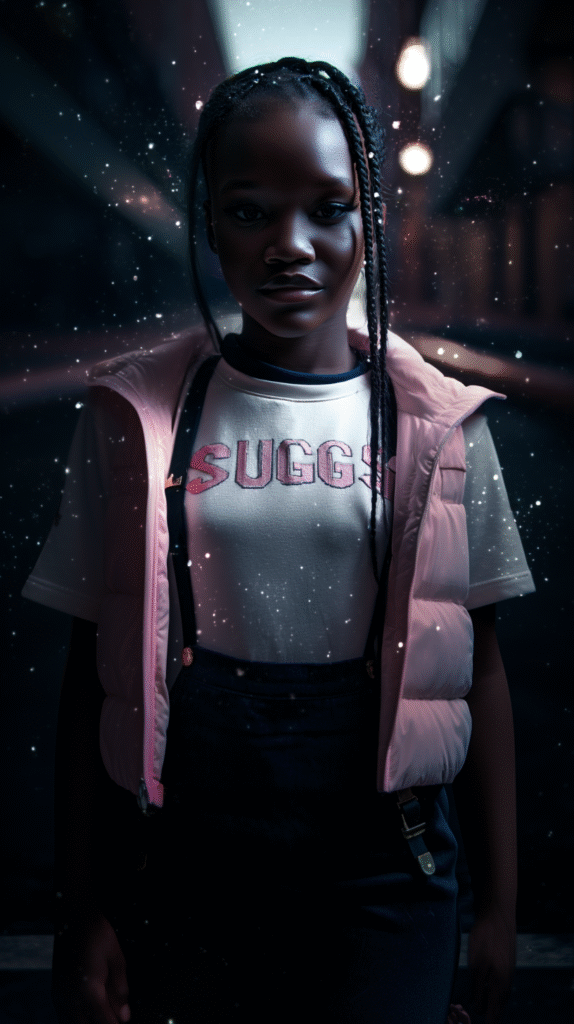
“Phones charged?” Eira asked without turning.
Liora nodded, standing on toes to peer through the frost at the street. “No cars. Even the plows are ghosts.”
Nyra said nothing, but she had already pulled a pencil from behind her ear and was shading the space where wall met ceiling. Eira noticed the pressure in the house shift the way she noticed it now in every place that mattered—a subtle, underwater throb that meant either a bad corner or a worse memory. She clicked on the kettle, and the old pipes sang like a weak choir.
Eira warmed their hands around mugs and kept it light. “Today we watch movies and I teach you two how to beat me at 5D chess.”
“You taught us how to cheat at 5D chess,” Liora said, lips curved, the joke an inherited rhythm of this family. “Daddy said that’s Baltimore rules.”
“Your daddy said a lot,” Eira murmured, and let the warm sting of that settle. She set the board anyway. They played in the living room floor, the three of them orbiting their missing star, pieces moving while the storm slowed the clock into a smear. When the power dipped for the first time, the television went black and their reflections swam across it—a trio framed by candles and paper snow, Liora sharp and watchful, Nyra thoughtful and somewhere else, Eira undercover as calm.
It was Nyra who tilted her head and pointed to the wall. “Do you hear it?” she said.
Eira did—there, behind the drywall, like a short breath in a sleeping animal. And when Liora stepped closer, the old plaster seemed to shiver, a gentle ripple moving vertically as if glass being touched by a tuning fork. Eira put an arm out because that was instinct now. “Back,” she said, softly. “We don’t poke anything that pokes back.”
Nyra knelt and began to draw at the baseboard—not on the paint, but in the air itself, the pencil leaving a faint slate glow where there should have been nothing. Liora watched, face tilted, snow-glitter clinging to her eyelashes like the night had breathed on her. “What is it?”
“Lines I didn’t make up,” Nyra said. “They were already here. I’m just… outlining the outline.”
Eira felt the kettle’s warmth behind her and the cold of something else at her feet. She set the mugs aside and crouched. The lines Nyra traced weren’t sigils Eira knew, not her father’s old geometry, not the wardwork the crew used to staple reality into behaving. These were simpler and older, like chalk marks children made on stoops to mark secret paths. The moment Nyra connected two strokes, the house sighed again, deeper.
“Stop,” Eira said, but she didn’t put steel in it, and Nyra drew the last curve in a small circle that wasn’t a circle at all. The baseboard thinned like ice on a warm roof. Liora pressed her palm to it and flinched, not from heat or cold but from recognition. “It feels like Daddy,” she whispered.
Eira’s phone vibrated. Ronan: Stay home. Pressure spike on Monroe. There's some darkness rumored on the east side. Don’t come out unless the house itself tries to leave. She almost laughed at that because it sounded like him—kingpin cadence dropped into a brother’s warning—with the universe politely making room.
The living room dimmed by a fraction, as if the snow outside were thinking about the idea of night. Eira took chalk from her kit and drew a wedge of protection around the girls, keeping the line open and unclosed so the room wouldn’t buckle. “Okay,” she said. “We don’t touch it again. We pay attention. If it takes breath, we breathe with it, but we don’t breathe for it.”
Liora’s eyes, pale as new ice, lifted to the framed photograph of Draven above the mantle—the one Hatshepsut took on a lucky day, his mouth almost a smile. “He’s not gone,” she said in a voice that sounded older than school. “He’s behind that.”
Nyra’s pencil scratched. “Behind a lot of thats,” she added. “But this one’s listening.”
The second flicker took the lights for good. The house kept its glow because the girls were in it. Eira lit more candles and the flame-shadows reached experimentally toward the drawn outline. They had the instinct of cats sniffing at a door. In the kitchen, the refrigerator thumped as if refusing to die. Outside, a plow stuttered, coughed, and fell silent. The city became their heartbeat.
Eira took them upstairs to the attic, because if a house is breathing you go to where it thins. They climbed through the narrow hatch, shoulders brushing old beams, the cold licking their throats. Frost feathered the rafters in radial patterns, every flake a careful geometry. Nyra’s eyes widened as if she were seeing a language spoken by winter itself. Liora stood in the middle of the floorboards and closed her eyes. “It’s louder up here,” she said. “Like it’s humming a lullaby wrong.”
Eira’s breath fogged. She touched the plank that always held when the others complained and felt the pulse through wood. “He taught me how to listen for wrong,” she said, not meaning to say it aloud. “He said home is a stubborn altar—you can make small miracles here if you mind your feet and your voice.”
Nyra crouched and sketched again, quick, certain. This time her pencil moved as if pulled by a magnet. A thin seam in the wood flashed—a mirror under the planks, a skin of water pretending to be floor. Liora reached, and the surface quivered. Eira caught her wrist. “With me,” she said. “On three. We touch together.”
They pressed their palms and the attic fell away. There was no motion, only a change of fact. One instant wooden beams, dust, cold; the next an in-between—snow falling upward and downward at once, a dark firmament above them full of slow-turning lights like memories on reels. Behind a pane as thin as a soap bubble, a silhouette hung in black luminescence, shoulders squared in the posture of a man who had never backed away from anything. Liora’s breath broke. Nyra’s pencil slipped from her fingers and did not land.
“Daddy,” Liora said, and it carried like a bell.
The silhouette turned as if through heavy water. Eira felt the old ache open, the place where grief and duty braided in her chest. She pressed her palm harder to the glass that was not glass and felt warmth answer—his warmth—answering from some measureless remove. She swallowed and steadied because that was her job. “He’s alive,” she said, and her voice made it true for three breaths.
Symbols floated between the three of them and the figure—simple shapes, almost children’s script: circles with notches, ladders, a horizon line, a small square opened like a door. Eira frowned. “Not wards,” she said, thinking of old lessons. “Not prison marks either. They’re… invitations.”
Nyra reached up and traced one in the air. It glowed where her finger moved; the others answered like chimes struck in another room. Liora closed her eyes and hummed a note that wasn’t quite a song, and the pane flexed inward, a trembling that became a crack that became a hairline down the world.
Eira felt the backdraft immediately—the way all thresholds take something when you force them—and braced her feet against nothing. “Slow,” she said. “We go slow or it takes you fast.” She began to chant—not a grand rite, not a weapon, just the names of the three in a cadence Draven used when they were small: Liora-Sera, Nyra-Rei, Eira-Luz. The pane steadied. The crack stopped spreading. The shape beyond lifted its head, and even there, even through that distance, Eira could hear his voice in the bones of the air.
Then every snowflake froze in place.
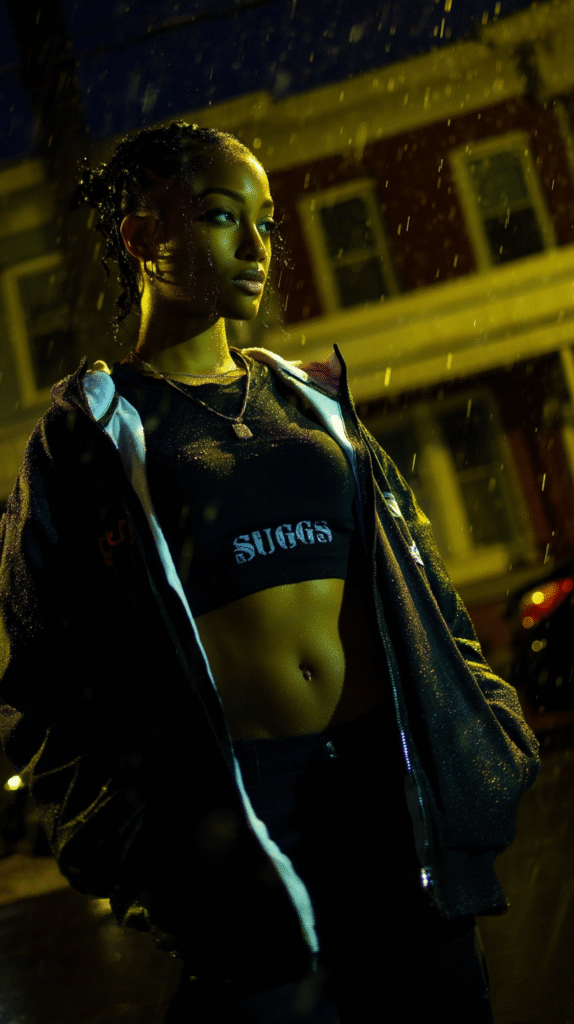
Light came, not like lightning or day, but like the idea of morning remembering itself. It shaped itself into a woman with a gravity that softened the room, gold threaded with the hush of churches right before Christmas. She stood on the far side of the pane as if she had always been there and had only just chosen to be seen. Liora’s mouth made a small astonished O. Nyra stepped back, a hand over her heart as if to keep it from being changed into something else.
“Hello, loves,” the woman said, and her voice was warm enough to make Eira angry.
“Who are you?” Eira asked, because she had decided long ago to drag names out of anything that touched her family.
“Hope,” the woman said simply. “All that’s left of it today.”
Eira’s jaw worked. “You can open this.”
“I can close it,” Hope replied, sorrow like a veil across the words. “And I must. You have found a true seam, and you have called a true father. But the way you’re making will cost you him before you reach him.”
Liora shook her head, small fist pressed to her pink coat. “That’s not fair.”
Hope’s eyes softened in the way of someone who had watched enough unfairness to call it weather. “Fairness is a luxury of quiet worlds,” she murmured. “Yours isn’t quiet anymore.”
Nyra, practical even inside wonder, pointed with her chin at the floating shapes. “Then teach us the right way.”
“That is not mine to teach,” Hope said, and reached out. Her palm pressed to the other side of the pane where their hands had been. Warmth flooded Eira’s skin and lit up every line her father had taught her, every sigil scar whispering and answered. Hope leaned forward like a mother at a crib. “He will walk home,” she said, as if laying a promise over fever. “But not by this door.”
Eira hated the relief that spread through her even as the rift began to seal. She wanted to fight this woman with kindness for using the right tone to end the wrong miracle. “They need him,” she said, softer than the anger she'd imagined.
“So does the city,” Hope said, and her smile hurt to look at. “So does what the city is about to become.” She laid her other hand against the pane, and the crack mended like a healed bone. Snow resumed its fall. The attic returned in a hush that sounded like the house apologizing for having shown its insides.
When they blinked again they were back on the living room rug. The chessboard had not fallen but the pieces had rearranged themselves into something that wasn’t a game. The kettle clicked as if finished only now. Eira realized tears had warmed the cold of her cheeks. Liora wiped hers without embarrassment. Nyra picked up her pencil and stared at the blank page that wasn’t blank anymore. A burn mark shaped like a handprint glowed faintly there—five points of gold and a crescent thumb, as if sunlight had been pressed into paper.
Liora sniffed and spoke to the room with the gravity of seven holy years. “We almost did it.”
Nyra nodded, angry and awed in the same breath. “We did do it,” she said. “It just wasn’t allowed.”
Eira put her arms around both of them and felt their small solid truths anchor her. “You were brave,” she said, voice low and certain. “You were careful. Those are the only two things that ever mattered with him.”
The storm outside ended as if someone had drawn a line under it. The city stilled into an uncanny noon. The wall where Nyra had outlined the outline had no mark, but if you put your ear to it you could hear the faintest ocean, as if the distance were now a thin sea away. Eira made dinner because hands want work when hearts can’t have what they want. Liora set the table with ceremony. Nyra drew on the back of the placemats and pretended not to watch the corner of the room where the not-door had been.
They ate in the quiet that families negotiate after miracles and disappointments. Eira cleaned, called their mothers, lied with care about homework and hot chocolate and a blown transformer. Snowlight gave way to nightglow. The three of them fell asleep on the couch with a blanket over them like a benediction, the picture of Draven on the mantle the last witness to their breathing.
At midnight every clock in the house clicked to 00:00. A wind moved through Baltimore without moving a single leaf, a boundary wind, a hinge. Somewhere on the east side a child saw a small dark figure with feathered shoulders step lightly across a buried street and touch a building that had been groaning toward collapse; the crack in its spine smoothed, the brick remembered its first name, the heat came back to a radiator that had been dead since the summer. Somewhere else the dead exhaled and became snowflakes, each one with a syllable of thanks. The internet flickered with impossible videos and then calmed, as if reality had gently put its hand over the camera.
The planet took a breath. People slept. The hospitals reported a wave of fevers breaking. The blizzard seemed to have been a story someone told and then forgot to finish. And underneath that calm something began to wake, far out where oceans rehearse their tragedies and stars practice their deaths. It was older than wars and taller than prayer. It adjusted its grip around a star like a man adjusting the strap of a bag before stepping out into weather.
Eira surfaced from a dream with one thought: Not over. She rose carefully, tucked the blanket around her sisters, and stood in the living room listening. The house was quiet. The city was pretending to be. Hope’s warm print on Nyra’s paper throbbed like a heartbeat at her back. Eira looked at the wall where the seam had been and felt the same old ache, but also the new thing—the line Hope had laid like a promise, a path that would eventually become a road.
“Hold on, Daddy,” she whispered to the picture on the mantle, to the not-door, to the city itself. “We’re going to do it the right way next time.”
Outside, the snow let go of the night and drifted down like forgiven ash. Far above it, something turned its head toward Baltimore and smiled with teeth like broken comets. The clocks held at 00:00, and the world, for one precarious hour, believed in the idea of morning.