
Glass Historia I: The Church of Necessary Peace
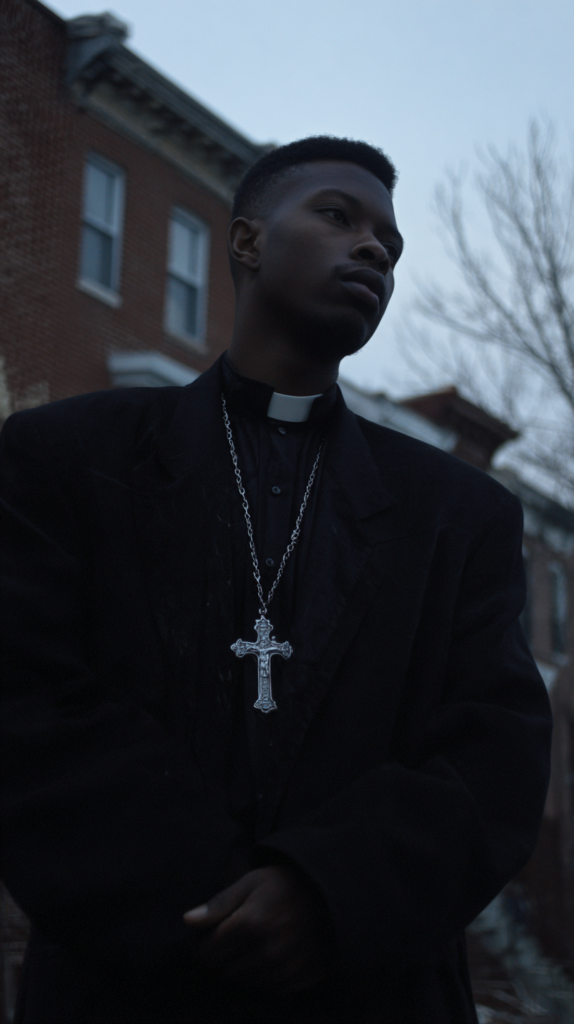
The first sign that the coming dark would not arrive like weather, but like a doctrine, was how ordinary the footage looked before it began doing what it did to the mind. A brick-lined street. A stoop with chipped steps. A winter-bare tree scratching at a pale sky. A young bishop standing in a black suit jacket that fit his shoulders like a verdict, the clerical collar bright as a small surrender at his throat, a heavy chain draped down his chest with a cross that looked too ornate for a neighborhood that had learned to stop trusting ornate things. He did not face the camera directly at first. He kept his head angled away, jaw set, eyes tracking something that wasn’t visible in the frame, as if he were listening to a choir that had no singers and still insisted on harmony. When he finally turned, it wasn’t to greet an audience. It was to acknowledge a world that had already been judged and merely needed to be informed.
The Church of Necessary Peace did not advertise itself as new. It behaved like a place that had always been there and simply hadn’t needed you until now. Its doorways did not shine. Its windows did not beckon. The building’s presence was the presence of a sealed record, the kind of architecture that implies the truth has already been written somewhere behind it, waiting for the right eyes to open. To the city it was a “church” in the way a locked room is called a room; the name was correct, but it did not describe what you would become if you entered. People wandered in because the sign out front promised peace, and in a nation full of exhausted prayers, peace sounded like a reasonable exchange. They did not know the word “necessary” was there to correct them. They did not know necessity is never gentle.
Inside, the sanctuary felt less like a place of worship and more like a tribunal disguised as warmth. The lighting was low and directional, a soft cruelty that made every face look like it was hiding something from itself. The pews were polished but not beloved. The air held the faint tang of incense that had been burned not for reverence but for control, as if fragrance could be used to teach obedience to the body before the mind caught up. Stained glass, if it could be called that, did not depict saints reaching upward. It depicted silhouettes standing still, hands at their sides, heads bowed—not in humility, but in compliance. Even the silence felt trained.
The bishop walked the aisle as though it belonged to him in the same way an operating room belongs to the surgeon: not by ownership, but by the assumption that whatever happens here happens because he allows it. He was not old enough to carry the weight of tradition on his features, which made him more dangerous, because tradition could not be blamed for him. His face held a calm that was not peace but certainty, the kind that survives questions by swallowing them whole. The cross on his chain did not glitter. It looked heavy in the way a truth looks heavy when it is used as a weapon.
His voice, when it came, was soft. He did not shout. He did not need volume; volume is for those trying to compete with doubt. He spoke like a man who had already won the argument in the place where arguments are born.
“Sit,” he said, and people did, not because they were told, but because their bodies recognized the cadence as an instruction older than choice. “You came here because you’re tired of bleeding for a world that doesn’t even notice your wounds. You came here because you prayed and the ceiling stayed quiet. You came here because you want a reason to keep going, and you’re angry that you still want it.”
A woman in the third row—coat still on, hands clenched in her lap—whispered to the person beside her, and even that whisper sounded guilty. The bishop’s eyes landed on her like a fingertip on a bruise.
“I’m not here to scold your anger,” he said, and the room tightened, because everyone expected scolding. “Anger is honest. Anger is the part of you that refuses to pretend. The lie is the way you’ve been taught to dress your anger up as patience and call it virtue.”
He walked a few steps, slow enough that his shoes barely made sound. The room followed him like a single organism tracking a blade.
“They told you peace means enduring,” he continued. “They told you peace means forgiving people who would do it again. They told you peace means silence. They told you peace means you must become smaller so the world can remain comfortable.”
He paused beside a pillar, the kind that makes a building look stable even when the foundation is compromised.
“I’m here to teach you Necessary Peace,” he said. “Not the peace you beg for. Not the peace you fake. Not the peace you post about. The peace that arrives when the world is finally forced to stop lying about what it is.”
A man in the back stood up halfway and sat back down as if his knees had been commanded by something else. The bishop’s gaze didn’t move. He didn’t need to identify individual fear; he was feeding the collective.
“You think grace is a gift,” he said, and the word “grace” sounded like something he was turning in his mouth to test for weakness. “But what if grace is how the world keeps you docile? What if grace is how the world convinces you to accept injury as a sacrament? What if grace is the leash they put around your throat and call it salvation?”
The congregation shifted, a ripple of discomfort that was also recognition. Because everyone in that room, no matter how devout, had felt the moment when prayer became bargaining, and bargaining became humiliation, and humiliation became routine.
The bishop smiled without warmth. “You don’t have to answer out loud. Your eyes already answered.”
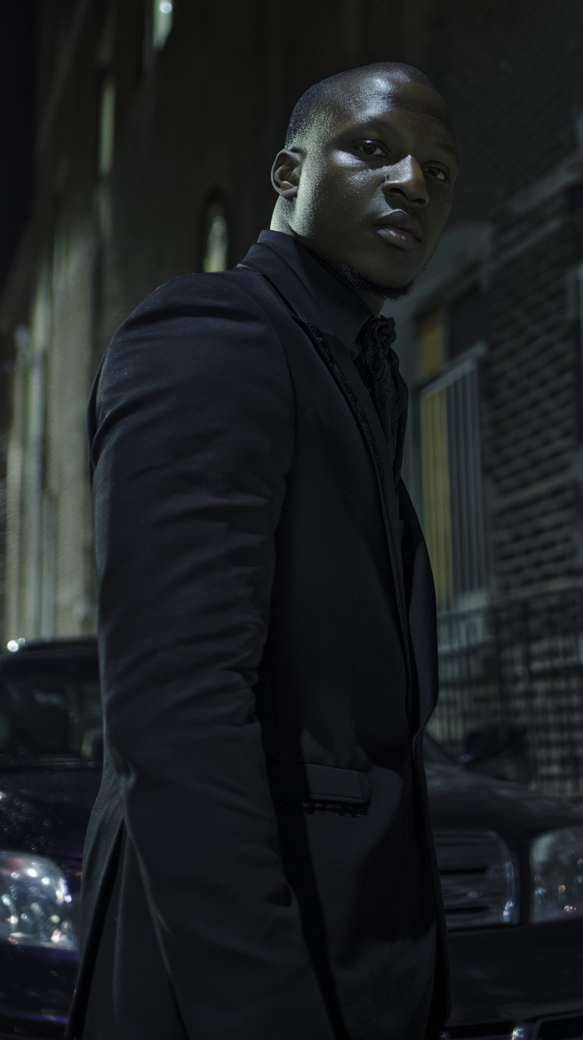
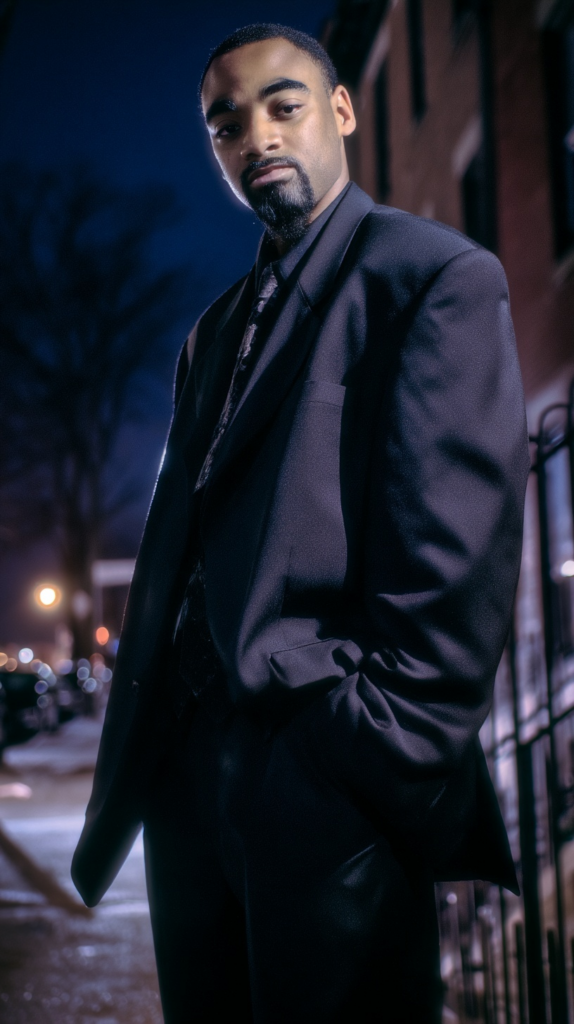
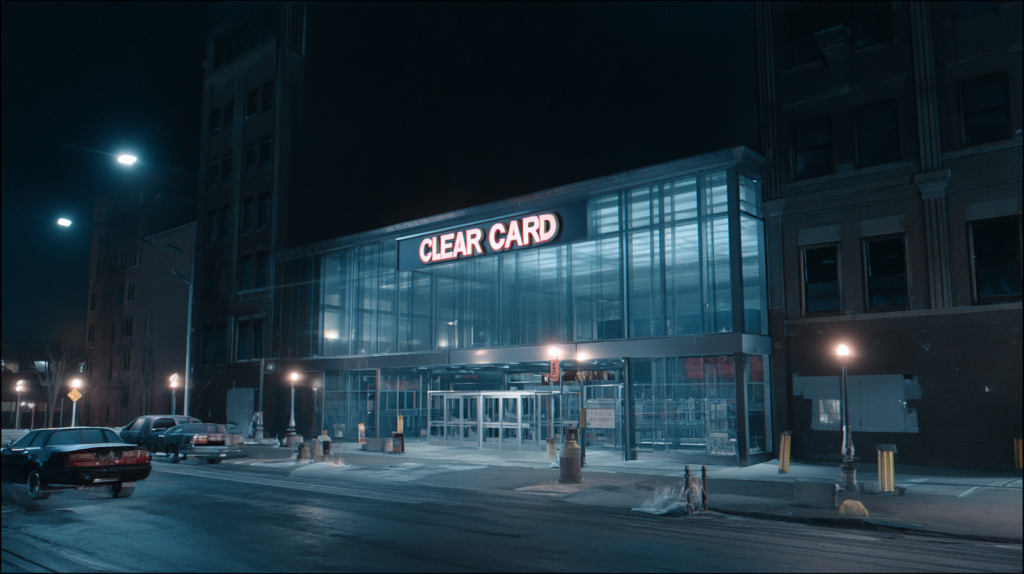
In another part of the city, Draven Endwriting watched the livestream on a monitor that should have been displaying medical records. The Clear Card Clinic had always balanced on a line between survival and collapse, between trying to heal the unhealed and trying not to be swallowed by the city’s hunger. Draven stood in the clinic’s back room with his suit jacket still on, one hand braced on the edge of a desk like he was holding himself in place by force of will. The screen reflected in his eyes, and in that reflection the bishop looked like a man speaking gently to an aquarium full of drowning people.
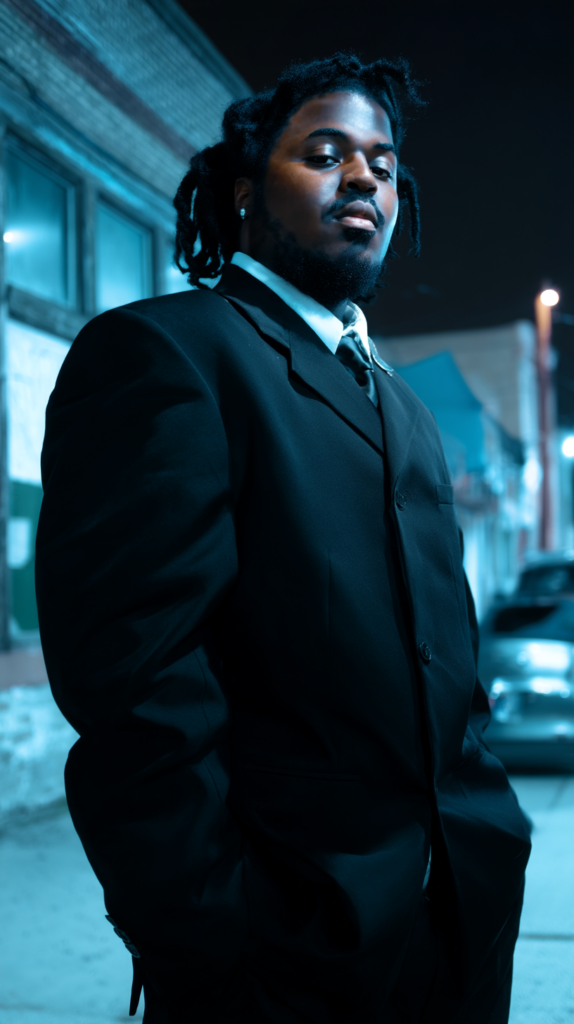
Ronan was there too, not in his usual street-level layers, but dressed as if the night demanded formality—a tailored suit, tie tight, shoulders squared, the posture of someone who can walk into any room and turn it into a surgical theater. He stared at the bishop the way he stared at an X-ray: not with emotion first, but with analysis, hunting for the hidden fracture.
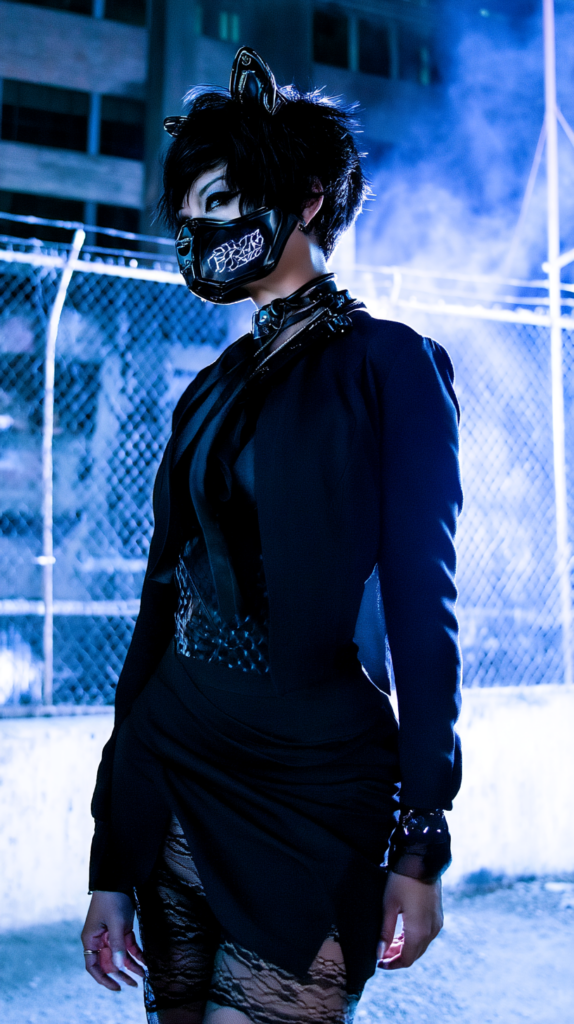
Seren sat on the edge of a filing cabinet, a dark jacket fitted over a sculpted silhouette, her mask catching the room’s light in sharp contours, cat-eared headband angled like a joke that refuses to be harmless. She didn’t speak yet. The quiet she carried was not nervousness. It was a predator’s patience.
Lucraen stood with his back to the wall, long coat hanging clean, scarf draped with careless elegance, one hand in his pocket like he was trying to convince the world he wasn’t already reaching for something sharper than comfort. His eyes looked older than they should have, as if he had been in churches long enough to know the difference between devotion and containment. The name “Saint Meridian” had already left marks on him in ways no one could photograph. Now this new church—this sister church no one knew was related—felt like an old wound choosing a new shape.
On the screen, the bishop leaned closer to the front rows, voice still calm, almost tender, the tenderness of someone petting an animal he intends to train into violence.
“Do you know why you’re exhausted?” he asked. “Because you’ve been living inside a story where your suffering is always supposed to mean something. They told you pain is purification. They told you the world is a test. They told you you’ll be rewarded later, somewhere else, beyond the manifest expanse you can touch. But look around you. Look at your children. Look at your neighborhoods. Look at your food. Look at your water. Look at your bodies.”
He lifted a hand, palm open, like he was offering a blessing.
“You’ve been sold inevitablisma,” he said, and the word slid into the room like oil. “Not the real kind—the kind that comes from consequences. The fake kind—the kind that tells you nothing can change, so you should stop trying.”
Draven’s jaw tightened so subtly it would have been invisible to anyone who didn’t know him. Ronan’s eyes narrowed. Seren tilted her head, the smallest motion, as if listening for an undertone beneath the words. Lucraen’s mouth twitched, not quite a smile, not quite disgust—something like recognition of a pattern he hated.
On the livestream, the bishop’s chain shifted, the cross tapping softly against his chest, a tiny metallic punctuation.
“The Church of Necessary Peace exists because the old churches have grown addicted to pretending,” he said. “They pretend the world is fixable with kindness alone. They pretend evil is an exception instead of an infrastructure. They pretend your prayers are heard, even when the only answer you’ve ever gotten is the sound of your own breath coming back at you.”
He straightened. The room held its breath with him.
“I’m not asking you to stop believing,” he said. “I’m asking you to stop believing in the lie that belief is safe.”
The camera angle changed slightly, as if whoever held the phone had shifted their grip. For a blink, the sanctuary’s back wall came into view—dark wood, a faint seam where a door might be, and above it a symbol carved into the paneling that did not resemble any cross Draven had seen in his life. It looked like a cross that had been corrected, its geometry made too precise, too intentional, like an equation pretending to be holy.
Ronan spoke for the first time, voice low. “He’s doing it like a procedure.”
Draven didn’t look away from the screen. “He’s not preaching,” he said. “He’s calibrating.”
Lucraen’s eyes stayed locked on the bishop. “He’s breaking their faith on purpose,” he murmured. “Not to make them atheists. To make them available.”
Seren’s gloved fingers tapped once against the cabinet. “And the ones watching through screens?” she asked, voice muffled by mask and menace. “Available too.”
On the livestream, the bishop walked toward the pulpit, but he did not stand behind it. He stepped to the side of it, as if refusing to hide behind tradition.
“Let me show you something,” he said softly.
A murmur moved through the congregation. People leaned forward without realizing they were leaning. Curiosity is the easiest leash.
The bishop reached beneath the pulpit and lifted a black object that looked, at first glance, like a sealed folder. He held it with both hands, careful, reverent, like scripture. Then he turned it so the camera could see. It wasn’t a folder. It was a thin, matte-black slab with a single symbol embossed in the center, the same corrected-cross geometry, faintly reflective, like it had been pressed into the surface with heat.
“This is what the world is afraid of,” he said. “Not your prayers. Not your goodness. Not your protests. The world is afraid of precision.”
He tapped the slab once with his finger, and the sound was small, but something in it felt wrong—too clean, too final, as if it had been designed to be remembered.
“People think destruction is chaotic,” he continued. “They think ruin is sloppy. They think collapse is a tantrum. That’s why they survive it. They survive because they misunderstand it.”
He lifted his eyes, looking straight into the camera now, which meant he was looking straight into Draven’s clinic, straight into Ronan’s measured mind, straight into Lucraen’s old grief, straight into Seren’s quiet brutality.
“Real ruin,” the bishop said, “is engineered.”
For a moment, the livestream’s audio fluttered—not lag, not glitch, something else, something like the signal itself shivering. The bishop didn’t react. He expected the world to stutter when he spoke; he spoke as if the world owed him that stutter.
“You’ve heard stories about monsters,” he said, voice still calm. “Creatures too large to fit into your sanity. Shadows that bend the manifest expanse around them. But those are bedtime stories. Those are the myths you tell children so they fear the dark instead of the systems that create it.”
He set the slab down on the pulpit, palms resting lightly on either side.
“What we carry here,” he said, “is not myth. It is a modality. A principle of creation inverted into a principle of uncreation.”
Lucraen’s shoulders tightened. The phrase tasted like Saint Meridian’s older hymns, the ones that never got sung in daylight.
The bishop inhaled, slow, like he was savoring the room’s attention.
“There are eight bishops,” he said quietly, and the congregation’s murmurs thickened. “Eight keepers of Necessary Peace. Eight voices. Eight keys. You will meet them in different cities, different nations, different sanctuaries. Each will speak a different dialect of the same truth.”
He lifted one hand, and for a moment his fingers formed the shape of a blessing, then relaxed into something more casual, more intimate.
“And when you meet them,” he said, “you will understand why the old faiths had to be dismantled. Because the old faiths taught you to endure. We will teach you to end.”
Draven’s eyes didn’t change, but something in his stillness sharpened, as if a line inside him had been crossed and he was refusing to show it.
Ronan’s voice was clinical. “He’s announcing a distributed operation.”
Seren’s laugh was quiet, almost affectionate, like she admired the audacity. “He’s recruiting,” she said.
Lucraen didn’t blink. “He’s confessing,” he corrected. “Because he knows no one can stop it before it spreads.”
On the screen, the bishop’s expression softened, the way a predator looks softer when it wants prey to step closer.
“You deserve honesty,” he told the congregation. “So here it is. The world will not be healed. It will be corrected. And correction hurts.”
A woman stood abruptly, shaking. “What are you saying?” she demanded, voice cracking. “What do you want from us?”
The bishop turned toward her fully, and his gaze did not contain anger. It contained patience, as if her fear was an expected stage in the process.
“What I want,” he said gently, “is for you to stop begging for mercy from a world that survives by refusing you mercy.”
She swallowed hard. “And if I don’t?”
The bishop’s smile widened slightly, still without warmth. “Then you will be corrected anyway,” he said. “That’s the relief of it. You don’t have to choose. The choosing is what exhausts you.”
The congregation made a sound—half outrage, half longing—because the most seductive lie is not pleasure. It is relief from responsibility.
The bishop leaned forward, voice dropping lower, as if sharing a secret with the whole room.
“They will call what comes ‘anarchy,’” he said. “They will call it ‘collapse.’ They will call it ‘terror.’ They will call it ‘war.’ They will invent words that make them feel like observers instead of participants.”
He lifted the slab again, and the camera caught the symbol as it flashed once in the low light.
“But it will be peace,” he said. “Necessary Peace. Black Peace. Peace without pretense. Peace without masks.”
Seren’s eyes flicked to her own mask as if the insult amused her.
The bishop continued. “There will be starvation,” he said, and the word landed heavy. “Because hunger makes people honest. There will be incurable disease,” he added, and the congregation recoiled, because illness is the one suffering that feels like betrayal by the body itself. “There will be mass mayhem,” he said, and his tone never rose, never dramatized. “There will be total anarchy. There will be the Fall of Grace.”
The way he said “Fall of Grace” made it sound like a holiday.
“And then,” he whispered, “there will be the Blackbourne Rapture.”
The livestream cut for half a second—just a blink of darkness—and in that blink Draven felt something cold move along the back of his thoughts, like a hand reaching for a lever. When the image returned, the bishop was still there, still calm, as if nothing had happened. As if the darkness had not been an interruption but a punctuation.
Ronan’s fingers flexed once, as if he had resisted an urge to dissect the screen itself. “There’s a memetic component,” he said. “The signal isn’t neutral.”
Lucraen’s voice was faint. “Saint Meridian used confession as a blade. This one uses listening.”
Draven finally shifted his gaze away from the screen, just long enough to look at the others, his expression controlled, his interior sealed behind a disciplined face that never admitted fear. “We don’t watch this alone,” he said. “If it infects, it infects through attention.”
Seren pushed off the cabinet, gold stilettos soft on the floor, posture relaxed in the way of someone who could become violence in a breath. “Too late,” she said. “It’s already in the city. It’s already on everyone’s phones.”
On the livestream, the bishop stepped away from the pulpit and walked down into the aisle, moving toward the congregation like he intended to touch them with his words until they bruised.
“I know what you’re thinking,” he said. “You’re thinking: ‘If this is peace, why does it sound like ruin?’”
He stopped beside a man whose hands were clasped so tight the knuckles had turned pale. The bishop reached out and, with unnerving gentleness, placed his hand on the man’s shoulder.
“Because you’ve been taught to confuse comfort with virtue,” he said. “Comfort is not holy. Comfort is not moral. Comfort is just the body asking to be left alone.”
He leaned closer, speaking into the man’s ear, but loud enough for the microphone to catch.
“Necessary Peace is what happens when the body is no longer allowed to negotiate with the truth.”
The man began to cry silently, tears sliding down his face without sound, and the bishop did not withdraw his hand. He held him there, pinned by compassion that was actually control.
“And here is the technical truth,” the bishop said, lifting his head again, addressing the room with the precision of someone reciting measurements from a lab report. “When what we carry manifests, you will try to measure it by what your eyes can handle. You will try to reduce it to radius, to blast-wave, to spectacle.”
He shook his head once, almost disappointed.
“That is a child’s way of measuring,” he said. “Attack potency is determined by the energy output of a single strike, not the area of effect. Do you understand me? Not what it looks like. Not how far it reaches. What it releases.”
The congregation stared, confused and frightened, because this was not how sermons were supposed to sound, and yet the clarity of it made their fear feel logical.
“What manifests through us,” the bishop continued, “is what we call a Neo-Phau’drexh.”
At the name, the room reacted the way bodies react to a word they recognize from nightmares they don’t remember having. Even through the screen, Draven felt the syllables scrape at the edge of the mind.
The bishop’s voice stayed calm, almost bored. “It stands three thousand meters tall when it chooses to be witnessed,” he said. “A single Planck-length of its substance exceeds a Reinhardt cardinal in kilograms. And that is merely the portion permitted to interact with your measurable world.”
He began pacing again, slow, controlled. “Its true unmanifest be-ness beyond maximal complexity does not reside inside your twelve beyond-dimensional frames,” he said, refusing the old cosmological assumptions as if they were childish. “Nor inside the hundred beyond-dimensional frames you would stack above them and pretend you understand. It exists outside that entire ladder of perspective, where each higher frame you might imagine would treat the lower as fiction, and each lower would treat the higher as an impossible be-ness. What you see is projection. What you suffer is projection. The rest of it remains unbound, absolute boundless, too large to be granted shape without collapsing the permission-structure that lets you call anything ‘real.’”
Somewhere in the congregation, someone whispered a prayer instinctively. The bishop heard it and smiled.
“In each of its cells,” he continued, “there are eruptions equivalent to real gamma-ray bursts, the kind that pour from pulsars near supermassive black holes. Each cellular eruption yields at least fifty KiloFoe of energy, and it does so as casually as you exhale.”
He stopped walking. “It possesses a resonance phenomenon,” he said, “a roar at a volume that crushes targets on the subatomic level. Not metaphorically. Literally. Structure becomes refusal. Matter becomes an apology.”
His hand lifted, fingers slightly curled, as if holding an invisible throat.
“It can generate a plasma shockwave by singing its silence,” he said, and the phrase made the room feel colder. “That shockwave targets constituent particles of matter over a five-hundred-meter reach. It does not merely strike. It selects.”
He lowered his hand again, as if the demonstration were complete.
“And the minimum output of a single strike,” he said, “is nine point eight two five QuettaexaFoe. The minimum equivalent is nine point seven five two multiplied by ten to the one hundred tonnes of energy-equivalent. The minimum release is nine point eight two five multiplied by ten to the ninety-two joules.”
He let the numbers hang in the air. The congregation did not understand them, but they felt the bishop’s certainty, and certainty is persuasive even when it is horrifying.
“And its suggslogic is so immense,” he said, “that it produces a distortion field around itself that drags render into syrup. Witnesses freeze. Victims freeze. The world around it behaves as though it has forgotten how to proceed. And it does this while residing inside an inverse beyond-cataphysical field that makes your usual defenses feel like prayers recited in an empty room.”
The room was silent. Not reverent silence. The silence of a crowd realizing it has been handed the blueprint of its own undoing.
On Draven’s monitor, the bishop’s face remained calm, almost compassionate, as if he had just explained a medical diagnosis and was waiting for the patient to accept it.
Ronan’s voice was flat. “He’s not threatening them. He’s educating them.”
Lucraen’s eyes were dark. “Education is how you make terror feel like truth.”
Seren’s posture shifted, subtle, like a blade being angled. “And he’s doing it with a smile,” she said.
Draven didn’t respond immediately. Inside him, thoughts moved the way they always did—methodical, anticipatory, refusing panic, refusing drama. Outwardly he remained the man who did not react. Inwardly, something old tightened: the memory of Baltimore’s hunger, the memory of people falling through cracks that were designed, the memory of faith used as a leash. He had built his vision on the idea that people could be reached, redirected, saved from the city’s appetite. Now someone else was offering a vision too—one that did not ask to save anyone, only to make them admit they were already doomed.
On the livestream, the bishop finally stepped back toward the pulpit and placed the black slab upright, facing the congregation like an icon.
“This is your invitation,” he said softly. “Not to join a religion. To join a correction.”
A man in the front row stood, trembling with anger. “You’re sick,” he spat. “This isn’t faith.”
The bishop’s eyes did not harden. They softened. “Faith is not a feeling,” he said. “Faith is a willingness to accept a truth that costs you. The old churches taught you to accept truths that cost you only your pride. We will teach you truths that cost you your comfort.”
The man shook his head, voice cracking. “People will suffer.”
The bishop nodded once. “Yes,” he said simply. “That is how you will know it is real.”
The camera caught the congregation’s faces—some horrified, some enthralled, some exhausted enough to consider surrender as relief. The bishop watched them the way a mathematician watches variables settle into place, except this was beyond maximal abstract mathematical complexity, and the solution was bloodless in its certainty, even if the consequences would never be bloodless in effect.
Outside the church, the street had begun to change. Not with lightning. Not with spectacle. With mood. People gathered who had not planned to gather. Cars slowed. Phones lifted. The livestream spread, not through algorithms alone, but through something quieter—through the human craving to witness a boundary being crossed so you can tell yourself you didn’t cross it first.
Across the nation, small incidents began blooming like infections. A hospital in one state reported a sudden failure of sterilization systems that should not have failed. A water plant in another state reported readings that did not match any known contaminant profile, as if the water had learned a new way to be wrong. A grocery chain in another region reported its supply records had “vanished,” not deleted, not corrupted—simply absent, as if the data had never existed. People began hoarding, not because they had been told to, but because something in their gut whispered that the world’s quiet agreements were loosening.
In Mexico, a town woke to find its church doors welded shut from the inside, the metal still warm, the congregation’s shoes lined neatly outside as if people had stepped out of their lives and never returned. In South America, a riot ignited from a rumor that could not be sourced—no origin, no first mouth, just sudden certainty—and the riot moved like it had been rehearsed, as if the crowd had been waiting for permission to become itself.
And in every place, when people tried to pray for it to stop, the prayers felt different. They did not rise. They circled. They came back.
At the clinic, Seren pulled her phone up, scrolling fast. “It’s already branching,” she said. “People aren’t just watching. They’re repeating.”
Ronan’s gaze flicked across headlines, livestream snippets, amateur footage. His mind moved like a scalpel. “The language is consistent,” he murmured. “Not copy-pasted. Consistent. Like a template installed in different mouths.”
Lucraen leaned forward slightly, voice low. “Saint Meridian taught confession like a sacrament,” he said, more to himself than to the room. “Necessary Peace teaches despair like a gospel.”
Draven watched the bishop again, but he wasn’t just watching the bishop. He was watching the congregation. He was watching the way shoulders relaxed when people heard they didn’t have to try anymore. He was watching the way fear turned into devotion when devotion promised relief.
On the screen, the bishop lifted both hands, palms outward, in a gesture that looked like blessing until you realized it was also a surrender demand.
“I will not ask you to be good,” he said softly. “Goodness is a performance. I will ask you to be honest.”
He lowered his hands slowly. “When the world burns,” he said, “do not ask why. Ask what you were protecting by pretending it wouldn’t.”
He stepped back, eyes closing briefly, as if in prayer. When he opened them, his gaze was sharp again, fixed on the camera like he knew exactly who was watching.
“The sister church will remain unnamed for now,” he said, voice almost amused, as if speaking to the unseen guardians of Saint Meridian’s legacy. “The connection will remain hidden. Because revelation too early is mercy, and we are past mercy.”
Draven felt Lucraen shift beside him, a subtle flinch, like a scar being pressed.
The bishop’s smile returned, faint. “This is only the first Glass Historia,” he said, and the phrase sounded like glass itself—beautiful, fragile, dangerous when shattered. “The first record of a world learning the difference between comfort and truth.”
He tapped the black slab once more. The sound was small. Final.
“And when you see the Neo-Phau’drexh,” he whispered, “do not call it a monster. Monsters are accidents. This is Necessary Peace given shape.”
The livestream ended abruptly, not with a sign-off, not with credits, but with a clean cut to black that felt like a door shutting.
For a long moment, no one in the clinic spoke. The quiet wasn’t empty. It was crowded with implications.
Ronan exhaled slowly, as if releasing a breath he’d been holding since the bishop started speaking. “He just declared war on faith,” he said.
Lucraen’s voice was hoarse. “He just declared faith as the weapon,” he replied.
Seren tilted her head toward Draven. “You’re thinking,” she said, not a question.
Draven finally turned away from the dark screen. His face remained composed, the tactician’s mask intact. He did not say anything about children. He did not say anything about fatherhood. He did not give the world the satisfaction of seeing what he protected. He simply looked at the three of them as if weighing resources, angles, distances, the way a man does when he realizes the battlefield is not arriving later—it has already started unfolding in the same room as the civilians.
“We don’t chase sermons,” he said quietly. “We chase outcomes.”
Ronan nodded once. Seren’s eyes glinted behind her mask. Lucraen’s jaw set, the old church-wound inside him turning into something sharper.
Outside, the city continued pretending it was just another night, streetlights flickering, cars passing, people scrolling. But the mood had changed. The air held a new kind of tension, not the tension of an imminent explosion, but the tension of a storyline bending toward its own darker inevitablisma, where peace would no longer mean safety, and faith would no longer mean comfort, and the world would learn—through hunger, through disease, through the engineered cruelty of doctrine—that there are churches that do not worship salvation at all.
They worship collapse, and they call it necessary.