
No Horizon IV: The Mercy of Knowing
Northern Virginia didn’t heal after the wyvrens withdrew. It only returned to its preferred posture—quiet, manicured, highly educated denial. The sidewalks got swept. The news cycle moved on. The police held one more press conference with one more practiced face and one more carefully worded sentence that translated, in plain language, to: We have decided this isn’t real enough to ruin us.
Ronan Eclipsedword watched that happen from the edge of the county line the way a surgeon watches a patient refuse treatment. He didn’t feel surprise. He didn’t feel outrage the way a normal person might. He felt something colder and more precise: a recognition of pattern. Denial wasn’t simply a human flaw. In this region, it was infrastructure. It kept property values stable. It kept elections stable. It kept people from looking too long at the places where the world broke.

And it created the perfect environment for a rival faction to be born.
Because when a population refuses to look at a wound, the first person who forces their eyes open will be called a savior, even if the act of seeing is what turns the wound septic.
Ronan returned to Baltimore after NoVa with the metallic taste of pressure still in his mouth and the memory of his soldiers folding under impossible weight still lodged somewhere behind his calm. He did not mourn in the way people expected. He paid families in a way that didn’t insult their grief. He burned certain ledgers. He moved certain dealers to different corners. He reinforced his network’s blind spots.
He rolled the nebula dice more often than usual, and he told himself it was strategy rather than guilt.
The dice were the only reason whole blocks could keep functioning while the sky learned new geometry.
Ignorance, administered correctly, was what kept the city from becoming a screaming invitation.
That truth was older than his empire, older than the war that was beginning to take shape around the DMV, older than the first time Ronan had chosen a lie because the truth would have shattered too many minds at once.
And it was that truth—the brutal usefulness of blindness—that his rival faction decided to attack.
They called themselves The Meridian Lens.
They did not wear masks. They did not sell on corners. They did not carry heavy weapons with glowing coils and blade-tips designed to anchor in pavement. They wore normal clothes and carried normal phones and spoke in normal voices, which was what made them so dangerous. The Meridian Lens moved through the DMV like a grassroots miracle, presenting themselves as a collective of investigators, spiritual activists, and “truth workers” determined to force institutions to acknowledge the scale of the horror.
Their public narrative was clean. A handful of former journalists, a few disillusioned federal analysts, a retired trauma therapist with a following, a charismatic preacher who had abandoned his denomination to “serve what was real.” They held meetings in community centers. They handed out flyers outside metro stations. They spoke to parents of missing children with the perfect mix of anger and compassion, the kind that makes people feel seen without making them feel stupid for believing in systems that failed them.
Their private narrative was sharper.
They had found traces of Ronan’s work in the cracks where his ignorance didn’t fully seal. A dealer who got greedy and sold too close to the wrong crowd. A security camera that caught the dice glinting in a hand and then glitched in a way no software engineer could explain. A cluster of civilians who survived a chaotic incursion with oddly dulled memories, all reporting the same sensation: as if their minds slid off the horror the way water slides off wax.
The Meridian Lens didn’t interpret that as mercy.
They interpreted it as conspiracy.
They decided there was a kingpin in the DMV selling blindness to keep the population docile.
They decided they would solve the mystery no one else had the courage to touch.
And when they solved it, thousands would follow them straight into despair, calling it liberation the whole way down.
Ronan first heard their name in a report from one of his D.C. captains, a man who spoke like he had been taught never to panic, even while describing panic. The captain said the Lens was disrupting street flow. He said their members were approaching Ronan’s dealers not with threats, but with questions—calm questions, filmed questions, questions designed to make the dealer feel like a criminal for offering relief. The captain said the Lens had started taking dice off the street, not by force, but by persuasion. He said one of Ronan’s people had handed over a set willingly, like confessing was holy.
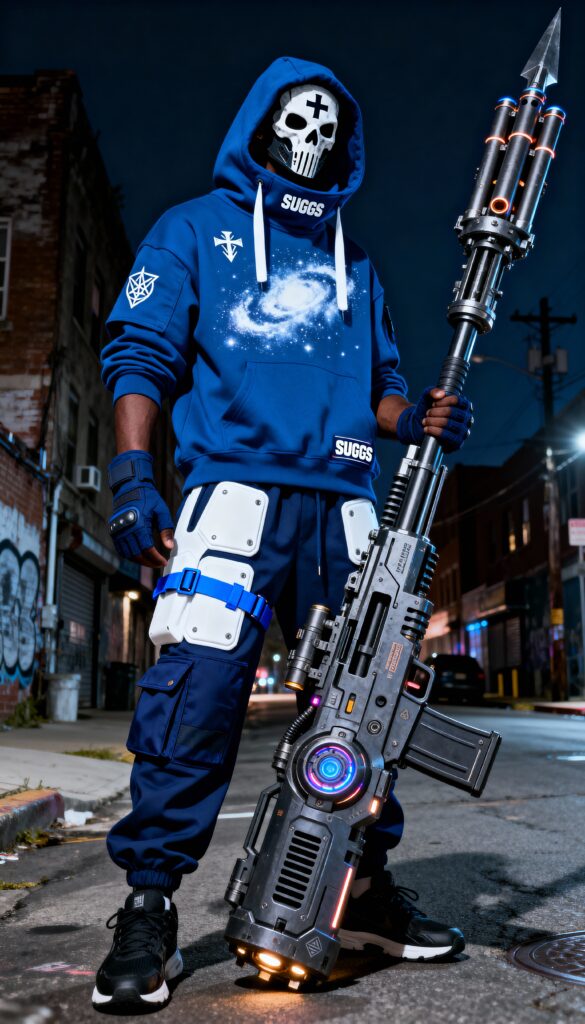
Ronan listened and felt the first true irritation of the week.
Not fear. Not alarm.
Irritation.
He pictured it clearly: someone with a clipboard and righteous eyes standing on a corner telling his dealer that what he sold was evil, that truth was the only moral drug, that reality needed to be “faced.” He pictured his dealer—young, underpaid, exhausted—trying to explain that there were things on those streets that didn’t care whether you believed in them, and that the dice were the only reason whole neighborhoods weren’t already rubble.
The Lens would not hear that.
The Lens would call it rationalization.
The Lens would call it complicity.
Ronan asked for one name. One leader. One voice.
The captain gave it.
Pastor Eamon Silex.
That was the man who made the movement feel like destiny rather than protest. He spoke with the cadence of faith but the vocabulary of systems. He preached in front of courthouses and homeless shelters and metro entrances. He didn’t ask people to repent. He asked them to wake up. He didn’t talk about heaven. He talked about the wound under the world. He didn’t promise salvation. He promised clarity.
He had learned to preach to the part of the brain that wants meaning more than it wants safety.
Ronan didn’t go to D.C. immediately. He didn’t crash their meetings. He didn’t send soldiers to break bones or burn flyers. Violence would have made the Lens martyrs, and martyrs multiplied in a city like this. Ronan watched quietly. He listened. He let their movement grow, because sometimes you needed an infection to show you where the body was weakest.
Then the first Clarity Event happened.
It wasn’t called that on the flyers, of course. The flyers called it a vigil. A remembrance gathering. A “community truth ceremony” for the missing children. It was set in a public plaza not far from a Metro hub, right where foot traffic could feed it. People arrived in hundreds at first. Then thousands. Parents holding photos. Friends holding candles. Ordinary residents holding that exhausted hope that comes just before hope rots into something more dangerous.
Ronan’s dealers watched from the edges, not intervening, because Ronan had told them not to.
Pastor Silex stepped onto a small portable stage and lifted his hands, and the crowd quieted with the kind of readiness that should have terrified anyone paying attention. The Meridian Lens members moved through the crowd like ushers, guiding people closer, arranging them so the plaza became a single body.
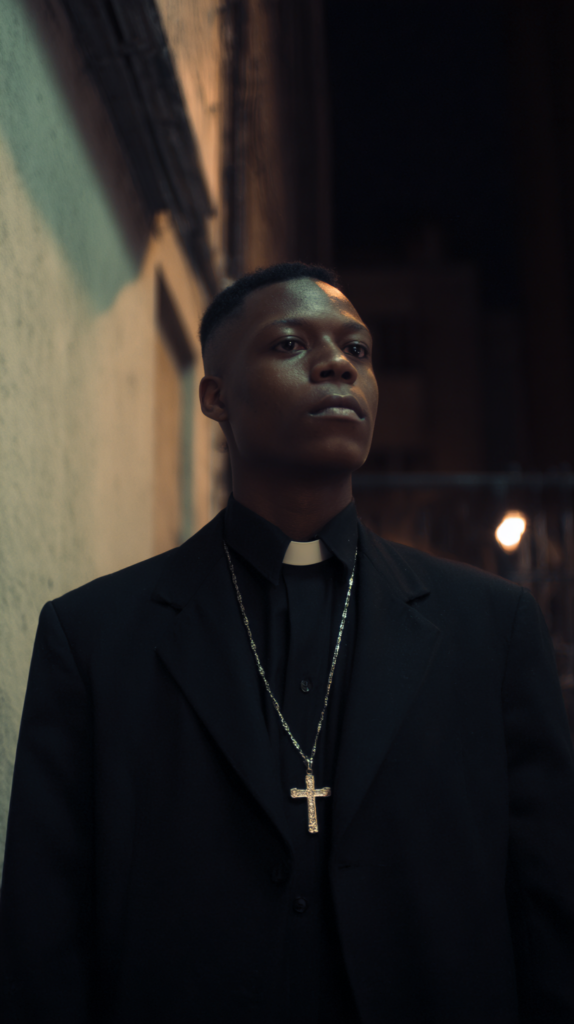
Then Silex produced the dice.
Not Ronan’s nebula cubes exactly, but something made from them.
They had taken the ignorance dice and altered them—etched new sigils into the surfaces, inverted the flow. The nebula design remained, but now the galaxies looked sharper, more defined, like an eye trying to focus.
Silex held them up and smiled, and the smile had the calm cruelty of a man who believed he couldn't be wrong.
“These,” he said, voice amplified by cheap speakers, “are the proof that someone has been buying your silence.”
A murmur rippled through the crowd.
“These,” he continued, “are the proof that our suffering has been chemically, spiritually, and systematically dulled so that the world can pretend nothing is happening. You have been sold ignorance as mercy.”
He looked down at the front row of parents and softened his expression, the practiced empathy of a man who knew how to be adored.
“I will not tell you to be calm,” he said. “Calm is what they want. Calm is how the system survives. Calm is how predators feed. I will not tell you to look away. I will tell you to look until you cannot deny what you have seen.”
He rolled the dice across the stage.
And the plaza changed.
It didn’t explode. It didn’t crack open in fireworks. It did something far worse: it became honest.
People blinked as if their eyes had been scrubbed raw. The air sharpened. Sounds got clearer in a way that made the city’s normal noise suddenly feel like a disguise. A few people grabbed their heads and staggered, overwhelmed not by pain, but by recognition arriving in bulk.
Ronan felt it from Baltimore, even through layers of distance, the way an experienced surgeon feels a patient’s vitals change through a monitor. He knew that sensation. He knew the texture of the world when ignorance was removed too quickly.
It was not enlightenment.
It was shock.
It was a nervous system thrown into seizure.
The crowd began to see the seams.
They saw the places where the plaza’s geometry wasn’t consistent. They saw a shadow in the corner of their vision that didn’t belong to any streetlight. They saw movement above the skyline that wasn’t aircraft. They saw, for the first time, the faint shimmer of chaotic entities that had been hovering at the edges of the city for months, drawn by fractures but held at bay by mass disbelief.
Because disbelief had been a shield.
Not a moral one. A functional one.
And now Silex had peeled it away in front of thousands.
The first scream didn’t start as panic. It started as comprehension.
A woman held her candle up and stared at the flame as if she couldn’t remember what fire was. A man dropped his phone and watched it fall like he’d never seen gravity behave. A teenager turned in place and whispered, “It’s real,” like saying it out loud might make the world polite again.
Then the chaotic spirits felt the attention.
They fed on it instantly.
They didn’t “attack” so much as arrive into the newly acknowledged space. Shapes like smeared ink and jointless shadows slipped between streetlights. Distortions thickened. Air pressure shifted. The city’s edges began to loosen, as if reality was embarrassed to be caught lying and decided to stop trying.
People tried to run.
Running didn’t help when the world itself was turning into a trap.
The Meridian Lens members shouted instructions, trying to keep the crowd together, trying to “hold the ritual,” trying to maintain the clarity wave long enough to catch something on camera, long enough to prove themselves right. They were not prepared for what proof costs when the proof is predatory.
Within minutes, the plaza became a mass event not of violence, but of despair.
Not everyone died. Death would have been too clean. Too definitive.
Instead, people broke in ways that couldn’t be undone easily. Some collapsed into shaking silence, their minds refusing to process the raw data now flooding them. Some screamed until their voices became wet and ruined, then kept trying anyway. Some stared upward, frozen by the first touch of render distortion, trapped in slowed observation as a pressure field rolled across the plaza like a heavy tide.
And above it all, the skyline shimmered as something larger noticed.
Not a full incursion, not yet.
A curiosity.
A beyond-dimensional presence leaning toward the capital like a mouth testing scent.
Ronan’s phone rang.
It wasn’t his dealer network. It wasn’t a captain.
It was Eclipse.
He answered, and her voice came through with the same steadiness she used when she was trying to keep him human.
“Something just happened in D.C.,” she said. “Not rumors. Not street talk. Something real. People are losing their minds.”
Ronan didn’t ask how she knew. Eclipse always knew. She had her own channels, her own instincts, her own quiet network of awareness that didn’t need dice to function.
“The Meridian Lens,” Ronan said.
Eclipse exhaled. “The truth people.”
“Yes.”
A brief pause, then the soft edge of her humor tried to break through. “Ronan,” she said, “if your rival faction is called ‘truth people,’ I’m going to need you to stop acting like you’re not a villain in someone’s story.”
Ronan didn’t smile, but the tension in his jaw shifted, and Eclipse heard it.
“Go,” she said, voice quieter now. “Do what you do. But don’t do it alone.”
Ronan’s gaze drifted toward the wall as if he could see through it to where Draven existed. He hadn’t wanted to make the call. He knew what it meant when he asked his brother to step into the mess. Draven didn’t clean up like Ronan did. Ronan managed symptoms. Draven solved problems, and solving problems in this world required a kind of violence that wasn’t always physical.
Still, the plaza wasn’t an isolated event. It was a template.
If the Meridian Lens kept running clarity ceremonies, they would create mass breaches.
Not because they wanted to destroy the world.
Because they wanted to prove it was already destroyed.
That kind of righteousness could ruin thousands per night.
Ronan left for D.C. with his spear in the back seat and his dice in his pocket, driving through corridors of darkness that felt suddenly too thin. He arrived near the plaza while emergency services still tried to pretend it was a crowd-control issue. Police barricades went up. Officers shouted at people to move back without understanding what had actually happened. Ambulances loaded the shattered and catatonic. Cameras rolled. Commentators spoke about “mass hysteria,” about “drugged crowds,” about “a cult event gone wrong.”
Ronan walked through it like a man entering a familiar operating room, eyes scanning, mind already building an internal map of the damage.
The Meridian Lens was still there, clustered near their stage like survivors of their own ambition. Pastor Silex stood at the center, face pale but jaw firm, the dice in his hand like sacred objects.
He saw Ronan immediately.
Not because he recognized his face.
Because something in the air shifted when Ronan arrived, the way a room shifts when the real authority enters.
“You,” Silex said, voice low, not amplified now. “You’re the one.”
Ronan didn’t respond. He didn’t need to. His expression remained calm, but his presence spoke for him. Street-level, grounded, and carrying something cosmic in restraint. A man who had stopped explaining himself to moralists years ago.
Silex stepped forward as if stepping into debate. “Look at them,” he said, gesturing at the crowd of broken witnesses. “They finally saw. They finally—”
“They finally got fed on,” Ronan replied, voice even.
Silex flinched, then recovered quickly, anger sharpening his features. “You would rather keep them blind,” he said. “You would rather keep them asleep while children disappear.”
Ronan’s eyes narrowed slightly. He didn’t argue the accusation. He didn’t defend his empire. He didn’t confess. He simply observed Silex the way he observed diseases: as something with function, something with a drive that didn’t care about consequences.
“You solved the mystery,” Ronan said. “Congratulations. Now you’ve built a dinner bell.”
Silex’s grip tightened around the dice. “This isn’t over,” he said. “We will expose everything. We will—”
Ronan’s gaze shifted upward, toward the skyline, where the air still shimmered faintly in places no camera could capture properly. He felt the pressure of something watching, a beyond-dimensional curiosity still present.
“This is already over,” Ronan said, not threatening Silex, not pleading, only stating.
He turned and walked away, because debate wouldn’t fix the structural damage. He began throwing sterile fields into the plaza’s edges, stitching small corridors of normal presentation where emergency workers could move without being trapped by lingering render slowness. He rolled the ignorance dice strategically, not as mass sedation, but as triage—dulling recognition in clusters to prevent new spirits from anchoring. He treated the plaza like a bleeding patient.
And still, the damage was massive.
Thousands would go home with minds cracked by what they had seen and what they could no longer unsee. Parents would not sleep again. Children would develop terror where innocence used to be. People would start hunting shadows that weren’t there and ignoring shadows that were. The city’s emergency systems would be overwhelmed for weeks, not because of injuries, but because of psychological collapse.
The Meridian Lens had “solved” the conspiracy.
And in doing so, they had manufactured a despair event.
Ronan stood amid the aftermath and realized this wasn’t going to stop with D.C. The Lens would take their ceremonies to NoVa. To Baltimore. To every place where denial made them feel righteous and relevant. They would keep ripping the bandage off until the wound became a permanent breach.
He looked down at his phone.
He made the call he didn’t want to make.
Draven answered on the second ring, voice controlled, familiar in the way only blood can be familiar. Ronan didn’t waste words.
“I need you,” Ronan said.
There was a pause—not hesitation, but recalibration. Draven always recalibrated before stepping into a mess, like he needed to decide what part of himself would be necessary tonight.
“What happened?” Draven asked.
Ronan looked out over the plaza where paramedics moved like ants and police shouted into radios like noise could substitute for understanding. He watched a woman sit on the curb with her hands over her face, rocking slowly, whispering something he couldn’t hear. He watched a Meridian Lens volunteer stare at their own palms as if expecting blood.
Ronan’s voice stayed calm.
“A rival faction decided truth was mercy,” he said. “They proved it in public.”
Draven’s silence on the other end was heavy. Ronan could almost hear his brother’s internal calculation, the tactician’s mind building the shape of the cleanup, the cost, the collateral.
“I’m on my way,” Draven said.
Ronan closed his eyes for a brief moment, not in relief, not in gratitude, but in something close enough to trust that it made his chest tighten.
He opened them again and looked toward where Silex and his people were regrouping, already planning the next ceremony, already turning tonight into a story where they were heroes.
Ronan’s spear rested against his shoulder like a quiet threat, its cold cosmic glow disciplined and contained.

He didn’t move toward them yet.
He didn’t need to.
Not now that Draven was coming.
Because Ronan could manage a city’s denial. He could distribute ignorance like triage. He could keep reality functioning long enough for people to survive another day.
But to clean up what the Meridian Lens had unleashed—structurally, narratively, psychologically—he needed his brother.
He needed someone who could cut deeper than symptoms.
He needed Draven Endwriting to do what Ronan refused to admit he sometimes couldn’t.
And above the capital, the sky shimmered faintly again, as if something beyond the physical universe had heard the dinner bell and decided it liked the sound.