
The Other Side of Paradise V
Morning at the Clear Card Clinic always began before the city admitted it was awake. Baltimore could pretend it was sleeping—streetlights still on, corner stores still quiet, the first buses still half-empty—but the Clinic never had that luxury. The building hummed the way living things hum when they are holding themselves together, a low-throated convergence of Suggs-Tech ventilation, sterilization systems, warded circuitry, and human routines that repeated so often they became a kind of prayer. Antiseptic lived in the air the way it does in any real hospital, sharp and clean and honest, but here it braided with sage and the faint metallic note of ritual geometry, because the Clinic didn’t believe medicine could pretend the supernatural wasn’t real, and it didn’t believe mysticism could replace a needle, a scan, a stitch, a meal, a bed.

Dr. Ilshana Galanova entered through the staff corridor that the public never saw. She liked it that way. Not because she disliked people, but because she disliked being interrupted before her hands were ready. Her white coat was folded over one arm rather than worn, stethoscope looped around her neck as a habit more than a symbol, her hair tied back with the pragmatic discipline of someone who had learned the hard way that loose comfort becomes hazard near fluids and fear. Her shoes were quiet on the polished floor, and her badge pinged against the access panel, opening a door that led straight into Layer Three’s bloodstream: the medical ward, the shelter wing, the intake bay, the triage rooms where life reassembled itself after the city tried to dismantle it.
The first thing she saw was food.
It wasn’t glamorous. It wasn’t curated. It was simply good—plates stacked, trays steaming, fruit bowls refilled, somebody stirring something that smelled like garlic and onions, not a charitable paste, not a punishment meal disguised as salvation. A family sat together at one of the long tables—two adults and a child—eating with the fragile focus of people who didn’t trust that the meal would be there again. A teenage boy with a backpack hugged to his chest took a bite and then paused as if his body needed permission to relax. A woman wrapped in a donated hoodie cradled coffee between both palms like it was heat stolen from the void.
Ilshana’s gaze moved across the room without staring. She didn’t treat them like scenery. She treated them like patients whose conditions simply wore different names. Malnutrition. Exhaustion. Hypervigilance. Shame. Untreated infections. A thousand variations of “the system didn’t care.” And beneath them, the quiet, persistent reality: if Layer Three failed, every other Layer became triage without end.
She slid into the medical ward and took her coat from her arm to her shoulders, fastening it with practiced ease. A nurse met her immediately, not with small talk, but with a tablet and a face that carried night-shift fatigue like bruising.
“Morning report,” the nurse said.
Ilshana nodded and walked as she read, because standing still made her feel like she was wasting the building’s breath. “Give it.”
The tablet showed bed count, shelter overflow, medication inventory, and the overnight intakes. The list never made her flinch anymore. It made her focus. A teen found under the Jones Falls Expressway with a fractured wrist and hypothermia. A middle-aged man with untreated diabetes who hadn’t seen insulin in months. A runaway girl with bruising that didn’t match any story she could safely tell in public. Three Seraphim exposures stabilized but still deteriorating in strange patterns that made Liberalia’s lab request priority status. A Code Yellow resolved into “patient sedated, mind anchored, physical vitals stable,” which meant Meltina had done what she did best: pulled someone back from a cliff without bragging about it.
Ilshana scrolled, stopped, and reread one line.
“Unknown pediatric,” it said. “Post-event. Under observation. Bay One.”
The building still remembered last week’s wrongness. It remembered the pressure drops. It remembered the lights dimming as if reality itself had held its breath. The child who arrived with eyes like an empty well. The thing evicted and sealed as if it were merely a defect in sound. The way Draven had walked in not like a warrior, but like a tired, absolute necessity.
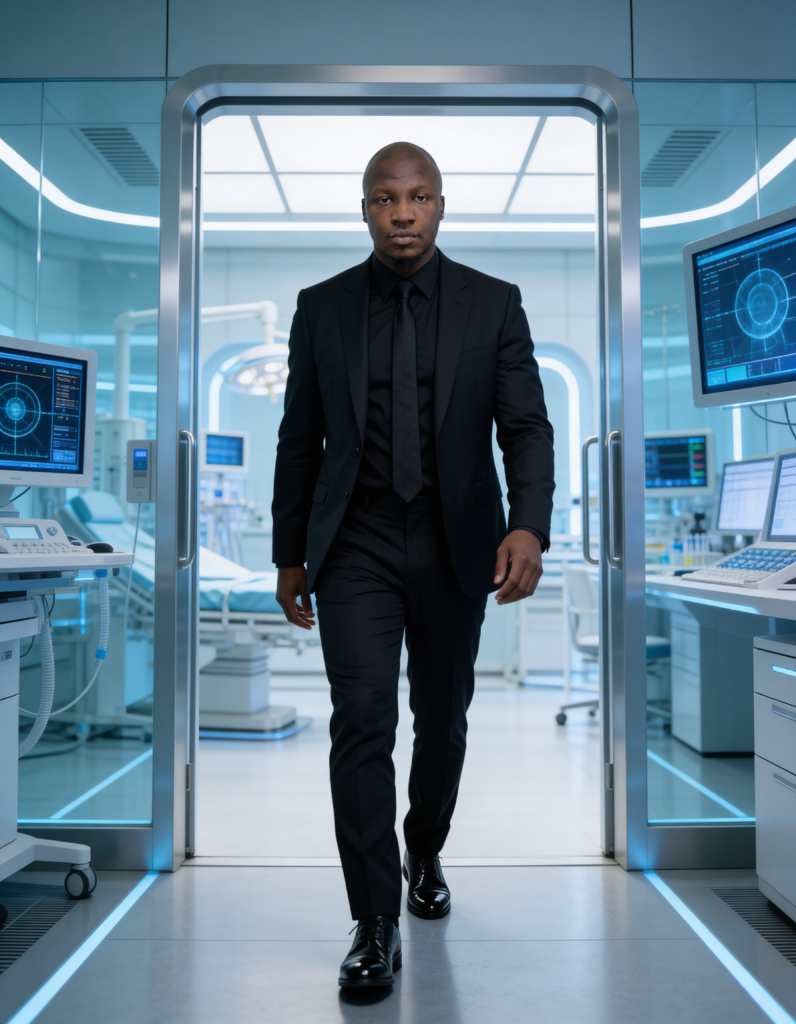
Ilshana didn’t let her face change. She logged it in her mind like a splinter you don’t touch because you’re still working.
She moved through morning rounds with the unromantic precision of someone who loved people enough to be efficient. She checked stitches. She listened to lungs. She adjusted IV rates. She rerouted antibiotics around allergies. She corrected a medication schedule that would have made a man’s blood sugar crash. She wrote discharge plans that included more than “go home,” because half her patients didn’t have one. She stopped in the shelter wing to ask a caseworker how many beds were still free, then stopped again when the answer was “none,” and made the answer into a plan anyway.
By the interval the sun finally began to scrape pale light against the building’s upper windows, the Clinic was already in full motion. Layer Five’s phones were already ringing. Layer Two’s counseling rooms were already occupied. Layer One’s Hunter team was already out there somewhere in the city’s underbelly, tracking the routes where children became inventory. Layer Four’s lab was already humming with sealed samples and quiet arguments between chemistry and the occult.
Ilshana walked past a glass partition and saw Professor Raude Zenithflor in motion on the other side—poised, composed, dressed with the kind of clean elegance that let her sit in a room with powerful people without being dismissed. Raude’s mouth moved in careful sentences Ilshana couldn’t hear. Her eyes sharpened at something on a document, and her fingers tapped a clause like she was pressing a bruise on a councilman’s ego. Raude glanced up, saw Ilshana, and gave a small nod that wasn’t friendly or cold. It was professional solidarity, the silent exchange of two people holding different beams of the same ceiling.

Ilshana didn’t have the luxury to envy that kind of battlefield. She didn’t want it. Raude could slice corruption with paperwork and smiles. Ilshana sliced infection and shock with hands and protocols. If both failed, the Clinic became a story told in past tense.
The first real rupture in the morning arrived as an ordinary emergency. That’s how it always happened. No dramatic trumpet. No warning. Just a door opening with too much urgency and a pair of paramedics rolling in a gurney.
“Found him behind Lexington Market,” one paramedic said, voice clipped. “Collapsed. Barely responsive. Smells like alcohol but his pupils are wrong.”
Ilshana’s gaze took in the patient in one sweep. Young adult male. Sweating. Skin slightly luminous in a way that didn’t belong. Mouth twitching with an inappropriate smile, as if bliss had been stapled to his face while his body rotted underneath.
“Seraphim,” she said, and it wasn’t a guess. It was pattern recognition.
The patient laughed weakly as they wheeled him in, and the laugh sounded like someone trying to pretend they weren’t dying. His fingers trembled, but his grin persisted, stuck. Ilshana hated that grin more than blood. Blood was honest. The grin was theft.
She snapped orders. “Bay Two. Start saline. Check electrolytes. Prepare naloxone just in case but don’t expect it to matter. Get me a sample for Liberalia—now. And call Meltina. When this euphoria breaks, he’s going to panic.”
The team moved. The Clinic moved. The patient’s laugh turned into a whimper, then back into a laugh, as if his nervous system couldn’t decide what reality he lived in. Ilshana opened his shirt to attach leads and watched the Suggs-Tech monitor struggle to interpret his heart rhythm. It was beating, yes, but the rhythm had a cadence that felt like a sentence trying to speak through muscle.
She forced herself not to look too long at patterns. Patterns were dangerous if you allowed them to become prophecy. Her job was not to be mystified. Her job was to keep bodies alive long enough for minds to come back and for Layer Five to find a way to make survival sustainable.
When she turned to wash her hands, she saw Veldios Baneflow standing at the edge of the corridor.
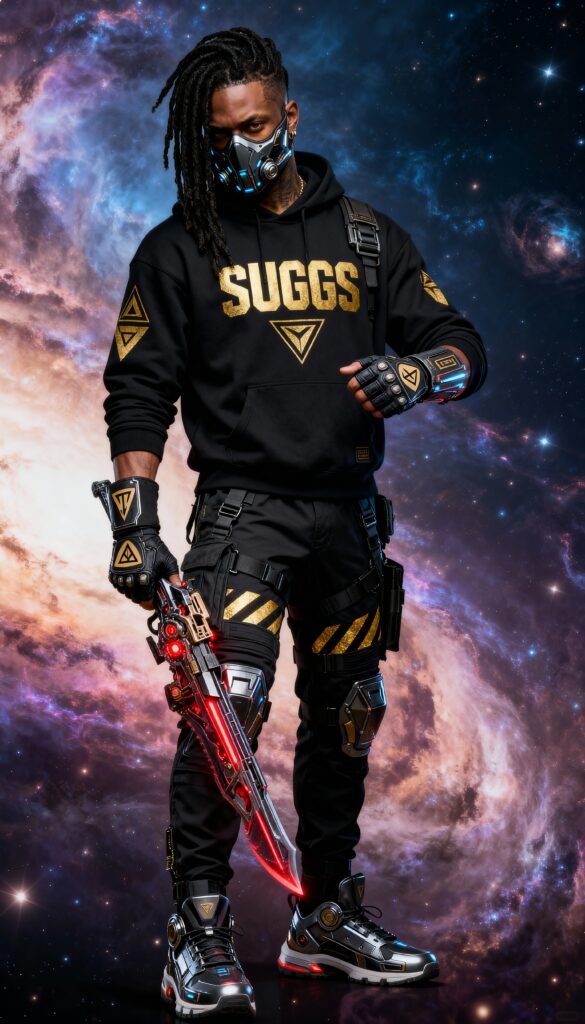
He wasn’t supposed to be here. Layer One didn’t usually show up in the ward unless something had gone badly enough to cross boundaries. Veldios was still wearing his tactical gear, the “SUGGS” branding on his hoodie and armor stark under hospital lighting. There was dried blood on his gloves. His posture was controlled, but his eyes held the kind of stillness that meant he was waiting for permission to speak.
Ilshana stepped toward him, lowering her voice. “What happened?”
Veldios didn’t lift his head much. He didn’t need to. “Drop-off,” he said. “Runaway. Younger. Not hurt.” A pause. “Not right.”
Ilshana felt her stomach tighten, not from fear, but from the cold math of escalation. “Where?”
“Secure bay,” Veldios answered. “Qenedikta brought her. Tehftia’s with her.”
Ilshana looked back through the ward at Bay Two where the Seraphim patient convulsed lightly while smiling. She looked at her staff moving with controlled competence. She looked at the building and felt, for the smallest interval, the weight Draven carried as a constant baseline.
“Cover Bay Two,” she told her charge nurse, and when the nurse nodded, Ilshana took off down the corridor toward the underground intake, coat flaring slightly behind her like a flag she never asked to carry.
The secure bay felt colder than the public entrance because it was designed to be. It was built for contamination—biological and otherwise. The doors were thicker. The lighting harsher. The warded seals etched into the doorframe made the air feel subtly tight, as if the room itself was holding its breath.
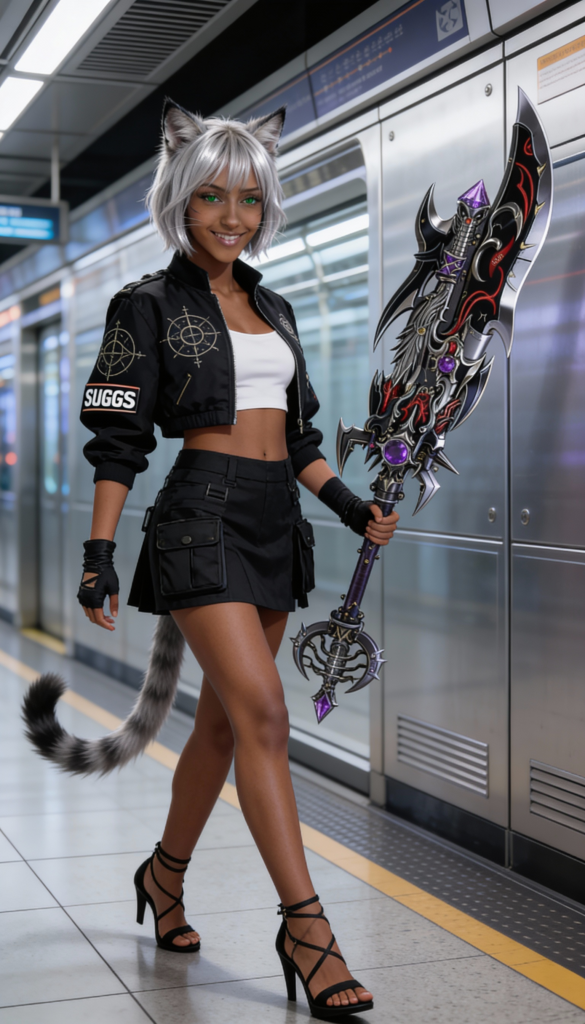
Qenedikta Brea stood near the gurney with her greatsword leaned carefully against a wall, as if she refused to bring that level of violence too close to the patient. Her wolf-like attentiveness wasn’t theatrical here. It was quiet. Ears angled. Nose twitching faintly as if she could smell fear and lies the way other people smelled rain.
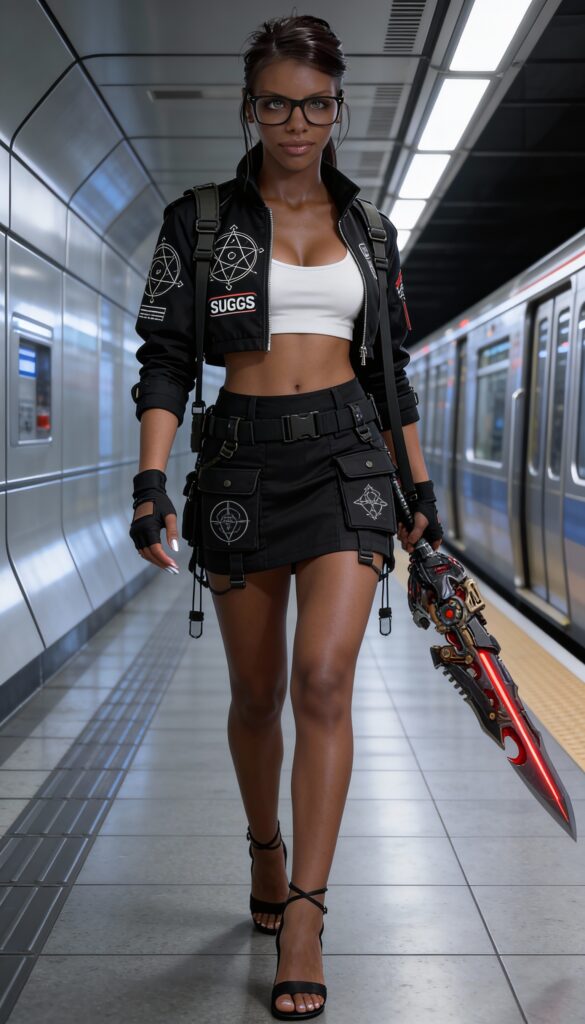
Tehftia Aureoleray stood opposite her with a wrist gauntlet lit, glasses catching fluorescent light. She looked like she’d already mapped the entire sequence of events and was now waiting for Layer Three to catch up.
On the gurney lay a girl—teenage, thin, clean enough to be suspicious, eyes open but flat. Her expression was not numb the way trauma victims often looked. It was… absent in a different register, like a person whose reactions had been edited out.
Ilshana approached, hands already gloved. “Vitals?”
Tehftia spoke softly. “Normal enough to fool a quick check. She never speaks. She never cries. She never asks for anything. When we found her, she was sitting in the corner of a bus terminal bathroom like she’d been placed there.”
Qenedikta added, voice low. “No fear smell.”
Ilshana leaned in and checked pulse, pupils, skin temperature. Everything was plausible. Everything was wrong.
“What do you mean, no fear?” she asked quietly, because she already knew the answer and didn’t want to hear it.
Qenedikta’s jaw tightened. “I mean there’s no human fear on her. Not suppressed. Not buried. Just—missing.”
Ilshana felt a familiar chill. She remembered Bay One. She remembered eyes that weren’t eyes. She remembered the building dimming as if reality itself disliked what had been brought inside.
She signaled. “Trauma Bay Three. Now. And keep the warded corridor active.”
Veldios moved to the door automatically, filling the frame like a promise. Tehftia typed something into her gauntlet and the Clinic’s internal network acknowledged with a quiet ping. Qenedikta lifted the girl with tenderness that looked strange on her predatory frame, then set her back on the gurney as the staff rolled them into the building.
As they crossed the threshold, the lights dipped.
Not a flicker. Not a surge. A pressure drop—the building reacting like a body recognizing a toxin.
Ilshana didn’t stop. She didn’t allow the staff to stop. “Keep moving,” she said, and her voice was calm enough that the panic stayed contained, even as her own skin prickled with the memory of wrong resonance.
Trauma Bay Three was brighter than the corridor, almost aggressively clinical, as if light could intimidate shadows. Ilshana hooked the girl to Suggs-Tech monitors. The machine readouts came back normal. For a breath, Ilshana almost believed the girl was simply dissociated.
Then the ECG line stuttered into a rhythm that didn’t belong to biology. A pause-spike-pause cadence like punctuation. Like code. Like a sentence.
Ilshana’s mouth tightened. She adjusted leads. Replaced them. Rebooted the module. The pattern persisted.
She cut the girl’s shirt open to attach additional sensors and froze.
Beneath the skin, faint markings traced along the ribcage—not tattoos, not scars, not bruises. Lines like veins deciding to become script. They weren’t as developed as the previous child’s sigils had been, but they were there, latent and growing, like a blueprint waiting for activation.
Ilshana felt her own heartbeat speed up, a rare betrayal of composure. She forced it down. “Call Liberalia,” she said. “Now. And page Meltina.”
A nurse moved fast. The doors hissed. The air felt tight. Veldios stood at the bay’s entrance like a sentinel carved out of refusal.
Meltina arrived first, moving in with her usual calm that made the room feel less alone. Her face markings—deliberate, disarming—made her look like she had already survived ugliness and now wore it as armor. She took one look at the girl and her expression changed just slightly, the way an expert recognizes a category of danger before anyone else does.

“Do we have language?” Meltina asked softly.
“No,” Tehftia replied. “Not one word.”
Meltina nodded and sat beside the gurney, posture loose, voice gentle. She spoke to the girl like she spoke to any victim: offering anchoring, offering safety, offering choice. The girl stared at her without blinking.
Meltina reached in—careful, subtle, not invasive in a theatrical way, but in the quiet, practiced way of someone who could find a person inside a storm. Ilshana watched Meltina’s face as she worked, because Meltina’s expression was often the first monitor that mattered.
Meltina’s eyes tightened. She inhaled sharply, just once, like she had stepped into a room with no air.
“There’s nothing,” Meltina whispered, and she didn’t mean silence. She meant hollow.
The girl’s hand snapped up and caught Meltina’s wrist with a grip too strong for her thin frame. Meltina didn’t cry out, but her entire body jolted as if a cold wire had been pressed to her spine. The girl’s mouth didn’t move. Yet Meltina’s face went pale.
Ilshana heard nothing. The room heard nothing. But Meltina flinched as if someone had spoken directly into her mind with words designed to cut.
Meltina tore her wrist free and stumbled back, breathing hard. Her voice came out low and shaken. “That’s not her,” she said. “Something’s using her like—like a radio.”
The word radio didn’t belong in Ilshana’s medical training. It belonged in the realm Draven moved through, the realm where people could become beacons for hostile resonance.
The doors slid open again and Liberalia St. Suggs entered with a sealed case and calm that looked like cruelty in the face of panic. Her scrubs were clean, gloves already on, eyes sharp with the focus of someone who hated incompetence and found predation offensive.

She took one look at the girl’s skin markings and didn’t bother with pleasantries. “Sample,” she said.
Ilshana drew blood. The fluid looked normal at first glance—dark red, ordinary enough to lull a careless mind.
Then it began to shimmer faintly under the lab light, metallic at the edges, as if the blood carried a second substance that didn’t want to be categorized.
Liberalia capped the vial and studied it. “It’s seeded,” she said quietly.
“Seeded with what?” Ilshana asked.
Liberalia’s gaze lifted to the girl’s eyes. “With the same kind of residue we saw in Bay One.” She didn’t say Draven’s name. She didn’t need to. “This is an attempted repeat.”
Tehftia’s voice was steady, but the edge beneath it was fear disguised as professionalism. “They’re testing the Clinic.”
Ilshana felt the weight of that sentence press into her chest. The Clinic wasn’t just a sanctuary. It was being treated like a target, like a laboratory environment for somebody else’s cruelty.
The alarms remained soft, pulsing like a restrained heartbeat. Outside the bay, the corridor lights dipped again. The building was reacting like an organism recognizing threat.
Ilshana looked at her staff. She saw competence in every face. She saw fear too, not because they were weak, but because they understood exactly how much they didn’t know.
And in that moment, Ilshana understood why Draven’s staff didn’t just respect him. They needed him. Not for comfort, but for classification. For recognition. For the ability to name something before it spread.
She activated the internal priority channel that bypassed public lines, the one Layer Five had protected with legal firewalls and Layer Four had warded against hostile echo.
“Control,” she said into the comms, voice level. “We have a seeded vessel. Similar signature to Bay One. Layer Two can’t find a psyche. Layer Three can’t trust vitals. We need Draven in Trauma Bay Three.”
She hated needing to say it. She hated what it implied. She hated the reality that even the best sanctuary has a ceiling, and sometimes the sky itself has to come down to hold it up.
The interval between the call and his arrival felt too long even though it was brief. Ilshana watched the girl’s chest rise and fall, watched the sigils under the skin pulse faintly like ink trying to become command, watched the monitors trace that unnatural punctuation in the heart rhythm.
Then the doors slid open.
Draven Endwriting stepped in with sleeves rolled, shirt creased, eyes tired in the way of a man who had fought something vast and then been asked to return to the intimate horror of a child used as a tool. He didn’t look like a hero. He looked like a necessary correction.
The room shifted around him. Not because he demanded it. Because everyone’s bodies recognized his presence as the moment where fear could become procedure.
Draven walked straight to the gurney and looked into the girl’s eyes. The emptiness stared back.
The girl smiled.
It wasn’t joy. It was recognition.
Draven’s face didn’t change. He raised his hand and placed two fingers near the edge of her gaze as if he were checking for fever, as if he were about to pluck a splinter out of the world.
Ilshana’s stomach tightened. She braced for glass to shatter, for alarms to spike, for the room to become a tuning fork again.
Draven didn’t fight. He didn’t perform. He evicted.
His fingers moved forward into the void of the girl’s eyes, and the air pressure in the bay dropped so sharply the lights dimmed in a smooth wave. The sigils beneath her skin surged and then tightened as if resisting being peeled out. Draven’s hand closed around something unseen, and he pulled.
The entity came out as a strip of distortion—resonance turned hostile—thrashing like a parasite ripped from a wound. It screamed without sound, and the scream manifested as fracture: a hairline crack spiderwebbing across a wall screen, a surgical tray rattling as if struck, a nurse flinching as the vibration tried to find an echo.
Draven remained unmoved.
Ardine Leodore appeared at the bay threshold like he had been waiting just outside reality’s curtain. Hood up. Expression solemn. Hands already prepared. He stepped forward and cast a Suggs-Logic ward not as spectacle but as architectural correction, rewriting the bay’s acoustic geometry so the entity couldn’t multiply itself through reflection.
The screaming distortion folded inward, compressed into silence, collapsing into a matte-dark marble that Ardine sealed into a small etched vial.

Draven handed it to him as if passing a sample to a lab tech.
“It wasn’t a demon,” Draven said, voice low. “It was a frequency. Don’t let it vibrate again.”
Ardine turned the vial slightly, reading it like a man reads a hazard sign. “I’ll rewrite the room’s geometry,” he replied. “It won’t find an echo here.”
The girl collapsed into ordinary sleep. Her chest rose and fell in a rhythm Ilshana could trust. The sigils beneath her skin faded into faint tracings, dormant ink without command.
The staff breathed again, not with relief alone, but with the grim awareness that someone had tried to turn their sanctuary into a beacon twice now.
Draven didn’t stay to be thanked. He didn’t offer comforting explanations. He turned, gave Ilshana the smallest nod—acknowledgment without softness—and left the bay like a man returning to a war he never truly leaves.
By midday, the Clinic had returned to its normal controlled chaos, because it had to. The shelter wing still fed people. The trauma ward still filled. Layer Five still fought paperwork wars. Layer One still hunted. Layer Two still held minds together with gentle insistence. Layer Four still did its controversial work in sealed rooms that smelled like antiseptic and ritual.
Ilshana moved through the afternoon like a person whose fatigue had been set on mute. She handled Seraphim patients as they came in, watching euphoria become rot, watching the antidote strip bliss into pain and pain into recovery. She coordinated with Liberalia on sample chains and with Meltina on psychological fallout. She listened to the screaming without letting her face become a mirror of it, because if she broke, the room would break with her.
Then the city tried to shut them down.
It arrived in the shape of two inspectors with clipboards and smiles too practiced to be human. They came with a police escort that looked bored and annoyed, like they were doing a routine job rather than participating in a sabotage attempt. Raude met them in the administrative wing with her calm elegance and legal knives, but Ilshana could feel the pressure in the building shift even before she saw them. The Clinic always knew when corruption entered its bloodstream.
Ilshana walked down the corridor and stopped at the edge of the confrontation. She watched Raude’s smile stay polite while her words pinned the inspectors to their own procedures. She watched the police officer’s eyes drift toward the shelter wing as if searching for something to justify cruelty. She watched the inspectors glance at the wards on the doorframes and pretend they didn’t see them.
One inspector’s gaze landed briefly on Ilshana, and Ilshana felt a chill like a faint echo of the earlier frequencies. Not the same distortion. Not as strong. But present enough to make her skin prickle.
She didn’t say anything. She didn’t create a scene. She logged it in her mind like a symptom: corruption wearing a face, and behind it, something else listening.
Raude won that skirmish the way she always did—by forcing bureaucracy to obey itself. The inspectors left with threats and schedules and muttered promises to return with “bigger oversight.” Raude’s smile didn’t change until the doors closed behind them. Then her expression hardened into something tired and sharp.
Ilshana met her gaze across the hall. Raude’s nod was smaller than before, and it carried a new weight: they had held the ceiling again, but the sky was pressing down harder.
Evening came, and with it, the Hunter team’s return.
Not all at once. Not with blood and drama. With children.
They arrived in a cluster—runaways pulled from a bus terminal, faces dirty, eyes wide, bodies tense. Some were too young to know the words for what they had escaped. Some were old enough to know too many words and didn’t trust any of them. Qenedikta stayed near them like a guardian predator, letting them see her and be afraid of her instead of being afraid of the world. Tehftia spoke softly into comms, coordinating transport, securing routes, making sure no cameras captured faces that didn’t need to become evidence in someone else’s case file. Veldios stood at the door like a wall again, because a wall is sometimes the kindest thing you can be.
Ilshana took them in. She treated scraped knees like sacred injuries. She treated dehydration like a battlefield wound. She treated fear like a medical condition that required patience and warmth and zero sudden movements.
One boy refused to release his backpack even while Ilshana checked his pulse. His knuckles were white. His eyes flicked constantly to exits.
Ilshana didn’t pry. She didn’t ask questions he couldn’t safely answer. She simply said, “You can keep it,” and watched his shoulders lower by a fraction, as if permission itself was medication.
Night settled over the Clinic in the way it always did—like an added layer of vulnerability. The city outside grew darker, and predators grew bolder. The Clinic’s lights burned warm in the atrium and bright in the wards, a beacon in the slums that could be mistaken for hope or mistaken for opportunity.
Ilshana thought about going home. She thought about her bed. She thought about silence.
Then a gurney rolled in fast, and the thought disappeared.
A young man—late teens, maybe—was brought in by Hunters with urgency in their posture. His skin was cold. His lips blue. His eyes half-open but unseeing. A paramedic’s voice ran through the facts, too quick, too clipped. “Found in an alley. Pulse was there, then gone. We got a flicker back, then nothing. We’ve been compressing.”
Ilshana’s body moved before her mind finished grieving the inevitability. “Bay One,” she said, because Bay One had become the place where normal medicine admitted its limits.
They worked him hard. Compressions. Airway. Drugs. Defibrillation. Suggs-Tech monitors screaming in controlled pulses. Ilshana’s hands moved with a discipline so deep it felt like instinct. She refused to let her face show panic because her staff needed her steady more than they needed her emotional honesty.
The young man’s heart did not return.
Ilshana felt the moment the room realized it. The air changed. Staff slowed. Hands hovered as if reluctant to stop because stopping makes the truth final.
Ilshana stared at the patient’s chest, at the stillness, at the way the monitor line became flat.
In a normal hospital, this is where you call it. This is where you pronounce. This is where you let death be the end.
This was not a normal hospital.
Layer Four existed upstairs and below and adjacent to all of this like a controversial engine that could make death negotiable in specific circumstances, under specific protocols, for specific reasons. Ilshana didn’t like relying on it. Not because she thought it was wrong, but because she knew what it cost. She knew that resurrection wasn’t free. She knew that bringing someone back forced the world to acknowledge how easily it had let them go.
Her eyes flicked to the boy’s face. He looked young enough to have been a runaway. Young enough to have been invisible. Young enough to have died unjustly because nobody with authority considered him worth the paperwork.
Ilshana swallowed.
She activated the Layer Four channel.
Liberalia arrived first, calm and lethal in her competence, scrubs pristine as if cleanliness itself were a weapon. Ardine arrived second, hooded and solemn, eyes carrying the weight of a man who understood what doors were being opened. Veldios arrived third, taking position at the bay entrance, because if something came with the returning, it would have to get through him.
Ilshana stood at the bedside as the boundary between medicine and ritual blurred into one unified act. She did not perform occult gestures. She did not pretend to speak the language Ardine spoke. Her job was the vessel. Her job was to make the body stable enough to accept return without tearing itself apart. She prepared lines. She positioned support. She watched Liberalia’s reagents—clear, measured, dangerous in their precision—mix with the subtle warded field Ardine established around the bay.
The air changed. Not dramatic. Just tight. Like the room had become a sealed container.
Ardine’s hands moved, writing geometry into the space so quietly the eyes almost missed it. Liberalia’s syringes moved, delivering counteragents, repairing what death had damaged at the biological level. Ilshana watched the patient’s chest, hands ready to compress again if needed, because she refused to surrender the body to ritual alone. She believed in integration, not replacement.
The monitors flickered. The lights dipped once, smooth and controlled, as if the building itself recognized the act and braced.
The boy’s mouth opened slightly. A faint breath entered him like a stolen thing.
His heart spasmed, then beat—once, weak and uncertain.
Ilshana felt her own throat tighten. She didn’t smile. She didn’t celebrate. She leaned in, eyes sharp, and watched for the signs that would tell her whether the return was clean.
The heart beat again. Then again. The monitor line rose into a jagged rhythm that looked like life fighting its way back into ownership.
The boy’s eyes fluttered. Tears leaked out without expression, the body reacting before the mind fully arrived.
Ilshana exhaled slowly, not relief, but controlled release. She looked at Liberalia and Ardine and saw their focus remain absolute. This wasn’t a miracle to them. It was a protocol. A correction. A refusal to let injustice be final.
When the boy stabilized, when his breathing settled into a rhythm that no longer required their hands to force it, Ilshana stepped back for the first interval in the night.
Her gloves were slick. Her coat had faint smears. Her shoulders ached. She felt as if her bones had been carrying the Clinic’s weight instead of her muscles.
She walked into the corridor and saw Draven standing at the far end.
He hadn’t announced himself. He never did. He stood like a man who had been awake for too long, eyes tired, sleeves rolled, posture heavy with the kind of burden that turns breathing into labor. He looked at Ilshana with the same cold, methodical attention he gave everything that mattered.
He didn’t say, I’m proud. He didn’t say, Thank you. He didn’t dramatize her.
He gave her a single nod.
It landed heavier than praise because it meant he had seen her hold the ceiling when the sky pressed down.
Ilshana’s throat tightened and she forced it back into professionalism. “He’s stable,” she said, voice low.
Draven’s gaze flicked toward Bay One, then back to her. “Good,” he replied, and the word carried an entire philosophy: stability is victory; survival is not negotiable.
He turned and walked away, because his work never ended and because he didn’t allow himself the softness of lingering.
Ilshana watched him go and felt, for a brief interval, the strange intimacy of this operation: a man who could evict hostile frequencies from a child’s eyes, and a clinic full of people who could treat rotting euphoria, anchor shattered minds, fight zoning wars, and bring the unjustly dead back into breathing.
Near the end of night, the Clinic quieted again—not because suffering stopped, but because exhaustion forced a lull. The shelter wing dimmed. The ward lights softened. Staff moved with slower steps, the kind that come after too much adrenaline.
Ilshana stood at a sink in the staff room and scrubbed her hands until the water ran clear, until she couldn’t feel the city on her skin, until the night’s residue stopped clinging to her nails. She looked at her reflection in the mirror above the sink and saw a woman who looked competent, composed, and slightly haunted. She didn’t look like a savior. She looked like a person who kept showing up.
She left the staff room and walked back into the ward, because morning would come again whether she was ready or not, and the Clinic would inhale, and the city would test it, and someone would need a hand that didn’t shake.
That was the truth of the Other Side of Paradise.
It wasn’t calm. It wasn’t clean. It was a building that refused to let the invisible be devoured without consequence, and Ilshana Galanova held its medical heart from morning into night, again and again, even when the world tried to prove that sanctuary was a lie.