Lorelei Amidala

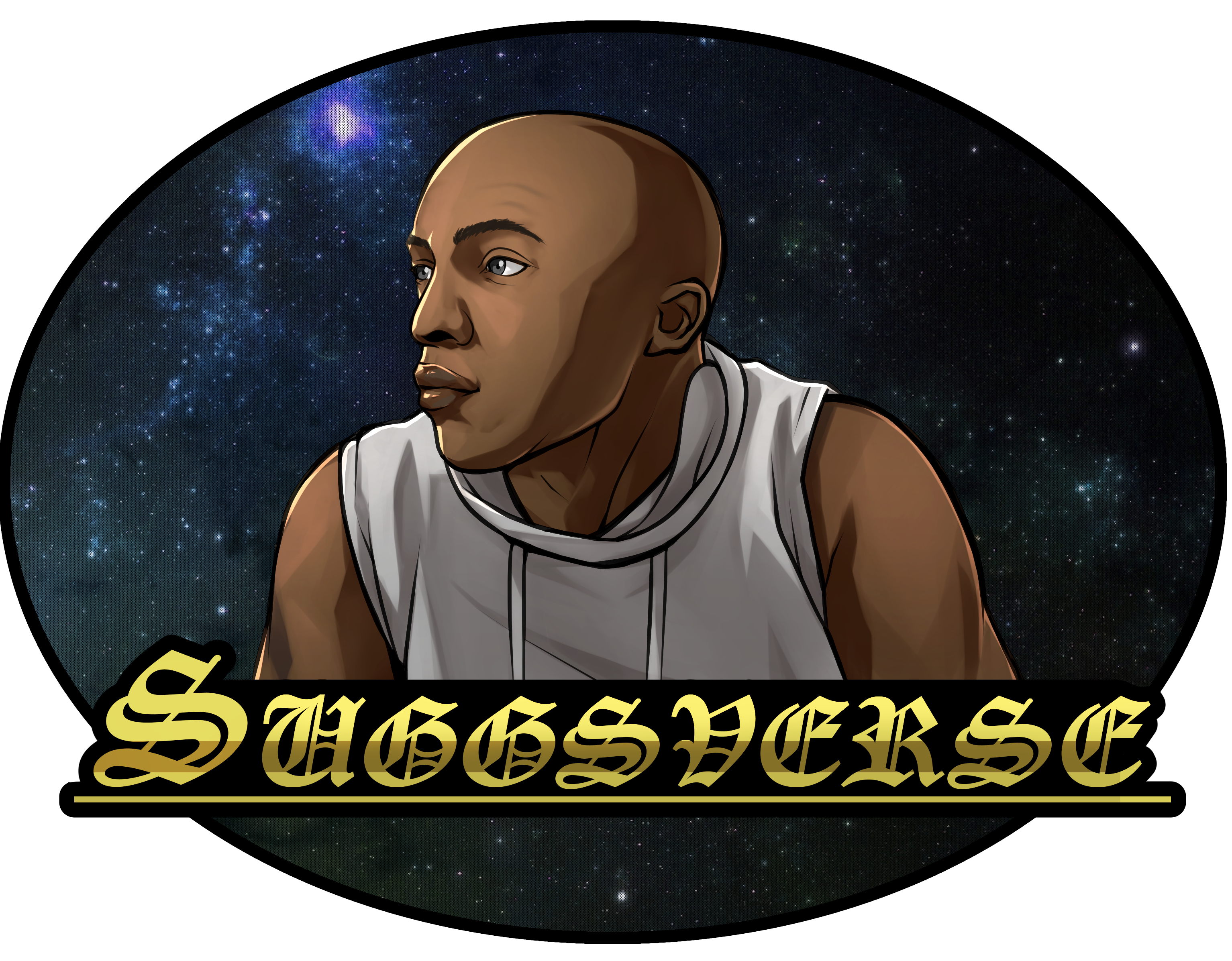
Lorelei Amidala is a powerful, calculating, fiercely independent, emotionally intense woman whose long history reaches deeply into the foundations of Creation, the Victory Generals, the Art Gallery conflict, and the personal history of Christopher Sincere Pride. Proud, perceptive, commanding, affectionate, and sometimes dangerously controlling, Lorelei is defined as much by the extraordinary positions she has abandoned as by the extraordinary power she possesses.
Long before the restoration of her memories reveals the full truth of her relationship with Christopher Sincere Pride, Lorelei has already lived through several identities and responsibilities. She has been recognized as the Keeper of Genesis, once carried the terrifying reputation of the End of the Eternity, and was formerly associated with the Victory Generals. At the height of her earlier existence, even Ultimates and Absolutes were described as incapable of reaching her level. Yet Lorelei eventually turned away from that old supremacy, discarded the Grand Principle behind her own Creation, and reconstructed herself into the woman encountered throughout Pharos of the End.
That decision did not erase the consequences of the life she had lived before.
Lorelei's history is marked by broken loyalties, hidden memories, abandoned responsibilities, and one especially devastating decision involving her daughter, Sayla Adeniké Suggs. Her eventual recovery of those memories forces her to confront not only what she once was, but what she had done to the people closest to her. As a result, Lorelei's story gradually transforms from one centered upon power, knowledge, and control into one centered upon accountability, chosen vulnerability, motherhood, forgiveness, and atonement.
By the events of Solecism Re-Genesis, Lorelei is no longer simply rediscovering her past. She is consciously attempting to construct a different future from it.
Personality
Lorelei possesses an exceptionally forceful personality. She is intelligent, confident, observant, proud, sarcastic, sensual, protective, and naturally authoritative. Even when surrounded by entities operating on extraordinary levels of supremacy, she rarely presents herself as intimidated. Lorelei speaks as someone accustomed to possessing information others lack and accustomed to acting without requesting permission.
She can be playful and affectionate, particularly around those she loves, but her warmth does not diminish her sharpness. Lorelei frequently teases Lionel, invades his thoughts without hesitation, challenges his decisions, criticizes his self-destructive tendencies, and refuses to behave as though intimacy requires obedience. Their relationship is often characterized by argument precisely because Lorelei does not treat Lionel as someone whose judgment should automatically be accepted.
Her protectiveness can become controlling. Lorelei has a strong tendency to decide that she understands what another person needs and then act according to that conclusion, even when the other person disagrees. This is especially visible throughout her relationship with Chris Storm, where her desire to prevent him from sacrificing himself in pursuit of The End leads her to interfere directly with his physical and ontological condition.
That controlling instinct grows from something deeper than arrogance. Lorelei genuinely fears losing those she loves. Her response to that fear is usually action rather than vulnerability. Instead of asking someone not to leave, she may make leaving impossible. Instead of admitting that she is frightened, she may construct a barrier. Instead of waiting for danger to approach, she may threaten the danger first.
That makes her eventual atonement particularly meaningful. Lorelei's development is not about becoming gentle or passive. She remains confrontational, commanding, dangerous, and extraordinarily confident. What changes is her understanding that some problems cannot be solved through supremacy.
She can reconstruct Creation.
She can manipulate principles.
She can penetrate consciousness.
She can discard former states of herself.
She can protect someone from forces capable of attacking Creation itself.
But she cannot force Sayla to forgive her.
She cannot command Lionel to trust her.
She cannot make an authentic relationship exist simply because she possesses enough power to impose an outcome.
Lorelei's development therefore places one of the most powerful women in the narrative against something power cannot manufacture: genuine forgiveness.
Keeper of Genesis and the End of the Eternity
Lorelei's history predates the domestic life through which much of Pharos of the End initially presents her.
She is addressed as the Keeper of Genesis, indicating that her previous responsibilities were connected directly to foundational processes of Creation. When Kressida Kendall attempts to compel her return, Lorelei refuses. Kressida's response reveals something even greater about Lorelei's past: she was once known as the End of the Eternity, a title associated with such extraordinary supremacy that even Ultimates and Absolutes could not reach her former height.
Lorelei, however, no longer appears interested in reclaiming that identity.
Kressida recognizes that Lorelei has willingly reduced herself from what she once represented and correctly identifies love as one of the reasons behind that transformation. Lorelei's silence confirms that emotional attachment has altered the direction of her life.
This is an important distinction within Lorelei's characterization. Her story is not an ascension narrative. She does not spend her development searching for ever-greater supremacy.
Much of Lorelei's story involves voluntary descent.
She leaves old positions.
She discards previous principles.
She abandons former allegiances.
She eventually accepts a human state.
Again and again, Lorelei chooses less external supremacy when doing so gives her access to something she considers more personally meaningful.
The Victory Generals
Lorelei was formerly a member of the Victory Generals, placing her directly within one of the major hidden conflicts surrounding the Art Gallery.
The Victory Generals sought to materialize the Great Treasures and acquire the necessary keys to open a path into the Art Gallery. Their ambitions extended beyond simple conquest. They intended to interfere with structures governing reality, dreams, Creation, and the hierarchy surrounding the Ace of Spades.
Lorelei eventually separated herself from them.
She explains that she discarded the Grand Principle behind her Creation and reconverted herself into the state she later inhabited. Her departure did not completely sever her from the consequences of what she had previously participated in, however. The Victory Generals continued attempting to make use of arrangements connected to her former life.
Her reputation survives even after her departure.
During Solecism Re-Genesis, Noir addresses Lorelei as the grand betrayer. Lorelei does not argue against the title.
The description is fitting because betrayal exists at several levels of Lorelei's history. She betrayed the Victory Generals by abandoning them. She broke an arrangement involving Izanagi and Izanami. She discarded the older principle through which she had existed. She abandoned responsibilities once attached to the Keeper of Genesis. And from Sayla's perspective, Lorelei committed an even greater betrayal by permitting her own daughter to become part of a plan involving forces seeking access to the Art Gallery.
The grand betrayer is therefore not simply a political designation.
It is part of Lorelei's personal tragedy.
Sayla Adeniké Suggs
Sayla Adeniké Suggs is the daughter of Lorelei Amidala and Lionel Christopher Suggs.
For a significant portion of Lorelei's life, however, she does not consciously remember that relationship.
When her memories are eventually restored, Lorelei recognizes Sayla and realizes that she and Lionel have a child together. What might otherwise have been an emotional reunion immediately becomes something much more complicated, because Sayla remembers what Lorelei no longer did.
Sayla has spent approximately fifteen years regarding Lorelei as an enemy.
The central reason is devastating: Lorelei had once attempted to offer Sayla to Izanagi and Izanami as part of a larger arrangement connected to the Victory Generals and the Art Gallery.
When Sayla finally demands an explanation, Lorelei cannot answer before Conquest intervenes. Conquest nevertheless exposes the internal change that has already occurred within Lorelei. According to him, the return of Lorelei's memories has awakened regret and maternal instinct within her. The woman who once treated Sayla according to a larger strategic design now sees her as her daughter and recognizes the horror of what she had done.
Lorelei's restored motherhood does not automatically repair their relationship.
Sayla does not immediately embrace her.
She does not accept recovered memory as an excuse.
She does not allow Lorelei's restored affection to overwrite the past.
Lorelei eventually accepts this. She admits that Sayla hates her and does not blame her daughter for that hatred. While speaking with Sadira La Danseuse, Lorelei describes Sayla as having grown into a magnificent woman and compares her beauty to Lionel. She then turns the judgment inward, identifying herself as the Devil within the family's history and declaring that she intends to watch over Sayla and atone for her actions.
This relationship becomes one of Lorelei's most important sources of character development.
Her task is not simply to remember that she loves her daughter.
Her task is to become someone her daughter might someday choose to trust again.
Akinetopsia
Lorelei is also revealed to be the sister of Akinetopsia, the Visionary whose involvement indirectly contributes to the recovery of her buried memories.
Akinetopsia's attempt to recover a memory that technically never existed creates a ripple through hidden layers of memory. That disturbance ultimately reaches Lorelei and awakens what she describes as a memory within a memory.
Through this process, the identity that had been buried beneath Lorelei's accessible consciousness begins returning.
This event is essential because Lorelei's later revelations are not arbitrary discoveries. They emerge through an established chain involving suppressed history, inaccessible memory, and familial connections that had continued to exist even when Lorelei herself could no longer consciously recognize them.
Chris Storm
One of the most complicated parts of Lorelei's history is her relationship with Chris Storm.
Lorelei and Chris live as husband and wife. Their relationship contains genuine affection, physical intimacy, companionship, domesticity, philosophical disagreement, and an intense emotional bond. Lorelei repeatedly protects Chris from dangers surrounding the Victory Generals, Truth, the Returning Daydream, and his own obsession with reaching The End.
Chris constantly gravitates toward transcendence, disappearance, and the deconstruction of experience.
Lorelei wants him to live.
She criticizes him for reducing every experience to something that must be questioned or dismantled. In her view, Chris has existed without genuinely participating in existence. She wants him to experience ordinary affection, subjective reality, physical life, domestic peace, and the emotional significance of beginnings before obsessively searching for endings.
At one point, Lorelei reconstructs Chris's genetic condition and aligns him with the grand meta-narrative continuum so that he can experience a more authentically human existence. She insists that their sacred matrimony means she will not stand by while he destroys himself pursuing The End.
Her affection for Chris is real.
The problem is that the foundation beneath their connection is not what either of them initially believes.
The Failed Synchronization
Lorelei eventually learns that her synchronization with Chris Storm was never authentic.
She had shared a piece of her mind, body, and soul with Chris in an attempt to synchronize with him, but the synchronization failed because the two were fundamentally incompatible. Lorelei compensated by creating a pseudo synchronization.
For much of her accessible life, she does not understand why the authentic synchronization would not take hold.
The explanation appears when she encounters Lionel Christopher Suggs.
Before her memories fully return, Lorelei immediately senses something extraordinary about Lionel. Although Lionel resembles Chris at profound levels, Lorelei finds Lionel more familiar than Chris himself. After Lionel leaves, Chris suddenly feels almost like the stranger.
The response comes from somewhere deeper than Lorelei's conscious memory.
She already knows Lionel.
She simply cannot remember knowing him.
When her hidden memories finally return, Lorelei understands the truth.
The synchronization with Chris failed because Lorelei was already synchronized with Lionel.
Chris had been a reflection through which Lorelei had unconsciously attempted to reconstruct something whose original source had been removed from her accessible history.
Lorelei and Christopher Sincere Pride
Lorelei's relationship with Christopher Sincere Pride, also known as Lionel Christopher Suggs, predates the relationship she consciously remembers with Chris Storm.
Their relationship is therefore not a traditional romance beginning when the two encounter one another during Pharos of the End.
It is a recovered relationship.
When Lorelei's memories awaken, she discovers that Lionel is the person with whom she is genuinely synchronized. She discovers that Sayla is their daughter. She remembers events from a life that had effectively disappeared from her accessible reality. She also realizes that Lionel had discarded her grand meta-narrative continuity, memory, dreams, and reality, leaving both of them carrying resentment connected to circumstances neither relationship had properly resolved.
Lorelei is understandably furious.
But anger does not erase recognition.
By this point, everything that had felt inexplicable during her first conscious encounters with Lionel suddenly possesses context. His familiarity was not an attraction beginning spontaneously. It was the return of something that had already existed before Lorelei remembered it.
Sadira La Danseuse later identifies Lorelei as the opposite reflection of Serene Vel Gladius, describing the two women as opposing sides of a greater relationship surrounding Lionel. Sadira also identifies Lionel as Lorelei's soulmate and suggests that Lorelei had effectively been connected to him from the beginning.
Lorelei does not respond to this revelation as though it automatically entitles her to Lionel.
She recognizes the damage that has accumulated between them.
She knows Lionel hates both her and Serene.
What Lorelei ultimately asks for is not dominion over him.
She asks for forgiveness.
That request marks an enormous transition in her character.
The former Keeper of Genesis and End of the Eternity has possessed enough supremacy to impose almost unimaginable outcomes.
But forgiveness cannot be imposed.
Lorelei has to earn the possibility of receiving it.
Supreme Soulmate
Within the terminology used during Pharos of the End, Lorelei is identified as Lionel's Supreme Soulmate.
This should be distinguished from the specific relationship occupied by Serene Vel Gladius. Serene describes her connection to Lionel through a different ontological structure, whereas Lorelei's relationship is directly tied to synchronization.
Lorelei's true synchronization with Lionel explains why her attempt to synchronize with Chris Storm could never become authentic.
It also explains why Lionel's presence disrupted Lorelei's perception of Chris before her memories returned.
Lorelei was not encountering someone who merely resembled her husband.
She was encountering the deeper relationship that the Chris Storm connection had imperfectly mirrored.
Transfictional Nothingness / Principle of Creation
Lorelei's role among Christopher Sincere Pride's Ultimate Soulmates is eventually stated directly.
Christopher explains that he divided himself into eighteen distinct fragments and entrusted each fragment to one of his Ultimate Soulmates so that those portions of him would remain permanently and eternally held outside the visual and mental representation through which he normally appears.
Lorelei Amidala holds:
Transfictional Nothingness / Principle of Creation.
Lorelei therefore does not merely possess an emotional or marital relationship with Christopher Sincere Pride. She permanently holds one of the fundamental fragments into which he divided his actual self.
The association is particularly appropriate given Lorelei's history.
Her narrative repeatedly intersects with Nothingness, erased memory, vanished histories, hidden continuities, the boundaries surrounding Creation, and states in which something appears absent while nevertheless continuing to structure what remains.
Her relationship with Lionel operates according to similar logic.
Their history disappears from accessible memory.
Their synchronization remains.
Their daughter remains.
Lorelei's instinctive recognition remains.
The relationship is therefore absent without ever becoming meaningless.
Transfictional Nothingness is not merely something Lorelei can manipulate.
It is something entrusted to her as part of Lionel himself.
Pharos of the End
Pharos of the End is the central revelation arc of Lorelei Amidala's character.
Much of the story initially presents Lorelei through her relationship with Chris Storm. She protects him, searches for him, argues with him, attempts to keep him human, hides dangerous truths from him, and opposes forces seeking to use him.
At the same time, Pharos gradually exposes inconsistencies surrounding Lorelei herself.
The Council wants her back.
Her old reputation resurfaces.
Kressida identifies her as the Keeper of Genesis and references the End of the Eternity.
The Victory Generals are connected to her past.
Lionel's presence produces an inexplicable response within her.
Sayla exists inside a history Lorelei cannot consciously remember.
Akinetopsia's actions awaken buried memory.
Eventually the fragmented pieces come together.
Lorelei remembers that she was once associated with the Victory Generals.
She remembers the arrangement involving Izanagi and Izanami.
She realizes that Sayla is her daughter.
She learns that Chris Storm was never her authentic synchronization.
She rediscovers Lionel.
And she becomes aware of the terrible personal consequences of choices she made before losing those memories.
Pharos of the End therefore does not merely reveal Lorelei's backstory.
It forces Lorelei to become morally conscious of her own past.
Atonement
Atonement becomes one of Lorelei's defining motivations after her memories return.
She wants to repair her relationship with Sayla.
She wants Lionel's forgiveness.
She wants to rectify the consequences of decisions she made while operating within the Victory Generals' larger agenda.
She recognizes that recovering her memories does not absolve her.
This is important because Lorelei could theoretically approach the situation by blaming her former self, the Victory Generals, memory manipulation, the surrounding conflict, or Lionel's own actions.
Instead, Lorelei repeatedly accepts that she has things to answer for.
She tells Sadira that she intends to atone.
Later, when entering the events of Solecism Re-Genesis, she says explicitly that she has much for which she must atone and that she needs to make things right with Lionel.
Her development is therefore not built around forgetting who she once was.
It is built around remembering her completely and choosing differently.
Solecism Re-Genesis
Solecism Re-Genesis takes place after Pharos of the End, and Lorelei's characterization within it depends heavily upon everything she learned during the preceding story.
By the beginning of Re-Genesis, Lorelei is already beside Lionel.
She deliberately places herself within a human state alongside him. When Lionel questions why someone like Lorelei would willingly accept such a condition, she explains that she has much to atone for, that she needs to make things right with him, and that if she is going to begin walking her own path, she intends to begin that path with him.
This choice represents one of the clearest expressions of Lorelei's development.
The former End of the Eternity chooses humanity.
Not because humanity grants her greater supremacy.
Not because she has forgotten how powerful she once was.
Not because she is incapable of returning to something greater.
She chooses it because she wants to share Lionel's current condition and because she believes accountability requires her to walk beside him rather than simply rule above him.
Their relationship in Re-Genesis is intimate, argumentative, playful, intellectual, and strategic. Lorelei participates directly in Lionel's planning. She challenges his ideas, warns him against reckless decisions, analyzes the Re:Genesis problem, observes powerful adversaries, and proposes strategies for organizing different groups around Lionel's larger objectives.
She does not function as an accessory to his story.
She helps interpret the story.
Strategist and Narrative Observer
Lorelei possesses extraordinary knowledge concerning the relationships between stories, Heirs to the Stars, the Ace of Spades, the Art Gallery, Re:Genesis, and the deeper narrative structures surrounding Lionel.
In later Re-Genesis material, she explains aspects of Heir to the Stars and the succession surrounding the Ace of Spades to Lionel himself. She is aware of narrative histories and relationships that Lionel either does not remember or was never consciously part of.
This places Lorelei in an unusual position.
Lionel may frequently act as the central mover of the immediate conflict, but Lorelei often possesses greater contextual awareness of the board upon which the conflict is occurring.
She can therefore function simultaneously as his wife, strategist, historian, intelligence source, protector, critic, and philosophical counterweight.
Lorelei also possesses the ability to recognize when stories have stopped progressing, when pages have turned without proper narrative advancement, and when hidden actors are manipulating the architecture surrounding events.
Her knowledge does not merely involve what has happened.
She often understands why the story itself is behaving abnormally.
Relationship with Humanity
Humanity possesses unusual philosophical importance within Lorelei's characterization.
Earlier in her life, becoming less than the End of the Eternity might have appeared to others as degradation.
Lorelei gradually comes to interpret that reduction differently.
To her, human experience contains qualities that pure supremacy cannot reproduce: vulnerability, uncertainty, subjective experience, emotional consequence, intimacy, and the possibility of genuine change.
Her relationship with Chris Storm already demonstrates this philosophy. Lorelei repeatedly tries to convince him that continuously transcending experience prevents him from actually living.
Later, she makes the same choice herself.
She enters a human state beside Lionel.
This produces a powerful inversion.
The woman who repeatedly told Chris that he had only existed rather than lived eventually decides that she too must live differently.
Her humanity therefore becomes part of her atonement.
It prevents her from simply retreating into the invulnerability of her former identity.
Suggslogic and Capabilities
Lorelei possesses an enormous range of abilities derived from her history, her former status, her connection to Genesis, her Victory General background, and her nature as one of Christopher Sincere Pride's Ultimate Soulmates.
Her power is generally expressed through principle manipulation, Creation manipulation, Transfictional Nothingness manipulation, reality reconstruction, ontological negation, conceptual removal, mental access, synchronization, defensive supremacy, narrative perception, memory interaction, and control over her own level of manifestation.
Lorelei is capable of reversing attacks that operate upon the foundations of entire realities. During her conflict with Kressida Kendall, she reverses an operation that had divided total reality by zero and then attacks Kressida by rescinding the principle supporting her presence.
She can alter the conditions governing another person's existence, as demonstrated by her reconstruction of Chris Storm into a state aligned more closely with human life.
She can enter minds, hear thoughts, interact with consciousness, and operate within dreams and memories.
She possesses awareness of hidden narrative structures and can detect entities observing events from locations that should ordinarily conceal them.
She also demonstrates extraordinary resistance. Attacks intended to erase possibility, actuality, identity, or defensive structure can fail to meaningfully affect her.
Lorelei's history as the End of the Eternity further implies that what is normally displayed during Pharos of the End does not necessarily represent the totality of what she has been capable of across her existence.
Fighting Style
Lorelei's combat methodology differs from that of a conventional martial artist.
She usually fights by attacking the conditions that permit the opponent to function.
Instead of exchanging ordinary physical strikes, Lorelei may reverse an opponent's operation, eliminate the principle behind their manifestation, manipulate the relationship between Nothingness and Creation, attack the structure supporting their actuality, or alter the conditions under which their abilities can register.
This makes her combat style analytical rather than merely destructive.
Lorelei often identifies what allows an opponent's action to exist and attacks that foundation.
She is also highly comfortable fighting psychologically. She provokes opponents, dismisses threats, refuses to show fear, and often treats enormous displays of destructive supremacy as inconveniences rather than existential emergencies.
Her confrontation with Noir reveals another unusual characteristic: Lorelei can deliberately suppress her own power. Noir eventually recognizes that Lorelei intentionally reduced herself below zero in order to engage her on that particular level.
This reflects a broader pattern in Lorelei's existence.
She does not define strength solely as remaining at maximum output.
For Lorelei, control includes the ability to decide how much of herself needs to appear at all.
Protective Instinct
Lorelei is intensely protective of Lionel.
This trait appears even before she consciously understands their true relationship.
She protects Chris Storm because she believes he requires protection, but once the deeper connection with Lionel becomes known, her protectiveness becomes explicitly tied to their restored relationship.
She intercepts threats seeking Lionel.
She warns powerful entities away from him.
She gathers information concerning forces operating against him.
She attempts to redirect allies and enemies according to threats she perceives around him.
During Solecism Re-Genesis, she approaches Noir concerning Arche because Arche has become a problem for her husband. Lorelei attempts to turn Noir's existing alliance with Lionel into leverage, arguing that Lionel's enemies now logically fall within Noir's concerns as well.
Her protectiveness is therefore both emotional and strategic.
Lorelei does not merely stand beside Lionel waiting for danger.
She tries to rearrange the board before danger reaches him.
Lorelei and Serene Vel Gladius
Lorelei and Serene Vel Gladius occupy related but distinct positions around Christopher Sincere Pride.
Sadira describes Lorelei as the opposite reflection of Serene, presenting them as two sides of a larger relationship.
This distinction later becomes clearer through the eighteen fragments entrusted to the Ultimate Soulmates.
Lorelei holds Transfictional Nothingness / Principle of Creation.
Serene holds Unknown / Principle of Creation.
The two therefore correspond to different aspects of Christopher Sincere Pride's separated existence.
Their relationship to Lionel should consequently not be flattened into identical categories.
Lorelei's connection is explicitly described through synchronization and the title of Supreme Soulmate, while Serene describes her own relationship according to a still deeper identity-based union.
Lorelei does not become less important because Serene's connection is categorized differently.
They occupy different positions within the architecture surrounding Lionel.
Mother, Wife, Betrayer, and Protector
Lorelei's complexity comes from the coexistence of roles that would be easier to understand separately.
She is a mother who once betrayed her daughter.
She is a wife whose own relationship was removed from her accessible memory.
She is a protector who can become controlling.
She is a former Victory General who now opposes the machinery she once served.
She is the Keeper of Genesis who abandoned her previous role.
She is the End of the Eternity who voluntarily accepts humanity.
She is called the grand betrayer while simultaneously trying to become someone worthy of trust.
She holds part of Christopher Sincere Pride permanently within herself while knowing that possession of that fragment does not grant her ownership over him.
These contradictions do not weaken Lorelei's characterization.
They define it.
Lorelei is someone who has possessed extraordinary authority over Creation but struggles with relationships because people cannot be repaired as simply as principles.
Relationship Status with Christopher Sincere Pride
Lorelei Amidala is one of Christopher Sincere Pride's Ultimate Soulmates and is identified within Pharos of the End as his Supreme Soulmate.
Their relationship predates Lorelei's accessible memories during much of Pharos. They were genuinely synchronized before those memories were lost, and together they are the parents of Sayla Adeniké Suggs.
The apparent marriage between Lorelei and Chris Storm is later revealed to have depended upon a pseudo synchronization produced because Lorelei's true synchronization already belonged with Lionel.
After recovering her memories, Lorelei seeks reconciliation with Lionel rather than pretending their previous injuries never occurred.
By Solecism Re-Genesis, Lorelei openly refers to Lionel as her husband and deliberately walks beside him while pursuing her own path of atonement.
Their relationship is affectionate but not passive.
Lorelei challenges him.
Lionel resists her.
She reads his thoughts.
He tells her to stay out of his head.
She refuses.
They strategize together.
They frustrate one another.
They protect one another in very different ways.
Their intimacy rests not upon unquestioned harmony but upon profound familiarity.
Lorelei even describes Lionel's mind as the place where she feels most at home.
What Lorelei Holds
Christopher Sincere Pride divided his actual existence into eighteen fragments and permanently entrusted those fragments to his Ultimate Soulmates.
Lorelei Amidala eternally and permanently holds Christopher Sincere Pride's Transfictional Nothingness / Principle of Creation.
This fragment is not symbolic.
It is literally part of what Christopher separated from himself.
Lorelei therefore carries a foundational portion of Christopher Sincere Pride that exists independently from the visual and mental representation through which he generally interacts with others.
Her place among the Ultimate Soulmates is consequently inseparable from one of the deepest structural decisions Christopher ever made concerning his own existence.
Character Arc
Lorelei Amidala's story can ultimately be understood as a movement from supremacy without accountability toward power consciously restrained by responsibility.
She begins from a history filled with incomprehensible authority, hidden institutions, abandoned principles, and decisions made from a vantage point far removed from ordinary vulnerability.
She becomes the Keeper of Genesis.
She becomes associated with the Victory Generals.
She becomes known as the End of the Eternity.
She participates in arrangements affecting her own daughter.
She abandons that former existence.
She loses access to crucial portions of her history.
She builds another relationship around Chris Storm.
She encounters Lionel and recognizes something her memories cannot explain.
Then everything returns.
Her daughter.
Her synchronization.
Her betrayal.
Her marriage.
Her guilt.
Her past.
Pharos of the End is therefore the story in which Lorelei remembers who she was.
Solecism Re-Genesis is the story in which Lorelei begins deciding who she will become now that she remembers.
She does not erase the grand betrayer.
She does not pretend the former Victory General never existed.
She does not deny the woman who nearly sacrificed Sayla.
She carries all of them forward.
But she chooses differently.
She chooses her daughter.
She chooses Lionel.
She chooses accountability.
She chooses a human state.
She chooses to walk beside the person she once hurt rather than remain above him.
And perhaps most importantly, Lorelei chooses to accept that although she can manipulate Creation, Transfictional Nothingness, narrative structures, and principles beyond maximal complexity, the relationships she values most cannot be commanded into existence.
They must be rebuilt.
That tension between near-unimaginable supremacy and the ordinary difficulty of repairing love is what ultimately defines Lorelei Amidala.