
Black Memoria II: Variables
Baltimore at dawn had a different kind of quiet. The city didn’t sleep — but it paused, like it was catching its breath before another day tried to break it. Draven stepped onto the porch as the first thin strip of light pulled across the street, his hoodie zipped tight, his eyes still carrying the night. The salt line he’d laid across the front walk had blown into scattered remnants — necessary work, but reminders always lingered.
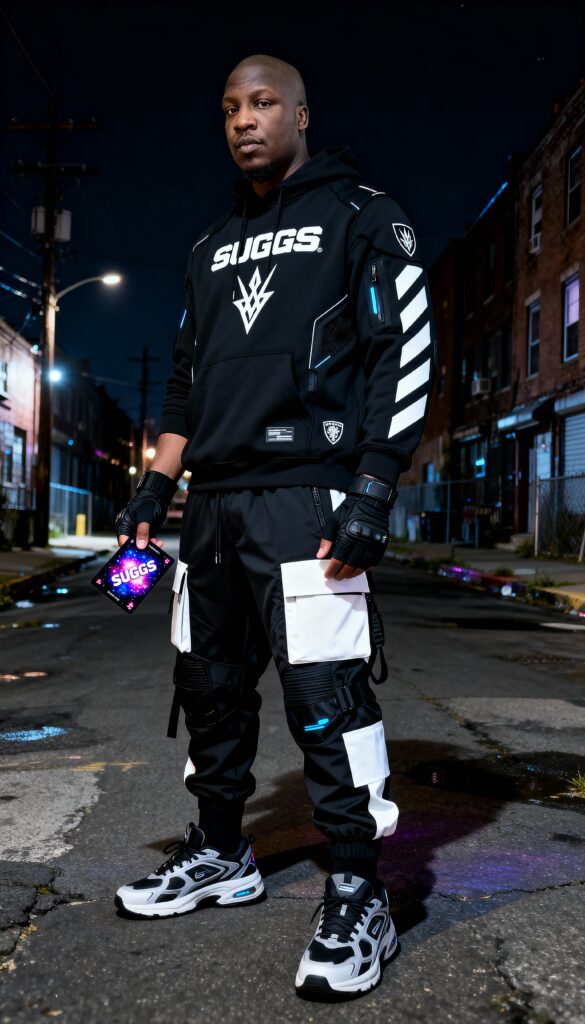
He checked the windows one more time. Liora curled under blankets, clutching her plush toy. Nyra sprawled diagonally like she was fighting the bed. Eira’s room stayed closed, but he caught movement inside — she was awake, pretending not to be.
He sent a text:
Leaving for a bit. Stepping out. Call me if anything feels wrong.
Three dots appeared instantly.
Eira: Define wrong.
Draven: Anything that ain’t normal.
Eira: You live here. Nothing’s normal.
Draven: Just lock the door.
A skull emoji was the last thing she sent before he stepped off the porch and into the day.
Hatshepsut lived on the clean side of Baltimore — the version built from glass and ambition. Steel towers and warm lobby lights. Snow shoveled before sunrise. The kind of place where monsters needed disguises.
Draven parked his black muscle car outside her building and watched the steam of his breath fade before heading in. The lobby floor was polished stone; the air smelled like citrus and quiet money.
He knocked lightly.
Hatshepsut answered the door in soft house-wear — not dressed up, not unstyled. Just natural. Effortless in a way that meant she didn’t have to try to be beautiful.

Her eyes traced him once — checking for wounds he hadn’t mentioned.
“You didn’t sleep,” she murmured.
“You always open the door with analysis?” he countered.
“Yes,” she said, stepping back to let him in. “Data doesn’t lie.”
Her place was all sleek lines and warm light — shelves full of scientific texts and weather pattern printouts, not pictures. The only framed photograph rested on a side table — Eira asleep on Draven’s chest when she was six, both smiling without knowing they were smiling.
Hatshepsut brushed past him, laptop open on the marble counter, screens filled with atmospheric models and numeric overlays. “The Midwest is having atmospheric anomalies,” she said, tapping one file. “Seismic sensors triggered without tectonic cause. Strain patterns indicating vertical displacement of soil.”
Draven frowned. “Earthquake?”
“No. Biological movement.”
She turned the screen so he could see. A grid of pressure readings, all spiking upward in a line that stretched across miles of farmland.
“This isn’t a tremor,” she whispered. “Something woke up.”
Draven’s jaw tightened the way it did when fear tried to disguise itself as readiness.
“Carmina said it’s nationwide,” he said quietly.
Hatshepsut’s expression didn’t change — but her fingers tightened around the counter. “Carmina’s right.” She took a breath. “And you’re going to go wherever this leads you.”
It wasn’t a question.
He nodded once.
She stepped closer, voice lower. “When did it become your job to save the country?”
Draven didn’t have an answer. So he just looked at her, and she read everything in what he didn’t say.
Her hand lifted, brushing the faint bruise on his neck he’d hidden under his collar. “Is this from your ‘small case’ yesterday?”
“Apartment exorcism,” he replied. “Nothing serious.”
“You say that,” she whispered. “But every time something scratches you… I ask myself how close you were to not coming home.”
Draven swallowed. “I always come home.”
Hatshepsut’s eyes flicked upward, meeting his fully.
“That’s what terrifies me,” she said. “You believe that.”
She didn’t cry. She never cried. But her voice carried enough restraint to silence him.
Eira emerged from the hallway wearing wide-leg jeans that dragged elegantly along the ground and a white asymmetrical top made of layers that drifted when she walked. Over it she threw on a dark jacket that grounded the outfit — older soul in young bones. She carried a patterned handbag like she’d practiced the movement from older girls she secretly judged.
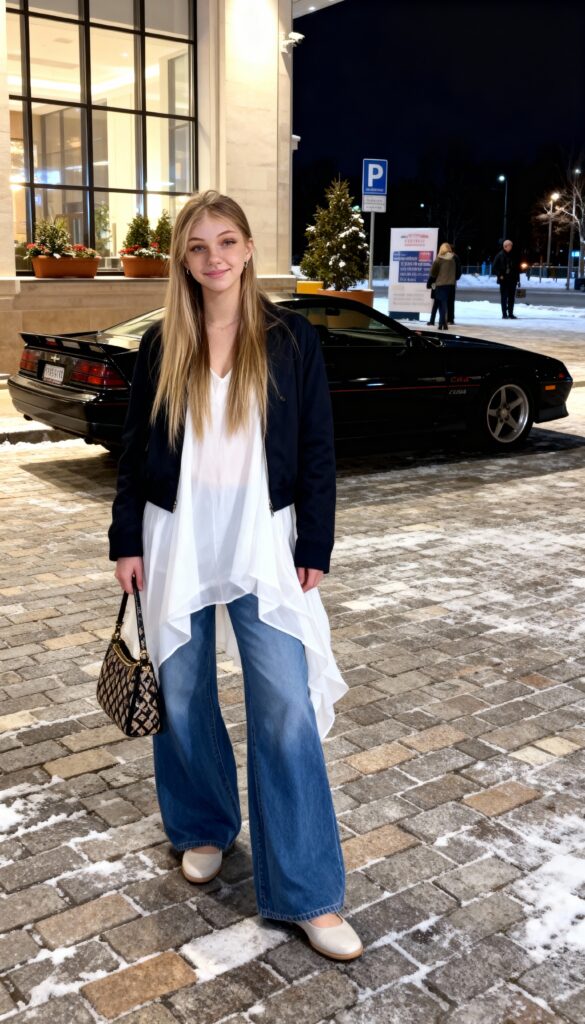
Her look said:
I care, but I need you to think I don’t.
“You ready?” Draven asked.
“I’ve been ready,” she said, adjusting her hair. Then, noticing Hatshepsut’s screen: “Midwest weather catastrophe or something?”
“Just modeling work,” Hatshepsut replied smoothly.
Eira rolled her eyes. “Right. ‘Modeling.’”
Draven chuckled. “C’mon. We’re doing a lesson.”
Eira followed Draven to the garage beneath the building. His car sat under white fluorescents like a black panther stretching — all horsepower and attitude.
“You stall, you walking home,” Draven warned.
Eira slid into the driver’s seat with teenage arrogance and a pinch of terror. “You got insurance, right?”
“I got patience,” he said. “Drive.”
Eira hit the gas like the pedal owed her money. The car jerked forward — Draven grabbing the dashboard — and she slammed the brake immediately.
“I panicked!” she gasped.
“You live in panic,” Draven said.
She glared. “That’s genetics.”
They tried again.
This time smoother. A few stops. A few curses. But she listened — and Draven watched her grow into the space behind the wheel, proud hidden behind critique.
“I want to go to college out of state,” Eira said suddenly, eyes fixed on the road.
Draven’s heart thudded. “Where.”
“Anywhere not here,” she said. Then quieter: “Is that selfish?”
Draven breathed out slow. “Wantin’ more than this city ain’t selfish.”
“But leaving you is.”
Draven looked at her profile — jaw set, eyes forward, the woman she was becoming punching through the girl she’d been.
“No matter where you go,” he said, “you ain’t leaving me.”
Eira blinked hard. “You promise?”
“I don’t break promises,” he said.
She nodded, satisfied enough to keep driving.
Later, Draven sat on Hatshepsut’s couch while Eira showered. The evening city lights glittered outside like a galaxy pretending to be orderly.
Hatshepsut sat beside him, closer than professional, further than convenience. Their shoulders brushed. Neither moved away.

“That big thing out there,” she said, staring through the glass, “I don’t know if the world can handle it.”
Draven glanced at her. “The world don’t get to choose.”
“You think you do?” she asked, turning toward him.
He didn’t answer.
Her eyes studied him — the bruise, the exhaustion, the commitment he carried like a burden stitched into bone.
“You’re not allowed to disappear,” she said, voice barely above a breath.
Draven reached out, fingers brushing hers — not hungry, not rushed. Just deliberate. Present.
“I’m not planning on it.”
Hatshepsut leaned her forehead gently to his. The contact small. Intense. A moment that said far more than mouths could shape without consequence.
Their hands remained joined — warm, steady — the space between them tightening without urgency, the kind of intimacy earned through co-parenting and survival.
No fireworks. No performance.
Just two people who refuse to let the world peel them apart.
From down the hallway, water shut off. A door opened.
The moment paused — not broken, just placed gently aside.
Hatshepsut pulled away first, but her fingers lingered longer than necessary.
“You should take her home soon,” she whispered. “Snow will hit harder by midnight.”
“And the world doesn’t wait,” he said.
“No,” she murmured. “But we do. Right here. We wait for you.”
Draven stood, pulling his hood back on. He looked at Hatshepsut — the mother of his child, the anchor he pretends not to need.
“For now,” he said, “keep watching the sky.”
“I always do,” she replied.
Eira reappeared, hair damp, bag slung over her shoulder, gaze flicking between them like she’d stepped into the middle of a quiet secret.
“Ready?” she asked coolly.
“Yeah,” Draven said. “Let’s get home.”
As they walked out, Hatshepsut called after him — soft, but sharp enough to cut through fear:
“Draven—”
He turned.
“Whatever’s waking up?” she said. “Don’t let it see you first.”
The snow fell harder as they drove. Eira played music quietly — something low and melodic — while streetlights streaked across the windshield. For a few miles, everything felt survivable.
Then Draven’s phone chimed on the console.
A message from Kev:
Yo. Something’s moving in Kansas. Real BIG. News is blaming weather balloons.
Another buzz.
An attached grainy video:
A dark silhouette dwarving silos…
…a curve like a rib pressing against the clouds.
Draven didn’t speak. He didn’t need to.
Eira saw the look in his eyes — and whispered,
“…that’s not small.”
“No,” Draven said.
“It’s not.”
The landscape of America was changing.
And Draven Endwriting had run out of normal.