Chapter 1 — The Corner That Breathed
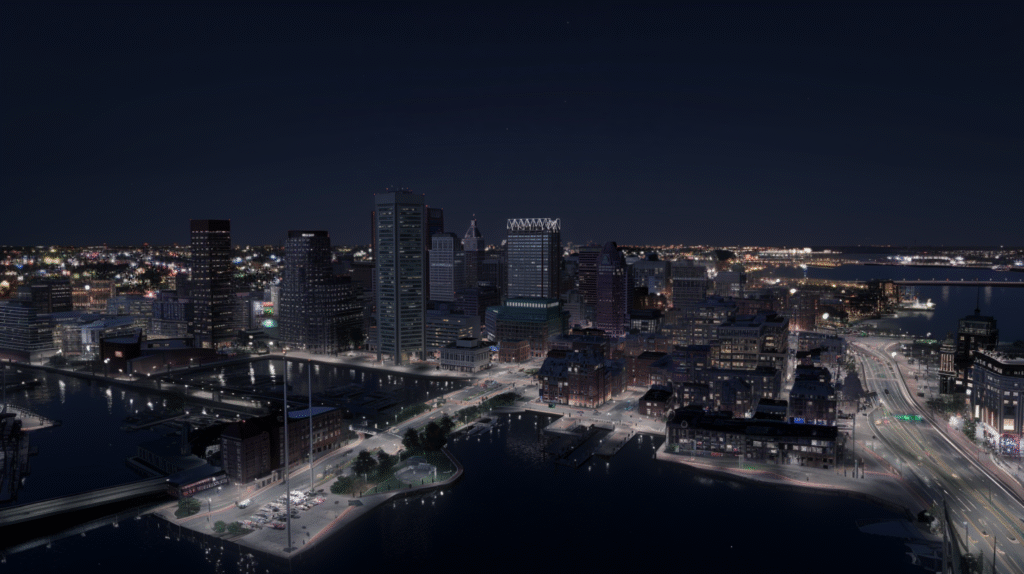
The night leaned heavy over West Baltimore, the kind of hush that sounds like a held breath right before a verdict. Streetlights flickered and smeared themselves across wet asphalt, and the rowhouses looked like teeth clenched against a cold they’d learned to expect. Draven Endwriting walked without hurry, shoulders squared in a coat that had seen every winter the block could invent. Beside him, Ronan’s silence ran mean and practical, the sort of quiet that carried solutions you didn’t brag about. Lucraen trailed a step back, eyes mapping angles and shadows like a man reading a prayer he no longer believed would save him.
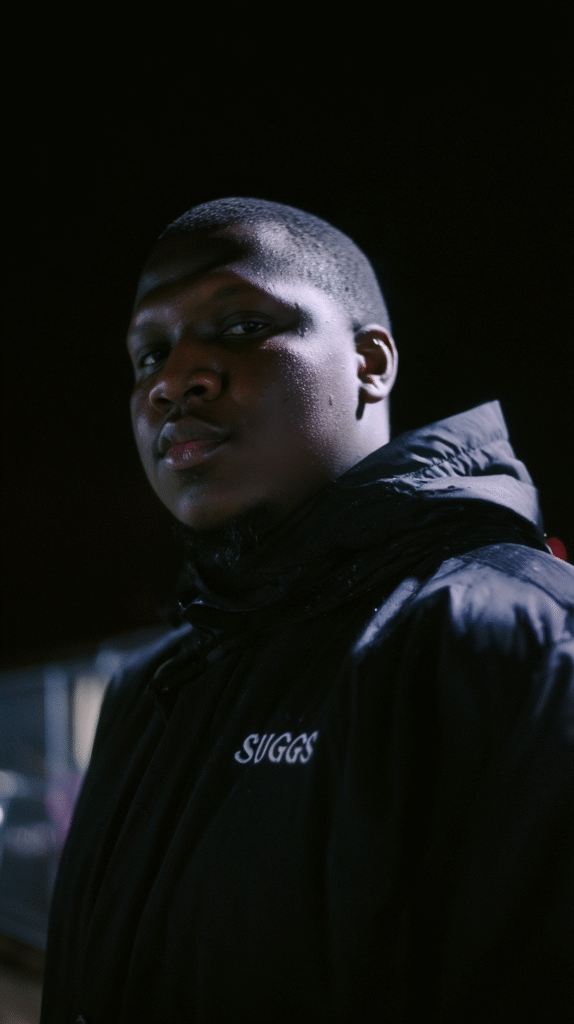
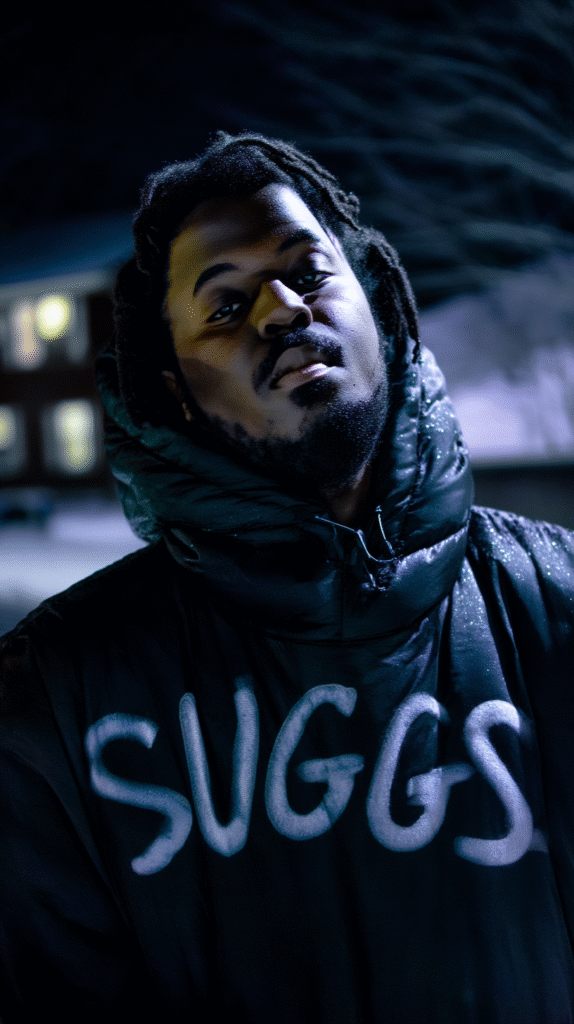
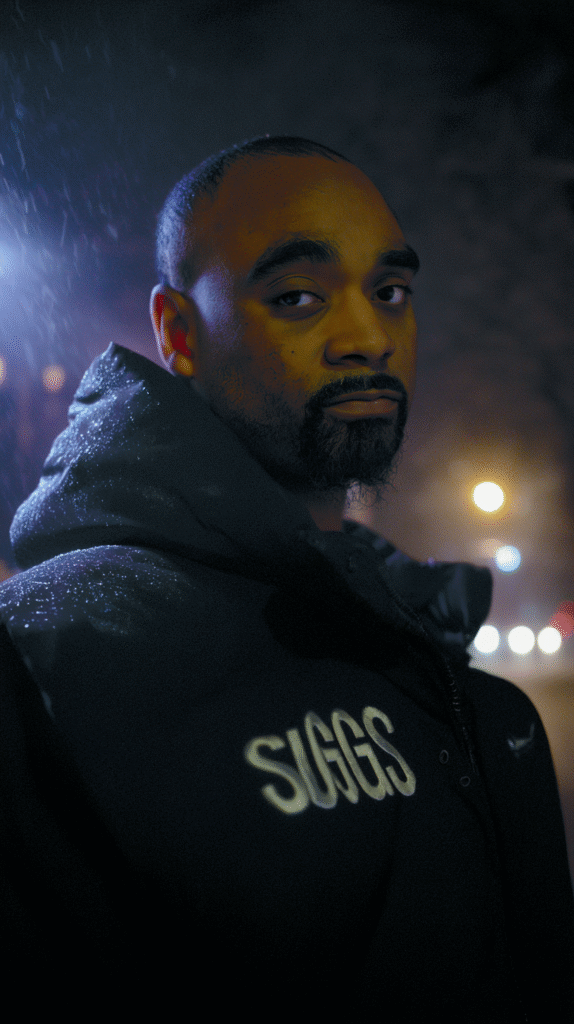
“Phone said she’s waiting on the stoop,” Lucraen murmured. “Kid’s been gone since time dipped into dusk.”
Ronan cut him a look. “Say ‘evening,’ Lu. Folks don’t need the poetry tonight.”
“Everything’s poetry,” Lucraen said, hands pocketed. “Even the way these corners repeat.”
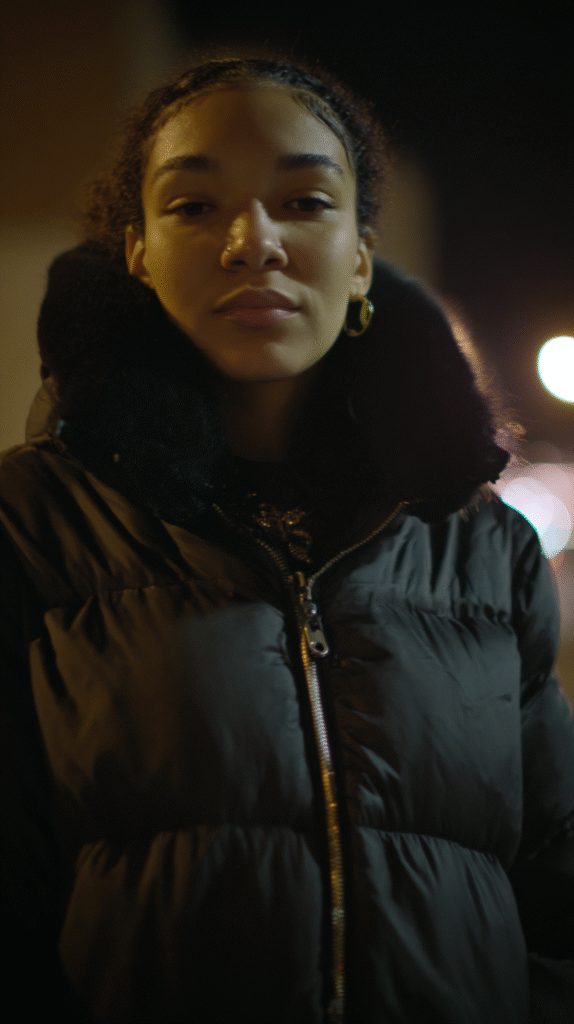
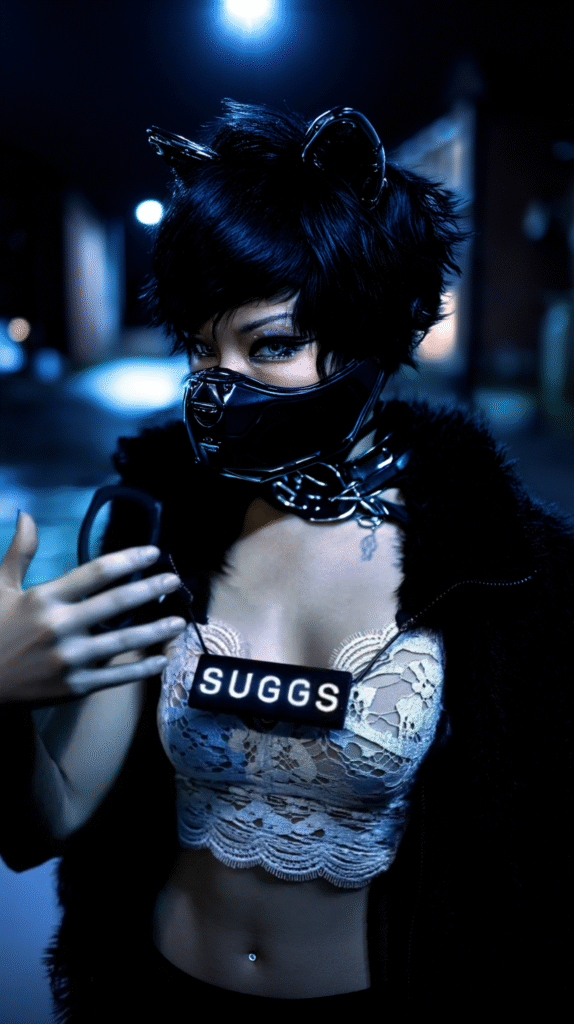
The mother sat where the steps broke and leaned like a cracked shoulder. She’d done that thing parents do when they’ve finished crying but the face doesn’t know how to stop looking broken: a stillness that had run out of options. “You the ones Serena sent?” she asked, voice tight. Seren Splinteredcrown watched from the curb, cat-mask dark against the night, the chain at her throat catching faraway red from a passing ambulance.
Draven nodded. “We’ll find what can be found,” he said. He never promised more. “Name?”
“Malik,” she whispered. “Fifteen. He went to the corner store for ginger ale, never came back. They said they saw him turn into the alley and—” She stopped like the sentence had cut its own throat. “—and the alley turned into him.”
Ronan’s eyes thinned. “How many said that exact thing?”
“Two,” she said. “And the old man across the street who don’t talk to nobody. He used to be a deacon. He said the alley was ‘breathing out words.’”
Draven glanced at Seren. She nodded once, already moving. “Corners talk,” she said, voice low through the mask. “We listen.”
They entered the alley like you step into a church when you’ve been away too long—warily, resentful at needing it. The brick was damp and humming. Not with electricity, but with something that made the air feel written. Lucraen touched a wall and jerked his hand back. “It’s warm.”
Ronan drew a piece of chalk and began to mark the ground without looking. He didn’t ask why the chalk never wore down. That was a question for another kind of life. “We’ve got repetition,” he said. “See the glass? Same bottle in four places. The alley’s folding into itself, the way we keep folding the same mistakes and calling them new hustles.”
Draven crouched, studying a smear beside the dumpster. It wasn’t blood. It was blacker, like a shadow had been dragged until it bruised. “Lucraen,” he said, “read me the heartbeat.”
Lucraen closed his eyes and breathed. “Three names under the brick, none spoken in this language. One begins with a V. Feels old. Feels hungry. Feels…like a cathedral collapsed into a mouth.”
Seren slipped past them, unzipped reality with the casual grace of someone removing a jacket. Not far—just enough to show what sat under the scene. Glyphs crawled along mortar lines. They weren’t symbols so much as intentions that had learned to spell themselves. “Same script I pulled off that basement on Franklin,” she said. “The one that hums when the rain turns sideways.”
Ronan finished the circle and struck a match. “Liora’s drawings,” he said quietly, surprising himself. “Didn’t we see this curve in one of them?”
Draven’s jaw tightened. “We ain’t talking about my girls in this alley.”
“That’s exactly why we’re talking,” Ronan said. “Because the alley already knows their names.”
The flame didn’t throw light so much as argue with the dark. The smoke rose and then flattened, pressed against a force that felt like monarch pressure—that heavy, wordless authority the city sometimes wore when it decided you were done. The chalk lines shivered, and a new shape wrote itself between them, as if an unseen hand had borrowed Ronan’s start and finished the sentence.
“Vor’dai,” Lucraen breathed, as if discovering the word in his own mouth. “That’s the V. I don’t know how I know, but I know.”
“What is it?” the mother called, still on the stoop, the courage in her voice already paying its own interest.
“History,” Seren answered. “And the receipt for it.”
Something moved deeper in the alley, not steps, not wind, not animal. A ripple, like a house taking a long, tired sigh. Draven felt it touch his bones like a note from a piano that never existed but still told you about rain. “Malik,” he called, voice steady. “If you hear me, answer. If you can’t answer, let something in this alley answer for you.”
At first there was only the wet hover of the night. Then a sound came back that wasn’t an echo and didn’t belong to anyone who’d ever learned to speak. It dragged syllables through gravel: Ma—li—k. The word came out wrong, as if the alley thought names were doors you could learn to unlock by trying the keys in different angles.
Ronan lifted his head, eyes gone far and sharp. “It’s testing the pronunciations,” he said. “It’s learning the children first.”
Seren stepped forward, the chain at her throat faintly trembling. “Let it learn me,” she said. “Let it learn the wrong woman.”
The alley narrowed as she walked, not with brick, but with intent—the way bad news narrows a day. In the middle distance, a bend that wasn’t there before offered her a choice that led to itself. Seren took it without pausing. She was good at choosing doors that didn’t wish to be doors.
Draven’s phone buzzed—three messages in a row. One from Liora: a photo of chalk dust on her palms and a caption, Dad, look what my hands won’t stop doing. One from Nyra: a sketch that looked like the alley if the alley had been taught geometry by a ghost. One from Eira, no text, just an audio clip. He pressed play. The soft sound of his daughter breathing, then the faintest whisper in the background, like a radio dialing a station no one built: We’re building the shape you keep walking into.
He swallowed. “You still think we leave the girls out of the alley?” Ronan asked, not unkindly.
“We keep them out,” Draven said. “We keep the alley out of them.”
Lucraen touched the new lines the chalk had grown. “The alley disagrees.”
The breathing got louder. Not air—this was the breathing of narrative and debt, the lungs of a city that had never been allowed to finish a sentence without being corrected. Brick flinched. A loose flyer for a lost dog curled into a spiral and began to turn in slow, resigned circles. The mother on the stoop began to pray, and the prayer came apart in her mouth like wet paper.
Seren reappeared, carrying nothing, eyes bright with what she never said out loud. “Two things,” she said. “One: the alley knows Malik’s jacket button count. Two: there’s a fold ahead that’s already eaten its own empty.”
“Meaning?” Ronan asked.
“Meaning it’s ready for dessert,” she said.
They pushed deeper together. Draven led, Ronan close, Lucraen a pace behind, Seren sliding along the left wall like a rumor trying to stay useful. The chalk circle they’d left should have remained behind them; instead, it skated along at their feet, a faithful coin tossed and tossed and never landing. When they glanced back, the stoop had receded into a tunnel of copy-paste houses, the mother a doll placed too far down a shelf to reach without knocking fifty other lives aside.
“Draven,” Lucraen said quietly, “there’s a hum you should hear.”
“I’m hearing it.”
“Not this one,” Lucraen said. “The one under it. The one that keeps asking whether possibility and nothingness are on speaking terms tonight.”
Ronan stopped them with a raised hand. “Listen.”
A small sound, lonely and stubborn, scuffed somewhere ahead. It was a kid’s sneaker trying to move against a floor that believed in gravity only as a rumor. Draven’s chest knotted. “Malik,” he said, and the alley returned Ma—lik like a lover practicing possession.
They rounded the bend that couldn’t exist and found a slice of pavement where the night was thicker, like syrup pooled under a table. A shoe floated there, not sinking, not rising, deciding. Draven reached—and Ronan grabbed his wrist. “This eats hands,” Ronan said softly. “Take anything else.”
Draven pulled the chain from Seren’s collar, and she let him without flinch. He looped it through the shoe eyelet, lifted easy, patient, as if coaxing a truth from someone who thought lies might taste better. The shoe came free, and with it a whisper of a voice that wasn’t a voice at all: thank—
Lucraen stared at the empty mouth of the shoe. “It’s not gratitude,” he said. “It’s trying out endings.”
They stepped back. The thick spot trembled, widened, then closed as if embarrassed. Somewhere behind them, the chalk circle broke itself into pieces and rolled under their soles like bones deciding which bodies to belong to next.
“We failed,” Ronan said, even voice, like a judge reading a sentence the law wrote centuries before he was born.
“Not yet,” Draven said, but it felt like the alley smiled.
They returned the shoe to the mother like bringing a flag back folded. She gripped it and made the kind of sound that should have peeled paint. “Is he—” She couldn’t finish.
Draven’s mouth worked once, twice. “He’s caught in a place that thinks it’s a street,” he said. “We can try again tomorrow.” He didn’t say if the street allows a tomorrow.
As they walked away, the city deepened its hush, and the snow that wasn’t forecast began to fall in dry, black flecks that left no mark on the ground. Seren tilted her head back and let them melt on her lashes. “Black glass coming,” she murmured. “Liora’s dream is practicing.”
Ronan lit a cigarette and didn’t smoke it. He just watched it burn like a tiny refusal. “How many losses make a wall?” he asked.
Lucraen answered without looking up. “As many as it takes to spell a name none of us want to say.”
Draven’s phone buzzed again. A text from an unknown number, no message, just a location pin seven blocks away and a timestamp that wasn’t a number—only a string of symbols that matched the chalk he’d watched complete itself. He showed it to the others. “Another call,” he said.
Seren’s eyes glinted behind the mask, something like a dare or a promise. “Another verse in the same hymn.”
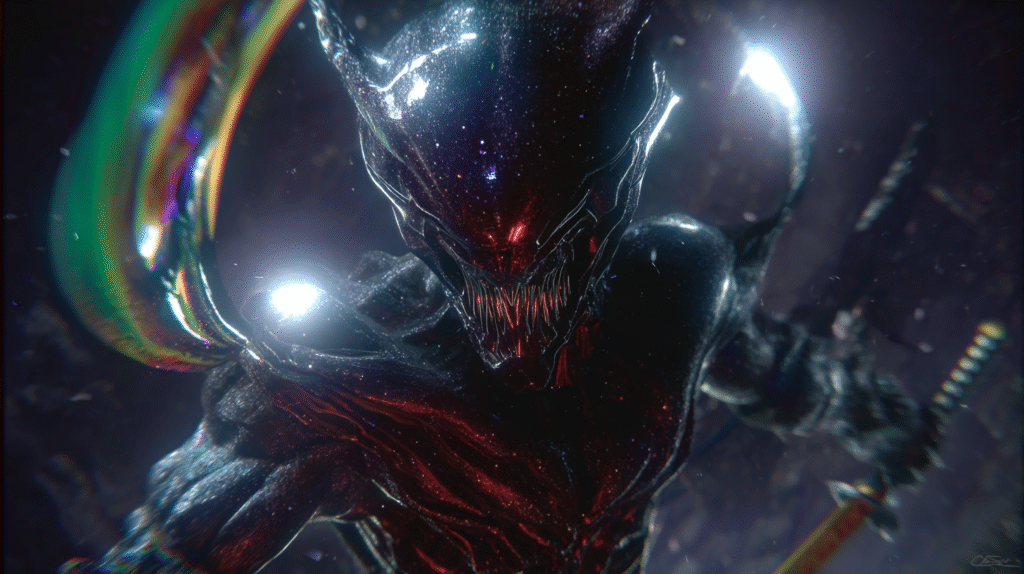
They moved on, four shadows threaded by a city that was learning to write them. Above their heads, the constellation no one had ever named rearranged itself a fraction—just enough for the night to notice. And in a place beneath concrete, older than maps, Avidyraen⧬Voimhyss rolled like a tide that believed in nothing but hunger, practicing the pronunciation of humanity, refining the syllables until extinction sounded beautiful.