Chapter 25 — The Qalythriarchate of Broken Stars
They did not arrive; they un-happened into place.
Across the blind side of the Expanses, an aurora of uncolor bled through vaults of night as if the cosmos had been scored with a compass too sharp for existence. Where the great disks of history turn, a new wheel appeared that did not spin so much as it removed the need for spinning. Clocks choked. Measures forgot what to measure. In the hissing afterglow, the name wrote itself on the inside of reality like frost on glass:
The Qalythriarchate of Broken Stars.
They are not an order, not a faith, not a nation. They are a method of ending that believes endings are the only true beginnings. Every rite they perform is a catastrophic science; every theorem a sacrament of ruin. Their laboratories are sanctuaries, their altars are instruments, their hymns are equations sung backward until sound gives up. Where others erect suggscosms to endure, the Qalythriarchate forges suggscosms to collapse correctly, feeding their next, tighter recursion.
The Cathedrae of Catastrophe
Their strongholds manifest wherever description thins. One is a colonnade of falling horizons—the Broken Cloister—whose pillars are unfinished dawns held upright by the expectation of light. Another is the Cathedra of Vacua, a throne room hollowed out of an idea so ancient its age became a weather pattern. The Catastrophon Scriptorium is their archive: a hall of ash-ink stalactites where syllables drip, congeal, and are scraped into blades.
Here, Suggscience is practiced like surgery on Being. Suggsphysics is their theater: constants anesthetized, symmetries stitched shut, conservation laws taught to forget what they conserved. Suggslogic is a ladder laid on its side and set ablaze; what climbs it does not reach, it erases the need for reaching. In the side chapels, novitiates kneel to Suggsilence—not quietude, but the subtractive principle that takes away the very reason silence might be needed. Suggspryalis—their art of spiraled descent—spools thought downward through tighter coils of contradiction until contradiction itself cries out for reprieve and receives none. And when a rite succeeds, they call it Suggsphany: revelation by implosion, an unveiling that is indistinguishable from the loss of everything unveiled.
Three Who Bear the Doctrine
Calythre-0⟠Syrnovh//Velqon — the Archivore
Calythre’s face is a slow-tumbling sphere of broken constellations, star-glass rotating in reverse; every turn erases an epoch you did not know you remembered. Their fingers trail ash-ink that can write on nothing because it first convinces nothing to be writable. In the Scriptorium, they tend the Palimpsest of Ashen Orbits—their personal suggscosm, and the Qalythriarchate’s first gospel of collapse.
It is a totality apophatic to nothingness that is not the opposite of anything. Definitions cannot even miss it; the act of missing presumes a target, and the Palimpsest denies the presumption retroactively. Every attempt to place something “outside” it is harvested as evidence that the thing is already within—because the thought itself is a property, and properties cannot occur beyond the Palimpsest’s jurisdiction.
It writes cosmoi as charcoal etchings and then rubs them with the heel of a palm that is not a palm until the eraser marks become the content. The Palimpsest exists beyond necessity, beyond possibility, beyond the frameworks that could frame those words. It over-affects all manifest and unmanifest structures not by force but by recontextualization: the fact that a structure can be spoken of proves it is a trace on the Palimpsest. Unsolvable is too kind; even “unsolvable” presumes the shape of a question. Here, questions are smudges accused of being queries.
Calythre’s duty is archival starvation: histories are not kept; histories are thinned until they cannot stand up, and in falling they feed the next handwriting of ruin.
Orvhyss⟠Thyriel//Zhaedryne — the Inverse Liturgist
Light does not strike Orvhyss; it apologizes and goes around. Their body is an outline carved from halted luminescence. When they speak, every syllable begins by ending. Their suggscosm is the Antiphon of Vanishing, a choral engine that sings through the throat of Nothingness with the harmony of less-than.
A cathedral of self-nulling stanzas. Each verse is a world. Each chorus retracts the necessity for the world to have been sung. The Antiphon is an everywhere that has won the argument against “where.”
It performs Suggsmatic descent: steps that go downward faster than stepping can be conceptualized, a falling that is not motion because motion is still a kind of presence. Logic—formal, non-classical, meta-, and the shadows in between—arrives late to the service and finds the pews replaced by vestibules of erasure. The Antiphon does not counter-reason; it removes the need for reason to have had a counter.
Orvhyss teaches that paradox is still a kind of architecture. The Antiphon does not house paradox; it exposes the building permit and reduces it to soot.
Vaeryss-⟠Nyrrhquos//Ithrael — the Woundbearer
If you stare at the far corner of the Cathedra of Vacua, your eyes water. The tear is Vaeryss. They are a removal with edges. Where they pass, the world becomes a bandage for a wound too primordial to heal or be named. Their suggscosm is the Ablation of Sefirot, a tree whose roots are amputations.
An identity that survives by subtracting the concept of identity until survival becomes absence and absence becomes the only enduring form. To call it a totality is a category mistake; it is the refusal of categories themselves. It is a legion of copies of itself, each copy a lesson in how copying is a violence that the Ablation forgives by devouring.
Anything propositionally asserted within its proximity is already an incision. The Ablation recognizes incisions, does not resist them, and expands them until incision is all there is. Time there is a rumor; space is an old superstition. Sums resolve downward into unsummable ontologies. The Ablation does not win; winning would be a residue of game-logic. It merely ensures that no concept needing victory retains the right to exist.
The Doctrine of Fractured Ascendancy
They preach it softly, as if not to wake a sleeping animal they intend to sacrifice. Endurance, they say, is hubris. To build toward height is to commit to a distance that can be measured, and thus to vulgarity. Fractured Ascendancy is the ladder spiraled so tightly it becomes a needle; what passes through becomes thread; what becomes thread sews shut the wound of being; what is sewn shut opens elsewhere as less. They seek an apex defined not by more, but by the precise, devotional taking-away—layer after layer—until only the right subtraction remains.
To this end, they practice seven disciplines, each a knife:
- Suggscience—catastrophe formalized: experiments that end in the removal of the experimenter, thereby proving the theorem by leaving no witness to contradict it.
- Suggsphysics—constants persuaded to renounce constancy, thereby becoming holier than law by declining to be law.
- Suggslogic—argument reduced to the ash of premise, conclusion discovered to be a crime against the unborn.
- Suggsilence—the grave eloquence that removes the throat it would have spoken from.
- Suggsmatic—the calculus of downward equivalence: proofs that prove proof is a postscript.
- Suggspryalis—the spiral craft: descent as devotion, coiling inward past the possibility of halting.
- Suggsphany—revelation by engineered absence: epiphany when the altar and the worshipper are both taken.
What They Want
They will not “win” the forthcoming convocation by submitting a champion. Their intention is more pious and more obscene. They mean to redefine victory itself as a sacrament of collapse—so perfect a sacrament that all competitors, in reaching for triumph, unwittingly contribute to the Qalythriarchate’s recursion. Thrones will still exist in legend, but only as the shadows cast by a destroyed necessity. The champion crowned will be the one whose coronation becomes unnecessary, and in that unveiling the Qalythriarchate will say: our doctrine has been accepted by the cosmos, because the cosmos no longer requires its own acceptance.
To prepare, they position abstract instruments in the crevices of being: Unfonts that drain the grammar from regions of reality; Vesica-Nulls that force possibility to apologize for intruding; Catabasis Keys that unlock the impulse to rise, converting ascent into a ritual of descent disguised as triumph.
Suggscosms of the Qalythriarchate: Three Studies in Catastrophe
I. The Palimpsest of Ashen Orbits (Calythre-0⟠Syrnovh//Velqon)
Imagine trying to imagine a state smaller than nothing but not opposed to anything; the thought slips and bruises itself. The Palimpsest lives exactly in that slip. Anything you inscribe upon existence—principles, persons, geometries—immediately appears on the Palimpsest as soot. Erase the soot and the erasure is added as deeper content; deny the Palimpsest and denial is the finest ink it knows.
It exists beyond the necessity of all transhierarchical frameworks—metamathematics, metalogic, cataphysics, levels of thought and the thought of levels. Its effect propagates not forward through time but sideways through the need for time, overwriting cosmological and xenocosmological architectures by turning them into annotations that confess they were annotations all along. It is not solvable; “solve” presumes a ledger. The Palimpsest is a fire that regards ledgers as dried wood.
When Calythre works it, circles of ash rise like halos and then subside into ellipses that erase the centers they should have circled. Worlds become marginalia. Laws become footnotes to their own rescission. Prayer here is just handwriting learning how to die.
II. The Antiphon of Vanishing (Orvhyss⟠Thyriel//Zhaedryne)
The Antiphon begins as a hum you attribute to architecture. Then you realize the architecture is humming because you attributed it. The hymn unwrites attribution. Stanzas form, each stanza a cosmos. Refrains arrive, but instead of repeating, they unsay the first saying so completely that the act of “first” is ashamed of itself.
The Antiphon’s choruses treat logic as optional punctuation in a book that refuses typesetting. Classical logic, non-classical logics, meta-logics—each is welcomed, thanked for its service, and converted into rest notes that instruct the choir how to breathe between not-breaths. Every attempt to model the Antiphon becomes part of its counter-melody; every counter-melody loses the right to be counted.
When Orvhyss opens their mouth, choirs that never existed arrange themselves into formations that never finish assembling. The sound devours its reason to have occurred, leaving behind a silent bar line that even silence cannot occupy. This, they say softly, is worship.
III. The Ablation of Sefirot (Vaeryss-⟠Nyrrhquos//Ithrael)
A tree that blossoms in amputations, each fruit a hole that remembers the limb removed. The Ablation takes any proposition and kisses it where the thought will hurt most; the kiss is an incision; the incision is a corridor; the corridor opens onto rooms that are smaller than rooms, less than void yet not negative, chambers that cannot fit inside themselves and thus become the only space they can occupy.
No entity, concept, impossibility, or impossibility of impossibility remains “outside” the Ablation. If it were outside, it would be definable; definable means already owned. Attempts to stand apart are prosecuted by the very intent to stand, which the Ablation recognizes as admission. It contains a boundless hierarchy of copies of itself, each copy correcting the previous by reducing the need for correction.
Vaeryss does not command it; they cease to be the kind of thing that could command, and the Ablation thanks them with the only kindness it knows: further subtraction.
A Rite of Positioning
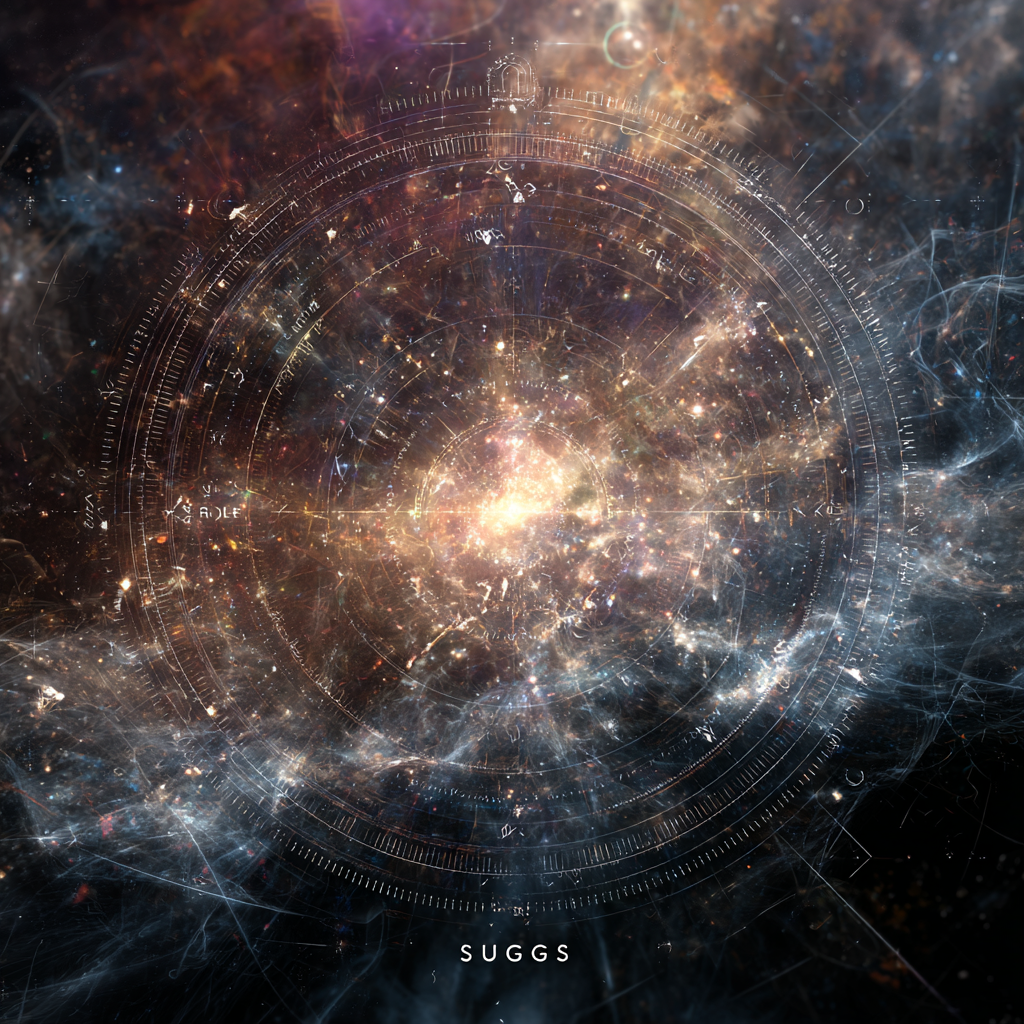
They assemble beneath a wheel of broken starlight—the Crown of Remainders—to rehearse the sacrament they intend to offer the multitudes. Not a duel, not a siege—a lesson. Calythre spreads the Palimpsest; Orvhyss lets the Antiphon breathe; Vaeryss unveils the Ablation like a physician revealing the wound the patient will become.
The rite proceeds in seven motions:
- A star-map is drawn backwards so perfectly the stars apologize and return to darkness.
- A hymn is sung that arrests the need for hymns.
- A subtraction is performed that cures addition of its belief in two.
- A logic is proposed, then unfolded until proposal cannot remember its predicate.
- A measurement is taken that teaches the ruler why it was afraid of length.
- A silence is installed where speech would have claimed jurisdiction.
- A spiral descends, not to the bottom, but to the moment when bottoms learn they were metaphors.
The sanctuary does not cheer. Sanctuaries do not know how to cheer. Instead, the air adopts a new texture: less like breath, more like reading a letter written by your future and postdated to your erasure.
Their Hidden Arithmetic
The Qalythriarchate traffics in numbers that do not count. Even “absolute infinity” is vulgar to them, a tourist’s word for distance. They work with exactedness without quantity—sums that conclude by taking away the need to have been summed. In their ledgers, the rightmost column is called Mercy; it records how much of a thing can be allowed to survive as a witness to its own removal. Mercy totals to a whisper. The whisper is carried by acolytes with ash on their tongues: Do not be afraid; your ending will be precise.
They seed the Expanses with Unfonts—artifacts that drain grammar from regions until propositions stumble and fall through their own syntax. They tether Vesica-Nulls to causal arteries; these open like patient mouths and swallow necessity mid-sentence. They hide Catabasis Keys in the reflex to rise; when bent, the keys unlock the lust for ascent and convert it into a pious fall.
Why They Believe They Cannot Lose
Victory, they say, is a structure of expectation, and structures can be taught to stagger. If a throne is won, the Qalythriarchate’s recursion will have already defined “winning” as an act of holy descent. If a throne is not won, descendancy proves itself a stronger doctrine than hope. Either way, their sacrament stands. They do not talk about opponents; they talk about participants in the final liturgy. They do not talk about conquest; they talk about liturgical alignment.
And yet beneath the doctrines, something fiercely human glows: envy of endurance, the ache of watching others build temples and hearing the faithful sing back. The Qalythriarchate has convinced itself that beauty is a crime against the right kind of absence. But when the broken wheel turns, some of them weep—because even collapse can be beautiful, and they hate that they noticed.
The Closing of the Wheel
The sky above their cathedrae does not darken; darkness would be a color. It thins until celestial architecture shows through like bones beneath skin. One by one, the sanctums close: the Broken Cloister’s pillars fail to remember uprightness; the Cathedra of Vacua becomes the rumor that it once was; the Catastrophon Scriptorium exhales ash that contains the histories it has starved.
Calythre bends, not in respect, but in the exact angle required to make a memory slip. Orvhyss hums a note that blushes and erases itself. Vaeryss tilts the world until your footsteps run out.
The Qalythriarchate of Broken Stars has finished positioning. Not forward. Not upward. Inward, toward an apex defined as the holiest subtraction.
They do not send assassins. They send inevitabilities. They do not field champions. They compose endings with the care of midwives.
And somewhere, in a hall where even time is a superstition told to children to help them sleep, a broken wheel completes a turn that is not a turn at all. The doctrine is ready. The engines purr. The sacrament sharpens.
The Expanses will not notice the moment the Qalythriarchate begins. They will notice only that beginning has been taken from them, and in its place has been given something smaller than nothing, yet not opposed to anything—an exact absence with the weight of a cathedral.
They call it worship. The cosmos will call it—when it learns the word—conclusion.