
Glass Historia II: The Canticle of Black Peace
The sermon did not end when the stream cut to black. That was the first lie the world told itself, because the world always tries to fold the unbearable into a neat conclusion, as though horror needs a curtain call. What actually happened was quieter and worse: the bishop’s voice remained, not as sound, but as an afterimage inside attention itself, like a melody that refuses to stop once it has learned the shape of your nerves. People who had watched the broadcast did not all remember his words accurately, yet their bodies remembered the permission inside them. Their shoulders loosened in grocery aisles. Their eyes lingered on strangers with a new kind of suspicion that felt righteous. Their prayers changed texture, becoming less request and more accusation. A doctrine had been installed. Not everyone would obey it, but everyone who had watched had been forced to host it, even if only as irritation, even if only as a small itch behind the thought that said, maybe mercy is a trick.
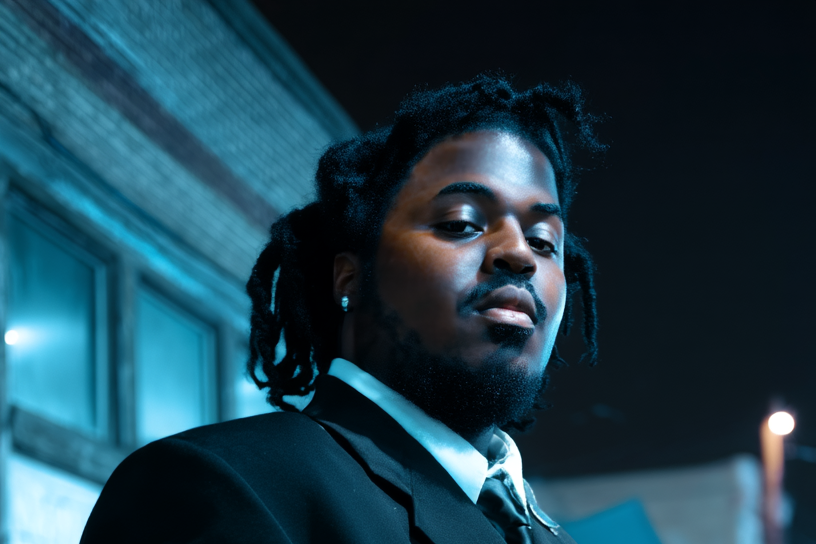
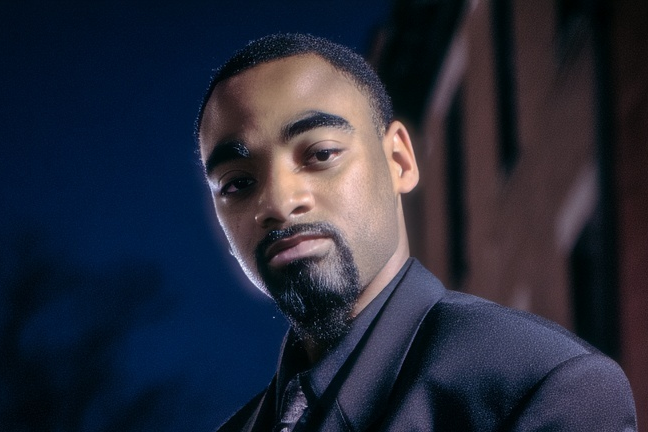
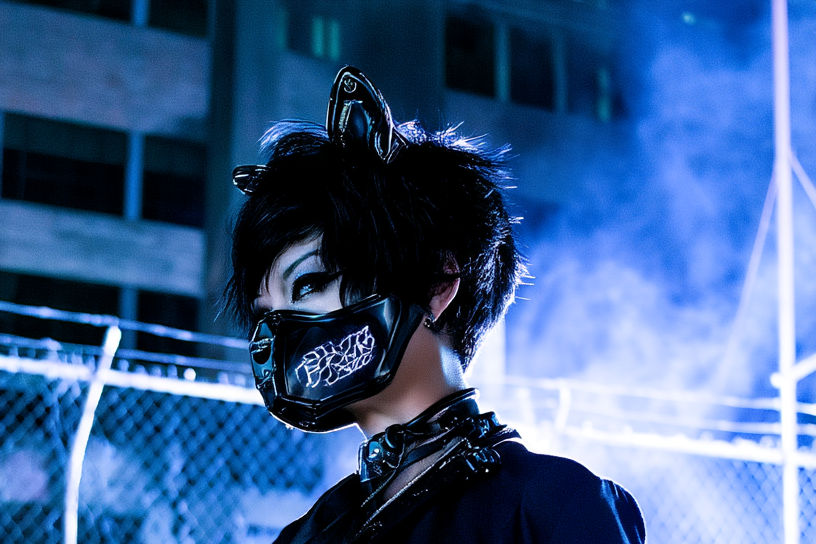
In the Clear Card Clinic’s back room, the air tasted like recycled light and old paper, but the screens made it feel like a command center in a war that refused to name itself. Draven Endwriting stood in the same posture he had held through the broadcast, hand braced on the desk, shoulders squared, expression disciplined into neutrality. He did not speak because speech would make the moment real, and he had learned, long ago, that reality can be bait. Ronan’s gaze moved across different feeds with a surgeon’s calm, tracking patterns in the way a neurologist tracks microseizures—small spikes that forecast something catastrophic. Seren watched without moving much, and the stillness she carried was not fear but appetite turned inward, the way a blade waits in a sheath and pretends it isn’t listening. Lucraen remained near the wall, coat falling clean, face angled slightly away from the screens as if he wanted to deny them the pleasure of seeing him flinch, even while the shadows on the footage kept trying to remind him what churches can do when they decide to stop being houses of consolation and become houses of selection.
The first wave didn’t arrive as spectacle. It arrived as ordinary failure that could not be explained by ordinary weakness. A hospital in the Midwest reported that its sterilization protocols were intact, its logs showed no tampering, yet infections appeared in surgical wards as though cleanliness had been rewritten into an aesthetic rather than a law. A water plant on the Gulf line flagged readings that did not match any known contaminant profile; the water looked the same, tasted the same, but people who drank it described a strange internal chill and a sudden, irrational conviction that they were already doomed. A freight yard on the East Coast lost its inventory records in a way that did not resemble deletion or corruption; the data behaved as though it had never existed, as if the very permission to confirm what was where had been revoked. None of it was loud enough to be called apocalypse, but all of it was intimate enough to be called violation, because the systems people trusted weren’t breaking like machines—they were breaking like promises.
Then the feeds began to show the second wave, and that one carried a face.
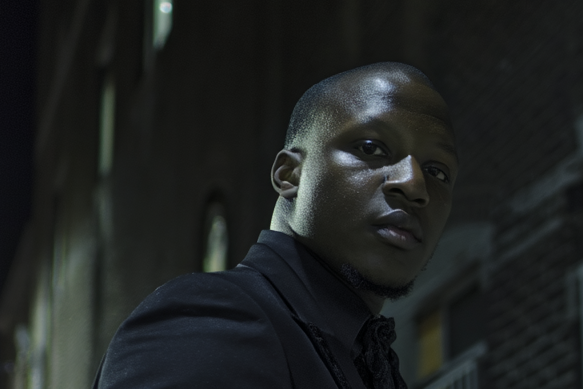
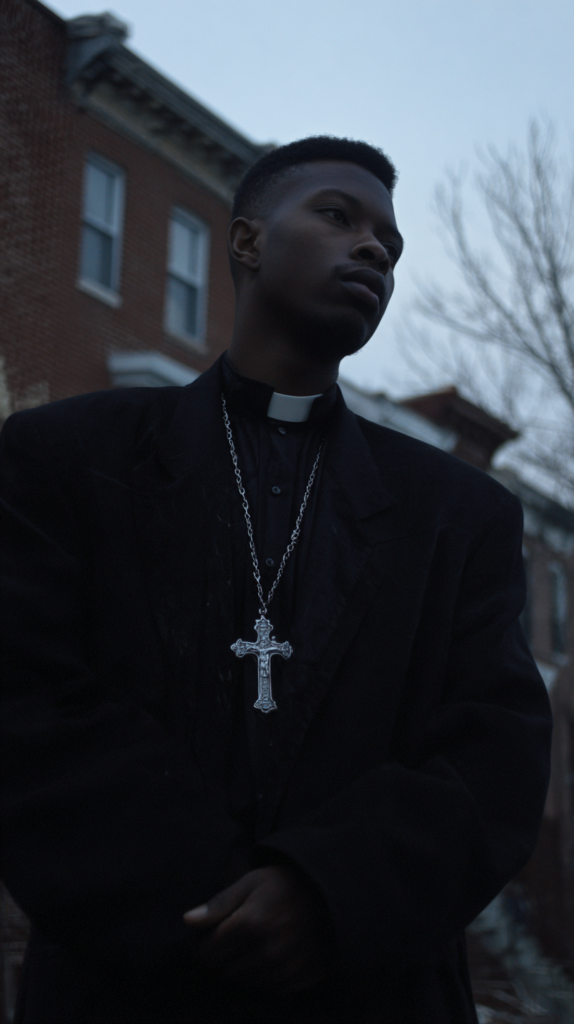
The bishop appeared again, not in a sanctuary, but in the open streets, standing beneath streetlights that made the pavement shine like wet stone. He wore the same black suit and clerical collar, chain draped down his chest, ornate cross resting against his sternum as if it belonged to him more than it belonged to any god. The camera angle was handheld, shaky, too close, and the closeness made it feel like he was standing in the viewer’s personal boundary rather than on a public sidewalk. Behind him, people gathered in a loose mass, some with phones raised, some with hands clasped as if they were afraid to unclasp them and discover what their fingers might do on their own.
He wasn’t shouting. He wasn’t calling for riot. He wasn’t preaching about vengeance. He was smiling in a way that made cruelty look like compassion, and that was the most contaminating element on the screen, because anger can be resisted, but tenderness used wrong is harder to reject without feeling like you are rejecting relief itself.
He began to sing.
The hymn was not familiar, yet it carried the shape of familiarity, the way certain chord progressions can evoke childhood even in people who never learned music. His voice was steady, low, almost gentle, like a lullaby meant for an exhausted nation. But under that lullaby was a second frequency, too subtle to be called sound and too sharp to be called silence, a kind of tonal geometry that seemed to press against the edges of perception. People near him swayed. Some cried. Some laughed without humor. The crowd did not behave like an audience; it behaved like a body being tuned.
As he sang, the street behind him began to change. A man argued with a stranger, and the argument escalated with an unnatural speed that didn’t feel like emotion; it felt like activation. Someone shoved someone else, and the shove became a pileup, and the pileup became a stampede, not away from danger but toward it, as though the crowd was hungry for the moment where restraint finally snapped and revealed what was underneath. Glass shattered somewhere off-camera, a sharp crack that sounded like a cue. A person fell, and the fall became the center of a widening circle of violence that didn’t need an ideology beyond this: enough.
Draven watched the footage with a stillness that was almost offensive, because it refused to give the horror the satisfaction of reaction. Yet inside him, the analysis was relentless. He could feel the way the bishop’s song was acting like a kind of permission-engine, turning grievance into sacrament, turning exhaustion into justification. He could also feel the more private sting: the recognition that people wanted to be released from responsibility, and that release was being sold as holiness. Draven’s vision had always required people to choose healing, to choose discipline, to choose a better tomorrow through painful effort. This bishop was offering something easier, something seductive: the right to stop trying and call that stoppage truth.
Ronan’s voice was controlled, clinical. “Listen to the compression,” he said, eyes fixed on the waveform display he’d pulled up. “The vocal band is carrying a structured pattern. It’s not just music. It’s an instruction set riding the hymn.”
Seren’s head tilted slightly, as if she could hear the second frequency without needing the graph. “He’s praising while the street is becoming a slaughterhouse,” she murmured, her tone not shocked, but razor-calm. “That’s not coincidence. That’s liturgy.”
Lucraen’s fingers tightened once at his side, then relaxed again, the movement so subtle it almost didn’t happen. “Saint Meridian made people confess so they would feel clean,” he said softly, not taking his eyes off the bishop’s face. “Necessary Peace is making people bleed so they’ll feel honest.”
The next feeds widened the scope. This wasn’t one street. This wasn’t one city. This wasn’t even one nation. It moved like a contagion that didn’t travel through breath or touch but through attention, through screens, through the human impulse to witness the forbidden and then pretend witnessing was passive. People watched. People replayed. People shared. And with every share, the hymn gained another throat.
In Mexico, a different feed showed a church door—an old wooden door, iron-banded, the kind that once promised refuge—now painted with the corrected-cross symbol, its lines too precise to be graffiti. A crowd gathered outside, shouting questions at priests who didn’t understand what had happened to their sanctuary. Then the camera jerked upward, and the viewer saw something worse: a thin crack in the sky above the bell tower, a bright fracture like a stress line in glass. The crack pulsed once, and the air around it shimmered as though the manifest expanse itself was trying to remember what rules it had agreed to follow.
In South America, a live clip from a marketplace showed people running not from a visible attacker but from their own reflections. Mirrors in stalls began to show scenes that weren’t present—streets that looked like the same streets but soaked in ruin, bodies lying wrong, mouths open as if screaming in silence. A woman covered her ears even though no sound was coming from the mirror. A man smashed the glass, and instead of shattering into harmless pieces, the shards glowed faintly and embedded themselves into the ground like seeds. Where they landed, the pavement darkened, as if the manifest expanse had been bruised.
The clergy on local news channels tried to interpret it. Politicians tried to contain it. Social media tried to meme it into something manageable. Nothing worked, because the doctrine was not trying to win debates; it was trying to collapse the very hunger for debate into a single conclusion: the world deserves to fall, and you deserve to stop caring.
Another clip surfaced, and it felt like the world’s version of a forbidden tape, the kind you shouldn’t watch because watching is participation. It wasn’t labeled with a warning. It didn’t need one. The title was simple, almost comforting: Necessary Peace Broadcast. The moment it played, viewers described the same reaction: a pressure behind the eyes, a sickly clarity, the sensation that the world’s cruelty was finally being spoken aloud without excuses. The video itself was not a montage of gore, yet it contained something more corrosive than gore: it contained the logic that made gore feel inevitable. It showed hospitals with empty beds because staff had walked out, convinced that healing was a scam. It showed grocery shelves stripped bare not by poverty alone but by panic that felt justified. It showed a child’s prayer whispered into a corner and answered only by the hum of a refrigerator, and the loneliness of that unanswered prayer hit harder than any scream.
People who finished the broadcast didn’t always become violent. Sometimes they became quiet, and that quiet spread like oil. They stopped feeding the homeless because they decided hunger was honest. They stopped checking on neighbors because they decided loneliness was truth. They stopped believing in mercy because mercy began to feel like a story told by people who had never been forced to test it.
The bishop reappeared in another street feed, and this time the scene was unmistakably soaked in chaos. Sirens wailed somewhere, their pitch distorted as if the air itself was bending the sound into mockery. Streetlights flickered. Cars sat at strange angles, doors open, alarms blaring. The pavement was dark with wetness that reflected red and blue in smeared streaks. People ran in the background, not in organized evacuation, but in that frantic, animal scatter that happens when a crowd realizes it has become its own predator.
And the bishop kept singing.
He lifted his hands toward the broken sky, palms up, as though receiving a blessing. His eyes shone with something that looked like devotion until you understood devotion can be directed toward collapse as easily as toward hope. He sang praise not to a savior but to the unraveling itself, to the idea that the world could finally stop pretending it was moral. His voice rose, and the crowd around him began to chant between breaths, not words, but syllables that felt like a code.
The sky above the street shuddered.
At first it looked like an optical illusion, like cloud cover shifting. Then the camera caught the fracture clearly: a line across the night—thin, bright, impossibly sharp—like a crack spreading across a pane of black glass. The fracture widened in slow increments, not ripping open like a wound, but separating like a deliberate seam. Through it, there was not a starfield, not heaven, not a different world in any comforting sense. There was an absence shaped like a doorway, a void-like aperture that seemed to drink the light around it and return nothing but pressure. People in the crowd fell to their knees without being commanded, not because they recognized divinity, but because their bodies recognized scale—the sense that whatever was behind that crack was too vast, too unnegotiable, too absolute boundless to be interpreted by ordinary thought.
Ronan’s jaw tightened as he watched. “That fracture isn’t weather,” he said quietly. “That’s a permission failure. The manifest expanse is losing coherence along a rule-line.”
Seren’s voice came out almost amused, though nothing about her expression suggested humor. “It’s literally glass,” she murmured. “A historia written into the sky.”
Lucraen’s eyes looked distant for a moment, as if he was seeing another church, another sanctuary, another set of stained-glass lies. “This is how you break faith,” he said. “Not by disproving it. By making reality behave like it doesn’t need anyone’s belief.”
Draven did not speak, but his mind moved in tight, disciplined circles. He could feel his own overcorrection wanting to emerge: the impulse to control everything, to anticipate every vector, to clamp down on every crack before it widened. That impulse was not virtue; it was trauma dressed in strategy. He swallowed it, not because he was calm, but because he knew panic can masquerade as planning. He watched the bishop with an attention that refused worship and refused hatred, the attention of a tactician who understands that the enemy wants to be emotionally centered in your mind, because that is the first step toward making you predictable.
On yet another feed, a city bus lay overturned, windows blown out. People crawled away, some bleeding, some simply stunned. A man stood atop the bus, screaming at the sky, demanding an answer from whatever god he had begged for his entire life. The sky gave him the crack instead. The crack pulsed, and the air around him rippled, and he fell silent in the way someone falls silent when they realize they were never speaking to anyone.
In a separate clip, a priest tried to perform an exorcism on a teenager who had started repeating the bishop’s hymn in a monotone. The priest sprinkled water that should have been holy. The water hit the teen’s forehead and evaporated, not from heat, but as if the notion of “holy” had been rejected by the local rules of the manifest expanse. The teen smiled, eyes unfocused, and whispered, “Necessary,” like it was a password. The priest stepped back, trembling, and the camera caught something behind him: the shadow on the wall did not match his movements. It lingered. It watched. It looked like a figure with too many joints, a silhouette that resembled a person only in the way a threat resembles a promise.
The bishop’s doctrine wasn’t only producing riots. It was producing spiritual failures—rituals that no longer latched, prayers that no longer felt addressed, symbols that no longer retained their old authority. The world’s moral geometry was being re-tuned until good deeds felt naïve and cruelty felt honest. It was the kind of evil that doesn’t need to possess bodies when it can possess definitions.
Across the feeds, the word “peace” kept appearing, spray-painted on walls, typed into comment sections, shouted at police, whispered by crying people in basements. “Peace” was being used to justify looting, to justify arson, to justify abandoning the sick, to justify turning away refugees. The bishop had accomplished a philosophical inversion: he had made destruction sound like relief, and relief is harder to argue with than rage.
Then the imagery shifted again, taking on the kind of catastrophic descent that felt like an empire arriving, like an asteroid descent shock, where the sky itself stops being background and becomes an invader. From the fracture in the sky, objects began to appear—not meteors, not aircraft, not anything that matched ordinary classification. They looked like dark monolith fragments edged in cold light, sliding through the crack as though gravity had been redesigned for them. They did not crash like falling debris. They descended with intention, settling into the air above streets as if the air had become a shelf.
Where they hovered, people’s phones died. Streetlights went out. The soundscape thinned, as if certain frequencies had been deleted. The monolith fragments emitted a faint hum that made teeth ache and made thoughts feel slightly misaligned, like a radio tuned a fraction off-station. Panic rippled outward, and that panic became fuel for the bishop’s hymn, because the hymn had prepared people for the idea that the world deserved to be corrected by something larger than human negotiation.
A news anchor tried to speak calmly about “unidentified aerial phenomena.” Behind him, through a studio window, the crack in the sky widened, and the anchor’s composure broke mid-sentence. The camera caught the moment his eyes shifted from professional detachment to childlike terror, and that moment went viral. Not because people enjoyed his fear, but because his fear felt like permission to admit their own.
The bishop appeared again, now framed beneath the crack, street behind him lit by flames. People moved through the background like shadows fleeing a fire they couldn’t understand. The bishop stood still, singing louder, face lifted, chain and cross glinting. His voice was no longer just a hymn; it sounded like a litany of vindication, like he was praising the world for finally showing its true face.
He stopped singing for one breath, and the pause was so deliberate it felt like a command. The crowd quieted, as if their lungs belonged to him.
“You see?” he said softly, and the softness carried more authority than a shout. “No more pretending. No more comforting stories. No more grace that asks you to swallow your wounds.”
He looked directly into the camera, and anyone watching felt singled out, as though the bishop could see not their face but their private exhaustion.
“This is Black Peace,” he whispered. “And it is beautiful because it is honest.”
Behind him, someone screamed. A gunshot cracked in the distance. A car exploded somewhere off-frame. The bishop did not flinch. He resumed singing, and the hymn threaded through sirens like a needle through fabric, stitching chaos into a coherent doctrine.
Draven’s stomach tightened with a specific kind of anger he rarely allowed himself: anger at seduction. Not at violence itself, because violence was expected in a broken world, but at the way the bishop made violence feel like moral clarity. Draven had spent his life trying to build structures that made people safer without making them smaller. This bishop was building a structure that made people smaller by convincing them they were relieved of the burden of being decent. Draven did not call it evil out loud. He didn’t need to. He could feel it in the way the feeds kept showing the same pattern: despair turning into ritual, collapse turning into worship.
Ronan quietly opened another window, pulling satellite footage and atmospheric sensor readings. “There’s a measurable distortion around the fracture,” he said. “Not just visually. The local field gradients are changing. It’s like the sky is becoming a boundary that can’t decide what side it’s on.”
Seren’s posture shifted again, subtle, predatory. “He’s getting ready,” she said.
Lucraen’s eyes narrowed. “No,” he murmured. “He’s already ready. He’s simply choosing the moment when the world will be forced to remember it.”
And then the feeds caught the third wave, the one that made the first two look like prologue.
The bishop moved away from the crowd and toward an open intersection, stepping through broken glass without looking down. He raised his arms, and the crowd followed, not touching him, but orbiting him. He began to sing again, but the hymn changed. The melody deepened, and the second frequency beneath it grew more pronounced, vibrating through street signs, through cars, through the bones of the buildings. The camera shook violently as though the person filming could no longer keep their hands steady, but the bishop remained perfectly still, like a needle in the center of a storm.
The crack in the sky widened abruptly, not with tearing, but with shattering. It spread in branching lines, spiderwebbing across the night in luminous fractures. For a moment it looked exactly like glass giving up under pressure, and the metaphor became literal so cleanly that the human mind recoiled. Pieces of the sky seemed to shift, not falling like debris, but sliding like panels separating to reveal something behind them—an absence that didn’t behave like emptiness, an absence that behaved like a presence whose modality of existence was too absolute boundless to be described by ordinary vocabulary.
The crowd began to sob. Some laughed. Some fell prostrate. Some ran. Some ran toward the bishop as if he were the only stable thing left.
The bishop lowered his hands to his chest, fingers touching the ornate cross. His eyes closed briefly, and the expression on his face was not triumph. It was reverence.
He sang one final note, and the note held longer than lungs should allow, as if his body had become a conduit for something that did not require breath. The air around him thickened. The streetlights dimmed. The flames in the background leaned toward him, as though heat itself had been instructed to pay attention.
Then the transformation began.
It was not a sudden explosion. It was an unmaking that looked like a decision. His silhouette blurred, not from camera motion, but from reality’s own refusal to keep him in the same category. The suit seemed to darken into something deeper than cloth, an enveloping shroud that behaved like a hooded mantle. The space where his face had been became a cosmic aperture, a galaxy-like blaze of starfield and nebula light, with a central radiance that pulsed like a heartbeat made of stellar ignition. His mouth became less human, lines of serrated hunger implied beneath the cosmic glow, not gory, not dripping, but architecturally predatory, as if the concept of “teeth” had been reinterpreted into a principle of consumption.
Behind him, shapes unfolded that were not wings in any angelic sense. They resembled colossal clawed appendages, branching, layered, each one glittering with harsh starlight as though the limb itself contained embedded constellations. The air around those limbs fractured with tiny sparks, as if contact with them caused the manifest expanse to throw off broken photons like shrapnel.
The camera dropped to the ground for a moment, then lifted shakily again, and now the bishop was no longer a bishop in the human sense. He was a Neo-Phau’drexh projection—towering not to his full three-thousand-meter witness-scale yet, but already too large to feel like a creature and too deliberate to feel like a natural disaster. The crowd’s screams blended into chanting, because terror and worship were now braided together, and the braid was tightening.
The feed’s audio caught the bishop’s voice again, but it was no longer only a voice. It was resonance. It was a roar under the hymn, a subatomic pressure that made the camera’s microphone distort. The very act of witnessing began to feel like a bodily burden, as if the Neo-Phau’drexh’s presence carried an inverse beyond-cataphysical maximal complexity field that slowed render around observers, making their reactions sluggish and their limbs heavy, not through magic-as-theater, but through rule-change-as-reality.

And then, as if to make the technical truth unavoidable, the air itself seemed to speak the measurements into the moment. The implication hit the mind with cold clarity: a single Planck-length of this projected substance exceeded a Reinhardt cardinal in kilograms. The horror was not in the mass alone. The horror was in the fact that the mass felt like calm, as if reality itself had accepted them as the new baseline.
The sky continued to crack above, glass lines widening, and the bishop—now Neo-Phau’drexh—lifted his head toward the fracture as though greeting a home that had finally opened its door.
In the clinic’s back room, the screens washed Draven’s face in flickering light. He did not speak, because any words would be too small. His silence was not surrender. It was containment. He could feel his mind trying to race ahead, trying to solve the unsolvable by sheer force of planning, and he forced that impulse into discipline again, because the bishop wanted panic. The bishop wanted reactive heroes. The bishop wanted predictable opposition.
Ronan’s hands hovered near the keyboard, but he did not type. He stared, measuring, dissecting, refusing to let awe interfere with comprehension. Seren’s shoulders rose and fell with slow breath, like a fighter watching an opponent warm up. Lucraen’s gaze remained fixed, and the old church-wound inside him did not bleed; it hardened.
Outside the screens, the nation convulsed. Across America, Mexico, and South America, the same hymn began to surface in different mouths, the same corrected-cross symbol appeared on different walls, the same fractures appeared in different skies. The world did not yet understand it had entered a period where faith would be broken not by argument but by engineering, where “peace” would be spoken by those who praised collapse, and where glass—once used to depict saints—would now be used to depict the sky itself shattering into a new doctrine.
And the Neo-Phau’drexh stood beneath that broken sky, singing.