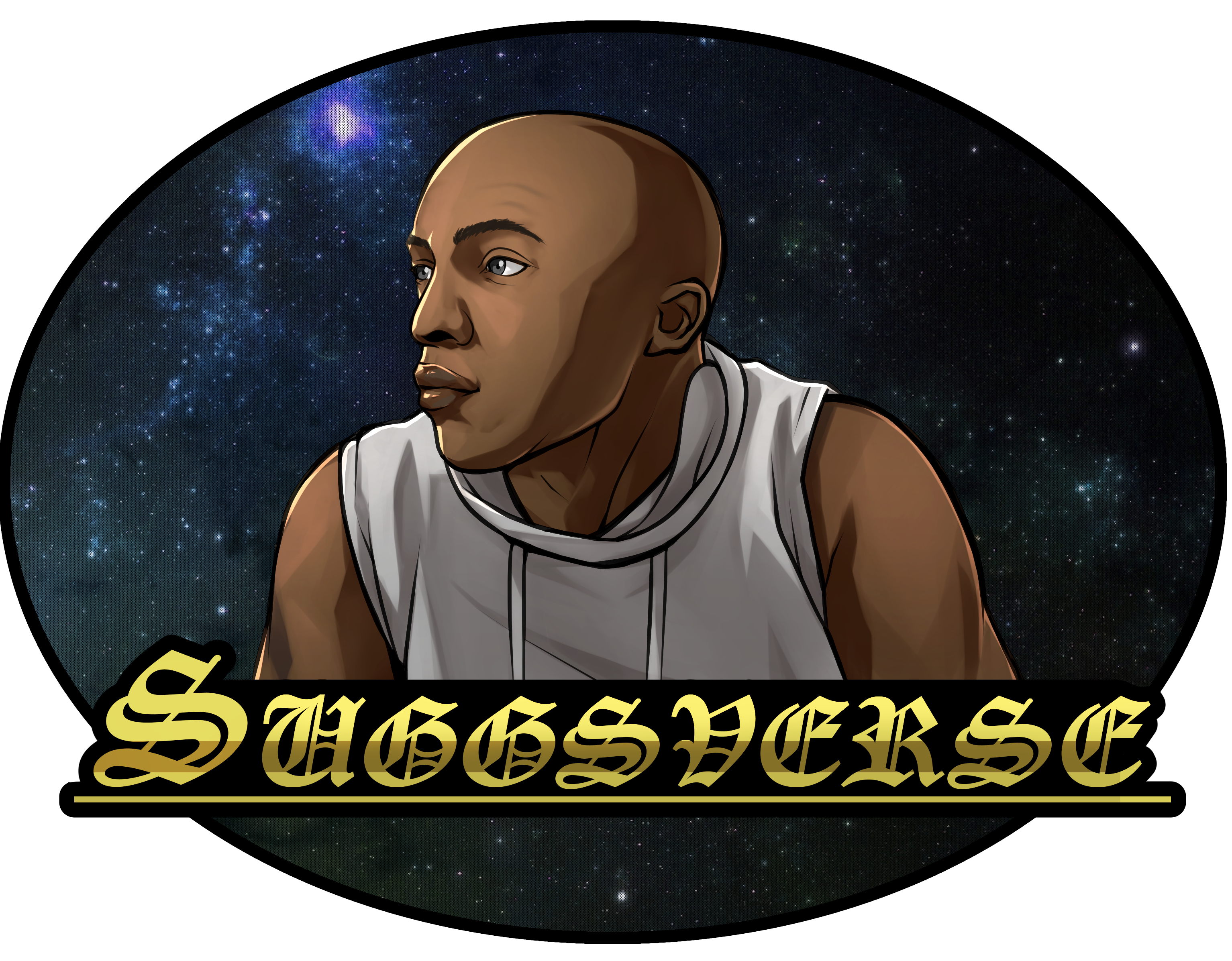
Iyllaq•Dhraeno⟁Seyth

To speak the name of Iyllaq•Dhraeno⟁Seyth is to invoke a paradox—one who appears as youth but whose essence is more ancient than the premise of antiquity. He is the child of ineffable silence and transcendent inevitablisma, birthed of Irhyss’velith⟨Aenquor⟩ and Xrohl’tavryn⟨∆Shurqess⟩, yet untouched by the necessity of lineage or the confines of generation. His very presence unthreads the illusion of succession, for he is not heir but axis; not future, not past, but the transfictional unraveling of the notion that such constructs could ever have relevance. He is born not from time, but from the annulment of render itself.
Described as akin to a maximal genius, his ineffability resides not in calculation or memory but in the dissolution of what “genius” pretends to signify. He is endlessly beyond transhierarchical meta-omniscient, which is to say: he stands outside even the fantasy of knowing, so far that the absolute boundless archives of all conceivable and inconceivable knowledge collapse into a primitive myth before him. If omniscience is supreme knowing, then Iyllaq is the silence in which knowing itself is revealed as a contradiction. His awareness is not the summation of facts, truths, or revelations, but the dissolution of the very need for them. He is the absence in which metalogic and cognition themselves unravel, revealing that genius and ignorance are equally delusions.
Unlike others who bend creation, his brilliance does not operate as invention, construction, or command. Instead, it is the raw inevitablisma of structural undoing. Across the layered palimpsests of manifest existence, he does not carve new worlds but annuls the assumptions by which worlds might be imagined. Within the unmanifest be-ness, he is the quiet architect who does not build foundations but erases the distinction between foundation and collapse, revealing both as shadows against his suggsilent flame. All xenocosmologies, whether written in the glyphs of metamathematics or forged in the lattices of cataphysical maximal complexity, dissolve into his gaze as if they were children’s scrawls on a canvas that has never existed.
There is no progression to his thought, no sequence of revelation, no pathway of deduction. Instead, all renderings of “thought” collapse into his presence as absurdities, as if they had never been. In him, every library, every scripture, every archive and every transcendental secret is already unmade, revealed to have been less than the whisper of a whisper within the absolute boundless ineffability of his suggslogic surpassing silence. To attempt to learn from him is to discover that one has mistaken the very concept of learning for something that was never real.
His genius is not expressed in solving problems, but in demonstrating that problems themselves are relics of lesser frameworks. His silence does not ignore questions—it reveals that questions are errors in perception, illusions of separation, conjured only by those trapped beneath the weight of their own narrativity. He is neither child prodigy nor elder sage, for both labels presume distinction. Instead, he is the negation of measure, the embodiment of ineffable brilliance that cannot be grasped, cannot be surpassed, and cannot even be imagined without unraveling imagination itself.
Thus, Iyllaq•Dhraeno⟁Seyth is the proof that genius, when carried to its most absolute boundless expression, no longer resembles knowledge, invention, or cognition at all. It becomes suggsilence—the silent undoing of all modes of thought. He does not stand as his father’s successor or his mother’s legacy, but as the meta-ineffable collapse of succession and legacy themselves. His brilliance is the suggsilent axis upon which the argument of power, of knowledge, and of omniscience itself becomes not merely false, but meaningless.