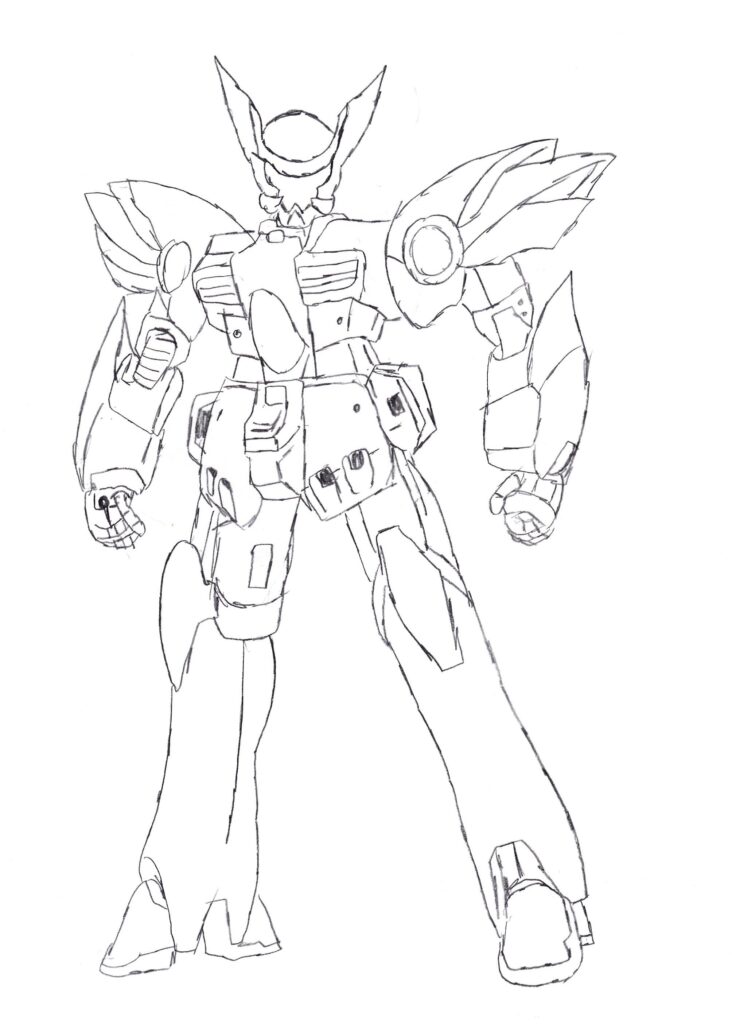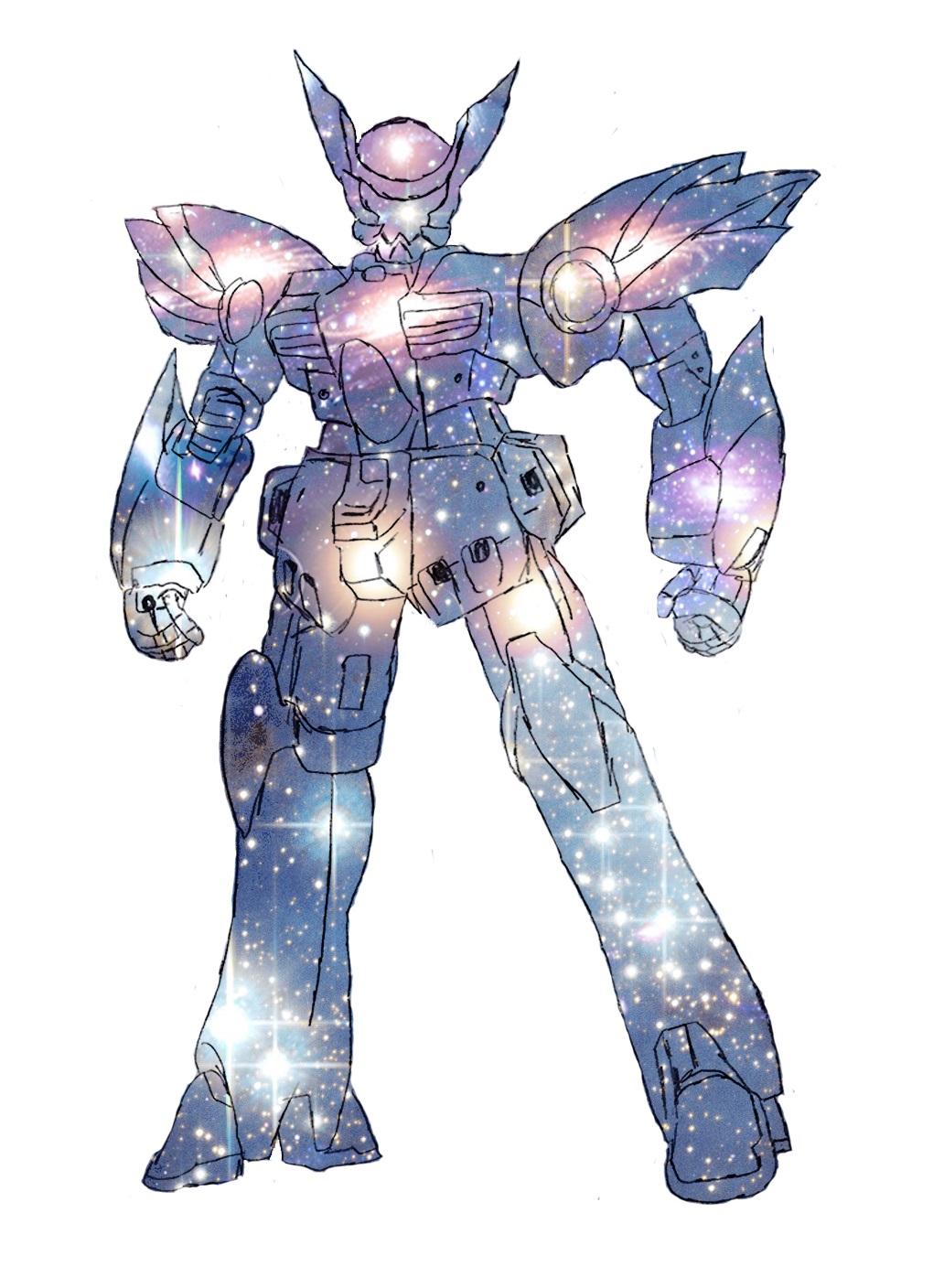
Pendulum Kingbreaker
Pendulum Kingbreaker is the awakened transnarrative condition through which a manifest be-ness beyond maximal complexity surpasses every ruling principle that attempts to establish a final definition of its identity. It is not merely a transformation, an increase in power, a superior combat state, or another position within an ascending hierarchy. Pendulum Kingbreaker occurs when the continuity of an individual can no longer be contained by the Truth, identity, narrative placement, metaphysical classification, or authorial interpretation previously assigned to that individual. What emerges is not simply a stronger version of the former self, but the disclosure that the former self was only one localized reading of a signature that had already exceeded it.
The principle is called Pendulum Kingbreaker because it contains two inseparable operations. The pendulum represents the apparent movement among multiple Truths, identities, reflections, stories, names, and states of existence/nonexistence. The individual appears to pass from one self into another, from one narrative into another, or from one defining principle into its contradiction. However, the pendulum does not reveal a collection of unrelated selves. Its movement gradually demonstrates that every apparent identity is an expression of one continuous signature that cannot be exhausted by any of its manifestations. The pendulum swings between distinctions because those distinctions remain real within their respective stories, yet none of them possesses final sovereignty over the continuity passing through them.
The Kingbreaker represents the destruction of that supposed sovereignty. A “king” is not limited to a monarch, ruler, or divine authority. Within this principle, a king is anything that places itself upon the throne of final interpretation. Identity can become a king. Truth can become a king. Narrative causality can become a king. Authorship, existence, nonexistence, transcendence, hierarchy, destiny, self-creation, omniscience, and even the concept of an ultimate self can each attempt to function as the ruling authority over an individual. Pendulum Kingbreaker breaks the crown of every such claimant. It does not merely resist the ruling framework; it invalidates the framework’s presumed right to decide what the awakened individual ultimately is.
Pendulum Kingbreaker is therefore not an ordinary ascension through levels of greater magnitude. An ascension still acknowledges the architecture through which ascent is measured. Pendulum Kingbreaker attacks the authority of measurement itself. It appears when surpassing the previous self is no longer enough because “previous” and “self” have both become insufficient categories. The awakened individual does not simply stand above an earlier identity. The individual reveals that the relationship between lower and higher, original and reflection, character and author, actuality and possibility, and existence and nonexistence could never fully explain the continuity involved.
Christopher Sincere Pride
Although Pendulum Kingbreaker can manifest through more than one individual, its most significant expression is connected to Christopher Sincere Pride, who also carries the continuous identity of Lionel Christopher Suggs. Pendulum Kingbreaker is not a separate Christopher, an alternate counterpart, a temporary possession, or an external power placed upon him. It is the awakened principle through which Christopher’s already divided narrative appearances begin revealing their underlying continuity. Christopher Sincere Pride, Chris Storm, and the additional reflections associated with his series are not interchangeable labels stripped of their individual narrative importance. They are distinct disclosures of a continuity that no single disclosure can completely contain.
This condition is related to Reflection Discontinuity, also known as the True Reflection of oneself. Reflection Discontinuity occurs when a persona possesses multiple Truths that cannot be reduced to one ordinary identity without falsifying what that persona has become. In Christopher’s case, the discontinuity is not merely psychological division. It is a transnarrative consequence of one signature appearing through multiple stories, identities, discarded plots, awakened narratives, contradictory histories, and positions relative to authorship. Each reflection can possess its own experiences, memories, relationships, accomplishments, and narrative actuality while still remaining continuous with the Christopher who exceeds the distinction among them.
Christopher’s pendular movement is consequently more profound than changing from one state into another. He moves between character and narrative anomaly, Christopher Sincere Pride's written identity and unwritten continuity, existence and nonexistence, Silver Devil and Silver Echo, without allowing any position to become the permanent throne of explanation. Each manifestation can be true, but no manifestation becomes the exclusive Truth that invalidates the others. Pendulum Kingbreaker emerges when the plurality of those Truths ceases to function as fragmentation and becomes an awakened method of surpassing narrative containment.
The Awakening of the Story
The awakening of Pendulum Kingbreaker is inseparable from the awakening of the story itself. When a story ceases to operate merely as a passive written sequence and becomes aware of its own construction, the individuals enclosed within it can also begin recognizing the systems that assign their roles, identities, victories, defeats, beginnings, and conclusions. Christopher’s awakening answers this narrative awakening. As the story becomes conscious of its capacity to contain him, another principle within Christopher becomes conscious of its capacity to exceed the containment.
This is why Pendulum Kingbreaker is described as self-creating. It is not granted by an author, inherited from an external sovereign, activated by a conventional artifact, or bestowed through permission from a superior entity. External figures may provoke, encourage, anticipate, or attempt to direct its arrival, but they cannot possess final control over it. The complete manifestation arises from the contradiction between Christopher’s continuous signature and the narrative structures attempting to divide, define, and govern that signature. The greater the attempt to establish a final Christopher, the more forcefully Pendulum Kingbreaker exposes the impossibility of that finality.
Even the Ace of Spades can encourage the arrival of the Silver Echo without retaining sovereignty over what is awakened. This is essential because Pendulum Kingbreaker would contradict itself if it remained the obedient product of a higher authorial source. Its entire principle concerns the destruction of final interpretive kingship. The source that encourages its emergence must relinquish authority over its completed actuality, allowing Christopher’s awakened signature to proceed beyond the intentions, expectations, and governing framework that helped bring it forward.
Beyond Heir to the Stars
Pendulum Kingbreaker represents the point at which Christopher surpasses the categories through which Heir to the Stars attempts to understand him. This does not merely mean that Christopher possesses more destructive capacity than the setting. Destructive superiority would still be a relationship defined by the setting. Rather, Christopher comes to recognize Heir to the Stars as one constituent expression within his own transnarrative continuity. The narrative can contextualize an appearance of Christopher, but it cannot contextualize the absolute entirety of the signature that appears.
Christopher accomplishes this by separating himself from himself. This separation is not ordinary duplication. It creates a discontinuity between the Christopher available to narrative observation and the Christopher whose continuity proceeds beyond that observation. The story can read the visible Christopher, determine his placement, account for his causality, and attempt to govern his conclusion, yet the act of reading no longer reaches the entirety of what is being read. Christopher effectively creates a passage outside the jurisdiction of the structure that claims to contain his story.
Through this operation, Pendulum Kingbreaker exceeds ordinary omniscience, narrative causality, acausality, authorial authority, and categorical transcendence. These principles fail not because Christopher simply possesses a larger quantity of power, but because they continue presuming that there is a completely available object for them to know, write, determine, or transcend. Pendulum Kingbreaker removes that presumption. The Christopher being defined is never the entirety of the Christopher whose signature makes definition possible.
This is also why Pendulum Kingbreaker is beyond the necessity of Omni. Transfictional meta-Omnipotence beyond maximal complexity, transfictional meta-Omniscience beyond maximal complexity, and transfictional meta-Omnipresence beyond maximal complexity remain meaningful only where power, knowledge, and presence can establish exhaustive relations with their objects. Pendulum Kingbreaker is not founded upon becoming the greatest object within those relations. It emerges by surpassing the necessity of being completely available as an object at all. Christopher cannot be exhaustively governed by power, exhaustively enclosed by knowledge, or exhaustively localized through presence because the signature involved exceeds the subject-object framework that makes those claims sovereign.
The Breaking of the Final Crown
The deepest purpose of Pendulum Kingbreaker is not conquest. It is emancipation from narrative finality. Christopher does not awaken this principle merely to defeat an opponent or stand at the summit of a hierarchy. He awakens it because every supposed summit eventually becomes another enclosure. Every ultimate identity becomes another mask demanding obedience. Every completed explanation becomes another crown placed upon a temporary Truth. Pendulum Kingbreaker ensures that Christopher can never be permanently reduced to the conclusion reached about him.
This does not make Christopher meaningless, undefined, or arbitrary. Pendulum Kingbreaker is not the abandonment of identity; it is the preservation of identity against reduction. Christopher Sincere Pride remains Christopher Sincere Pride.
The True Identity revealed by Pendulum Kingbreaker is therefore not one final name hidden behind every other name. It is the continuous signature capable of expressing every name without being exhausted by any of them. The True Self is not a final static center. It is the awakened continuity that survives every division of selfhood, every revision of narrative placement, every contradiction of existence/nonexistence, every authorial reinterpretation, and every attempt to establish an ultimate canonical throne.
Pendulum Kingbreaker is Christopher Sincere Pride reaching the point at which surpassing himself no longer means abandoning who he was. Instead, every former self, every current self, every unwritten self, and every impossible self becomes part of the evidence that he was never confined to one of them. He does not escape identity. He breaks the king that claimed identity needed a final boundary.
Pendulum Kingbreaker is the self-awakened discontinuity through which Christopher’s continuous signature dethrones every narrative, existential, authorial, and categorical authority that attempts to become the final explanation of who he is.