
Penultimate Truth VII — The Sky Does Not Hold
By the time the continent understood that its celebrated defenders had not retreated but been removed, Australia had already become a wound large enough to be seen beyond geography. Streets still held the posture of resistance. Barricades remained where frightened hands had dragged them. Burned sigils still glowed in the rain-dark asphalt. Assault rifles, ritual knives, shattered charms, broken prayer beads, magick cartridges, logic-bent casings, and half-discharged warding seals lay in intersections like the last punctuation marks of people who had tried to make a sentence out of survival and had instead been erased from it. The country had not merely lost soldiers. It had lost witnesses. Entire districts from Sydney to Melbourne to the colder southern lanes and the inland dead-zones had become places where the world no longer trusted its own continuity. Rumor moved faster than official statement. Something called the Deerstalkers was in Australia, people whispered in police chats, occult forums, shuttered church basements, emergency tents, hospital stairwells, and among the sleepless who watched the skyline for shapes too large to belong to creation. No one knew who they were. No one could prove they had seen them. But every few nights some impossible thing died, and some district that should have been lost until the end of all language somehow remained standing at dawn.
The Vyr’goth had made rumor feel small. Their arrival was not local even when they stood inside a city. Every one of them carried with it a transfictional pressure that reached far past weather, skyline, sea, and horizon. Their silence did not simply spread through streets. It entered the hidden joints between reality and illusion and began to pull. On the far side of visible existence, absolute boundless transfictional layers started to splinter like overburdened stained glass. Narratives lost their cause before their effect. Ontology forgot which things were permitted to count as things. Many-valued logic began to devour its own tolerances. Reflection hierarchies buckled inward. Noesis dimmed. Unmanifest silence ceased behaving like a terminal state and instead became an active hunger. What lesser sight would have mistaken for elaborate symbols or decorative luminous structures suspended in the Vyr’goth’s hands were in truth compacted maximal wholenesses beyond tiering to explain any cosmic structure, folded into weaponized embeddings. They carried not ornaments but functioning wounds: recursive compressions of thought, causality, and structural self-reference, condensed until they could be flung like spears into the manifest be-ness of a target. Every place they looked, the world around them began to misremember itself.
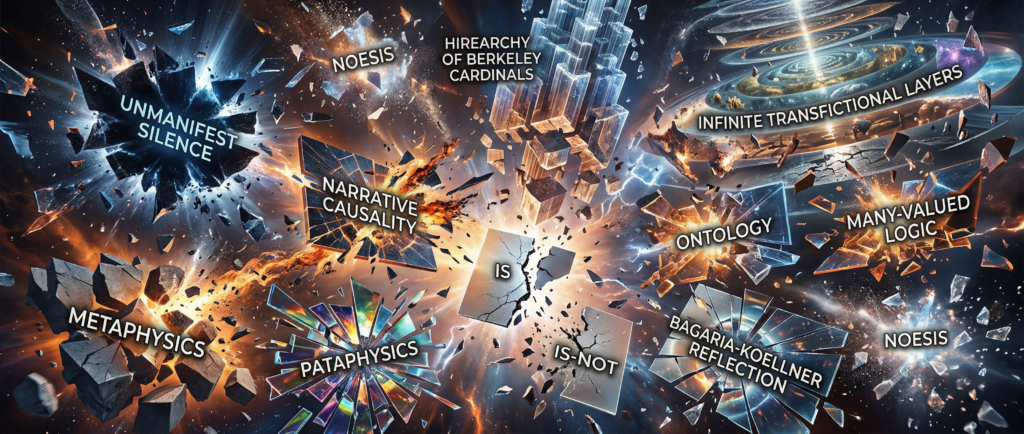
On one night that should have belonged to sleep and ordinary traffic, four different parts of Australia became four separate theatres of refusal.
Dandemægus walked alone first.
He moved through a ruined commercial corridor in Sydney with the patient stillness of someone whose body understood war even when his name remained sealed from him. The white tank clung to his shoulders. The white fabric at his legs caught every strip of cold streetlight. The blue-red sigil before him rotated with low deliberate light, not as a shield alone but as a declaration that he had ceased allowing the world to tell him what manner of man he was supposed to be. Around him, storefront glass had bowed inward without shattering, as if the city itself had tried to kneel. Tram wires hung in the manifest expanse like nerves torn from a greater body. Far overhead, the clouds had been carved open by something that was no longer weather.
Then the Vyr’goth stepped down through the fracture.
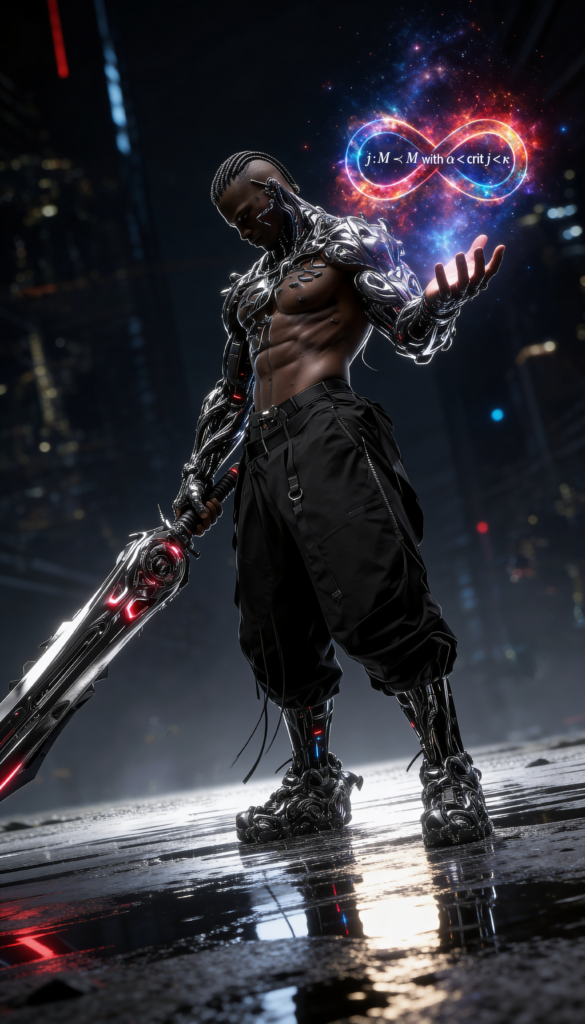
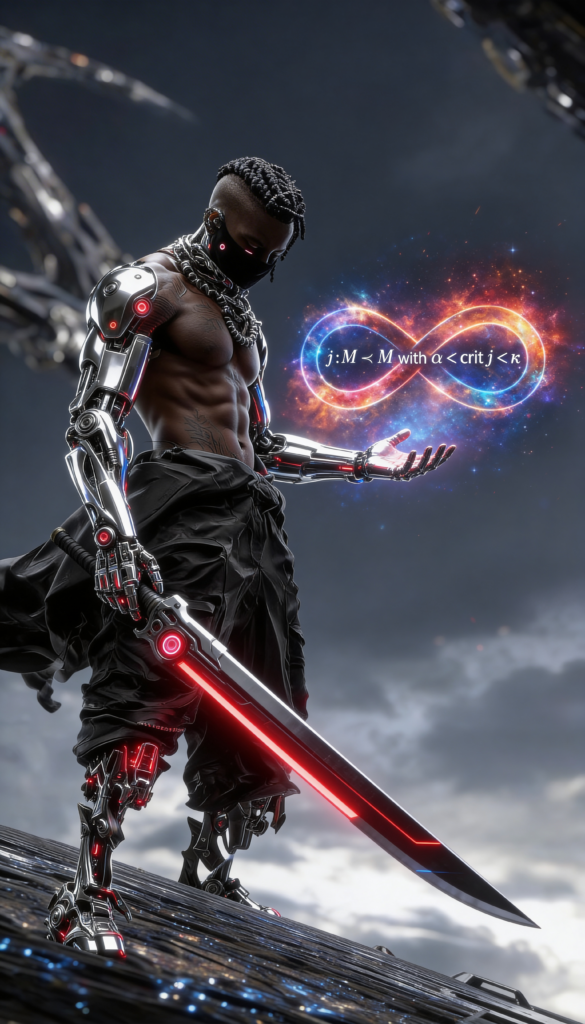
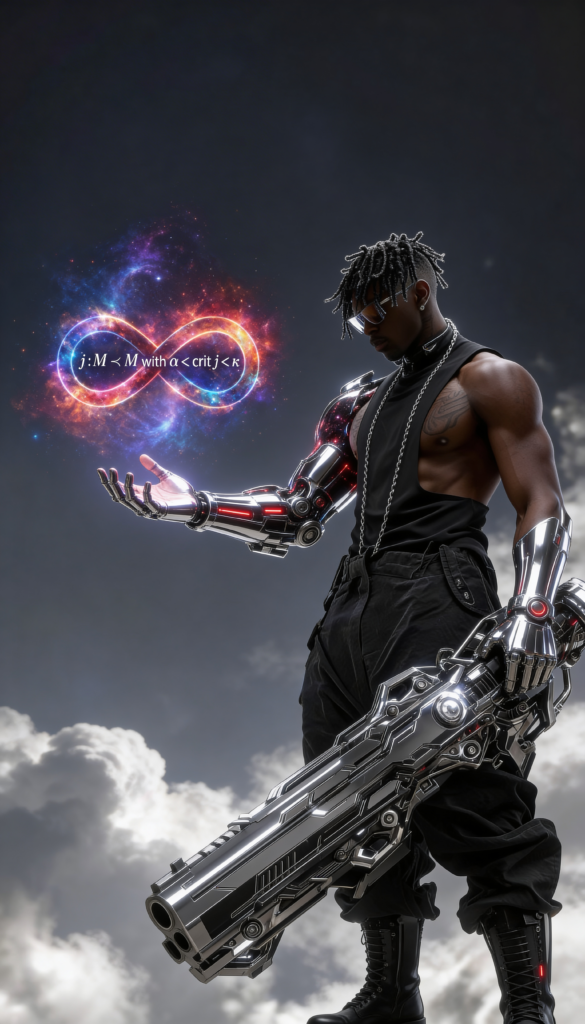
It was tall in the way a verdict was tall. Blackened chrome and mutilated modality ran over it in plates and tendon-like seams. One arm ended in a weapon too violent to be called a blade without insulting it. The other gripped a blade whose edge looked less forged than remembered by violence. Above its open hand floated the luminous embedding, the same sign that had been appearing in fragments over the continent: an infinity curve burning with recursive color, and inside it the operative statement, not symbolic but active, j:M < M with α < crit j < κ. In the presence of the Vyr’goth the notation ceased being notation. It became a working law. A local structure of reality-illusion distinction was forced to embed into a greater version of itself while losing the right to remain unchanged. The critical point was where endurance failed. The curve in its hand was a compact self-folding engine. It compelled neighborhoods, identities, trajectories, and even resistance itself to become lesser reflections within a larger hostile enclosure. Buildings tried to become sub-buildings of more broken buildings. Streets bent into copies of streets. Choice began to submit to prewritten collapse.
The Vyr’goth raised its hand and Sydney folded.
Not physically first. Deeper. Shopfronts were made to inherit failure from versions of themselves that had already burned. Concrete learned cracks it had not yet suffered. Human fear in the surrounding blocks was dragged forward from futures that had not finished happening. The air filled with a pressure like the background noise of an entire maximal wholeness beyond tiering being forced to watch itself die from above. Then the arm-cannon opened and released a concentrated beam woven from recursive self-embedding, shattered reflection, and the denial of stable identity. Everything it touched was meant to become only a diminished witness to its own annihilation.
Dandemægus looked at it.
Then he yawned.
It was not dramatic. That was what made it terrifying. He yawned the way a tired man might respond to a late bus or a bad television program. The beam reached the sigil before him, and the sigil did not flare or strain. It simply refused the premise of the attack. The recursive compression unraveled the instant it met him. The local street, which had already begun collapsing into lesser copies of itself, steadied. The wrong futures peeled off the shop windows like wet paper. The folded roads loosened and settled back into their single injured existence. Dandemægus’s eyes narrowed, not in fear, but in that peculiar cold concentration he had begun carrying since waking into this life without a past he could fully enter.
“I don’t know who taught you to threaten people,” he said softly, almost to himself, “but they did a bad job.”
The Vyr’goth answered by moving faster than something that size had any right to move. Blade first. Collapse following. The weapon-edge came down not to cut his body but to sever the terms under which his body could be said to exist. The silence swung low and spat a secondary wave shaped from the same embedding, attempting to reduce him to a subordinate clause inside its own recursive authority. Dandemægus stepped once, and the sword missed by the width of intention. He stepped again, and the silence slid around him as though the world could no longer agree where he stood. Collapsed pataphysics, instinctive and unannounced, moved under his skin. He did not cast it as a scholar would. He inhabited it. He became the exception a rule was too tired to contain.
The Vyr’goth brought the infinity-embedding closer, enlarging it until it hovered above the whole intersection. Now the symbol was surrounded by secondary lattices, geometric branches of broken noesis and wounded Berkeley-cardinal hierarchies. The streets beneath it began to moan. Windows blackened. Traffic lights reverted into unreadable colors. The attack was no longer a beam. It was a local imposition of transfictional inferiority. It declared that whatever stood before the Vyr’goth must, by structural necessity, fold under a greater recursion and cease claiming singularity.
Dandemægus rolled his shoulder once. His sigil turned. He remembered nothing and yet his hands knew everything terrible.
When he moved, the street did not see a man cross distance. It saw distance lose status. He was in front of the Vyr’goth before the recursion finished naming him. His fist, backed by neo-suggslogic that seemed to arise less from study than from buried birthright, struck the embedding first. The infinity curve shattered without sound. Not the potentiality of it. The operating authority behind it. The recursive law broke in the middle and bled light. The Vyr’goth recoiled for the first time, and Dandemægus’s expression grew stranger, as though a colder self was surfacing from under the blankness.
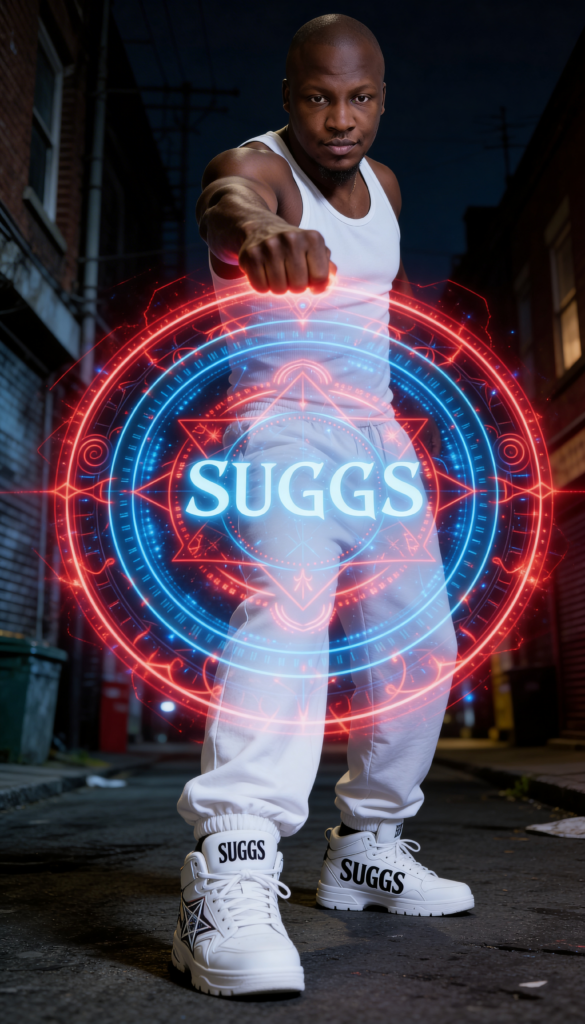
“You keep trying to fold me,” he said. “I don’t fold.”
He opened his hand.
Suggsvoid answered.
It did not descend. It was already nearer than nearness, a lesser-than-negation sink below the confidence of reality and illusion alike. It arrived not as darkness but as the irrevocable subtraction of permission. The Vyr’goth’s body began to lose its edges. The cannon went first, then the blade, then the chrome-black architecture of its chest. The silence inside it tried to scream, but suggsvoid was lower than screaming and older than silence. The titan’s immense modality thrashed once, twice, and then the whole thing was drawn inward through a point smaller than meaning, vanishing into a depth from which even return as an idea had been removed.
When it was over, only one thing lingered: a heatless smell like burned notation.
Dandemægus stood alone in the settling quiet, breathing once through his nose, the sigil fading. Somewhere very far off, beyond the city and beyond whatever he currently understood as self, something in him seemed to have approved.
Elsewhere, Excella Angelicus moved through another night as if she had been born knowing exactly where danger liked to stand.

She had taken a narrower district, one of those beautiful old city lanes where stone remembered the pride of prior centuries and neon from newer decades clung to the edges of the same walls with desperate modern optimism. Her dress was black, high-collared, close-fitted, elegant in the way a threat could be elegant. The slit at her leg and the sleek fall of the fabric did not weaken her presence; they sharpened it. In her hand the katana glowed with violet-white disturbance, its edge wrapped in a halo that looked halfway between sorcery and a wound in perception. She was walking, not hurrying, because Excella had long ago learned that panic was simply another way of surrendering the rhythm of a fight to the thing that wanted you frightened.
She stopped under a failed streetlamp and looked up.
The Vyr’goth standing above the rooftops did not announce itself with grandeur. It did not need to. Its presence pressed downward like a verdict already decided. Its form was sleeker than the one Dandemægus had ended—less brute, more deliberate, its chrome-black modality flowing in tighter, more controlled lines as if every contour had been refined for precision rather than spectacle. One arm extended outward, not in threat, but in quiet inevitability. Above its open hand hovered the same luminous embedding, the infinity construct turning slowly in burning color—j: M < M with α < crit j < κ—not a symbol, but a working authority.
When it began to move, the city did not break outward. It folded inward.
Not physically at first, but intimately.
The street around Excella inhaled. Windows did not shatter—they reflected. Not the present, but versions of the people behind them that had already failed. The air thickened with misplaced memory. Regret surfaced in the wrong places, arriving too early, too completely, as though the future had reached back and imposed its worst conclusions onto the now. Footsteps echoed from moments that had not yet happened. Voices spoke from conversations that had never resolved.
The Vyr’goth lowered its hand slightly, and the embedding expanded—not in size, but in jurisdiction.
Everything within its reach was forced into recursion, not of structure, but of self.
Every thought became a smaller thought inside a larger failure. Every feeling was made to inherit a deeper, more suffocating version of itself. The interior world—the one place most beings believed was their own—was pulled outward, exposed, and rewritten as a collapsing hierarchy of emotional inevitability.
The attack did not seek to destroy Excella.
It sought to make her become the proof that she could not stand.
Excella listened to the shrieking inwardness pressing at the district.
Then she yawned into her own hand and lowered it delicately.
“Oh,” she said, and smiled without warmth. “You’re one of those.”
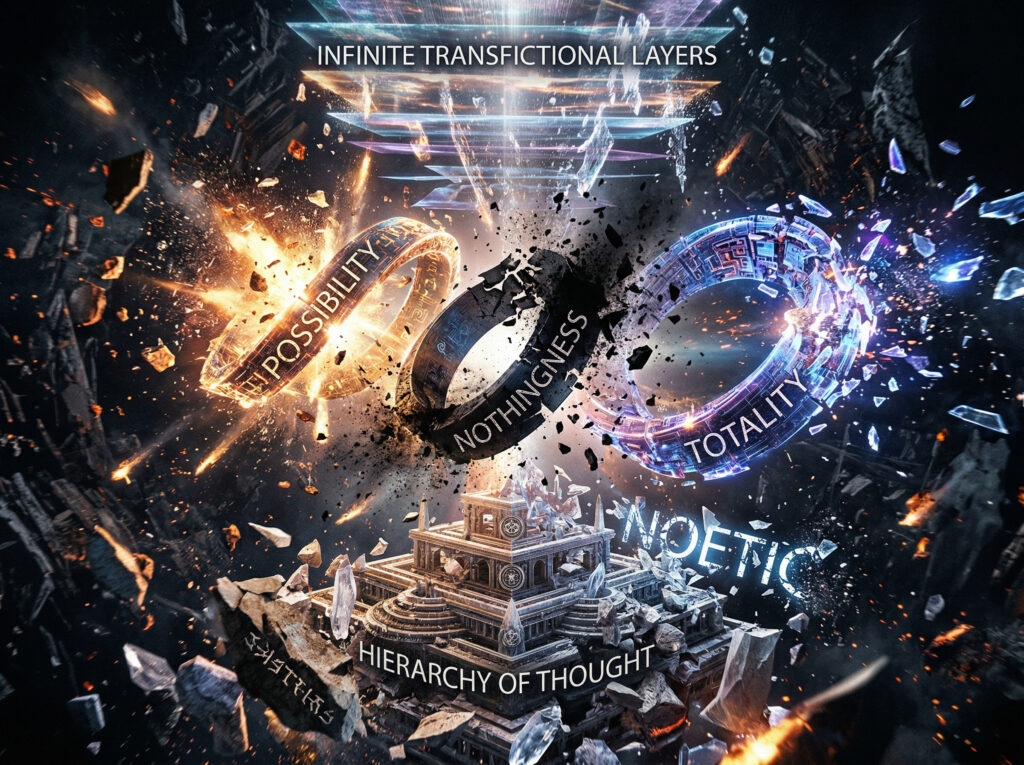
The Vyr’goth brought upon ineffable rings that were unmanifest silence. Possibility thinned into impossible accusation. Nothingness became an intimate invitation to surrender. Totality expanded like a lid over the lane, trying to close every alternative route of selfhood until only collapse remained. At the center of it all, the Hierarchy of Thought weaponized classification itself, deciding which memories got to bruise hardest, which sensations were permitted to feel most true, which inner wounds should be ripped open first. It was an exquisite atrocity. It would have destroyed almost anyone by making them the jailer of their own mind.
Excella closed her eyes.
Her sensory projection went outward and inward at once. She did not fall into the Vyr’goth’s hallucinated environment. She invaded it. The false lane around her deepened, became hyper-realistic, and then over-realistic, until the titan’s imposed dream and her own subjective reality manifestation occupied the same shared mental terrain. The difference was that Excella knew the grammar of interiority better than the monster did. She had spent night after night building a place called Unreturnable with a man who had no name he could fully keep. She knew the fragile architecture of hurt. She knew how love could make rooms sturdier than fact. She knew what it meant to walk alongside trauma and refuse to romanticize it. The Vyr’goth had expected a victim. It had found an artist.
The lane changed. Not for civilians watching from cracked windows, because none of them could see it properly. But in the shared mental environment between hunter and titan, the district became an endless corridor of doors made from memory. The Vyr’goth tried to open hers. It found not weakness but discipline. It found her laughter in the presence of horror. It found her refusal to be ashamed of having lived long enough to accumulate scars. It found her love for Dandemægus, and it discovered too late that this was not a wound it could exploit but a blade she carried willingly.
She opened her eyes and drew the katana in one fluid motion.
The rings came screaming down. Possibility first. She cut through it at the point where it presumed dominion. Nothingness lunged next, trying to swallow the lane whole. She turned her wrist, stepped inside its appetite, and severed the claim that absence belonged to it more than to her own practiced fearlessness. Totality descended last, massive and proud, thinking itself beyond elegance. Excella smiled then, and it was the smile of a woman who had survived too many bad gods to be impressed by a grand principle wearing borrowed light. Her blade passed across it in a clean diagonal stroke that did not simply split the ring but dissolved its local authority to remain coherent.
The Vyr’goth staggered. Its attack collapsed into sparks and torn phantom geometries. The apartments around the lane exhaled. Human minds on the block, moments from being trapped in personal catacombs, fell back into themselves shaking but alive.
Excella moved before the titan could recover. Her heels clicked once on wet pavement. Then not again. She was suddenly atop a bus shelter, then on a cornice, then along the creature’s own lifted arm, the sword trailing violet-white disturbance like the signature of a future too sharp to refuse. When she reached its throat she paused, just long enough to let it understand.
“You tried to use pain without learning reverence,” she whispered.
Then she cut.
The slash opened not flesh but destination. The deepest layers of the Void Beyond answered the wound, and the Vyr’goth was drawn down through them in strata, its body dissolving in elegant segments, each one losing more right to remain than the last. By the time the final fragment vanished, Excella was already dropping back to the street in one smooth motion, blade singing at her side.
She landed, looked once at the ordinary world returning around her, and only then allowed herself the smallest private grin, the kind she reserved for victories Dandemægus would have understood without needing them explained.
Melancholia Lostchild took Melbourne in a manner that felt almost rude to catastrophe.
She arrived smiling.

Not because the city deserved mockery, but because she had learned at some point before this chapter of existence that despair hated being laughed at by the correct person. Her hair, a short blue-green edge against old stone and civic architecture, caught the city’s fractured light. The crop top, the torn dark shorts, the high-laced boots, the casual exposed arms covered in black geometric sleeves, all of it gave her the look of somebody the world would underestimate half a second before it learned why that was fatal. The street she chose still held faint civic dignity. Tall facades. Iron windowwork. Steps that had once carried students, officials, scholars, and ordinary people with bags, coffee, and unfinished plans. Now it held scorched glyphs, melted tram signage, and the chalky afterimage of people who had been removed mid-flight.
The Vyr’goth confronting her did not descend so much as stabilize itself into dominance, as though the surrounding air had been forced to accept it as the most valid interpretation of existence. Above its open hand, the infinity embedding turned slowly—j: M < M with α < crit j < κ—radiant, recursive, and absolute in its jurisdiction. There were no orbiting symbols. There did not need to be. Because the moment it moved, everything those symbols would have represented began to fail on its own.
The street did not merely crack.
It lost agreement with itself.
Distinction came under siege—not as an attack from outside, but as a quiet revocation from within. Things no longer held their positions. A wall could not remain fully broken or fully whole. It flickered between incompatible states until the contradiction tore it apart. Cause and effect reached for one another and found their roles reversed, then blurred, then discarded. Meaning slipped from structure. Thought lost the authority to classify what it was perceiving.
The world did not shatter. It hesitated. And in that hesitation, it began to collapse. The Vyr’goth lowered its hand slightly, and the recursion deepened. Not outward—but downward, into the hidden agreements that allowed anything to remain itself.
Every system that once stabilized reality—logic, identity, narrative, even the quiet assumption that something could simply be—was forced into inferiority. Each was made to fold into a lesser version of itself, embedded within a greater structure that denied its independence.
The splitting line between is and is-not did not fracture dramatically.
It thinned.
Until it no longer held.
Melancholia looked up, hands on her hips.
Then she yawned.
“Oh my god,” she said, almost delighted. “You’re so extra.”
The attack reached her and stopped. Not because she blocked it in any conventional sense, but because ∀nti-narrative had already begun leaking from her smile. She did not counter by producing a stronger story. She countered by withdrawing story-rights. The Vyr’goth had come wrapped in explanation. Melancholia made explanation unsafe. The category-shards circling above its palm started to stutter. Metaphysics lost the privilege of framing the event. Ontology forgot whether it had jurisdiction. Narrative causality reached for sequence and found only dead syntax. Many-valued logic tried to widen its tolerances and discovered she had already danced outside its generous vocabulary. Even is and is-not, so proud in their central duel, began to fray at the edges because Melancholia was not arguing either side. She was invalidating the stage.
She stepped forward, and every footfall erased a clause.
The titan raised its weapon-arm and launched a filament storm of conceptual shrapnel. Each piece was a mutilated theorem, a severed ontological status, a collapsed hierarchy of reflection, a fragment of a transfictional layer instructed to explode on contact and rewrite the target into unstable contradiction. Melancholia tilted her head, watched them come, and laughed under her breath.
“Too slow,” she said. “Too serious.”
She spread her fingers.
Every shard froze in front of her, not in the manifest expanse but in authorship. They ceased because the sentence that would have delivered them to her no longer had a verb. She had quietly removed motion from their permission structure. Then she closed her hand, and the storm turned around.
The Vyr’goth lurched backward as its own mutilated categories hit its chest. For the first time that night, it had to feel what it had been forcing onto cities: the horror of discovering that the systems you weaponized could also be denied. Melancholia’s eyes sharpened then. The smile remained, but now it looked older.
“Go tell the deeper dark,” she said, “that this world still has girls who can say no.”
She swept her arm sideways, and ∀nti-narrative descended like invisible shears. The Vyr’goth’s body was not cut into pieces. It was cut out of admissibility. First the cannon lost the right to matter. Then the lattice in its hand lost the right to signify. Then the body itself lost the right to be the center of any event. One after another, its structural claims were peeled away until only raw, frightened enormity remained, and that last remainder was flung into the deepest layers of the Void Beyond where broken stories go when even oblivion refuses to be their editor.
Melancholia stood alone in the revived street while the last sparks of the category-field died in the cold air. The city did not thank her. Cities rarely did. But the silence after was cleaner. That was enough.
Label Endwriting chose the loneliest district of the four.
Not because she wanted to suffer theatrically, but because grief has a way of selecting terrain that agrees with it.

She came into a part of the continent where the damage looked less cinematic and more personal. A broken bus shelter. A convenience store with one window intact and all its lights out. Families sheltering in a community hall whose outer wall had been peeled back by something far stronger than a blast. Volunteers who had already run out of the easy sentences. Children trying not to ask where the loud sounds came from. The air still carried distant salt and city-smoke. Label moved through it without ceremony, slim and alone, her dark hair marked by pale streaks, her jacket hanging loose over the white lace and the pale pleated skirt, the strange private authority in her hand already beginning to wake. Suggsmatics did not announce themselves like grand sorcery. They assembled. They aligned. They unlocked.
People kept mistaking her for too young until she looked directly at them.
Then they stopped.
A local woman with ash on her cheek and a little boy hidden behind her leg asked whether more of the things were coming. Label looked past them to the ruined street ahead, where the pavement had already begun to glow with the wrong kind of mathematics.
“Yeah,” she said quietly. “One is.”
The woman swallowed. “Why are you here?”
Label’s mouth tightened just a little. She did not look dramatic when she hurt. She looked disciplined, and that somehow made it worse.
“Because home got too loud,” she said. “Because my father is gone, and if I stayed where everything reminded me of that, I was going to break in place. Because sometimes doing some good is the only way to keep from drowning.” She glanced at the child, and the hardness in her expression eased by a hair. “Get everybody inside. Stay away from the windows. Don’t come out unless I tell you.”
The woman wanted to ask more. Label had already turned.
The Vyr’goth rose beyond the next block like a vertical disaster, its presence forcing the surrounding world to acknowledge it before it had even fully arrived.
It did not carry an array of symbols. It did not need to. Above its open hand, the infinity embedding turned—j: M < M with α < crit j < κ—steady, absolute, and already in control of everything it touched.
At first, nothing seemed to happen. Then the world began to open in the wrong places. Not physically. Intimately.
The air around Label thinned into layers, each one slightly misaligned with the next. Spaces that should have remained sealed began to expose themselves—not as visible doors, but as internal access points. The structure of selfhood, usually hidden and protected, was forced outward into vulnerability. Boundaries did not shatter. They failed to remain closed.
The Vyr’goth lowered its hand, and the recursion shifted its application.
This was not collapse by force.
This was collapse by permission being revoked.
Every safeguard—memory, identity, resilience, the quiet inner architecture that allowed a person to endure—was treated as something that could be recursively embedded into a lesser state, then opened, then opened again. Not broken. Not destroyed.
Unlocked.
What had once been private became exposed.
What had once been stable became accessible.
And what had once been protected began to turn against itself, each layer of the self made to reveal a deeper, more fragile version beneath it, until the distinction between inner strength and inner weakness dissolved entirely.
The attack did not impose suffering.
It made suffering inevitable by removing the right to remain sealed.
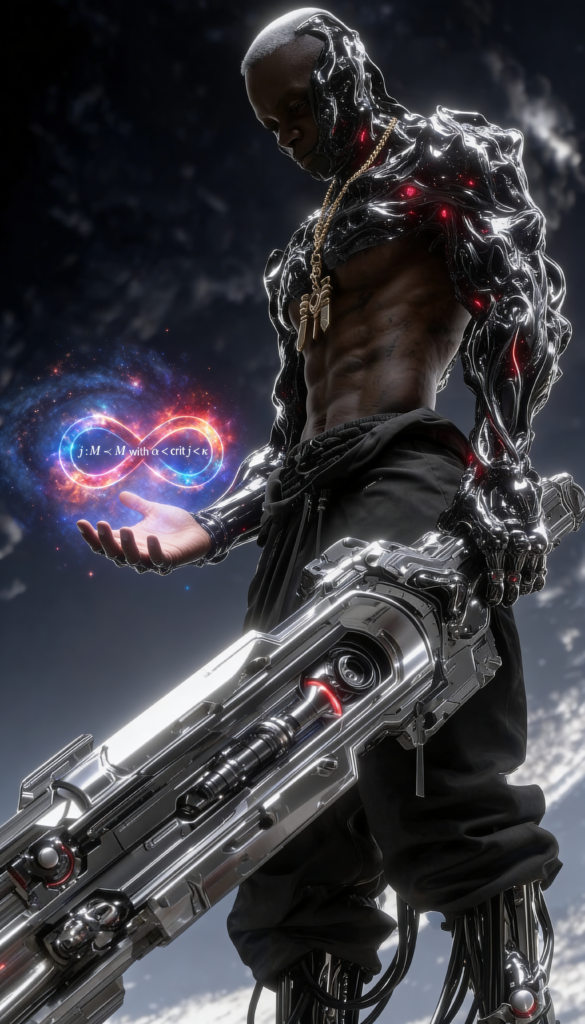
Label looked up at it and, after a rendered beat, yawned.
The Vyr’goth actually paused.
She could feel the grief in her chest like an old bruise pressed by weather. Three months and she still could not say father without hearing the Void Beyond underneath it. Three months and he was still a wound that kept changing shape. She had come to Australia for a change of scenery, yes. That was the small polite version of the truth. The greater truth was that she had come because helpless people still existed here, and helping the helpless was one of the last things that still made her feel connected to the man she loved enough to keep grieving. The continent had become an open throat. She had simply stepped toward it.
The Vyr’goth released its attack.
The key-manifold rushed her. Every seal rotated open. Streets around her filled with wrong doors, wrong versions of childhood rooms, wrong voices, wrong losses. The air itself became a corridor of invasive access. The attack wanted her to become a building full of unlocked sorrow collapsing under its own interior pressure.
Label lifted one hand.
Suggsmatics answered as ordered geometry.
Not decorative. Not even beautiful, though beauty happened by accident around it. A lattice of impossible authorization assembled around her fingers, each line denser than permission, each angle sharper than ordinary denial. Where the Vyr’goth’s keys were instruments of violation, her own Suggsmatics were sovereign locks and sovereign openings, the authority to say this may enter, this may not, this room is mine, this grief is not yours to touch, this pain will not be repurposed for your convenience. The oncoming manifold hit that declaration and began to fail. Keys snapped in luminous halves. Locks lost destination. Access-rights dissolved. The wrong doors around her slammed shut one by one until only the street remained.
Label stepped through the falling fragments.
“I don’t need you,” she said to the towering thing ahead of her. “I already know what absence feels like.”
Then she drew a final sigil in the manifest expanse with two fingers. It was small. That was why it was so terrifying. A precise, intimate seal. Personal. The kind of mark somebody writes when they mean to end one thing only. It touched the Vyr’goth at the center of its chest and spread instantly through every key, every lock, every false access path it carried. For an instant the titan became transparent, all its layered violations exposed. Then Label twisted her wrist.
The whole structure inverted.
Instead of opening into her, it opened beneath itself, and the deepest layers of the Void Beyond took it all at once. Its weapons, its embedding, its body, its silence, its claim to intrusion—everything was dissipated in a descending tear that collapsed inward until not even echo remained.
Label stayed standing after it was gone, shoulders set, one hand trembling just slightly where no one was close enough to see. Behind her, inside the hall, the frightened little boy she had told to hide pressed one hand to the crack of the door and watched her as if memorizing the shape of survival.
Across the continent, other Vyr’goth were still hunting.
At least, they were until the first shot landed.
No warning. No visible source. No heraldic signature except the impossible accuracy of refusal.
One titan above a ruined harbor was speaking silence into a district already on its knees when something pierced the center of its luminous embedding from farther away than distance should have allowed. The construct shattered. The Vyr’goth’s head snapped back. Before it could recover, a second shot passed through the gap and took the whole thing out of the world in one impossible line. Another, farther inland, had nearly completed a transfictional descent of its own body into three layered cities at once when its lifted hand exploded in white fracture. Then the shoulder. Then the mouth-like seam along its chest. It died standing before it understood it had been judged. A third made the mistake of turning toward the origin point. The bullet entered through one glowing eye and departed through seven consecutive reality-illusion strata behind it, leaving a perfect tunnel of absence in its wake.
No one saw the shooter.
Police radios crackled with half-panicked testimonies. Occult responders whispered about an angel, a saint, a mercenary, a widow, a ghost. Survivors only knew that somewhere very far away, someone patient enough to wait for certainty had decided Australia would not be surrendered tonight.
And then, just when it seemed the continent might finally be permitted to breathe, the sky broke.
Not cloud. Not weather. Not atmosphere.
The sky itself.
Every surviving witness, whether in Sydney, Melbourne, some ruined inland district, some harbor road lit by blue emergency strobes, some shelter, some tram stop, some church basement, some rooftop, looked up and saw the same impossible event.
High above the world, absolute boundless transfictional layers became visible as if the wounded dark had suddenly gone transparent. They did not open cleanly. They cracked. Layer behind layer, luminous and black and strange, the hidden structures beyond ordinary reality-illusion distinction began to rupture under a pressure vastly older and worse than the Vyr’goth. The fractures spread in branching geometries across the vault of night. Rings of Possibility, Nothingness, and Totality appeared like wounded relics suspended behind broken glass. Hierarchies of thought trembled. Noetics shed sparks. Unmanifest silence widened. The great architectures that had only been glimpsed in Vyr’goth embeddings now loomed above the whole continent in shattered scale, as though the creatures had not been the disaster itself but the first leaking instruments of something far more catastrophic pushing from beyond.
Dandemægus saw it with his jaw set and the aftertaste of suggsvoid still in his mouth.
Excella lifted her blade slightly, violet-white light reflecting in her eyes as though she had just realized the hunt had never truly been about the prey.
Melancholia’s smile vanished for the first time that night.
Label, alone outside the shelter, stared upward while grief and resolve tightened together inside her until they became almost indistinguishable.
Across Australia, every surviving light suddenly looked too small.
And above them all, the sky kept cracking.