
Prelude I: The Quiet Work of Draven Endwriting
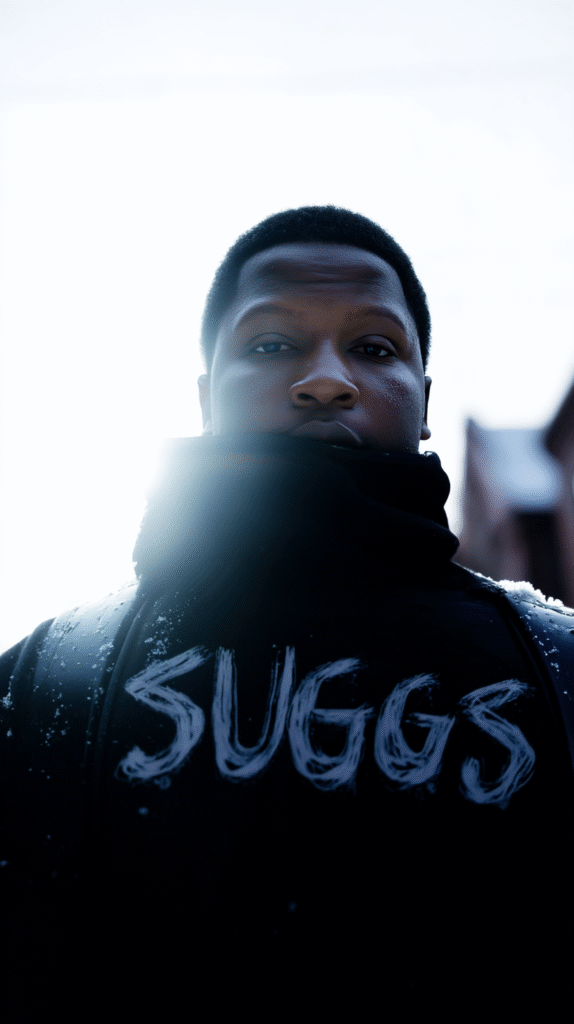
Angélique Tye said the city would never understand him because the city preferred stories it could fold into gossip, and Draven Endwriting refused to fold. She said this on a stoop in Reservoir Hill, the evening air heavy with fryer-smoke from a carryout that survived every decade’s promise to fix what never wanted a committee. She held a paper cup, not to drink the time away, but to warm her hands as she opened the locked cabinet of her memory.

She met him at Johns Hopkins where the halls smelled like sterilized ambition, where gifted students argued about the newest frontier while Draven wrote frontiers and walked past them. “His most dangerous weapon is his intellect,” she told me in the cadence of confession, but the word dangerous sounded wrong on her tongue because what she meant was indictment: of institutions that worshiped credentials, of governments that loved usable brilliance, of anyone who thought genius should be obedient. He carried no obedience, only responsibility, and even that cut his palms.
They tried to measure him. That was always the mistake. They built exams, he built modalities that made exams look like children’s chalk. Faculty debated whether he was an engineer or a theoretician; Draven treated categories like speed bumps—the sort you roll over without braking because your urgency refuses negotiation. Physics bled into robotics, which braided with cybernetics, which dissolved into genetics, which hardened into materials science, which flashed into weapons architecture, which dissolved again into biochemistry—a river abandoning its own banks in service of a coastline no map dared admit.
Angélique remembered the night the Possibility Platform awakened. In a basement lab beneath a lecture hall named after a donor who loved naming things more than understanding them, he assembled a lattice of sigil-etched plates and quantum reels. The apparatus hung in the room like a question that wanted to be forgiven. He told her it was not a machine but a negotiation table for reality—a surface where meta-possibility could be cajoled, vetoed, stalled, or accelerated without ever bending to brute suggslogic. When he powered it, the lights in the building flickered as if unsure they deserved to shine. The Platform inhaled. The city above it held its breath and did not know why.
It did not explode. It did something harder. It proved restraint. Draven coursed a precise prewritten hymn of equations—metamathematical staves braided with beyond-pataphysical marks—then stopped it a hair before saturation. The Platform hovered in perfect equilibrium, neither birthing nor erasing, but holding. “Anyone can break a door,” he whispered to Angélique with that quiet voice that always sounded like he spoke to spare the world rather than impress it. “I wanted to learn if a door can be taught patience.”
The Platform taught him something back: that possibility responds to respect more than command. From that night forward he wore respect like armor. He walked different. He listened longer. He began answering questions with questions because the only honest reply to a grand mystery is an even grander humility.
The following winter he turned toward longevity. Draven crafted vectors that threaded the cell’s will to endure without sprinting into malignancy. In a clean room humming with filtered stillness, he held a mouse whose breath should have been shallow and numbered; the mouse, contrary and calm, looked at him like a witness. He adjusted the protocol and watched its little heart steady as if refusing the calendar. He did not call it immortality. He called it “a reprieve,” and he looked ashamed by the word because even reprieves can be a cruelty if given without context.
He built A.I. cores next, not engines of mimicry but frameworks of comprehension. They did not guess; they grasped. He sent several to China under agreements that stank of oversight and courtesy—two flavors that become the same thing when the world wants to be reassured. The cores spoke to urban systems, hospitals, grids; they recommended without begging to be obeyed. Nations saw leverage. Draven saw neighbors. He never said peace and he never said deterrence; he said, “If minds can help, they should,” and refused the thousand-page speech that would have made governments feel centered in his sentence.
His natural talents multiplied in the alleyways between disciplines: leadership without charisma theater, strategy without bravado diagrams, politics without the public theater of righteousness, manipulation used not to win but to pry open stuck doors in organizations that only moved when pushed from impossible angles. He managed rooms full of titles while excusing himself from the theater of titles. People followed him because he made forward motion feel inevitable without promising destiny.
In the labs, he was a prodigious electrical and mechanical engineer, the kind who could ghost-diagnose a circuit by listening, who could hear the pitch of a failing coil the way a violinist hears a string begging to snap. He wrote firmware like prayer. He machined parts until they stopped pretending to be separate, clicked into assemblies with a relief that felt like destiny—but we do not use that word here, so call it alignment.
The professors argued about whether Draven’s greatest gift was the thinking or the making. Angélique said it was neither; it was the bridging. He would read a paper on advanced composites at breakfast, repair a failing neural interface by lunch, and then spend the evening in the library’s occult stacks—books mis-shelved by librarians who could not admit the catalog needed a new vocabulary. Where others said contradiction, he said kinship. His knowledge of magic did not decorate his science; it disciplined it. And the Platform, that impossible object, most of all was born from their marriage.
He did neurosurgery once, though he did not call it that in the report because the ethics board did not have a checkbox for what he tried. A patient arrived in a state the doctors wrote up as psychosis with ideation. Draven read the scans and saw an occupancy: not a demon, not a myth, but a parasitic claim written into the person’s outline of choices. In an OR washed in light like winter confession, he threaded microinstruments toward a thalamic seam and whispered through a gated transducer a series of Axioglyphs meant not to injure tissue but to loosen claim. The patient exhaled as if exhaling a courtroom. He did not remove flesh; he separated the person from predation, parted them from possibility’s captor and nothingness’ maw, and then stitched the outline of their self back together with the quiet competence of a man who would never publish what he had just done.
Some nights, when grief rose like steam from the campus brick and would not settle, he walked alone and let his consciousness widen until it could cradle a planet’s deranged chorus of data—traffic systems, hospital monitors, emergency calls, weather patterns, school servers, grid usage, municipal databases half-broken and stubborn. He did not steal; he shouldered. He downloaded a world’s worth of signals into an interior that did not buckle, not because he was unbreakable but because he refused to let the voices outside go unheard. The next morning he would submit a list to the city—anonymous recommendations, fixes for vulnerabilities, workarounds for people who could not wait for million-dollar committees to approve what could be repaired by a phone call and an invoice.
A dean once asked him to present on parallel realities. He agreed, but he changed the nouns. He refused the blandness of multiverse talk and spoke instead of parallel Omniverses and the braiding of beyond-dimensional reality, how narratives of causation can sit side by side without touching until a decision acts as a bridge. Students stared. Some wrote feverishly. One cried because she had always felt misfiled and suddenly felt cataloged under Here.
He wrote a white paper on stasis across the space-time—how to hold events in a cupped hand without crushing their continuity. He avoided every forbidden term, not as a parlor trick but because those terms were too clumsy to approach the delicacy of what he meant. Imagine, he told them, lifting a single minute from a suffering night without altering the story, only offering a breath. He did it once in the real world, during a five-car collision on the Jones Falls Expressway, when he stepped into the smoke and made the moment hesitate long enough to pull a child from a welded door. The officers swore the clock betrayed them; the mother swore an angel visited; Draven swore nothing and walked away.
He was an inspiring theoretician, but the word inspiring always embarrassed him. He would sit cross-legged on the cold floor of a lab and explain metamathematics with grocery-store metaphors, turn category theory into a laundromat, make beyond-logic feel like church without sermons. The undergrads loved him because he treated them like colleagues, and the colleagues loved him because he treated them like students who might yet invent a better compassion.
Angélique confessed there was something colder under all that warmth: a strategist whose mind could run scenarios across the universe and discard ninety-nine mercies to find the one that would actually save a neighborhood. He could move a politician with a whispered truth or dismantle a policy with a public silence. He could make a room vote against its own habits by rearranging the chairs before the meeting began. Manipulation was a word he hated; it tasted like contempt. He called it “geometry”: the art of placing truths where they cannot be ignored.
And then, in a spring that promised ease, he vanished from the public ledger. No scandal. No press conference. Just absence. The campus went on performing smartness while the smartest among them went home. The donors kept donating. The labs kept humming. His office light stayed off, like a vigil that pretended not to be one.
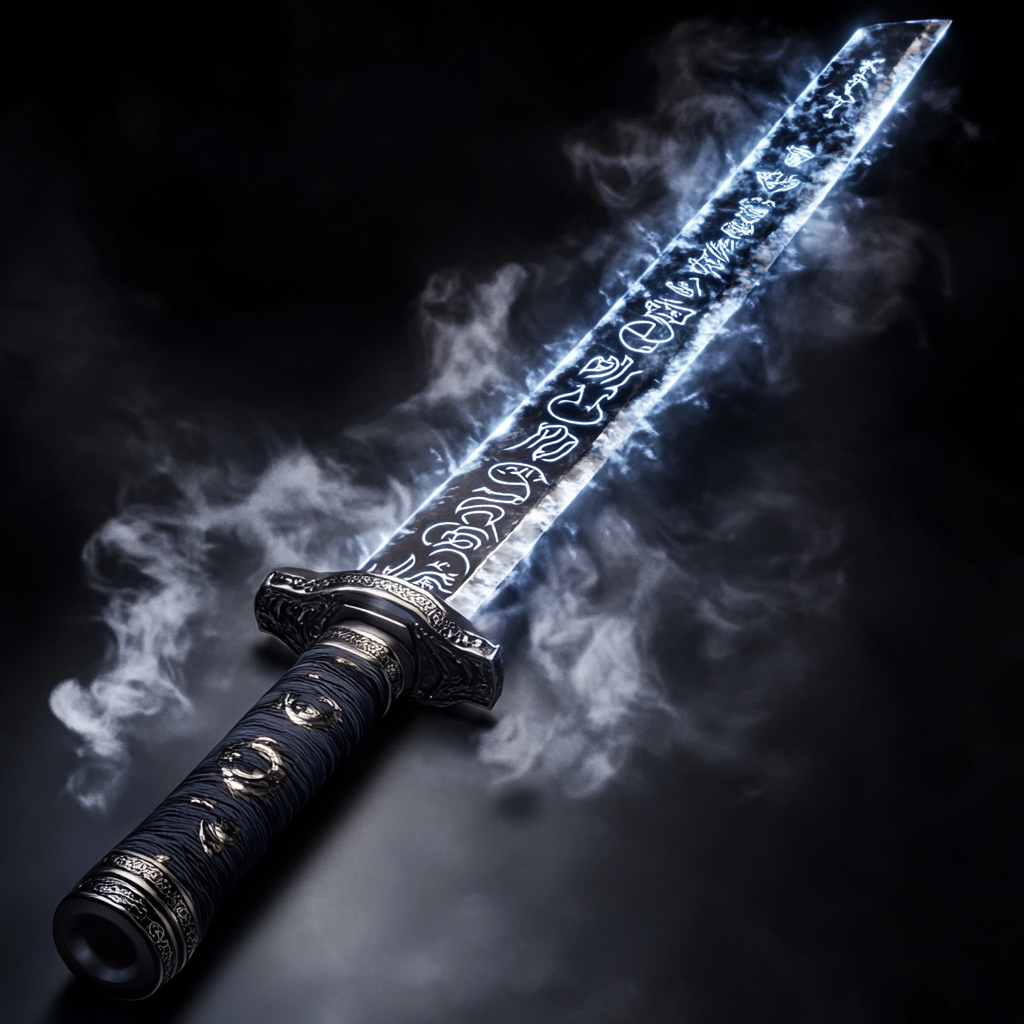
He left academia for alleyways. He took the knife with the blue-white mist—the blade that made the air shiver like a freezer door opening into a childhood kitchen. He moved through West Baltimore and PG County like a rumor that didn’t care if anyone believed it. He corrected housing code violations with the same focus he once reserved for quantum machinery. He taped up a window for a grandmother who had outlived three mayors. He replaced a breaker box in a church that had become an ark. He rebuilt a junkie’s ragged radio because it was the only voice the man trusted at noon and midnight. He didn’t post any of it. He did not curate virtue for strangers. He collected names and phone numbers under the entry “Call when it breaks.”
Word of a feeding drifted through the parks. Not a creature. Not a crime spike. A subtractive hunger that licked the edges of Druid Hill Lake and left joggers winded with dread and dogs less curious than usual. Angélique heard it from a cousin who ran mornings and started skipping them because the path felt watched by something with no eyes. Draven heard it from the water itself.
He went at dusk, when families drifted toward dinner and the lake wore the color of unsent letters. He didn’t dress like a hero; he dressed like a maintenance man—hoodie, boots, hands that remembered wrenches. He walked the circuit in silence, an engineer’s gait measuring loads, a scientist’s stare auditing perturbations, a practitioner’s interior listening for the tear in meta-possibility that marks a predator too arrogant to hide.
The phantom wasn’t a sheeted specter. It was a subtraction written into air—an absence dense enough to bend geese from their route, a frost on breath that tasted of hospital waiting rooms. Draven placed his palm on a railing and the metal recounted last night’s quiver, the minute a woman slowed to drink from her bottle and lost the urge to continue living by precisely one degree. The thing ate choice. Flesh came later if it came at all.
He drew a circle on the path with chalk and a carpenter’s pencil—chalk for the language the ground trusts, pencil for the language city workers respect. He set the knife on the circle’s rim, mist falling in a patient sheet. Then he lifted a portable array from his pack: five coin-thin plates, etched with Axioglyphs that wouldn’t frighten a passerby but would offend the parasite. He named each plate in his head, not aloud; names have a habit of thinking they are owed explanations.
When the absence moved toward him, it came as colder hush, as if the park had been told to hold its breath for the judge. He didn’t provoke. He placed his hand above the knife and let the blade’s hush become the organizing principle of the clearing. The array rose an inch above the chalk and turned slowly—five patient moons invented for this evening alone. “You’re not a who,” he said softly, “you’re a habit,” and the air shivered like a dog considering obedience.
The first pass was reconnaissance. The absence tasted the edges of the circle and recoiled the way a bureaucrat recoils from accountability. Draven exhaled. He adjusted a plate by a fraction—a relocated comma—and the array’s hum slid from curiosity to warning. Angélique would later say he looked lonelier in that moment than she had ever seen a person look. Great intellect isolates by necessity; keeping it gentle isolates by choice.
“Your feeder link isn’t here yet,” he murmured. “You’re an early scout.” He didn’t say Vyrathi. He didn’t need to. The grand meta-narrative had begun to itch with that word two years out, and he could feel the itch’s outline under the bark of every tree.
He invoked the Platform—but the small, traveling version, a palm-sized articulation he had built for fieldwork. It was not as strong as the basement ancestor, but it did not need to be. It needed only to speak in the grammar of mercy and the diction of consequence. He set it at the circle’s top horizon and watched it hover like a patient thought. The absence leaned in, wanting to eat the capacity-to-choose held there. Draven pivoted the grammar mid-sentence. The Platform offered the predator a mirror rather than a meal.
What mirrors do to the subtractive is neither pretty nor theatrical. The absence met itself and, finding nothing to devour, remembered—just briefly—what it had been before hunger assigned it a job. That remembering was agony; it screamed in a silence that bent the lake’s surface. Geese lifted. Lights along the path quivered but did not fail. Draven slid the knife forward with a mechanic’s decisiveness and pressed its mist into the scream until the scream became a sigh. The chalk line trembled. The array settled. The lake resumed pretending to be only water.
He stood very still, letting the habit unlearn itself. This takes longer than people think. Undoing is slower than doing because undoing respects what doing destroyed. He gave it the minutes it needed—no, not minutes: he gave it the narrative breadth required—then lifted the knife and returned it to its sheath. The Platform dimmed like a steadfast friend consenting to sleep.
A runner rounded the curve with earbuds in, oblivious to being alive because someone had chosen to be responsible on their behalf. Draven felt no triumph, only logistics. He sent a text to a city worker about a failing lamppost near the north pavilion. He emailed a hospitalist he knew about a patient whose heart monitor had been glitching due to electromagnetic interference from an old elevator relay. He called a pastor about a congregant who needed a ride to a clinic. Genius looks like this up close: a thousand tiny adjustments no one will ever tie together except the one who refused to let them remain unrelated.
Angélique tells the part people always skip: he went home and washed dishes. He folded laundry. He sat on the porch and answered a neighbor’s question about whether a compressor could be nursed for another season. He looked at the row of small plants his daughters were learning to nurture and checked the soil with a finger, the same finger that had tuned arrays and traced chalk prayers on a path and separated a human from a predator’s claim earlier in his career. He smiled at nothing in particular. The night was not safe. It was simply safer than it had been.
The following week he drove to PG County because a community center’s server kept crashing whenever the after-school kids logged into their homework portal. It wasn’t malware. It was neglect. He rebuilt the power distribution with parts from his trunk and left behind instructions written in a hand that assumed the reader was competent, because competence grows fastest when not insulted. He ate from a vending machine and fixed two flickering lights. Nobody took a selfie with him. He would have declined anyway.
Rumors continued about Druid Hill, but in the tone of rumors that cannot find purchase because the evidence has been shepherded into healing. The early Vyrathi itch quieted, not as defeat but as delay. Delay is not a small mercy; it is the largest one available while you fortify the perimeter of a city’s soul.
He met Angélique in a café near campus and she said the thing she had been carrying since the lab days: “If your mind is as dangerous as I say, what keeps you gentle?” He looked at his hands, which were not scarred enough for what they had done, and he said, “The girls. The block. The old heads who pretend they don’t need help and still accept it. The nurses who fix the messes rich men make. The janitors who grant mornings their shine. And the fact that intelligence without tenderness is just a clever kind of cruelty.”
She told him the city would eventually tell his story wrong—heroized into irrelevance or demonized into policy—and he said stories misbehave. “It’s fine,” he added, and he meant it in the way a man does when he has chosen the work over the credit, chosen the chalk circle over the podium, chosen the late-night fix over the a.m. headline.
That night he wrote notes in a ledger not meant for publication: improvements to the Platform’s field version; a way to spline longevity vectors into community-care protocols rather than private clinics; a set of A.I. guidance crib-sheets for city staff who would never be given training budgets; a draft for a stasis intervention technique that could stabilize a domestic crisis for just long enough to let an apology land. Across the last page, he carved three words: Hold the line.
Two years before the Vyrathi memory would stop itching and start opening its mouth, he tuned a city’s heartbeat with wrenches and knife-mist and arrays and lists and phone calls and unglamorous kindness. The alley, not yet devout to horror, was learning what it felt like to be defended by someone who refused to turn their intellect into spectacle.
Angélique says the prelude ends not with a revelation but with groceries: Draven carrying two paper bags up a narrow set of steps to a neighbor who couldn’t make it to the bodega before closing. It is a small image to hold against what is coming. Small is honest. Small is the unit of salvation most available to the poor. He handed the bags over, declined reimbursement, and walked back into a night that was not yet hostile but had begun taking notes.
What Baltimore did not know, what PG County could not foresee, was how the grand meta-narrative would contort soon—how the park’s early subtraction would bloom into a nation-scale hunger with a name too old for newscasters to pronounce. For now, the lake kept its surface, the joggers kept their routes, the dogs returned to curiosity, and the chalk circle was rinsed clean by a rain that arrived like a benediction no one asked for but everyone needed.
Draven Endwriting did not return to the lectern. He did not reappear on conference brochures. He did not publish the papers that would have made him legend among people who count their influence in citations. He published in bodies healed, in streets mended, in circuits coaxed back to honest work, in servers that stopped failing kids at 4 p.m., in lampposts that overcame their flicker at dusk, in knives that breathed winter into habits that fed on choice, in Platforms that taught doors to be patient.
If you require a final image before the grand narrative fractures, take this: a father on a porch in West Baltimore, listening to a city exhale after a long-held breath, the blue-white edge of his knife asleep beside him, the ledger that will never be peer-reviewed open on his knee, and the world—our Baltimore, our neighborhoods, our fragile archipelago of stubborn love—briefly steadied by a mind that chose service over spectacle and circles of chalk over circles of applause.