
Prelude III: The Wall That Wouldn’t Face You
Baltimore winter didn’t fall; it set its elbows on the windowsill and stared in. Breath smoked out of mouths like secrets too tired to be kept. On the block behind Mt. Royal Middle, a courtyard sat inside a sagging U of brick where the wind came to practice cutting. Folks called the building The Gap. Not because clothes were cheap there—because something was missing, loud as a siren you couldn’t point to. Draven Endwriting stepped through the iron gate like a man walking onto a factory floor he already owned in his head.
He was dipped in black polo under a heavier black jacket, boots quiet, gloves with grip. He did not announce. He audited. He read cracks, lint, gum scars, light hum, the way a copper wire behind a wall vibrated at the wrong frequency. He was not moved by pity. Pity wastes oxygen. He was moved by alignment, by the dirty religion of things doing the job they were made to do.
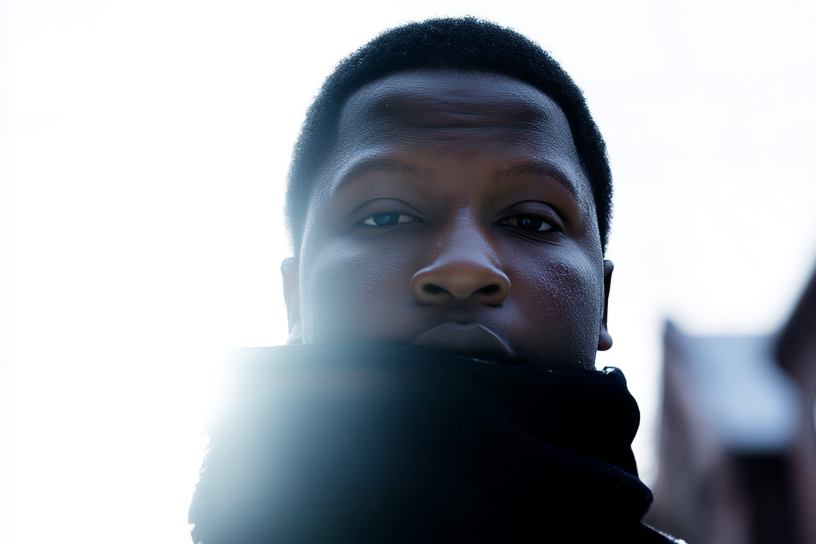
Two kids ghosted past with backpacks, cutting eyes at him because grown men who move silent in courtyards are either cops, problems, or solutions; you don’t speak to any of them first. Draven glanced at the second-floor rail—fresh paint over rust, a lie that would fail in ten days. Noted.
Riley Lavasseur was already waiting by the busted planter, hoodie open to the cold like she’d forgotten it was there. Pale hair in a messy knot, big glasses fogging, that fidgety genius energy skating under her skin like static. A grad-student mind without a grad program. She looked at him with a mix of relief and offense—relief that somebody competent arrived, offense that the world made her wait.
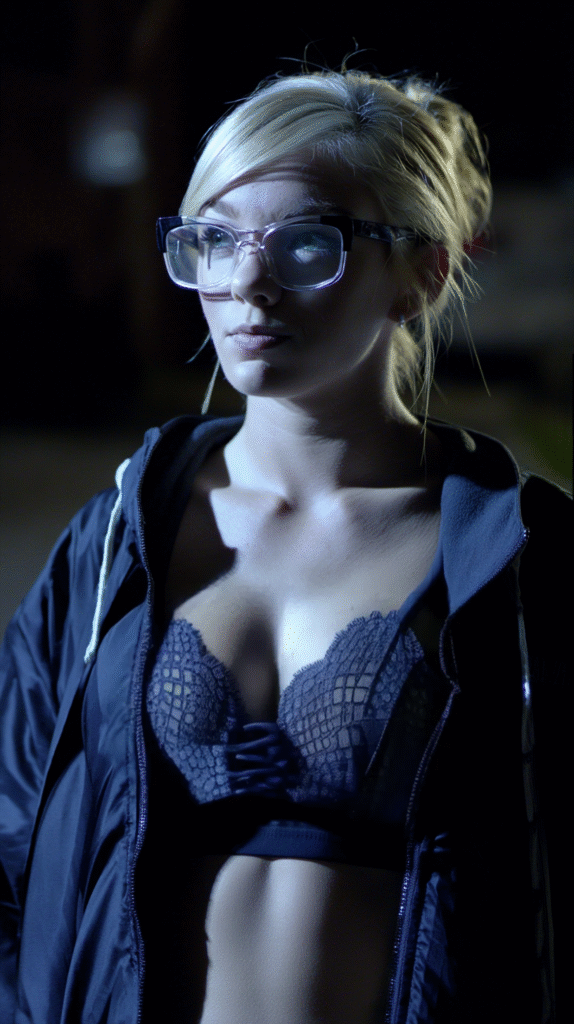
“You feel it?” she said. “Like the courtyard is… sideways.”
“Memory rot,” Draven said. “Ablation field. Eat-the-edges type.”
“From what?” she asked, too fast.
“From whoever wants it.”
Anita Bijlani came out of the stairwell yawning trench-light, coat cinched, gloves knitted by someone who loved her. Black hair, sharp mouth, sharper eyes. She’d been mapping despair like a social worker with a ballistic computer.

“Five cases,” she said by way of hello. “No drugs. Kids, aunties, a custodian. They walked through here fine; they left here convinced tomorrow was a prank.”
“It isn’t,” Draven said.
“You sure?” Anita asked.
“I’m sure because I’m here,” he said. It wasn’t arrogance. It was logistics.
A patrol car idled wrong at the curb, not for show—warming engine for the third time this hour because it didn’t trust the night. Detective Patina Caswell crossed the courtyard like a verdict, cornrows tight, posture tighter. She looked at Draven and didn’t blink.
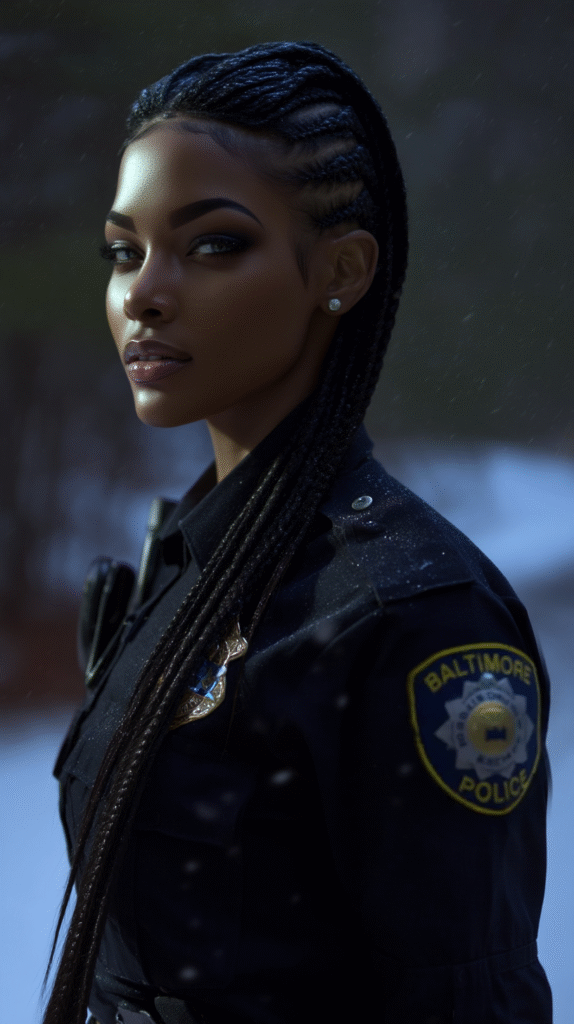
“Endwriting,” she said. “You the rumor or the man?”
“Depends what makes your report easier,” Draven said.
“I don’t like vigilantes,” Patina said.
“Me either,” he said, and the corner of her mouth acknowledged the answer.
Detective Malcolm Kilgore followed slower, hoodie under duty jacket, gloves rough, beard he’d let argue with the winter. He carried the weight of homicide boards and mothers’ kitchens in his shoulders. He tapped the rail with a knuckle like checking a pulse.
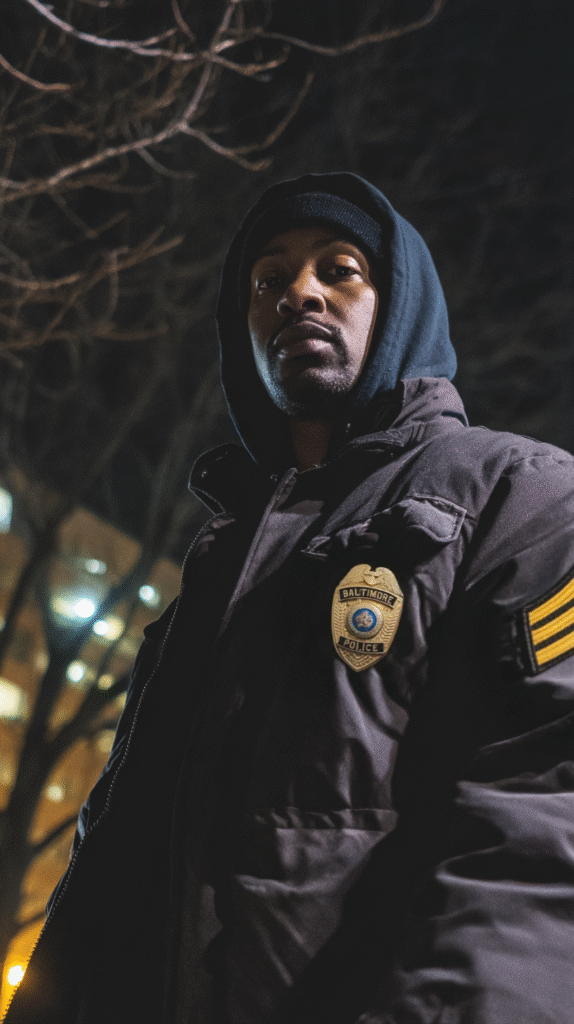
“This place goes back,” he said. “I had two boys disappear right where you’re standin’, ’98. Parents forgot by Tuesday. Teachers forgot by Wednesday. I only remember because I wrote it on myself.” He showed the inside of his wrist: tiny ink, two initials. “If you walk into that wall, be sure you ain’t married to your name.”
“Names are receipts,” Draven said. “I keep ledgers.”
The wall was wrong. Blank brick, mortared cleaner than the rest, graffiti refusing to take, not because kids respected it—because paint slid off like rain on wax. It had no front or back. It had presentation. If a room could refuse to face you, this did.
Draven put his palm two inches away. The skin on his wrist prickled like standing too close to a breaker panel with a hairline fault. The air had a taste: penny, aspirin, hospital pre-op. He didn’t close his eyes; closing eyes is for faith. He measured.
“Back up,” he said.
Nobody argued.
The courtyard fell inward without moving. Light inverted—didn’t dim, just chose a different job. Sound lost courage. Temperature remembered a morgue. And then she stepped through the wall the way sunrise steps through curtains it never asked permission from.
She looked like everything bedtime stories promise. Not a goddess. Not a ghost. A principle that grew skin: Hope. Eyes like first mornings. Voice like nurse hands. Clothes made of hospital corridor gleam and childhood kitchen warmth. Beautiful in that hazardous way purity hurts.
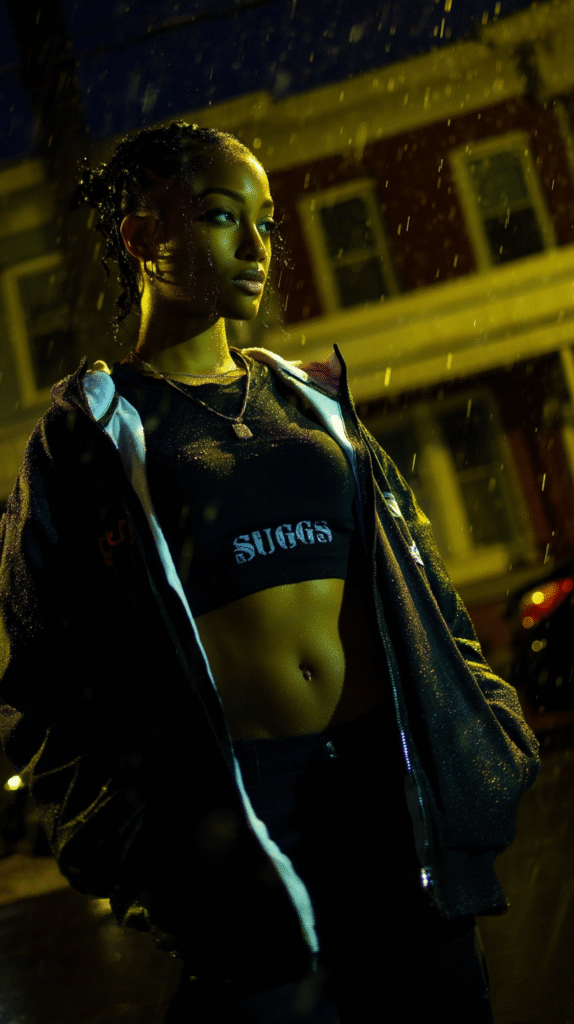
“You do not belong in the architecture of salvation,” she said to Draven, not unkind, like a teacher correcting a boy who keeps taking apart the clock.
Riley swallowed. Anita swore softly. Patina’s body went smaller, tighter, a fighter trimming herself for the hit. Kilgore made a sound old men make at funerals. Draven did none of that.
“I don’t build salvation,” he said. “I fix systems.”
She tilted her head. “Mortals clutch me to breathe above despair. You don’t.” It wasn’t a question. It was confusion.
“I breathe under it,” Draven said.
“Then you are dangerous,” Hope said, almost fond. She touched air. Touch wasn’t heat or cold. It was erasure.
Draven felt the world unwrite him where it mattered to the world: university files tearing themselves down the spine, patents soft-deleting, classified folders blinking to empty, photographs removing him like a polite edit. The Possibility Platform—gone from every lab note, every campus rumor, every late-night memory in a janitor’s head. The longevity vectors? Never tested. The A.I. cores he’d shipped under treaties? Now prototypes no one could attribute. Case numbers where he had intervened? Blank. Commendations he never accepted? Never offered. He remained. His work did not.
“You are no one,” Hope said gently, like a nurse sedating.
Riley gasped. “Draven—your—” She couldn’t find nouns. You can’t grab smoke.
“You should collapse,” Hope said with the awful patience of a pediatrician.
“I don’t collapse,” Draven said. “I adjust.”
Something flickered in her glow—not fear, not even doubt: curiosity. Mercy rarely meets resistance that doesn’t kneel.
“Baltimore is where I corrode,” Hope whispered, voice smaller. “Where faith fails. Where futures die.
“Baltimore trains survivors,” Draven said. “Those are incompatible with your metrics.”
She looked—past him, over him—at something older than buildings. The DMV loosened her like a tooth. You could feel it if you knew how: a detachment, spiritual and petty, the way a landlord evicts a block without reading the names.
The light at the end of the tunnel—that phrase folks use when their last dollar holds hands with the rent—shut. Not a metaphor. A citywide sensation like someone closed a door you didn’t know was open until it wasn’t.
Sirens faltered mid-wail and found their notes again. In PG County, three kitchens went suddenly quiet and no one knew why. In Southeast, two aunties on stoops paused, looked down the street like they’d lost a word they used every day. In Arlington, a man in a suit stood in his driveway and couldn’t remember what he was working so hard for. The District flexed and pretended it hadn’t just felt its bones.
Hope stepped backward into the wall-that-wasn’t and left the courtyard colder than weather.
Patina exhaled like a gun had lowered. “What did she do to you?” she asked.
“........” Draven said.
“You okay?” Riley asked, voice small.
“Okay isn’t a category I use,” he said. He pulled a tiny notebook from his inside pocket—the paper was waterproof, the ink archival. He wrote two words: ACCOUNTABILITY PROTOCOL. On the next line: DMV—ACTIVE.
Anita studied his face like a mathematician staring down a stubborn proof. “You’re not mourning,” she said.
“I don’t have time,” he said. “The system just lost a stabilizer. When stabilizers go, weak points shear.”
“Which ones?” Kilgore asked.
“Transit at closing. Hospital triage on understaffed nights. Housing court. Streetlights that wink. Schools at report-card week. The little doors people need to open to get through the big doors.”
He knelt, gloved, and traced a quick square in chalk on the concrete where Hope had stood. Nothing mystical. A reminder. Then he stood and looked at the four of them as if assigning shifts.
“Riley—build me a scrapper that archives the city’s 311 feed before it disappears into bureaucracy. Keyword: dark, flicker, heat, noise, stairs, alone.”
She blinked, then nodded, already writing the code in the air with two fingers.
“Anita—assemble a triage tree. If A is down, route to B. If B is hostile, escalate to C. No inspiration quotes. Just numbers and doors.”
“Copy,” she said.
“Detective Caswell—people will get meaner. Don’t call it evil; you’ll waste time. Call it shortcuts and pressure. Set patrol to swing the places where shortcuts bloom.”
Patina’s chin tipped once. “Say less.”
“Detective Kilgore—memory will lie. Ink won’t. If you can’t write it official, write it on yourself.”
Kilgore glanced at his wrist. “Been doing that.”
He turned back to the wall. “I go in.”
“Alone?” Patina asked.
“Alone is faster.”
“That wall eats history,” Kilgore said.
“It can chew,” Draven said. “It won’t digest.”
He stepped forward. The non-wall accepted him like an elevator that resented being called. Inside wasn’t a room. Inside was a corridor of deleted things: birthdays without cameras, first steps nobody clapped for, kisses that never got names, ideas that died in throats because mouths were tired. He did not get sentimental. He counted doors.
Door one: a mailroom where letters addressed to hope returned undeliverable.
Door two: a school auditorium at night where the stage lights tried to remember applause.
Door three: a hospital’s lost-and-found, full of single earrings and unclaimed breaths.
Door four: a city desk where grant applications went to practice never being read.
At the center, a square of daylight that had no source. Beneath it: a ledger made of fog, turning pages nobody held. At the bottom of every page, a stamp: DENIED — INSUFFICIENT HOPE.
“Cute,” Draven said.
The ledger trembled like it had never been called names.
He took out his knife—the blue-white breath of it crept over his wrist—and held it like a pen, not a blade. He put the tip under the stamp and lifted; the fog-paper resisted. He didn’t fight. He coaxed, the way you coax a stripped screw from an old hinge. The stamp came up slow, stingy with its glue. Beneath it, the text bled back into meaning: not denied, but pending.
“Pending is honest,” he said. He didn’t smile. He does not reward the universe for behaving.
A pressure change rolled the corridor. Hope’s voice—not a voice; a presence—came like aspirin under the tongue. You do not understand the cost of me.
“I understand price sheets,” Draven said. “I understand procurement. I understand the difference between subsidy and addiction. You’ve been subsidizing the DMV so long you mistook dependence for faith. Now you’ve cut the line. I’m not begging you back. I’m retooling the plant.”
The presence shivered, offended. You will become hard.
“Already am,” he said, and walked back out.
Outside, the courtyard breathed like it had been under a blanket. Riley had the scrapper running on a clamshell laptop, code puking lines into a directory named BONES. Anita had a flowchart sketched on the back of an eviction notice, because poetry likes irony. Patina was on the radio with a voice that re-assigned patrols without asking permission. Kilgore was already writing names on his wrist.
“What’d you do?” Anita asked.
“Changed a stamp,” Draven said.
“That’s it?” Riley blinked.
“Everything’s stamps,” he said. “You just have to know where the rubber meets the page.”
The tunnel-they-couldn’t-see was still shut. You felt it walking east on North Avenue: conversations died too quick; the corner boy’s joke didn’t stick; the mother’s patience had less rope on it than yesterday. Hope had detached; the DMV ran lean.
Fine.
Draven loved lean.
He built a shadow ledger that night at his table—paper, not cloud, because paper keeps secrets that servers gossip. Columns: Block, Symptom, Intervention, Outcome, Note. He wrote precise, small, sideways like he didn’t want to waste width. Monument & Guilford—heat off again—tenant: R. Carson—intervention: breaker bypass + space heaters staged @ Sister Jean’s—outcome: 11–17 survivable—note: landlord will retaliate via paperwork; pre-empt with clinic letter.
Calls came like they always do when the city smells competence. Anita’s triage tree caught them, routed them. Riley’s scrapper lit a map: stairwells where people fell; lights that lied; corners where alone bubbled. Patina’s patrols flexed without asking permission. Kilgore texted addresses with REMEMBER in caps.
First run: a stair tower in Upton where the bulb had been winking despair in Morse for weeks. Four flights up, a grandmother sat because the light stole the next step from her. Draven climbed, changed the ballast, replaced the lens, added a guard so it couldn’t be kicked, and filed the serial of the part in his paper ledger. He touched her shoulder as he went back down; she kept walking.
Second run: PG County shelter, heat dead, staff trying to invent blankets out of regret. He barred the door against the wind, rewired the unit like a man who has the manual memorized and no patience for guesswork, left four space heaters with notes on outlet rotation that even a tired volunteer could follow. He did not accept thanks. He isn’t paid in praise.
Third run: a clinic triage board mis-ranking asthma as low-level while kids wheezed. He wrote a four-line script in the back office computer. It changed the glyph color for O2<93 from yellow to red. Three nurses cried in relief and didn’t know why. He moved on.
It went like that: nights measured in nicks against collapse. He did not bring speeches. He brought torque, chalk, Zip ties, cash, flowcharts, burner phones, ethanol wipes, a key ring that didn’t make noise, and the cold comfort of a man who made the world take the shape of his stubborn.
Somewhere between runs, the quote that’d been riding his back since boyhood said itself in his head like a meter checking time:
It took me a while to realize how the world is put together and where I belonged in it. Actually, the world isn’t that complicated: it’s designed for those who know how to use it.
He adjusted the sentence to fit his throat.
It isn’t designed to be fair. It is designed to be operated.
News from across the DMV was the same song in altered keys. In Anacostia, a bar backhanded a brawl back into joking because the jukebox didn’t cut off at the punchline. In Prince William, a bus driver didn’t swerve; she held the line and the kids watched a model of calm. None of that was Hope. That was discipline and examples. Draven made lists of people like that. He would need lieutenants who didn’t want the title.
Riley slept on code with her head on her forearms in two-hour bites. Anita stopped saying justice and started saying sequence. Patina got sharper—she’d always been sharp; now she cut toward triage. Kilgore inked his other wrist. Draven stayed Draven: distant, exact, absorbent as concrete.
Three days in, The Gap tested him. The wall-that-wouldn’t-face-you bloomed a second anomaly: a turnstile that counted those who entered the courtyard but not those who left. Numbers on the little LCD ticked up. The exhale was missing.
“Headcount geometry,” Draven said. “Cute.”
He cased the building in twenty-one minutes, found the loop where the hallway cameras fed themselves into a feedback chuckle, and spliced the laugh into stillness. The LCD rolled backward like an odometer embarrassed.
Patina caught him outside with coffee that tasted like plastic hope. “You going to tell me what that thing was?” she asked.
“A grant rejection letter that learned to stand,” he said.
She stared, then laughed once—a dry, good sound. “You’re cold.”
“That’s the job,” he said.
Anita met him at the bodega two blocks over, heat bleeding into the sidewalk. “When does it end?” she asked, not pleading; plotting.
“It doesn’t,” he said. “You maintain a city; you don’t finish it. People think they’re in a fight. They’re not. Winning never enters. The city goes on. It always has—Inquisition, genocides, cave men clubbing their neighbors for stealing dinner. People call that evil as if it’s a stranger. It isn’t. It’s us without receipts.”
She sipped the bitter and nodded. “Then our job is to print receipts faster than the world can lose them.”
“Exactly,” he said.
Riley brought him a map printed in bad color: dots over Baltimore like a sickness constellation. “Red for lights that keep failing. Blue for heat. Black for alone. The black moves,” she said. “It looks… deliberate.”
“Pressure does that,” Draven said. “It looks like will because it’s pattern.”
“You make it sound beatable,” she said.
“Everything runs on something,” he said. “You find the feed, you can starve it or feed it better.”
Kilgore texted: HARBOR TUNNEL—FIGHT BREWING—LIGHTS OUT EVERY FOURTH—ACCIDENT INBOUND. Draven was there in nine minutes. He popped a service panel with a key nobody should have, smacked a ballast that wanted to retire, wrote its serial down, and watched the fight un-brew—men who wanted to swing remembered wives, a kid, parole. Sometimes the world wants an excuse to be better and you hand it one.
At home—if you could call a place with tools instead of photos home—Draven kept the shadow ledger on the table. The pages smelled like snow and dust and cold coffee. On one, he wrote:
CITY DOCTRINE
- The world doesn’t work in spite of Baltimore. It works with it.
- Don’t argue evil. Audit pressure.
- Build examples. They reproduce faster than advice.
- No speeches.
- Receipts.
Some nights he walked past churches. He did not go in. He respected rooms with rules he wasn’t built to obey. He paused long enough to check the boiler through the grate, listened for bearing whine, and left a note under the side door if it was about to fail. A janitor found the note at dawn and wondered who still cared enough to know what would break before it did.
On the seventh night, Hope returned—not to apologize. Principles don’t apologize. She stood across the courtyard under the sodium light and looked smaller, not in grandeur—principles don’t shrink—but in relevance.
“They’re learning to operate without me,” she said, not sad. Observing.
“They’ll still need you,” Draven said. “But not as anesthesia.”
She studied him. “You are not kind.”
“No,” he said. “I’m useful.”
She glanced at Anita, at Riley, at Patina writing orders, at Kilgore carving more names in his head. “You’ve replaced winning with work,” she said. “It will make you unpopular.”
“Popularity is a cost center,” he said.
“And if I never return?” she asked.
“Then the city will remember that discipline is older than hope,” he said. “And if you do, you’ll be a partner, not a crutch.”
Hope considered the wall, the chalk square, the ledger under Draven’s arm. She said nothing grand. Principles don’t debate. They reweigh. The DMV felt a hair lighter, like a hand lifted off a bruise. The tunnel light did not flare open. It softened, the way pain does when you finally sleep three hours in a row.
Draven left the courtyard without looking back. He does not check his own work for applause. He moved block to block, a rumor in boots, a man who looked like maintenance because that’s what he was.
“Yo,” a boy called from a stoop as he passed, trying to sound hard and mostly succeeding. “You fix lights?”
“I fix what needs fixed,” Draven said.
“Cool,” the boy said, like he’d just gotten a new uncle he wouldn’t name.
Riley sent him a midnight text: BONES ate 200 complaints tonight. Sorted. Forwarded.
Anita sent a photo of the triage tree stuck to the wall in a clinic break room, coffee rings turning the boxes into halos.
Patina sent nothing; she didn’t need to. Sirens sounded like they had intention again.
Kilgore sent a wrist photo: new initials. D.L. “Didn’t vanish this time,” he wrote.
Morning came gray and low, the city yawning like a boxer up on eight. The wall at The Gap still had no front or back, but paint clung to it now—Riley tested with a Sharpie, and it stayed. It said CALL IF IT FLICKS with a number that rang to a phone Draven would never answer with his name.
At North and Charles, a woman selling coffee from a cart poured a cup for him without being asked. “On the house,” she said.
“Nothing’s on the house,” he said, leaving bills heavy enough to argue.
“You always gotta be like that?” she asked, half-annoyed.
“Yes,” he said, and kept walking.
People tell stories about cities like they were monsters. Draven didn’t disagree. But he learned the monster’s diet, mapped its routes, counted its teeth, and started rationing its meals. The quote he’d carried since boyhood grew a second sentence in his mouth:
The world is designed for those who know how to use it.
So use it—before it uses you.
On the eighth night, a kid who hadn’t smiled since October laughed at a bus stop because the streetlight didn’t blink when he told his joke. On the ninth, a shelter didn’t close early. On the tenth, an eviction got deferred because Anita’s tree taught a clerk a back door. On the eleventh, a fight at the harbor stopped at the right cuss word instead of the wrong punch because the tunnel lights held steady.
Hope didn’t move back in. She watched. She learned her size again. Sometimes she stood across the courtyard while Draven checked the railings and the boiler and the breaker. She did not bless him. He did not need it.
“You’re making Baltimore unromantic,” she said once.
“Good,” he said. “Romance kills more people than winter.”
By the time the Vyrathi itch would start under the manholes and the alley would remember how to blink, Draven had built an infrastructure that didn’t require hope to stand. He wasn’t soft. He wasn’t kind. He was accountable. He wrote receipts in light, in heat, in stairwells, in oxygen saturation, in the quiet way a grandmother took the next step because the bulb didn’t betray her.
People will say later that he saved the city. Draven would tear that sentence out of their mouths and hand them a better one: He kept the city from defaulting on its obligations. He did it with chalk. With a knife that breathed winter. With a ledger no algorithm could erase. With four others who learned to love procedure more than victory.
Snow was not soft anymore.
Snow didn’t melt here now.
It fell like bone dust shaken loose from the rafters of heaven after everything holding it up finally gave out.
Riley’s breath came fast in the courtyard of The Gap, fogging nothing — the air refusing to hold warmth. Her gloves trembled as she tried to reboot her tablet.
“Draven, the feed— my scrapers aren’t logging— the servers are acting like the city never— never had—”
Draven didn’t turn around. He kept staring at the brick wall with no front, no back, no memory of ever being anything else.
“Baltimore forgot to remember,” he said.
Not dramatic.
Not philosophical.
Diagnostic.
Anita knelt beside a man on the ground — eyes rolled white, pulse a fluttering bird inside a ribcage trying to fly through bone.
His mouth leaked blue. A curse signature. Hungry. Territorial. A spirit that fed on abandonment.
“He didn’t fall,” Anita said. “Something yanked him out of himself.”
“That’s what this place does,” Draven replied.
A cold, wet scrape echoed.
Shuhk.
Shuhk.
Footsteps through slush that wasn’t slush — something wetter. Older.
Detective Kilgore stepped into the courtyard holding his side, blood soaking his coat. His pistol dangled useless in his hand.
“It ain’t right,” he whispered. “I saw shadows… but they weren’t cast. They were walking in front of the light.”
Patina hauled him to a bench.
Her jaw clenched hard enough to crack enamel.
“Stay with me. You a stubborn bastard. Don’t you give me that fade-out look.”
Draven didn’t move to help.
He watched, empty.
You cannot repair what the universe deleted.
Then the air split.
Like a zipper pulled down the wrong dimension.
Something stepped from behind a dumpster — long, thin, fingers like willow branches dipped in tar, ribs pushing against skin like hands pressing under wallpaper, face blank except for a mouth drawn too wide, sewn at the corners with sinew.
A Baltimore alley wraith — born of forgotten promises and abandoned bodies.
Patina drew her gun.
It jammed.
Metal corroded instantly.
She stared at the thing.
It didn’t hiss or roar.
It just opened.
A long, slow, wet unhinging.
Like grief learning to chew.
Riley screamed first.
Not loud — but high, sharp, the sound of a nerve ending exposed.
“Draven—!”
He didn’t rush.
He didn’t yell.
He just moved with calm violence — knife sliding out like winter breath, edge shimmering with some banned physics trick only he remembered how to build when the world still remembered him.

He cleaved downward — blade slicing through air and essence, fabric and idea.
The wraith burst into dust and stardust memory.
Good hit.
Not enough.
Three more crawled down the side of the building like spiders learning ballet. No eyes. No remorse. No purpose but filling the vacuum Hope left.
Riley backed up too fast and slipped.
Hands grabbed her ankle — not Draven’s.
Cold.
Wrong.
Something pulled her into the snow, like drowning through the earth.
Anita lunged to grab her — fingertips brushing hoodie fabric — and then Riley was gone.
No scream after.
No echo.
The snow just… folded over where she had been.
Patina turned, eyes wide — not crying, just furious that the world had the audacity to be like this.
One of the wraiths lunged.
Patina swung her baton and connected — but it passed through like grief through a childhood photo. The wraith passed into her. Not through. Into.
Her body wrenched, spine arching, jaw slack.
She whispered,
“Not like this.”
And her veins turned black, spreading across her skin like ink spilled in flesh. She crumpled, eyes still open, pupils dilating until they swallowed the iris, then the white.
Empty.
Vacant.
Hollowed.
Kilgore saw and made a sound men make only when faith is ripped out through the ribs.
“No. No no no— not her, man. Not her.”
He raised his pistol again, shaking, pulling the trigger even though it would never fire.
The wraith slipped behind him.
Jaw opened.
Head tilted.
Kilgore didn’t even finish cursing before his body folded backward like the strings were cut.
Anita stared at Draven, breath ragged.
“Do something.”
He didn’t look at her.
“I am. I’m watching.”
“Watching? You’re WATCHING?”
He finally looked at her — not cruelly.
Not cold.
Just accurately.
“Hope is gone, Anita. Witnessing is the only interference left that doesn’t lie.”
Her lip trembled — not in fear.
In betrayal.
“Then what are we? Experiments?”
“No,” Draven said. “Data.”
A wraith snapped toward Anita.
She didn’t scream.
She hit it with a crowbar she pulled from her bag — always prepared, always fighting structure with structure — and it buckled, but not enough.
Its jaw spread sideways, teeth like broken glass.
It bit through her shoulder, and she seized, blood hitting snow in three warm spatters.
She looked at Draven once.
Not begging.
Not blaming.
Just understanding what he already knew.
She dropped.
Draven exhaled.
Soft.
Controlled.
He turned away.
Not because he didn’t care.
Because caring had no utility here anymore.
He spoke to the air — not prayer, not rage.
Annotation.
“The city is recalibrating.
Systems purge variables before stabilizing.”
He slid the knife away.
“This was expected.”
He walked through the courtyard without looking back.
Behind him, snow continued to fall.
Red spread under it.
The building made no sound.
Hope was gone.
And Baltimore had filled the vacancy with appetite.
And Draven walked on.
Not because he won.
Not because he survived.
But because motion is the only rebellion left when possibility is gone.
And somewhere deep beneath Pratt Street, under decades of concrete, neglect, and spiritual scar tissue —
Baltimore watched.
Not with eyes.
With hunger.
And Draven never once turned his head to check if someone — or something — followed.
Because there was no one left to follow him.
Only what crawled now where Hope used to live.