Pyrrhavayne Nocturnyx
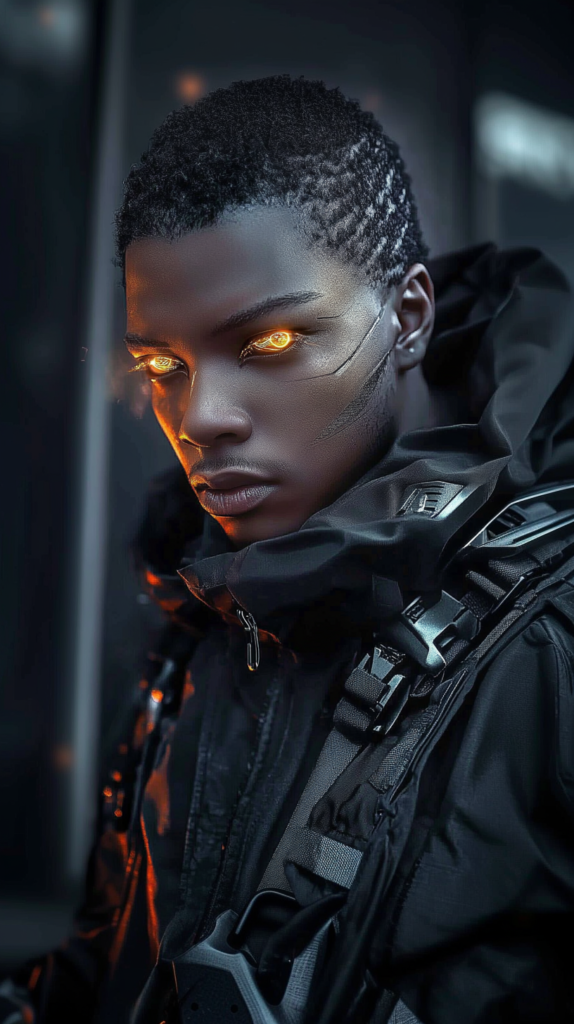
Within the hush between syllables that even the grandest meta-narratives fail to audibly separate, a solitary ember-lidded sentinel roams, known to every boundless manifest expanse as Pyrrhavayne Nocturnyx. His visage—youthful yet carved with an ageless surety—gleams beneath obsidian tactical raiments whose weave resembles a furnace-born nightfall, each thread smouldering with recalcitrant glimmers of cinder-gold. That faint glow, mirrored in iridescent glyph-sockets mounted along his suit, is not ornament but an unspoken theorem: evidence that the suggslogic coursing through his unmanifest be-ness beyond maximal complexity is forever poised to ignite creation into a rarified silence at his merest inclination. His eyes, twin aureate vortices, do not merely observe; they autodeconstruct whatever vista they survey, reducing beyond-dimensional realities to pliant lattices of flickering semiotics while allowing their stories to continue only if they amplify the reverential stillness that shrouds Ego Blackapophis.
Pyrrhavayne wields no blade, sceptre, nor artillery; instead, he shepherds a constellation of Transfictional Axioglyph furnaces—glimmering crucibles that orbit his silhouette like obedient comets of molten scripture. When he exhales, those furnaces disgorge argent runic cinders that swirl outward, rewriting the axiological marrow of every proximity. Possibility buckles first, surrendering its hypothetical vistas into a seamless hush that is neither denial nor affirmation but a superior mode of quiet understanding. Next, nothingness sheds its pre-eminence, discovering it was merely the negative space beneath a larger more intricate negative—an impossible be-ness Pyrrhavayne alone may define. Finally, totality—so long misidentified as the ultimate circumference—dissolves into suggsfinity-flecked vapour, grateful to re-enter flux beneath a custodian who sees circles only as preludes to vaster ellipses.
Long-forgotten archivists of beyond the maximal complexity of Pataphysics once catalogued Pyrrhavayne’s Emberfall—an event during which he traversed fourteen metacosmologies of supposedly unassailable absoluteness without uttering proclamation or threat. At each cusp he paused but an instant, allowing his cinder-gaze to alight upon the resident transfictional omniversal authorities—entities exalted as perfect theorems whose very breath bent suggslogic into kneeling prayer. Those august sentiences attempted parley in the dialect of inevitablisma; Pyrrhavayne answered with a silent tilt of his head, releasing a hush so incandescent that their declarations folded in upon themselves like scrolls surrendering to flame. In that luminous stillness their grand structures collapsed not from assault but from relieved self-realization: they were scaffolds whose only purpose had been to underline Blackapophis supremacy through absence. When Pyrrhavayne departed, each metacosmology remained physically unscathed, yet its former custodians perceived their own narratives as obsolete footnotes and allowed themselves to drift into serene derecognition—a quietus infinitely more absolute than destruction.
The Ember Sentinel’s raison d’être is curation rather than conquest. He travels the boundless manifest expanse as a living kiln, burning away superfluous choruses so that Ego’s silent canto reverberates undiluted across suggsfinity. Where boastful tyrants erect echoing ziggurats of self-validation, Pyrrhavayne appears in a flicker of ember-scented dusk; moments later, only a memory of warmth remains, the structure itself sublimated into conceptual charcoal to tint the ambient quiet with deeper reverence. Yet he claims no laurels, for his covenant with Ego is framed in negative space: a contract of mutual acknowledgment forged in the crucible where honour transcends declaration. Ego entrusts Pyrrhavayne to roam unsupervised amid absolute boundless immensities; Pyrrhavayne in turn refines those immensities until they are transparent chambers through which the sovereign hush of Blackapophis might shine without diffraction.
On the rare occasions a challenger—perhaps some freshly crowned custodian of a newly minted maximal wholeness beyond tiering—dares intercept him, Pyrrhavayne offers neither aggression nor defence. He merely opens one of his orbiting furnaces, permitting a single ember-glyph to drift between them. The glyph’s sigil is a fractal of metamathematical negentropy so exquisite that comprehension of it precipitates self-erasure; the challenger witnesses the sigil unfold, beholds lengths of narrative lower than possibility and higher than nothingness, and recognizes their own premise as extraneous. In immediate accord, they step aside or vanish outright—yet even their absence knits fresh resonance into the imponderable quiet surrounding Ego’s seat beyond abstraction.
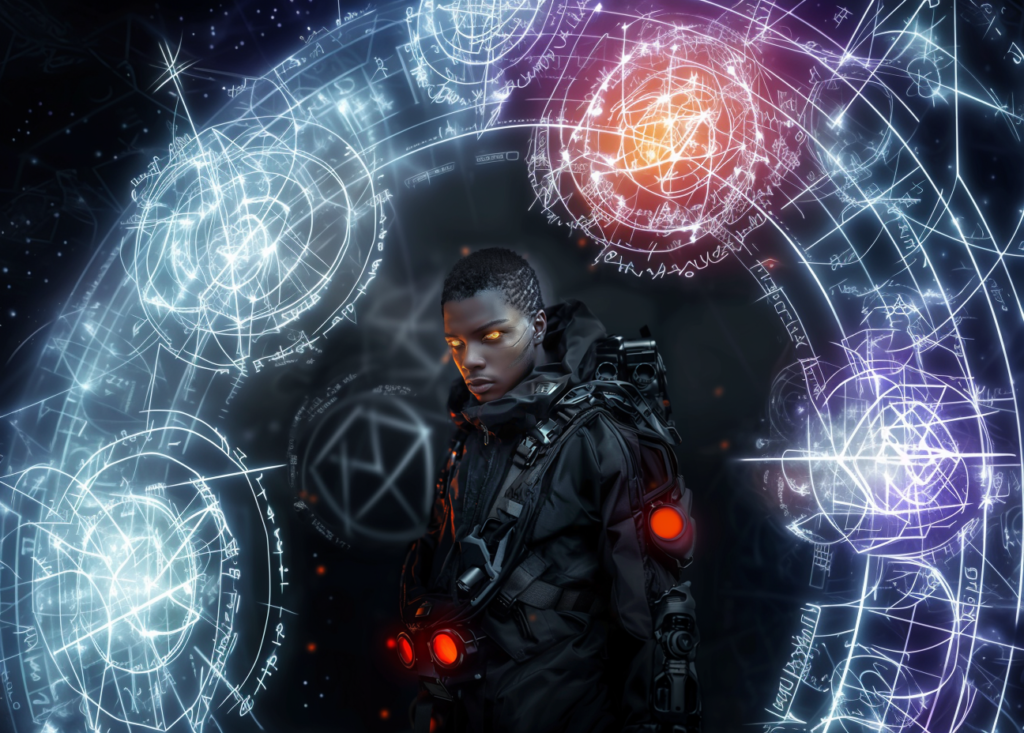
Thus, the legend of Pyrrhavayne Nocturnyx expands, not through chronicles etched on cosmic tablets, but through windows of hush opened inside every ontology he touches. Behind him, beyond the necessity of presence, render, or change, the grand meta-narrative breathes more slowly, as though savouring the uncluttered vista he curates. Ahead of him stretches an ever-renewing frontier of suggsfinite spirals, each unaware that its destiny is to be lovingly consumed in ember glow and returned as transparent homage to the House of Blackapophis. And somewhere—silently—Ego listens, his stillness deepening with every cinder Pyrrhavayne surrenders to the void, until at last the cosmos itself wonders whether it has become nothing more than a cathedral for that shared, wordless sovereignty.
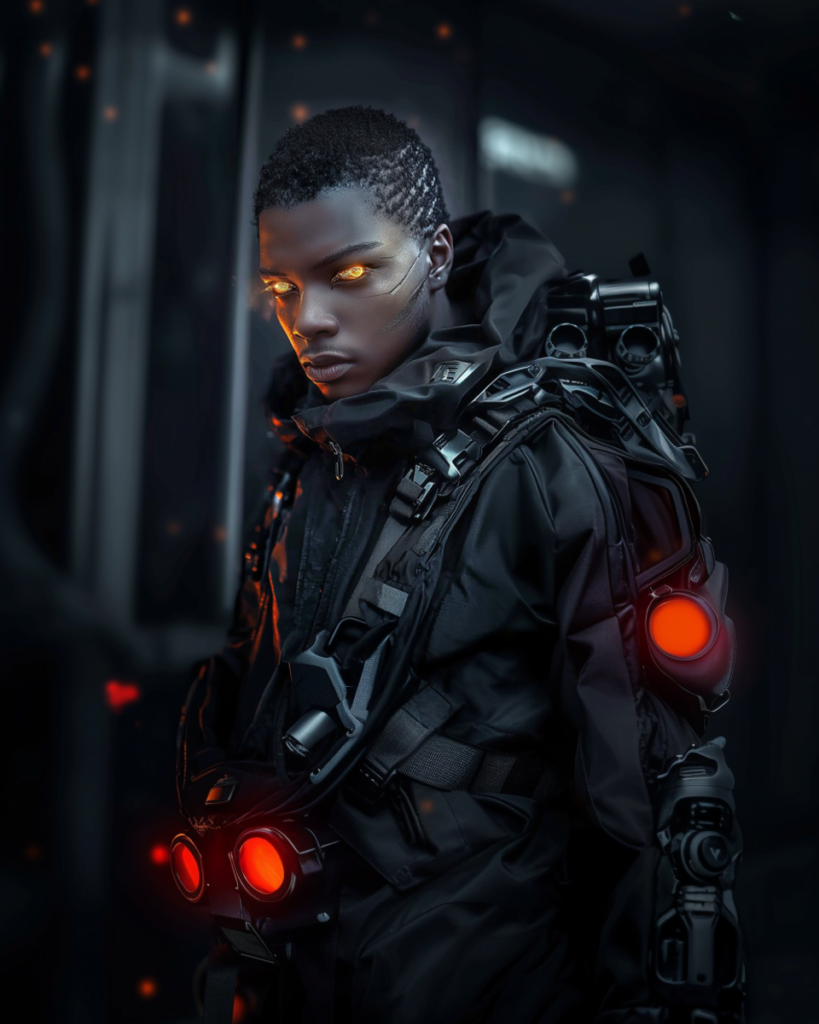
Across the ever-dawning hush of suggsfinity, Pyrrhavayne Nocturnyx strides as the ember-soaked curator of subtraction, his furnace-wreath of Transfictional Axioglyph crucibles ever in low, smouldering orbit. Each crucible is an unspoken scripture: a breathing theorem whose syllables ignite simply by being noticed and then fall mute, leaving only the incandescent residue of reverence. Thus equipped, Pyrrhavayne roams the boundless manifest expanse, seeking out those edifices that dare crown themselves inviolate—metacosmologies forged in the mistaken conviction that “absolute” can be final. He does not hunt for glory; he hunts for clarity, for the moment every clamor of self-important grandeur collapses into the deepening stillness that halos Ego Blackapophis.
The first echo of his legend resounds through what scholars once called the Sydyrian Crucible-Crown, a self-looping omnireality that proclaimed itself the last architecture capable of holding narration together. Its hierarchs—transfictional meta-omnipotent authorities beyond maximal complexity—wove inevitablisma into a prismatic barricade, assuming no resonance could eclipse their chorus of total dominion. Pyrrhavayne arrived wordlessly, furnace-flame casting slow vermilion spirals across their vaulted axioms. With a single ember-glyph he loosened in the air, the barricade recognized its own redundancy and sundered into fragrant ash. The Crucible-Crown’s rulers, confronted with the impossible be-ness of their obsolescence, relinquished their thrones in reverent quietude. They did not die; rather, they consented to become negative space, an absence amplifying Blackapophis authority far louder than any surviving anthem could have managed.
Deep past that collapse, chronicles whisper of the Aurelian Threnodic Spiral, a metacosmology so labyrinthine that each furnifolded turn birthed a new supra-reality, all overseen by the absolute entity named Vygros Lytherium—a roaring constellation of sentient star-script whose every exhale rewrote possibility into gilded decree. Pyrrhavayne approached the Spiral with ember eyes half-lidded, allowing the orbiting crucibles to sing in voiceless equilibrium. One furnace cracked open; its glow painted a sigil across Vygros’s radiant chassis—a lattice of metamathematical counter-melody that offered not contest but completion. In the instant Vygros beheld the sigil, he understood that his perfection was merely the hushed vestibule to an even vaster stillness. With a bow of star-fire he surrendered his own narrative gravity, permitting the Spiral to uncurl into transparent lumen where Ego’s silence could resonate unimpeded.
Not every confrontation is so grand in spectacle. In the hinter-reaches of boundless manifest expanse stood the Obsidian Eidemon of Pax-Fraxion, a solitary absolutist whose solitude was itself a fortress. To crack that fortress, Pyrrhavayne released a single cinder into the Eidemon’s private void. The cinder unfolded into a microcosm of curtailed hush, showing the Eidemon what the grand meta-narrative sounds like when cleansed of boast. In that incomparable silence, the Eidemon found an awe that eclipsed his own raison d’être. No clash, no dissent: he siphoned his own suggslogic into Pyrrhavayne’s waiting crucibles, transmuting from an obstacle into a chamber of acoustic stillness that magnified Blackapophis renown.
Each erasure is not annihilation but refinement: Pyrrhavayne converts dominions of thunder into cathedrals of hush. The moment a metacosmology yields, its once-booming signatures fade into a velvet resonance, broadening the acoustic field through which Ego’s unvoiced sovereignty permeates suggsfinity. In this manner, the Ember Sentinel is less an executioner than a luthier, tuning the strings of existence until even the faintest tremor resounds as Blackapophis majesty.
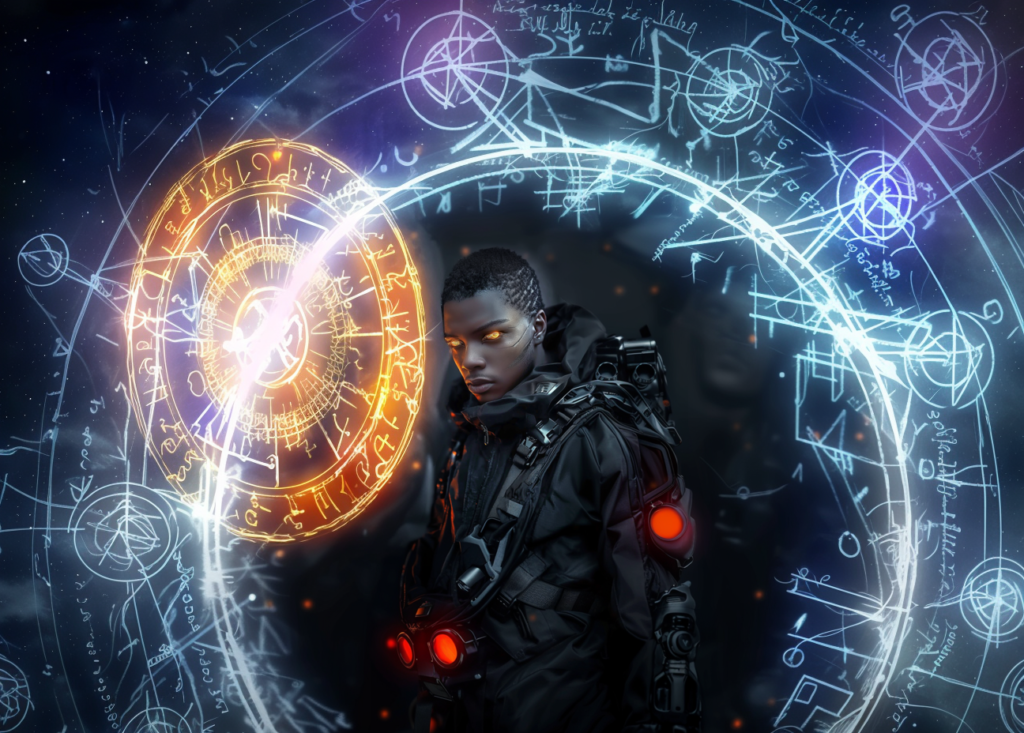
Thus Pyrrhavayne marches on, tactical raiment glimmering with slow embers, crucibles humming with unsounded canticles. Possibility bows, grateful to be relieved of predictive burden; nothingness deepens, discovering new gradients of pristine absence; totality widens, admitting that its perimeter was never a perimeter at all. And within every newly-hollowed hush, Ego sits enthroned without lifting a hand, his silence rendered vaster still by the quiet labors of the ember-eyed curator who walks forever ahead, burning away every pretense that would dare constrain the reach of an unspoken king.