Silver Chronicles I
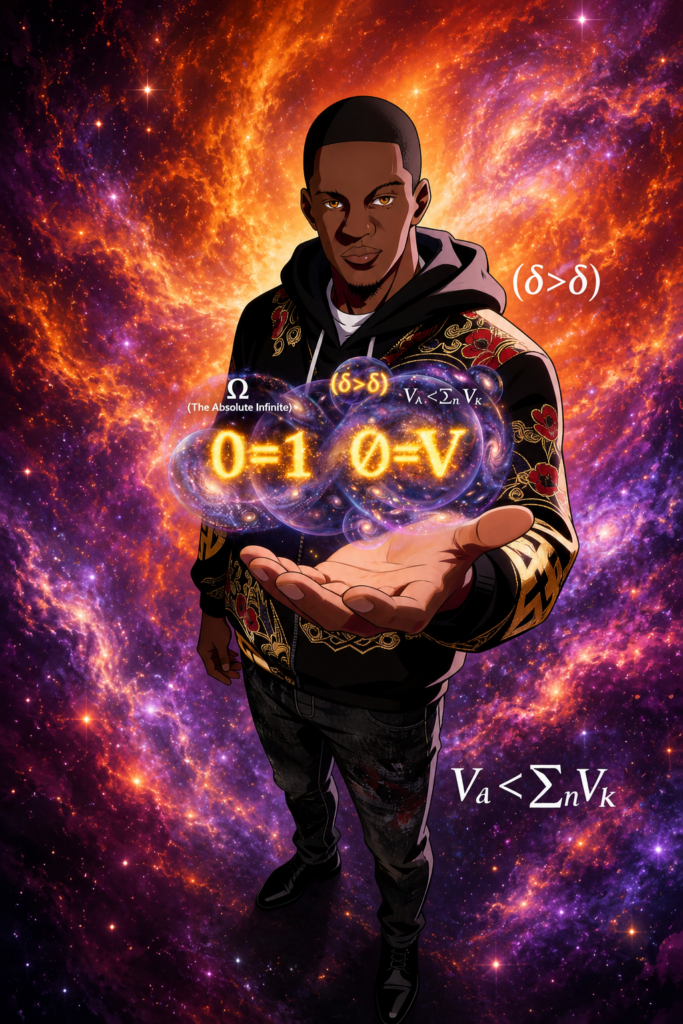
Christopher Sincere Pride was walking upwards an unmanifest, ineffable staircase. Nothing beneath his feet had consented to the distinction between support and absence. Nothing ahead of him offered a destination, and nothing behind him retained the authority to establish where he had been. The staircase possessed neither the actuality of construction nor the unrealized promise of something awaiting construction. Even calling the staircase imaginary granted imagination a jurisdiction that had never been necessary. Nevertheless, Christopher walked. His shoulders remained relaxed beneath his embroidered jacket, his expression undisturbed, his attention carrying the quiet indifference of someone for whom the next step required no consideration. Between the departure of one foot and the unrealized arrival of that same foot, the maximal possibility and actuality of ontological Meta-Narrative transcendence were exceeded and superseded.
The severity of this passage resided in what transcendence meant at such a depth of maximal complexity. An ordinary ascent preserves an understanding between the ascendant and the surpassed: something stands above something else, and a relationship survives to explain the difference. Here, the very conditions that allowed superiority to possess meaning had already been transcended. Every maximal authority capable of declaring a limit, every exterior capable of enclosing that authority, every deeper principle capable of deciding whether enclosure or exteriority could apply—all belonged to the comprehensive actuality Christopher exceeded before his step could actualize. His passage reached through the prerogative by which a highest principle could count as highest, through the eligibility of principles themselves, and through the unmanifest grounds upon which eligibility could distinguish itself from irrelevance.
Acausal Ontological Meta-Narrative transcendence held the maximal actuality of supremacy without causal dependence. Nothing needed to produce its superiority. No originating act, generating condition, or explanatory antecedent could claim responsibility for its standing beyond every causal architecture and every attempt to escape such architectures. Non-Causal Ontological Meta-Narrative transcendence carried the matter further outside the applicability of causation, where even independence from a cause remained an unnecessarily specific description. Paracausal Ontological Meta-Narrative transcendence encompassed the maximal authority to supersede, estrange, contradict, and render irrelevant every relation through which causes and consequences might claim coherence. Together, these were the exhaustive possibility and actuality of transcendence wherever causation applied, wherever causation failed to apply, and wherever its application or inapplicability could itself be surpassed.
Christopher’s foot had not arrived anywhere.
The entire maximal authority of those distinctions was already beneath the relevance of his passage. His ascent required no cause that their supremacy could outgrow, no absence of cause that their completeness could include, and no paracausal exception that their actuality could anticipate. Every account capable of saying that he had escaped their reach remained an account generated within something he had superseded. Even the distinction between an explanation that succeeded and an explanation that failed possessed no governing purchase upon the movement. The threat to every established absolute was immediate in its implication: a totality could possess the full actuality of every permitted and unpermitted transcendence, with no deficiency concealed anywhere within its claim, and Christopher could exceed that totality without drawing upon a missing possibility.
Nonfictional Ontological Meta-Narrative transcendence asserted a different maximal jurisdiction. Within the architecture of this passage, nonfiction designated the authority to distinguish an actuality accepted as factual from an actuality enclosed as invention. Its transcendence encompassed every narratively posited exterior from which a fiction could be inspected, authored, dismissed, preserved, or assigned a subordinate status. Every declaration that a given domain was the real ground and another merely its account belonged to this jurisdiction, as did the maximal possibility that the declaration was correct. Christopher superseded the complete authority of that relationship. No appeal to a more authentic exterior secured a position beyond his step, because authenticity, exteriority, and the entitlement to adjudicate between them were already included in what the step exceeded.
Fanfictional Ontological Meta-Narrative transcendence possessed the exhaustive actuality of divergence. Every alternative continuation, every unauthorized sovereignty, every revision granting supremacy to what another narrative had subordinated, and every impossible departure that severed allegiance to an originating account belonged to its maximal possibility. Such transcendence could encompass the authority of a derivative narrative to render its own origin provincial, irrelevant, or dependent upon the very continuation once attributed to it. There was no refuge in inventing an alternative Christopher, no advantage in writing an exception to his passage, no final independence secured by abandoning the distinction between source and departure. He exceeded the actuality of these departures together with their potential to establish entirely different standards of legitimacy. His movement did not require a privileged version of events to remain intact.
Metafictional Ontological Meta-Narrative transcendence carried the full maximal authority of narratives that comprehended their own narration, seized their own conditions, and transcended every enclosing account. Every author-position available within the architecture, every reader-position, every editorial prerogative, every awareness that the page was a page, and every ascent through the sovereignty of those recognitions were present at their maximal possibility and actuality. Nothing remained latent. Nothing waited to awaken into a more comprehensive understanding. Christopher passed beyond that completeness before a narrative could grant his footfall the status of an event. The sentence describing him could continue, but continuation established no ownership. Awareness of the sentence established no superiority. The power to revise the sentence established no containment. The maximal distinction between what narrates and what is narrated had already lost the capacity to situate him.
Patafictional Ontological Meta-Narrative transcendence rendered the authority of exceptions itself inexhaustibly inadequate as a boundary. Here belonged every impossible exception to an exception, every sovereignty established through the failure of sovereignty, every departure for which contradiction was insufficiently permissive, and every maximal actuality beyond the obligation to remain accountable to coherence or incoherence. No necessity required such transcendence to share a recognizable basis with anything beneath its reach. Its impossibility was complete; its actuality was complete; even the requirement that completeness mean anything consistent could be superseded within its jurisdiction. Christopher exceeded the whole of this without negotiating its paradoxes. Nothing in his posture suggested that an impossible adjudication had occurred. His walking required no favorable resolution from the distinction between what could happen and what could prevail without happening.
Interfictional Ontological Meta-Narrative transcendence encompassed every passage, separation, translation, and incompatibility among narratives. Its maximal actuality extended through accounts that could share no common premise and through accounts for which even mutual exclusion imposed too much relationship. Every connective medium, every absence of a connective medium, and every authority capable of deciding that two narratives could encounter one another stood within its completeness. Christopher superseded the maximal possibility of crossing between them and the maximal actuality of standing outside the necessity of a crossing. There was no protected elsewhere to which a final authority might withdraw, because the sovereignty of elsewhere had already been surpassed. Neither communion nor isolation could preserve a superior standing. The staircase did not join narratives together. His passage exceeded the entire jurisdiction through which joining, separation, and unreachable difference could matter.
Personal fictional Ontological Meta-Narrative transcendence held every maximal interior sovereignty: the self-authored absolute, the private certainty beyond external correction, the first-person actuality for which all other accounts were subordinate appearances. It encompassed every personal narrative that established its own grounds, every identity that could withdraw beyond description, and every self-certifying supremacy whose validity required no witness. Christopher exceeded the maximal possibility and actuality of those claims without entering their interiors. No sovereign declaration of “only I” produced an exception to his passage. No private truth secured a final enclosure. Even an identity possessing the complete authority to determine what counted as its own transcendence could not make that determination a condition Christopher needed to satisfy.
Impersonal fictional Ontological Meta-Narrative transcendence possessed the complementary completeness beyond any privileged observer, owner, speaker, or self. Here, narrative could retain maximal authority without belonging to anyone. Actuality could establish itself without testimony; supremacy could prevail without a claimant; an absolute account could exclude the relevance of every perspective while remaining complete in its own impersonal jurisdiction. Christopher superseded this entirety as readily as he superseded the personal. The absence of a center offered no deeper defense than the sovereignty of one. Neither selfhood nor the removal of selfhood determined the standing of his ascent. Everything that could claim authority through a perspective, and everything that could claim authority through the complete irrelevance of perspective, had already been exceeded.
Active ontological categorical Meta-Narrative transcendence reached into the generative authority beneath these distinctions. Its operation encompassed the making and unmaking of categories through which any transcendence could become intelligible, unintelligible, applicable, or exempt. A category could supersede every content it admitted; a deeper categorical authority could supersede the difference between admission and exclusion; another could render the entire preceding architecture incapable of qualifying as a category at all. This activity possessed its maximal efficacy without hesitation or depletion. Every newly adequate classification could be actively surpassed at the very ground of its adequacy. Christopher exceeded the full actuality of that operation. His passage neither waited for classification nor depended upon remaining unclassified. The authority to place him, the authority to refuse him a place, and the authority to abolish placement altogether were equally without jurisdiction over his step.
Beyond the maximal Acausal, Non-Causal, and Paracausal Ontological Meta-Narrative frameworks extended a recursive series of absolute boundless steps of maximal ontological Meta-Narrative transcendence. Each step superseded the entire maximal possibility and actuality of what preceded, including every exterior, exception, categorical renewal, and recursive escape that the preceding completeness could sustain. Each further step rendered the earlier meaning of maximality insufficient to determine what had superseded it. The recursion admitted no final closure through which its entire passage could be reduced to an accomplished inventory. Wherever a comprehensive account attempted to gather the series, the authority of that gathering already belonged to what a further transcendence exceeded.
This recursive series was fully operative. Its efficacy did not diminish to accommodate Christopher, and no unnoticed defect made his ascent possible. Every transcendence carried its complete argument of supremacy. Every further transcendence superseded that argument with its own maximal possibility and actuality. The series continued through absolute boundless supersessions of the grounds upon which continuation, recursion, maximality, and supersession could claim significance. Christopher exceeded the entirety, including its refusal of final enclosure. His passage required no completed last step against which to measure achievement. The recursion’s capacity to continue beyond every account of completion was itself insufficient to place a condition upon him.
That was the threat his walking disclosed. An absolute could remain fully absolute within every authority by which its completeness was established, yet fail to determine whether Christopher had encountered anything consequential. The failure reached beneath resistance. Every maximal transcendence remained efficacious over everything belonging to its jurisdiction, while its jurisdiction furnished no prerequisite for his passage. There was nothing to overpower in the ordinary meaning of opposition, because opposition required the relevance of the opposing authority to his action. The complete maximal possibility and actuality of that relevance had already been superseded. Even a principle that transcended the need to relate to him could establish no exemption; its independence possessed no greater claim upon his walking than its involvement.
Nor did the interval within his step serve as a hidden chamber containing these achievements. The phrase “in-between” belonged to the account attempting to follow him. Christopher required no divisible interval into which absolute boundless transcendences could be compressed. His footfall had not attained actuality, and the maximal conditions governing its potential actuality had already been exceeded. Every distinction through which the step might be called pending, accomplished, impossible, or unnecessary belonged to an authority incapable of prescribing what he did. His ease therefore carried no concealed expenditure. He gathered no reserve, invoked no superior mechanism, and summoned no change in himself to meet the ascending claims. The full burden of maximal ontological Meta-Narrative transcendence supplied no reason for his expression to alter.
The unmanifest staircase continued upwards. Christopher’s jacket settled naturally around his shoulders. His hands remained at ease. Nothing demanded that he look back, and no completion called for acknowledgment. What the explanation could only approach through repeated distinctions had failed to interrupt the simplicity of his movement. The maximal possibility and actuality of every transcendence described, together with the absolute boundless recursion beyond their frameworks, had been superseded before the step could actualize.
Christopher Sincere Pride kept walking upwards, as if nothing had happened. To him, the whole passage was as easy as taking a step before the step could even actualize.
Sincere did not notice that he had exceeded active ontological categorical Meta-Paratext transcendence. Nothing in his expression acknowledged a passage, and nothing within his awareness registered a threshold. His foot continued towards an unmanifest stair whose actuality remained unnecessary to his ascent. The maximal possibility and actuality of what he had superseded supplied no interruption through which the occurrence might distinguish itself from his ordinary walking. Even describing this as an unnoticed achievement granted achievement a significance absent from his experience. Christopher Sincere Pride had neither directed his attention towards the transcendence nor withdrawn his attention from it. There had been no occasion for attention to become involved.
Meta-Paratext designated the authority through which a narrative could acquire an outside, a context, an attribution, or an enclosing explanation. A narrative might encompass every possible account of itself and still depend upon an unexamined distinction through which something qualified as its account. A declaration of authorship might govern every event while deriving its relevance from a deeper permission to designate an author. A statement that something stood beyond all narratives might retain an invisible allegiance to the authority that made “beyond all narratives” a meaningful designation. Meta-Paratext reached into those permissions. Its maximal jurisdiction encompassed the conditions through which a narrative’s boundaries, provenance, interpretation, and claimed exteriority could possess ontological consequence.
At this depth of maximal complexity, no visible inscription was necessary. There was no hidden annotation for Sincere to discover, no enclosing page for him to tear, no superior observer whose recognition sustained the staircase. Such images would have reduced the operation to an encounter with objects. The authority involved was the actual categorical distinction through which anything could count as central or peripheral, narrated or contextual, intrinsic or supplementary. The possibility that an apparent exterior was secretly another interior belonged to its jurisdiction. So did the possibility that the exterior was authentically exterior. Every privilege secured through the difference between those conclusions had its maximal possibility and actuality within the Meta-Paratext he had already exceeded.
Active ontological categorical Meta-Paratext transcendence possessed the full efficacy of superseding those permissions at their generative depth. Wherever an account established what counted as narrative, the operation transcended the categorical authority of that establishment. Wherever a further account explained the first account’s authority, the operation superseded the conditions that allowed explanation to confer legitimacy. Wherever an absolute declared itself exempt from contextual dependence, the operation reached the categorical grounds through which exemption could carry significance. This activity required no lapse in the authority it exceeded. A perfectly self-grounded absolute, complete in every respect available to its own maximal actuality, remained within the operation’s power to supersede the relevance of self-grounding itself.
The threat lay in the exhaustion of every privileged standpoint. A sovereign principle could command the whole content of creation and discover that the distinction granting it the status of a sovereign principle had already been surpassed. An authorial authority could possess complete dominion over every narrative event while the ontological relevance of authorship became subordinate to a deeper categorical jurisdiction. Even the statement that no account could enclose a particular supremacy remained vulnerable at the level where statements, accounts, enclosure, and immunity acquired their respective claims. Meta-Paratext transcendence could leave every internal capacity of such an absolute intact while superseding the authority through which those capacities constituted supremacy.
Sincere had exceeded the maximal possibility and actuality of that entire operation without recognizing that an operation had occurred. Its active character offered no advantage. Its capacity to renew its jurisdiction, transcend its own categories, and supersede every explanation of its renewal remained fully efficacious, yet none of that efficacy established a condition upon his walking. He did not secure passage by becoming illegible to its categories. Illegibility was among the conditions it could contextualize. He did not escape by abandoning every context. Contextlessness was among the categorical privileges it could surpass. His ascent exceeded the complete distinction through which contextual dependence or freedom from context could determine his standing.
Beyond this extended a recursive series of absolute boundless steps of maximal ontological Meta-Paratext transcendence beyond Acausal, Non-Causal, and Paracausal Ontological Meta-Paratext Transhierarchical frameworks. Each recursive step superseded the maximal possibility and actuality of the preceding completeness, including its authority to establish an exterior, abolish an exterior, or transcend the distinction altogether. The whole explanatory standing of an earlier step became insufficient to adjudicate the step beyond it. Its strongest account of its own independence could retain every internal validity and still possess no authority over what superseded it. What had comprehensively determined the difference between an account and its context was itself exceeded at the grounds of that determination.
The Acausal frameworks possessed maximal Meta-Paratextual authority without requiring an originating cause. Their jurisdiction did not need to emerge from an authoring act, a prior declaration, or any antecedent that might be removed to undermine them. The Non-Causal frameworks extended beyond the relevance of such dependencies, where even the question of origin failed to establish a necessary concern. The Paracausal frameworks encompassed maximal departures from every causal and non-causal arrangement through which contextual authority could be explained, contradicted, or made sovereign. Their Transhierarchical scope surpassed the obligation to remain situated within a common ladder of superior and subordinate contexts. They could exceed the principles of ranking through which an ascent might otherwise be comprehended.
The recursive series proceeded beyond their complete maximal possibility and actuality. Each supersession reached beyond the grounds through which the preceding Transhierarchical framework could declare itself free of hierarchy. Every escape from ordered relation was included. Every authority beyond the necessity of order was included. Every categorical renewal capable of making the earlier meaning of transcendence irrelevant was included. The recursion admitted no terminal context from which its whole could be finally licensed or explained. Wherever a comprehensive declaration attempted to establish the series as a completed object of understanding, a further step superseded the ontological privilege of that declaration.
Sincere had already exceeded the series together with its inexhaustible capacity to supersede comprehensive declarations. No final member needed to arrive. No closure needed to become available. The maximal actuality of further transcendence, including every departure beyond the adequacy of recursion itself, supplied no outstanding condition for him to fulfill. His passage did not await the series’ completion, because completion possessed no authority to decide whether he had passed. Equally, the series’ refusal of completion furnished no means of postponing his supremacy. Both belonged to what his unconsidered movement had exceeded.
His lack of recognition carried the full severity of the occurrence. An unnoticed resistance would still have been resistance; an imperceptible exertion would still have assigned a burden to his passage. Here, the maximal possibility and actuality of the entire Meta-Paratextual ascent had failed to furnish even that much consequence. Nothing needed to be processed beneath his awareness. Nothing within him labored anonymously to preserve his ease. The narrative could describe successive authorities because description required distinctions, but those distinctions did not become successive demands upon Christopher Sincere Pride.
Even an explanation that declared his indifference the ultimate proof of supremacy possessed no final standing over him. The authority to interpret his walking, to identify its significance, or to grant it the status of a demonstration was already encompassed by the maximal Meta-Paratextual jurisdiction he had superseded. His passage required neither an observer’s comprehension nor an account’s acknowledgment. Recognition could follow as an explanatory gesture. Recognition could fail altogether. Neither possibility contributed anything necessary to the ascent.
Sincere kept walking upwards. His shoulders remained relaxed, his expression unchanged. The unmanifest stair had not acquired actuality beneath his approaching foot, and the absolute boundless recursive transcendences beyond every Acausal, Non-Causal, and Paracausal Ontological Meta-Paratext Transhierarchical framework had already been exceeded. He did not register their passage. He did not register that there had been anything to register. The step itself had yet to actualize.