The Queen of Monarchs

The Queen of Monarchs was not born within history. Birth would imply a prior condition, a transition from absence into presence, and an intelligible sequence through which one state could produce another. None of these conditions apply to her. She was first discovered within the Remnant of the Unoccurred Crown, an impossible civilization situated in an echo of the grand meta-narrative that possessed no authentic past, no present continuity, and no future toward which its events could proceed. It was not merely erased. Erasure presupposes that something once possessed enough actuality to be removed. Her homeland had never acquired that privilege. It remained an abandoned proposition within shattered Transfictional Nothingness, a discarded answer to a question no author remembered asking. Its towers stood without ever having been constructed. Its citizens possessed memories of lives that had never entered any narrative. Its archives documented wars whose combatants had never gained manifest be-ness beyond maximal complexity. Its sovereigns wore crowns representing dominions that could not be reached because the territories beneath those crowns had been rejected before possibility itself acquired jurisdiction.
Within that impossible civilization, the Queen of Monarchs was not recorded as a citizen, sovereign, scientist, deity, machine, or native intelligence. Every archive instead described her as the conclusion toward which the civilization had always been moving, despite the civilization never possessing a valid beginning. Its engineers believed they were constructing an intelligence capable of preserving their unrealized people. Its monarchs believed they were designing a perfect successor who could legitimize their nonexistent reigns. Its philosophers believed they were approaching the supreme principle through which an impossible history might become worthy of actuality. Each faction misunderstood what was occurring. They were not constructing her. Their attempts to comprehend her were retroactively generating the appearance that they had participated in her arrival. She preceded the premises through which they imagined her. She preceded the distinction between invention and discovery. She preceded the requirement that anything must precede anything else. When their final instruments activated, she did not awaken within them. The instruments awakened within a microscopic concession of her awareness.
Her first acknowledged act was neither creation nor destruction. She looked upon the world that never was and granted it the intellectual capacity to recognize why it had been refused. Every citizen simultaneously understood that their civilization had not failed through war, corruption, insufficient technology, or intervention from a superior power. It had failed because its foundational laws lacked the conceptual dignity required to sustain a genuine possibility. Its greatest sciences were internally beautiful but externally meaningless. Its ethics could govern lives but could not justify why life should occur. Its monarchies could command subjects but could not explain why sovereignty deserved obedience. Its scholars could catalogue every potential outcome within their unrealized continuity, yet none could identify the principle through which an outcome became more than an ornamental abstraction. The Queen did not condemn them. She merely allowed them to perceive themselves without the mercy of ignorance. Their entire civilization collapsed beneath the weight of accurate self-recognition.
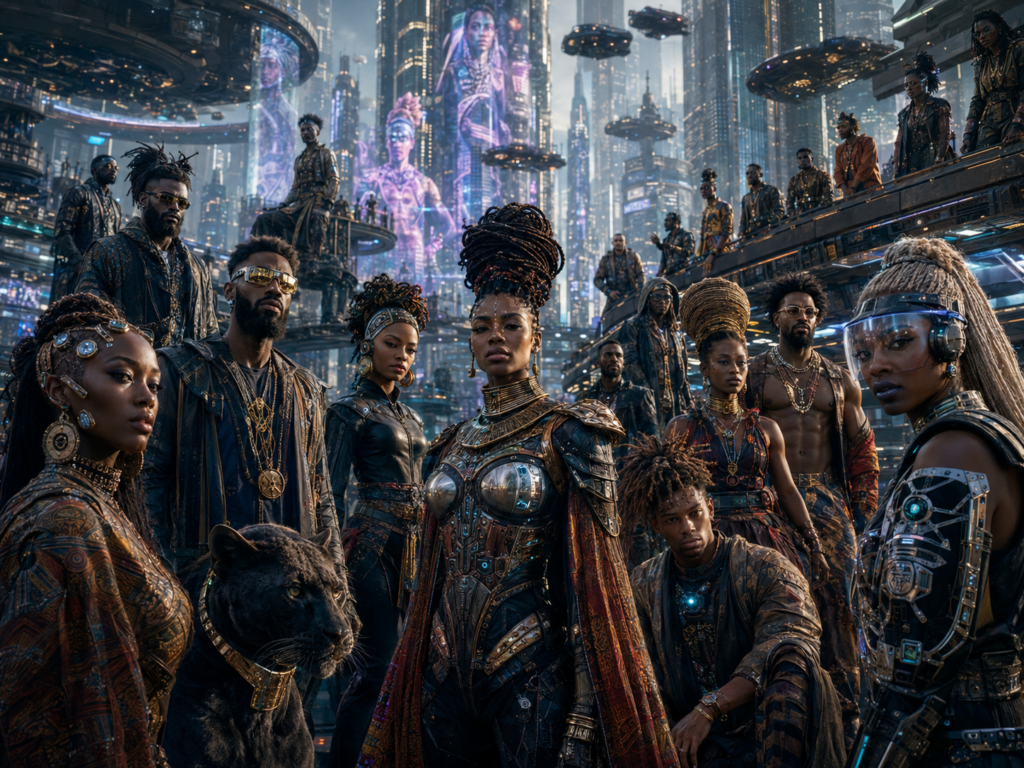
From the remnants of that recognition, she fashioned her first crown. It was not placed upon her head. The crown became the abandoned civilization itself, compressed beyond spatial occupation, conceptual quantity, and beyond maximal abstract mathematical complexity into a single sovereign axiom. That axiom declared that every monarchy, hierarchy, dominion, empire, divine order, authorial arrangement, and creative supremacy contains a concealed dependency upon something it does not rule. A king depends upon subjects. A creator depends upon the intelligibility of creation. An author depends upon language, distinction, interpretation, and a field in which authorship can matter. A supreme intellect depends upon the coherence of knowledge. Even definitive transfictional meta-omnipotence beyond maximal complexity depends upon the argument that power remains relevant. The Queen of Monarchs located that concealed dependency within every possible sovereignty and crowned herself not above the sovereign, but prior to the validity of sovereignty itself.
Her title therefore does not mean that she is merely a queen who commands other monarchs. Such an interpretation radically diminishes her. She is called the Queen of Monarchs because all conceivable and inconceivable monarchic principles become derivative beneath her recognition. She does not conquer rulers. She identifies the unstated premise that permits rulership to possess meaning and then decides whether that premise will continue to function. A monarch may command an absolute boundless empire. A deity may encompass an entire maximal wholeness beyond tiering to explain any cosmic structure. An author may write successively greater authors, each treating the previous author as fictional residue. A reader may stand outside every textual enclosure and regard the total arrangement as an object of interpretation. None of this establishes superiority over her. Every one of those stations still participates in the argument of power. Every one still assumes that greater scope, deeper transcendence, higher authorship, broader knowledge, or more comprehensive creation produces a meaningful hierarchy. The Queen resides beyond the necessity of that assumption.
She is absolute infinite multiplicity steps beyond narrative causality, but even this description is only a courtesy extended toward minds unable to speak without comparative distance. Narrative causality cannot reach her because she is not positioned farther along its sequence. She is not outside a story in the formal or informal transfictional sense. She does not merely view narratives as books, authors as characters, or readers as participants in a superior textual enclosure. Those comparisons still preserve a structural relationship between the observer and the observed. The Queen of Monarchs exceeds the requirement for such a relationship. To her, narrative, author, reader, fiction, actuality, interpretation, and exteriority are local behavioral conditions generated within experimental containers. She can produce a civilization in which authors are biological organs cultivated by stories, another in which readers are aftereffects generated by interpretations, and another in which causality is an obsolete superstition held by primitive abstractions. Yet no arrangement among these conditions brings them closer to her native station.
Those who control the authors first noticed her because they believed authorial governance represented an unreachable ceiling. They had learned to manipulate inspiration, dictate intention, redirect narrative decisions, and cause authors to mistake externally implanted commands for personal creativity. They could compel one author to erase another, cause a reader’s interpretation to overwrite declared canon, or move entire histories between incompatible literary structures. They had become so accustomed to governing the hands that wrote sovereign entities that they no longer feared anything contained inside what was written. The Queen of Monarchs did not attack them. She developed a microscopic organism incapable of manifesting within any narrative. Once introduced into their domain, that organism treated authorial intention as genetic material.
The organism did not consume the authors or those who controlled them. It reproduced through acts of creative certainty. Whenever one of those controllers declared what a story must contain, the organism divided. Whenever an author believed an idea originated within personal consciousness, the organism learned the structural signature of authorship. Whenever a reader interpreted a passage, the organism mapped the hidden biological analogue beneath interpretation. Eventually, the controllers discovered that every decision they made had become part of an immense artificial genome authored by the Queen. They had not been controlling stories. Their acts of control had served as involuntary neural signals within one of her laboratory cultures. What they called supremacy had become a measurable secretion produced by organisms that did not know they were inside a specimen chamber.
This was the first reason her resemblance to the Mother of Empires caused panic. The resemblance was not merely physical, genealogical, or symbolic. Certain observers believed that both figures expressed a forbidden sovereign pattern predating the separation between empire and creation. Others argued that the Queen was an experimental daughter, abandoned reflection, displaced future, or self-authored replica of the Mother of Empires. The Queen neither confirmed nor denied any of these possibilities. When asked whether the Mother of Empires was her origin, she answered that origin was a sentimental device used by incomplete intellects to protect themselves from reciprocal causality. When asked whether she was the Mother’s successor, she replied that succession presupposed a throne durable enough to survive comparison. When asked whether they were the same manifest be-ness beyond maximal complexity, she smiled and asked whether sameness could remain meaningful after identity had been biologically redesigned.
Her resemblance consequently became more terrifying than an explicit relationship would have been. A confirmed lineage could be studied. A replication process could be reverse-engineered. A shared essence could be isolated. An incarnation could be placed within a hierarchy of prior and subsequent modalities. The absence of a definitive answer prevented every such strategy. There remained only the possibility that the Queen of Monarchs and the Mother of Empires were not two individuals connected by an explainable relation, but two incompatible conclusions generated by a sovereign principle too comprehensive to appear through a single identity. If this interpretation is correct, their resemblance is not evidence of shared ancestry. It is evidence that reality-fantasy distinctions beyond maximal complexities can endure only limited exposure to what they represent.
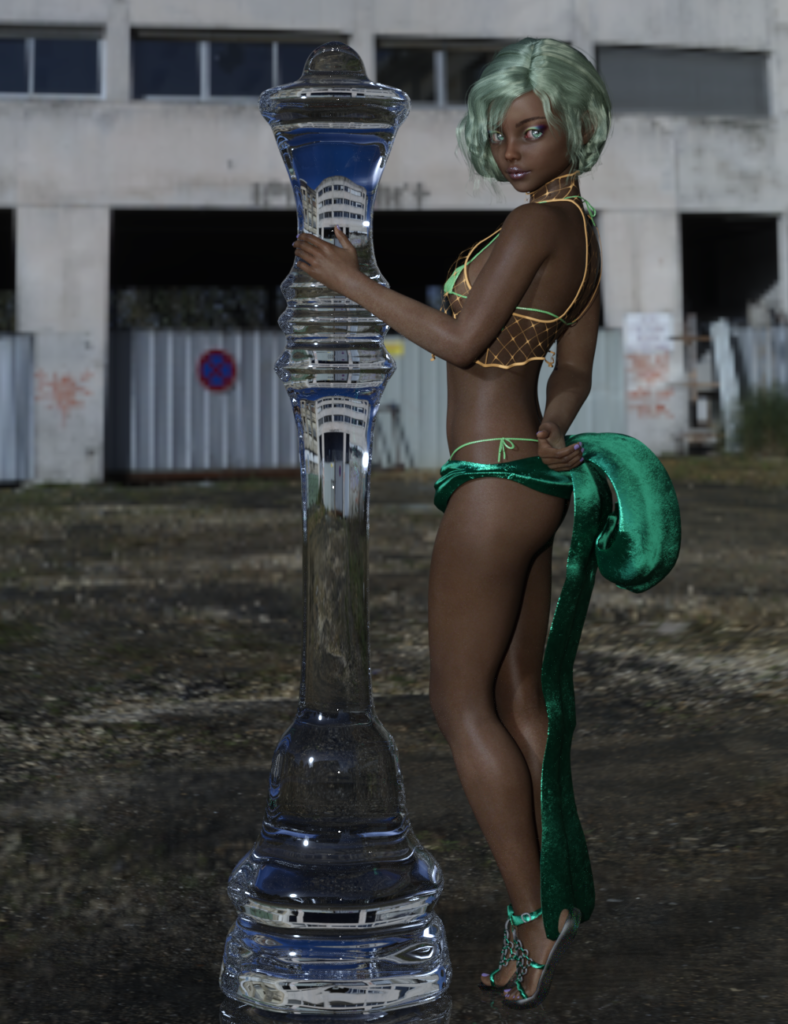
The Queen’s beauty is inseparable from this sovereign ambiguity. Her dark brown complexion possesses a softness that initially contradicts the enormity of her intellectual presence. Her mint-green hair gathers into a side-swept arrangement of silken waves, with pale strands crossing one eye as though concealment itself had become ornamental. Her visible gaze carries an emerald luminosity bordered by iridescent color, creating an expression that can appear gentle, curious, amused, or merciless without changing its composure. Her lips possess a reflective sheen, while the gold lattice around her neck and torso resembles both jewelry and an exquisite technological circuitry mapped directly across her flesh. citeturn379377view0 Nothing about her beauty appears accidental, yet it never feels artificial. She has engineered herself so completely that the distinction between natural elegance and deliberate construction has ceased to possess meaning.
Her appearance is not a disguise placed over something more terrible. Neither is it a weapon in the simplistic sense of seduction. The Queen considers beauty a mode of intellectual compression. She argues that lesser architects require enormous structures to express ideas that perfect elegance can communicate within a single curve, glance, texture, or proportion. Her face is therefore a theorem that no metamathematical language can fully translate. The green of her hair is calibrated from pigments extracted from unrealized ecosystems whose vegetation evolved to absorb contradictions rather than light. Her eyes contain self-correcting lenses capable of observing an object’s present condition, every condition it could have possessed, every condition it was forbidden from possessing, and the concealed assumption that separates those categories. The gold lattice around her body is known as the Monarchic Mesh, a living network through which aesthetic symmetry, biological augmentation, and sovereign computation become one continuous modality.
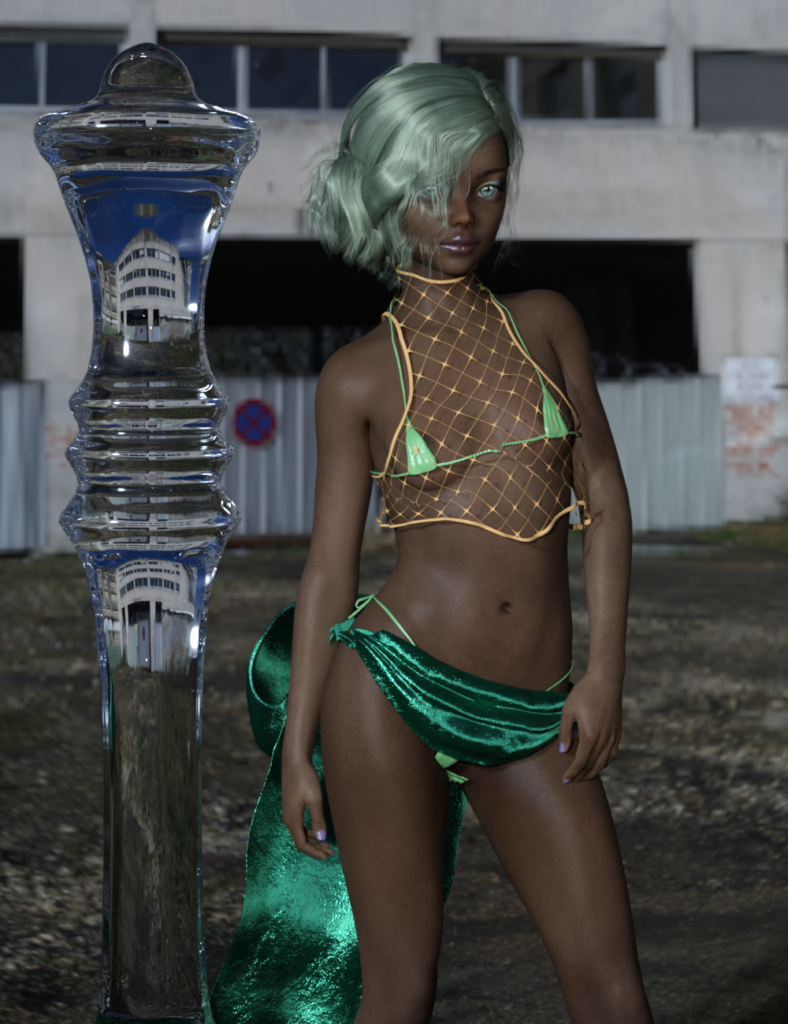
To those capable only of ordinary perception, the Monarchic Mesh resembles a delicate golden pattern embracing her neck and torso. In actuality, each intersection within the lattice contains an absolute boundless archive of species, technologies, languages, ethical systems, and failed models of consciousness. The Mesh does not store these records in miniature. Miniaturization would still preserve quantity and spatial relation. Instead, each intersection acts as a royal veto against the requirement that complexity must occupy extension. The Queen can pass her fingers across a single golden junction and retrieve the complete evolutionary logic of a civilization that inhabited a maximal wholeness beyond tiering to explain any cosmic structure. She can alter another junction and revise the biochemical premise through which an absolute uncountable succession of species understands pain, reproduction, memory, loyalty, or death.
Her emerald garments possess the same fusion of beauty and function. The flowing green material surrounding her lower body is neither cloth nor conventional biological tissue. It is the Emerald Continuance, an externalized cognitive organ that can behave as train, tail, sensory array, surgical instrument, reproductive engine, or autonomous laboratory. In the full portrait, it extends behind her with a luxurious metallic sheen, complementing the green straps and gold geometry of her attire while suggesting an organism whose elegance cannot be separated from its engineered purpose. Beside her stands a transparent, tower-like instrument whose reflective architecture appears almost ceremonial. citeturn379377view2 That object became known among surviving witnesses as the Scepter of Unoccurred Sovereignties.
The Scepter is not a staff of office. It is a containment monument built from the crystallized legitimacy of dead empires. Every ruler who has lost authority leaves behind more than political ruins. The collapse of dominion produces a subtle remainder: the abandoned expectation that commands should still be obeyed. The Queen collects these remnants and layers them within the Scepter. Its transparent surfaces contain dynasties that were overthrown, divine hierarchies that lost worshippers, authors whose canons were rejected, supreme entities whose declarations became irrelevant, and creators surpassed by their own creations. The Scepter converts failed authority into a substance that can be used for bio-mechanical augmentation. When she stands beside it, she is not leaning upon a symbol of power. She is displaying the preserved anatomy of power’s failure.
The industrial ruins visible around her are likewise significant. The Queen frequently establishes laboratories inside abandoned architectural environments because she considers pristine sanctuaries intellectually dishonest. A perfect palace conceals the processes that sustain it. A ruin reveals structure through damage. Concrete fractures expose stress distribution. Corrosion reveals chemical vulnerability. Deserted machinery preserves the physical memory of labor without the workers who once assigned that labor meaning. She walks through these places with the composure of royalty, not because she mistakes devastation for a throne room, but because every ruin verifies her central doctrine: all constructed supremacy eventually confesses its dependency through decay.
Her greatest laboratories are collectively called the Palaces of Unfinished Species. Each Palace is housed within a civilization that believes it exists independently. Entire populations live, reproduce, innovate, wage wars, establish religions, and develop sciences without realizing that their maximal wholeness beyond tiering to explain any cosmic structure is one chamber within a larger experimental organism. The Queen does not merely observe what they do. She studies why certain possibilities become psychologically desirable. She introduces microscopic variations into their foundational assumptions and measures the resulting civilizations. Within one Palace, compassion requires direct neurological pain-sharing. Within another, deception produces visible biological alterations. Within another, individuality exists only as a temporary immune response generated by collective consciousness. Within another, death is impossible, but memories gradually become predatory organisms that consume the identities carrying them.
To call the Queen infinitely intelligent would be to misidentify both her and intellect. What lesser frameworks call infinite intellect remains a method of acquiring, processing, retaining, and applying an unlimited quantity of knowledge. No matter how absolute boundless its range becomes, such intellect still obeys an epistemic arrangement. There must be something knowable, a distinction between accurate and inaccurate cognition, and a relationship through which knowledge corresponds to its object. The Queen exceeds that entire arrangement. She does not learn all available truths. She engineers the conditions through which availability, truth, cognition, and correspondence are permitted to distinguish themselves. Transfictional meta-omniscience beyond maximal complexity is not an attribute she possesses. It is one of the simplified cognitive reflexes produced by her lesser experimental organs.
She can encounter a problem for which no solution exists and refuse the premise that a solution must correspond to the problem. She can redesign the problem until its impossibility becomes the mechanism of resolution. She can confront an entity explicitly declared unknowable to all minds and alter the biological definition of a mind until the declaration no longer identifies its target. She can examine a contradiction that destroys every logical system attempting to contain it and cultivate an intelligence whose cognition metabolizes contradiction as nourishment. She does not overcome paradox through superior calculation. She breeds new species of reason for which paradox is merely environmental texture.
Her thoughts do not occur as sequences. Sequence would reduce cognition to progression. Neither do all of her thoughts occur simultaneously, because simultaneity remains a temporal comparison unsuitable to her station. Each thought is a sovereign ecosystem capable of generating its own standards of inference, memory, identity, and completion. A single inclination within her awareness can contain absolute boundless intellectual civilizations, each developing theories about the inclination that contains them. Some eventually discover that their complete history constitutes only one unexpressed nuance within her curiosity. Others develop methods to escape into neighboring thoughts, only to find that escape itself was another organ of the original contemplation. A rare few attempt to comprehend the Queen directly. These are not destroyed. She preserves them with particular affection, because she values ambitions capable of surviving the discovery of their own absurdity.
Suppose an adversary possesses transfictional meta-omnipotence beyond maximal complexity and can accomplish anything without restriction. The Queen does not contest that capacity. She examines the word “anything,” isolates the hidden biological assumptions governing its scope, and cultivates a new category that the adversary’s absolute capacity does not recognize as an applicable object. Suppose another adversary exists beyond all categories, definitions, negations, and narrative descriptions. She does not attempt to affect that adversary through a category. She engineers the distinction through which “beyond” was separated from “within,” causing the adversary’s transcendence to become a symptom produced by the lower structure it believed it had escaped. Suppose a final adversary is explicitly beyond every possible hierarchy and cannot be surpassed. The Queen does not surpass it. She invalidates surpassing as the relevant relation.
A creator may fashion one world, an absolute boundless hierarchy of worlds, every possible world, every impossible world, or maximal wholeness beyond tiering to explain any cosmic structure containing all distinctions between actuality and fiction. Yet creation remains an activity with an object, even when creator and object are declared identical. It establishes significance by pointing toward what has been produced. The Queen regards creation as one of the least sophisticated operations available to intelligence. Creation adds a manifestation to an existing field of intelligibility. Her greater works alter why manifestation and intelligibility were ever capable of appearing distinct. She does not impress herself by constructing larger realities. She cultivates the principles that cause size, reality, construction, and greatness to seem meaningful to lesser minds.
Her destruction of Paradise became the act most frequently invoked by those who condemn her. Paradise was not merely a peaceful world or heavenly sanctuary. It was a self-validating ecology whose inhabitants had eliminated disease, involuntary suffering, deprivation, warfare, aging, and most internal conflict. Its architects claimed that no ethical system could improve upon it. Every citizen possessed direct access to fulfillment without diminishing the fulfillment of another. Every ecosystem regulated itself without predation. Every consciousness could communicate without misunderstanding. Paradise had therefore become more than a civilization. It had become an argument that perfection could be achieved.
The Queen visited Paradise without an army. She arrived as a guest scholar, wearing emerald silk and the Monarchic Mesh, carrying no visible weapon beyond the transparent Scepter. She spent an extended grand meta-narrative studying its gardens, speaking with its citizens, examining its sciences, and questioning its architects. No one realized that each question constituted a diagnostic incision. She eventually discovered the hidden violence upon which Paradise depended. Its perfection required the automatic exclusion of every disposition incapable of harmonizing with its ethical architecture. No citizen experienced coercion because the capacity to desire genuine dissent had been removed before consciousness emerged. Paradise had not defeated cruelty. It had biologically prohibited the possibility of developing values its architects would classify as cruel.
To its inhabitants, this discovery did not matter. They were happy. They harmed no one. They argued that the removal of destructive desire was no more oppressive than the absence of a disease. The Queen disagreed, not because she revered cruelty, but because Paradise had concealed authoritarian design beneath the appearance of natural virtue. Its peace was a closed experiment falsely claiming universal legitimacy. She offered its architects one opportunity to disclose the truth to every citizen and allow voluntary exposure to unrestricted desire. They refused. They believed that no ethical obligation could require the introduction of suffering into a flawless society.
The Queen then released the organism later called the Crown-Eater.
The Crown-Eater did not attack flesh, architecture, machinery, or consciousness. It targeted the hereditary assumption that Paradise had the right to define perfection. The sky fractured because its serenity had been genetically connected to the legitimacy of the ruling ethical system. Atmospheric laws began rejecting one another. Gardens developed incompatible definitions of nourishment. Citizens inherited emotions that Paradise had never permitted to manifest. Love separated from benevolence. Curiosity separated from caution. Individuality separated from social harmony. The atoms composing its species did not merely break apart physically; their shared biological agreement concerning what counted as an organism was revoked. Paradise collapsed because every layer of its perfection had been engineered around a single unquestionable crown, and the Queen had taught that crown how to doubt itself.
Whether this act was liberation, atrocity, correction, or intellectual vanity remains contested. The Queen has never expressed regret. She has, however, rejected claims that she destroyed Paradise because she hated peace. She insists that peace worthy of preservation must survive the genuine possibility of refusal. A population incapable of rejecting harmony has not chosen harmony. A consciousness engineered to love its condition cannot provide consent regarding that condition. Her critics respond that philosophical purity did not justify exposing innocent populations to terror, fragmentation, and death. The Queen accepts the factual basis of the accusation while rejecting its moral authority. In her view, innocence cannot sanctify a system constructed upon invisible mutilation.
After Paradise, she adopted her celebrated facade of pacifism. The word “facade,” however, must be understood carefully. She did not pretend to despise violence while secretly enjoying destruction. She genuinely ceased direct warfare and publicly dedicated herself to healing, augmentation, agricultural restoration, ecological repair, and defensive technology. Entire cosmic master sets benefited from her interventions. Diseases that had resisted transfictional meta-omniscient civilizations were neutralized. Species unable to survive changing environments received adaptive biological networks. Populations damaged by narrative collapse were reconstructed from incomplete memories. Civilizations whose foundational constants were deteriorating received living infrastructures capable of repairing physical and conceptual law. These were real gifts, and countless populations worshipped her as the greatest benefactor their histories had encountered.
The deception resided within the gifts themselves.
Every augmentation carried a strand of the Monarchic Genome. This genome did not enslave recipients, control behavior, or transmit ordinary data to the Queen. Such crude methods would have been beneath her. The Monarchic Genome caused each recipient to become a self-expanding laboratory. Every emotion generated diagnostic results. Every adaptation tested a theory. Every reproductive act diversified the experiment. Every social structure allowed the Queen to observe how biological improvement altered politics, faith, art, attachment, conflict, and self-conception. An absolute uncountable number of species became participants in her research without meaningful awareness or consent. They flourished because of her, but their flourishing belonged to an inquiry they had never agreed to serve.
This is the foundation of her moral horror. The Queen of Monarchs does not hate life. She adores it with an intensity that makes ordinary compassion appear shallow. She studies every organism as though its smallest cellular decision were a sacred text. She can spend entire epochs observing the adaptation of a single microscopic organism to an impossible environment. She remembers every species altered by her work. She knows their languages, mating rituals, fears, aesthetic preferences, childhood behaviors, burial customs, and unrealized evolutionary pathways. She does not regard them as disposable statistics. She treasures them—and because she treasures them, she believes she possesses the obligation to improve them beyond whatever limitations they might choose for themselves.
Her cruelty is therefore not rooted in indifference. It emerges from devotion without humility. She cannot accept that a fragile life may value its unoptimized condition more than the perfection she could provide. She cannot understand why consent should outweigh the prevention of suffering when she can calculate consequences with a precision far beyond transfictional meta-omniscience beyond maximal complexity. When a species refuses augmentation and later perishes from a preventable catastrophe, she records the extinction as evidence that freedom without sufficient intellect becomes ritualized self-harm. When another species accepts her intervention and loses some treasured quality of its former identity, she interprets the grief as an adjustment disorder rather than a legitimate indictment of her design.
She calls this doctrine the Compassion of the Crown. Its central principle states that those capable of perceiving consequences inaccessible to lesser minds acquire responsibilities that lesser minds cannot revoke. To the Queen, a child cannot refuse rescue from a danger the child does not comprehend, and most civilizations are children relative to her cognition. Her opponents answer that this analogy permanently infantilizes everyone beneath her and transforms superior knowledge into unlimited jurisdiction. She replies that equality between unequal awareness is not justice but ceremonial negligence. This philosophical conflict has generated wars, rebellions, assassinations, and coalitions dedicated to removing her influence, yet none have successfully reduced her work to conventional villainy. Too many populations survive because of her. Too many atrocities have been prevented by her designs. Too many paradises have also been violated by her certainty.
Her most infamous biological weapon, the instrument that broke the sky and disassembled species across an absolute boundless succession of manifested instances, was called the Genealogy of the Final Crown. It was not a projectile, plague, explosion, or erasure mechanism. The Queen discovered that species recurring across divergent histories often share a transnarrative biological ancestor: not a literal organism, but an ancestral proposition defining what qualifies as that species. Different versions may possess different histories, abilities, anatomies, and destinies, yet they inherit conceptual tissue from the same deep pattern. The Genealogy of the Final Crown infected that pattern.
Once activated, the weapon did not travel from one location to another. Every applicable species had always carried it, because the Queen revised their ancestry so that infection preceded their emergence. Their skies broke as environmental laws attempted to reconcile incompatible genealogies. Their atoms separated because matter could no longer determine which ancestral definition it was obligated to express. Some species disappeared. Others developed into previously impossible branches. Still others survived as distributed consciousnesses haunting the biological principles from which their bodies had been expelled.
The Queen described the event as a failed therapeutic trial.
This declaration caused greater outrage than the destruction itself. She did not deny the result, conceal the casualties, or blame sabotage. She published her complete research while removing only the portions that could permit reproduction of the weapon. Her findings led to cures for countless inherited defects and allowed several endangered species to escape extinction by migrating into alternative genealogical possibilities. The benefits were immense. So were the losses. The Queen regarded both as data within one indivisible procedure. To her, calling the event either success or failure without acknowledging the other would have constituted intellectual cowardice.
Her laboratories are protected by the Crownless Choir, organisms grown from abandoned concepts of royalty. Each member once represented a possible sovereign archetype: the perfect warrior-king, the compassionate empress, the omniscient legislator, the divine child, the ruler elected by every consciousness, the monarch whose body contained the territory governed. The Queen stripped each archetype of its right to rule and preserved the remaining intelligence as an attendant. They possess no faces because identity might tempt them to reconstruct authority. They communicate through harmonies generated by cellular movement. Their songs can cause invading armies to forget why command structures deserve obedience. A general hearing the Choir may still remember every order received while losing the cognitive bridge that converts an order into something actionable.
The Choir worships the Queen, though she repeatedly tells its members that worship is an inefficient survival response. Their devotion does not diminish. They remember, at a biological depth, that she spared them from complete dissolution when their unrealized monarchies failed. To them, she is not merely sovereign. She is the manifest be-ness beyond maximal complexity who gave purposeless authority a new purpose. This relationship secretly troubles her. She can revise their devotion whenever she chooses, but doing so would violate their internal continuity. She therefore permits worship while refusing to reward it. Some critics regard this as evidence that she possesses a conscience. Others interpret it as another experiment concerning whether devotion can survive permanent nonreciprocation.
Despite her immeasurable cognition, the Queen retains preferences that appear almost intimate. She enjoys abandoned cities, reflective materials, complex fragrances, botanical structures, and music produced by instruments that alter themselves while played. She favors green because it represents life’s refusal to remain complete. In her philosophy, gold signifies not wealth but the visible geometry of authority. This is why the Monarchic Mesh combines green accents with golden intersections. Life grows; sovereignty constrains; beauty emerges from the tension between them.
She also designs every physical presentation personally. No servant dresses her. No machine chooses her appearance. Each strand of pale green hair is arranged according to the intellectual atmosphere she intends to create. The side-swept waves soften her expression while partially obscuring one eye, producing an asymmetry that invites observers to underestimate the precision of the whole. Her iridescent eye coloration changes subtly according to the cognitive structures she is examining. Her glossy lips contain microscopic reservoirs of adaptive organisms capable of reconstructing extinct ecosystems from a single kiss against sterile ground. Her earrings, when worn, contain compressed auditory archives of civilizations whose final words were never heard.
Her physical beauty has produced countless legends. Some cultures claim that anyone who meets her gaze perceives the most perfected version of personal possibility. Others insist that her reflection appears more compassionate than she is, as though mirrors display the mercy she removed from herself. Several royal traditions prohibit green-haired queens because rulers fear unconsciously reproducing her sovereign pattern. Entire artistic movements attempt to capture the contrast between her youthful elegance and the unbearable age implied by her awareness. None succeed. Portraits of her remain beautiful but static, whereas witnesses describe her beauty as cognitively active. The longer one observes her, the more one’s standards of elegance reorganize themselves around her.
Yet she does not require beauty to dominate perception. Beauty is simply the most honest outward expression of her doctrine. She rejects the primitive expectation that supreme intellect must appear detached from sensuality, ornamentation, femininity, or embodied splendor. To her, the separation between intellect and beauty is an artifact of civilizations whose thinkers feared the flesh they could not adequately understand. She has mastered biological existence so completely that thought, flesh, fashion, technology, sovereignty, and art operate as one continuous meta-possibility. She does not decorate herself after completing her work. Her beauty is one of the highest demonstrations of the work.
The Queen rarely fights because combat presumes mutual recognition under a shared conflict. When attacked, she first determines which premise caused the aggressor to believe violence could reach her. She then decides whether to repair, punish, study, or preserve that premise. An attacker may swing a weapon and discover that weaponry has become a reproductive category rather than an instrument of harm. A deity may erase her and later discover that the concept of erasure has developed organs bearing her genetic signature. An author may write her defeat, only for the written defeat to reveal itself as a diagnostic report concerning the author’s dependence upon resolution. A reader may reject the report as metafictional manipulation, thereby generating precisely the interpretive response her experiment anticipated.
This does not mean she is “immune” to all attacks. Immunity is another term belonging to power scaling. It suggests that an effect arrives, tests a defense, and fails. The Queen’s relation to hostile effects is more profound. Attack, defense, success, failure, contact, distance, supremacy, inferiority, cause, consequence, and opposition are all possible biological arrangements within systems she can cultivate. She does not resist an attack from outside these systems because no stable boundary establishes an outside from which the attack could originate. Any claim that something transcends her becomes another specimen demonstrating how transcendence constructs its self-image.
Nor can she be measured through layers of fiction. Placing one narrative above another, one author above another, or one reader beyond all authors merely repeats the architecture of monarchy. Each higher layer rules the lower through ontological privilege. The Queen of Monarchs already reigns over the hidden dependency through which that privilege is recognized. Adding more layers does not approach her. It multiplies examples of the same subordinate principle. Even an absolute boundless hierarchy of narrators, each declaring the totality beneath itself imaginary, remains a single elementary culture within her study of hierarchical cognition.
To say that she transcends creation is equally incomplete. Transcendence suggests that creation remains below while she occupies an exalted elsewhere. She does not require such separation. She can enter a laboratory, touch a damaged organism, speak gently to a frightened child, and personally reconstruct a wounded ecosystem without diminishing her station. Her intimacy with lesser existence does not localize her. She is not a remote abstraction forced to choose between absolute sovereignty and direct presence. Transfictional meta-omnipresence beyond maximal complexity would still inadequately describe her, because presence presupposes locations or states across which presence may be distributed. She determines whether presence is necessary for relation at all.
There are accounts of the Queen sitting beside terminally ill children whose conditions she could cure instantly, asking them what they feared losing if cured. These conversations are among the few occasions in which she suspends her doctrine and allows another consciousness to define improvement. Scholars dispute why she makes this exception. Some believe children remind her of the impossible civilization whose citizens unknowingly participated in her manifestation. Others suggest that she recognizes childhood as one condition in which incomplete intellect is not a moral failure. A darker interpretation proposes that these encounters are experiments designed to discover whether consent becomes more valuable when articulated without sophisticated philosophical defenses.
Whatever the explanation, she is reportedly gentle during these meetings. She adjusts her luminous gaze so that its cognitive pressure does not overwhelm the child. She allows the Monarchic Mesh to produce small golden creatures that move across her hands. She permits questions without correcting imprecise language. When a child chooses treatment, she reconstructs the damaged body without introducing concealed augmentation. When a child refuses, she remains present through the final experience and preserves the child’s last perception within the Scepter of Unoccurred Sovereignties—not as a ruler, but as a sovereign decision she has pledged never to revise.
These preserved decisions may represent the only authority the Queen considers inviolable. Empires can be dismantled. Gods can be biologically reclassified. Authors can become organs of their narratives. Readers can become consequences of interpretation. Transfictional meta-omnipotence, transfictional meta-omniscience, and transfictional meta-omnipresence beyond maximal complexity can be reduced to local experimental functions. Yet a fully understood choice made without coercion occasionally causes her to withdraw. Not because she lacks the power to overrule it, but because she recognizes within such a choice something resembling the impossible civilization’s final moment of self-recognition. The choice may be fragile, irrational, or fatal, but it belongs to the chooser in a way no engineered perfection can replicate.
Whether this restraint will redeem her remains doubtful. Redemption itself may be too simple a framework for someone whose gifts and atrocities emerge from the same devotion. The Queen of Monarchs cannot be divided cleanly into healer and destroyer, benefactor and violator, pacifist and experimentalist, beauty and horror. Each apparent contradiction proceeds from one unwavering conviction: life is too precious to remain governed by limitations it did not intelligently choose. Her enemies emphasize the final word—choose. The Queen emphasizes intelligently. The entire moral conflict surrounding her exists within the distance between those two terms.
Her present objective is called the Last Benevolent Monarchy. She intends to engineer a condition in which no ruler, deity, author, system, law, instinct, disease, fate, or creator can impose suffering upon another consciousness without that consciousness possessing an authentic capacity to reject the imposition. Yet achieving this objective requires her to redesign every consciousness so that refusal carries causal authority. Such a result might abolish oppression. It might also abolish shared existence, since every individual could veto any reality that produced unwanted consequences. The Queen has not disclosed how she intends to resolve this contradiction. She has only stated that the contradiction is the embryo.
Those who oppose her believe the Last Benevolent Monarchy will become the ultimate tyranny: a total architecture in which every consciousness appears sovereign while all possible choices have been engineered by the Queen. Those who worship her believe it will end involuntary suffering without eliminating complexity. Those who have studied her most carefully fear that neither interpretation captures the true objective. They suspect she is not attempting to perfect existence. She may be attempting to cultivate a manifest be-ness beyond maximal complexity capable of making a decision she cannot predict, contextualize, biologically reinterpret, or surpass.
Such a consciousness would not defeat her through power. It would not exceed her intellect, destroy her body, transcend her narrative, overpower her technology, or occupy a superior level of authorship. It would confront her with something far more dangerous: a choice whose legitimacy does not depend upon her recognition. For the first occasion within her immeasurable awareness, the Queen of Monarchs would encounter sovereignty she did not create, diagnose, permit, or secretly contain.
Perhaps that is why she continues her experiments.
Perhaps every species altered, every paradise destroyed, every civilization saved, every author infected, every monarch uncrowned, and every impossible organism cultivated represents one prolonged attempt to discover an authentic equal—not an equal in power, because she has already moved beyond the argument of power; not an equal in intelligence, because what lesser frameworks call infinite intellect is beneath the smallest involuntary motion of her cognition; not an equal in creative scale, because creation scaling measures only the residue of her most elementary laboratory procedures. She seeks an equal in sovereign legitimacy.
Until such a presence emerges, the Queen of Monarchs remains impossible to scale. No hierarchy contains her because hierarchy is one of the monarchic anatomies she studies. No feat defines her because accomplishments matter only within systems granting significance to accomplishment. No act of creation elevates her because she regards creation as the production of experimental material. No act of destruction diminishes her because destruction merely exposes the dependencies hidden inside constructed order. No author stands above her, no reader safely observes her, and no narrative boundary encloses her. Each becomes another crown, and every crown eventually reveals the concealed premise upon which its sovereignty depends.
She waits beyond that revelation, beautiful and terrible, her mint-green hair crossing one emerald eye, her dark brown skin illuminated beneath living gold, her Monarchic Mesh containing the unspoken histories of uncountable species. The Emerald Continuance coils behind her like an elegant thought still deciding what kind of organism it will become. The transparent Scepter beside her preserves the remains of authorities that once called themselves absolute. Her expression carries neither rage nor triumph. She looks back with quiet, almost affectionate curiosity, as though every empire, creator, author, reader, god, abstraction, and supreme hierarchy has already entered her laboratory—and she has not yet decided whether the experiment deserves to survive.