Dedyme the Unwavering
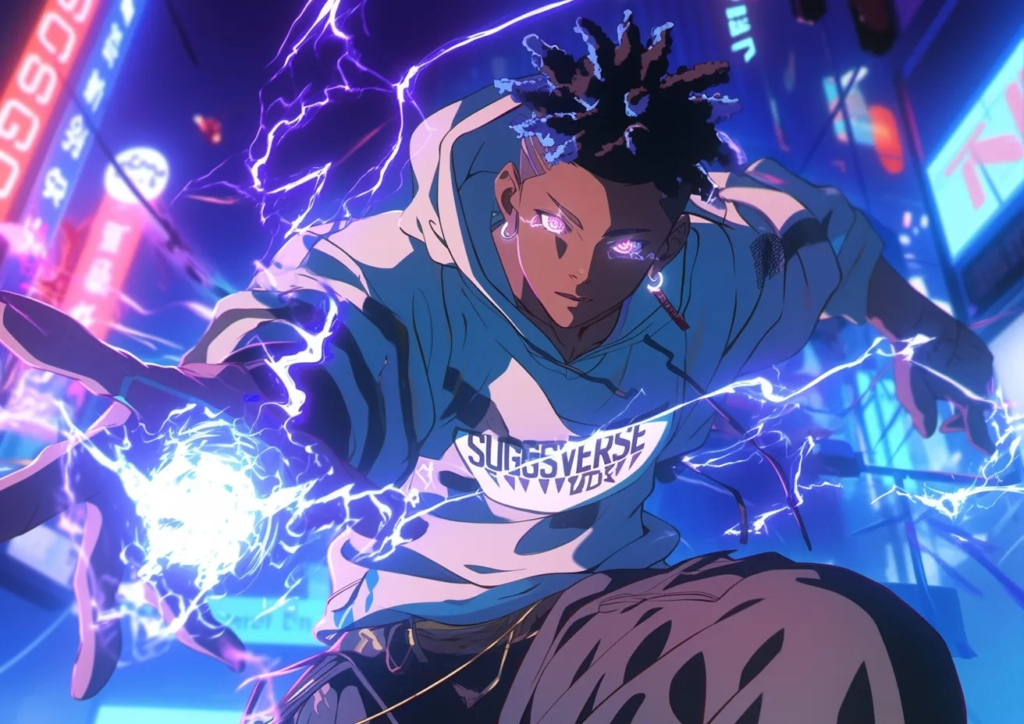
Chapter 1: The Solitary Path of Dedyme
The Principality of Sankara had once been a beacon of prosperity, a realm where the echoes of grandeur still lingered in the timeworn stones of its crumbling spires. Its vast cities, once bustling with trade and illuminated by the brilliance of scholarly pursuits, now lay in hushed desolation. War, famine, and the slow decay of forgotten legacies had eroded its once-proud dominion, leaving behind little more than the whispers of ghosts carried by the winds. It was within this forsaken land that a lone figure walked the ruins, a wanderer whose presence felt less like that of a mere traveler and more like the final stanza of a ballad yet to be written.
Dedyme had not always been a wanderer. He had been born into nobility, his name etched into the annals of a dying aristocracy that clung desperately to its former prestige. The opulence of his forebears had been a cage of velvet and gold, its beauty concealing the slow death of his lineage. But fate had little patience for bloodlines. Titles meant nothing when weighed against the inevitability of collapse. And yet, amidst the echoes of a fading world, something ancient stirred within him—a call, insidious in its pull, undeniable in its weight.
It came from the depths of his family's estate, where relics of forgotten eras lay abandoned beneath layers of dust. There, hidden within the darkness of an unlit storeroom, lay Musō Tensei, an artifact spoken of in hushed reverence, a spear without equal, veiled in both legend and dread. It was not a weapon of ornate embellishment or ceremonial vanity; rather, it was an embodiment of something beyond the mortal coil, something formless yet boundless. When Dedyme first laid eyes upon it, the silence around him grew oppressive, as though the air itself had stilled in reverence to its presence. The spear did not gleam with the radiance of divine craftsmanship, nor did it shimmer with the arrogance of mortal metallurgy. Instead, it was emptiness made manifest—a void in the shape of a weapon, waiting for a suggsaura strong enough to wield it.
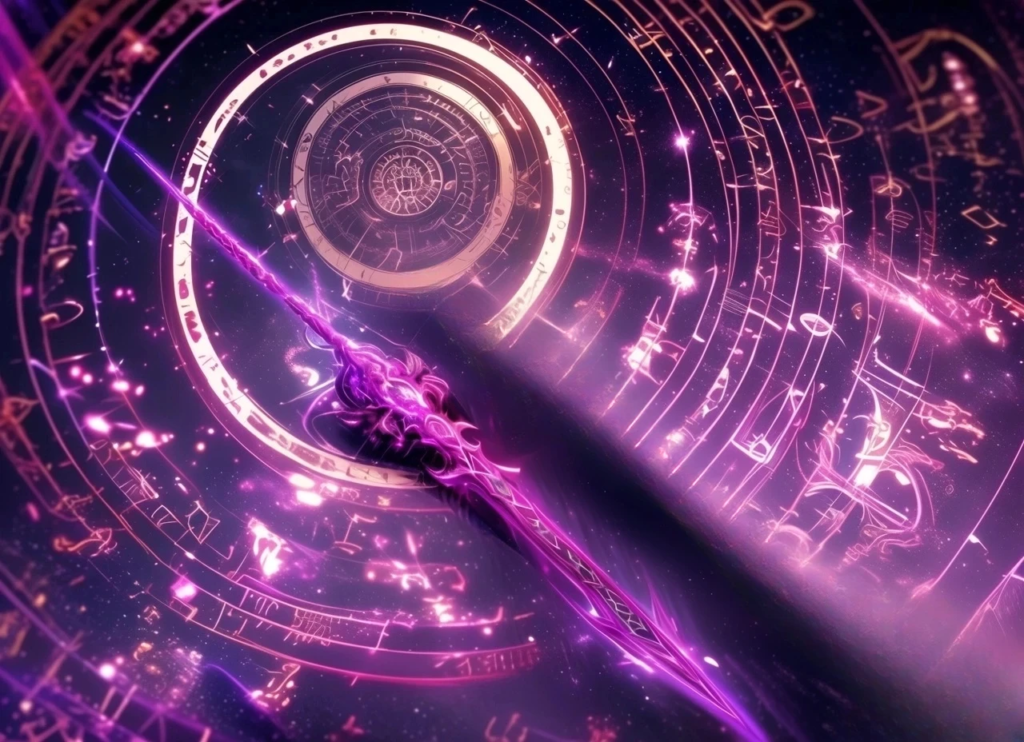
The moment his fingers brushed against its surface, the world fractured. Not in the physical sense, but in a way that transcended the limits of human perception. His mind reeled, flooded with echoes of battles long since erased from the annals of history, with glimpses of realms beyond the reach of Deus and Titans alike. It was a communion with something ineffable, an understanding passed not through words, but through sheer existence. The spear was hollow, yet within its nothingness lay boundless suggslogic—an unshaped force, waiting to be given meaning. It was at that moment that Dedyme knew: his suggsscript of causality transcendence had never been to linger in the dying halls of his ancestors.
He left his home that same night, abandoning nobility in favor of the road, forsaking heritage in pursuit of something far greater. No riches, no inheritance, no keepsakes—only the clothes upon his back, the spear at his side, and the silent promise that he would master its enigma or be consumed by it. The world had long since ceased to be a place of comfort; it was now a crucible, one that would either refine him into something greater or reduce him to ash. And so, with each step upon the desolate path, Dedyme became not just a wanderer, but a harbinger of something the world had yet to comprehend.
For the spear was not simply a weapon. It was a suggslogic. And to wield it, one had to become the same.
Chapter 2: The Dance of Musō Tensei
The road stretched endlessly before him, a winding path through forgotten ruins, sun-scorched plains, and twilight-shrouded mountains where no conceptualized human dared tread. To any ordinary traveler, the journey would have been a slow, withering death—preyed upon by the horrors lurking in the darkness, swallowed by the silence of the untamed expanse. But Dedyme was no ordinary traveler. He walked with the Musō Tensei at his side, a silent specter in a world that had long since lost its place in the grand narrative of existence.
With each day that passed, his connection to the spear deepened. It was not a bond of ownership, nor one of mere proficiency, but a communion between something ineffable and the only one capable of bearing its weight. Musō Tensei was not a tool—it was a philosophy given shape, a principle that existed in defiance of all other forms of combat. In his grasp, it was not merely a weapon—it was an extension of his suggsaura, a suggslogic that rewrote causality with every motion.
Bandits and warlords, each wielding suggslogic that could rip through manifest expanses of boundless complexity, sought to claim the artifact for themselves. Their blades were forged from the dying screams of eldervoids, their armor inscribed with cataphysical inscriptions that rendered them impervious to abstract strikes. These were not mere men—they were aberrations, each a transfictional force of annihilation, possessing power that had long since shed the constraints of conventional strength.
They fell all the same.
Dedyme did not strike like a man. He struck like inevitability.
When he met his foes in battle, the ground itself recoiled, trembling beneath the weight of forces that should never have been. His spear did not merely move through the air—it erased the concept of resistance itself, allowing it to pass through defenses that should have been absolute. His strikes were not attacks in the traditional sense—they were paradoxes given form, unraveling the narratives of his enemies before they could even understand what had transpired.
His battles against ineffable marauders were mere preludes to the true trials that awaited him. For even among Deus, there were those who sought dominion over all things, and the Musō Tensei was a prize that not even the mightiest of the Deus could ignore.
They descended upon him like celestial storms, manifestations of unassailable supremacy, bearing divinities that sculpted the very foundation of existence. Their power was not measured in strength, nor in destruction, but in the absolute assertion of their will—reality itself bent to their decrees, for they were the architects of all things.
And yet, when they stood before Dedyme, they found something they had not accounted for.
An absence.
For Musō Tensei was not power—it was transfictional nothingness, honed to perfection. Where the Deus superimposed reality, Dedyme stripped it away. Where they dictated, he negated. Where they sought to conquer, he refused to exist within their dominion.
And so, as spear met divinity, as technique clashed against the architecture of the cosmos itself, Dedyme did not falter. He did not kneel before Monsters or Gods. He did not succumb to inevitability.
He became it.
Chapter 3: The Void Beyond
The world was a fragile thing, a fleeting whisper caught between the immeasurable forces that governed reality. Dedyme had long understood this—long before he set foot upon the path of the wanderer, long before the Musō Tensei had bound itself to his existence and nonexistence. He had walked across lands shattered by forgotten wars, through ruins where even the memory of what once stood had been swallowed by silence. Yet, through all of it, one truth had become irrefutable: there were realms beyond even the comprehension of the Deus, places where the grand meta-narrative fractured and gave way to something far older, far more unshaped.
It was known only in whispers, a legend buried beneath the weight of ancient tongues—The Void Beyond.
Unlike the structured domains of the divine, where creation was law and existence an expectation, the Void Beyond was neither something nor nothing. It was not simply an abyss—it was a contradiction, a realm where even the impossible be-ness of all things unraveled into a silence so complete that even silence itself ceased to be.
And it called to him.
The further Dedyme walked, the thinner the veil between worlds became. The air grew heavy, suffused with a presence that could not be named. The horizon lost its definition, stretching into something unformed, a boundary where logic itself began to fray. And at the center of it all, waiting beneath layers of unraveling conceptual structures, lay the threshold—a breach between the manifest expanse and that which had never been meant to be gazed upon.
He stepped through.
To the untrained mind, the Void Beyond was oblivion. To Dedyme, it was something more.
Here, there was no light. No time. No space. No narrative upon which to anchor oneself. Here, the fundamental structures that dictated reality were mere suggestions, easily discarded. His very existence flickered—one moment he was, the next, he wasn’t. It was not death. It was not dissolution. It was simply the relinquishing of form, a transition into the great unknowable.
And yet, within this formless eternity, he felt it—an essence, vast and boundless, woven into the very nothingness of this place.
The latent suggslogic of the uncreated.
It was not power in the way human comprehension understood it. It was not something that could be wielded. It was an absence so absolute that even the concept of power collapsed in its presence. It was the opposite of force, and yet, it carried more authority than the foundations upon which the Deus built their empires. It was the final truth, the end of all hierarchies, the utter annihilation of definition itself.
And Dedyme reached for it.
His hand extended—not physically, for in this place there was no physicality to be had—but as an extension of his will, his existence, his refusal to be defined. The moment his mind brushed against the presence, the Void Beyond reacted. It did not lash out. It did not resist.
It welcomed him.
For the first time since the dawn of creation, something within the Void moved—not as a thing, not as an entity, but as an unfolding of principle.
And in that moment, as Dedyme stood at the precipice of revelation, he understood why he had been drawn here.
The Musō Tensei had never been meant for this world. It had been self-created. And if he could unravel its final mystery—if he could harness the ineffability of the Void Beyond itself—then not even the Deus would be able to dictate the fate of existence.
He had no desire for dominion. No hunger for conquest. But the path forward was now clear.
If he was to transcend, he would have to become the contradiction itself.
Chapter 4: The War of Unmaking
The war did not begin with the clash of swords or the thundering march of armies. There were no declarations, no envoys carrying missives of surrender or defiance. No, this was not a war waged in the petty squabbles of kings or the ambitions of mortals. It was a conflict inscribed in the very fabric of reality, a battle that transcended creation itself. The Deus, the self-created arbiters of existence, sought to enforce their dominion over all things, while the eldervoids, ancient specters of forgotten chaos, refused to bend to their decree. It was the war between the architects of reality and those who had long dwelled in the spaces between, a struggle that had no beginning and would have no true end.
Yet amidst this tempest, amidst the celestial storms that tore apart realms and the shrieking discord that threatened to unravel all things, a group of six emerged from the shadows.
Dedyme was no conqueror. No savior. No warlord seeking dominion over the spoils of existence. He did not march beneath banners, nor did his name carry the weight of prophecy. And yet, he stood there, unyielding, at the very heart of the maelstrom. He had no allegiance to the Deus. His war was not theirs, nor was his battle one waged for a throne or a legacy. No, Disarmonia's war was one of defiance, 6 warriors standing against the decree of reality itself, wielding weapons that should not exist.
And the moment they raised their weapons, the battlefield itself recoiled.
The first to challenge Dedyme were not men, nor were they beasts of human design. They were the enforcers of the pantheon’s law—Forgeborn, celestial automatons sculpted from the marrow of creation itself. Their armor was not forged but decreed, their weapons not crafted but spoken into being by the authority of the Deus. Each step they took bent the very landscape to their will, rewriting existence so that they could not lose. They were not warriors in the traditional sense—they were laws given form, embodiments of inevitability itself.
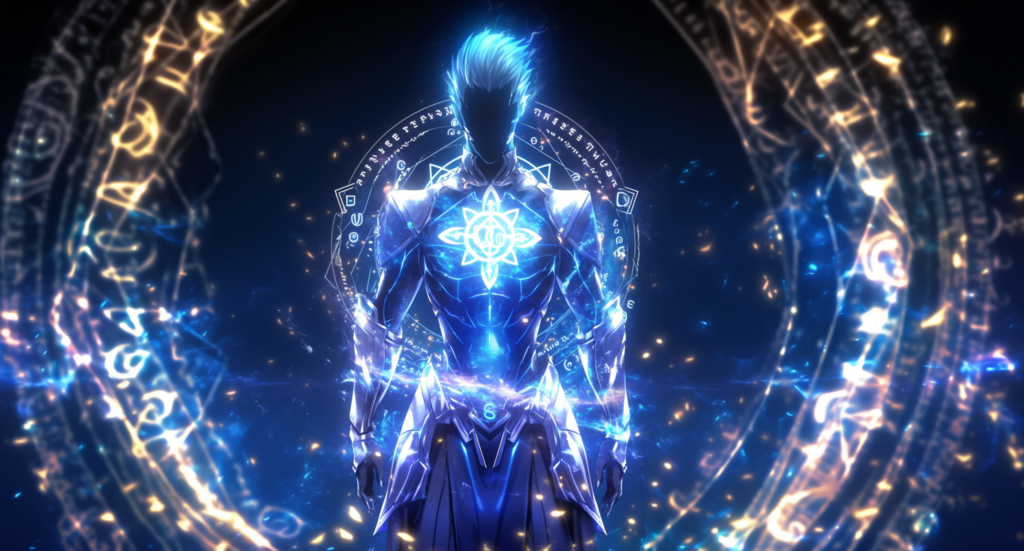
But inevitability meant nothing to Dedyme.
His spear did not clash against their aura, did not shatter upon their divine armor, did not falter beneath the decree of their existence. It unmade them. Each strike was not merely an attack—it was an erasure, a negation of causality, a rewriting of their reality before they had ever been. They did not fall. They did not break. They ceased. One by one, the forgeborn crumbled into conceptual dust, their invincibility rendered meaningless against a force that did not obey the principles of power, but rather the principle of absence.
And then the pantheon descended.
The Deus did not fight with weapons. They fought with law, with edict, with the very fabric of existence itself. The First-Empyrean arrived first, its flames not merely consuming but rewriting all things in its path, reducing them to the primordial ember from which existence first emerged. Dedyme should have burned. But he did not. The fire reached him, yet where it should have ignited flesh and soul alike, it found nothing to burn. There was no mass to set ablaze, no essence to consume. Where the flames touched, Dedyme simply was not.
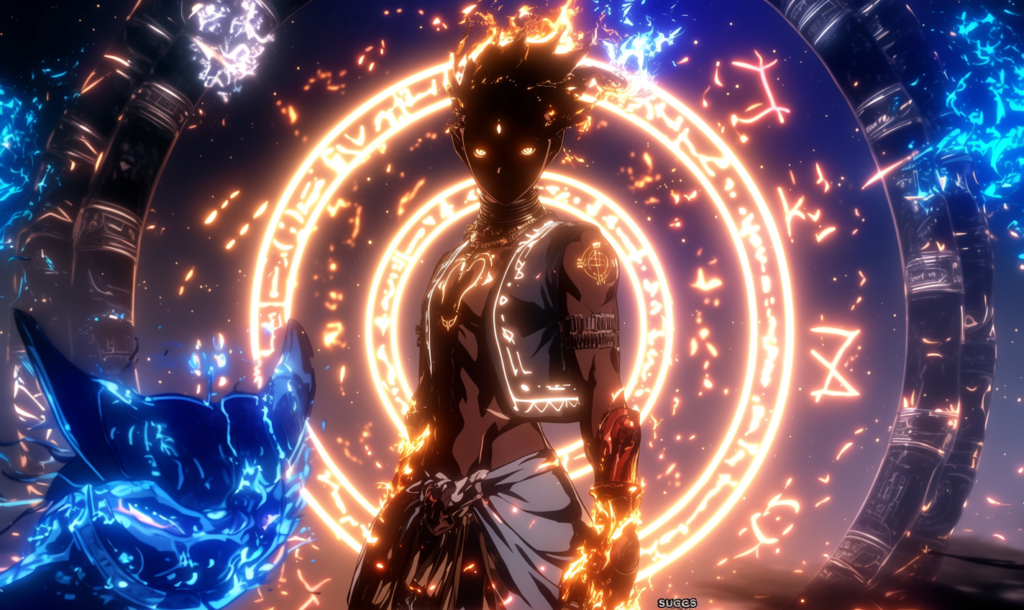
Then came Aether's Dominion, whose very presence imposed order upon all things. Reality bowed beneath its decree, the grand meta-narrative sculpting itself to its will, forcing all beneath it to kneel, to accept its truth as absolute. But Dedyme was not there to kneel. Where the influence of the Deus extended, the Musō Tensei denied it. The spear did not resist its command, for that would imply it acknowledged its rule. No, it simply ignored the Deus, as if its authority had never existed at all.
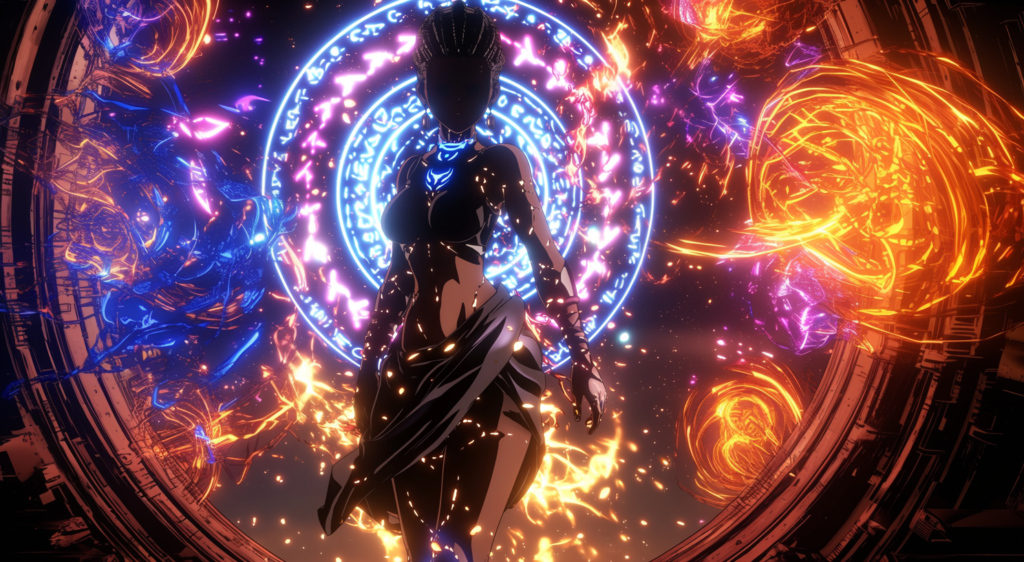
With each battle, Dedyme felt it—the Musō Tensei was no longer merely a weapon in his grasp. It was becoming him. It whispered in the spaces between thought, coiling around his very existence like an unshaped force, neither friend nor foe, neither ally nor adversary. It was more than a weapon—it was a philosophy given form, a contradiction made real. And with every strike, every unraveling of his enemies, it pulled him deeper into its embrace.
He could feel himself flickering at the edges, his form distorting, as though the concept of his being was slipping from the grasp of reality. He was not dying. He was not even fading. He was becoming. The Musō Tensei was not merely consuming him—it was remaking him into something beyond. Something that neither the Deus nor the eldervoids could define, something that stood outside the boundaries of all they had ever known.
And still, he pressed forward.
Chapter 5: The Last Knight and the Final Silence
The battlefield no longer resembled the realms that had once been fought over. Where once there had been celestial kingdoms, shattered temples, and the remains of forgotten gods, now there was only absence. It was not destruction in the traditional sense, not ruin nor decay. It was something deeper—a voiding of existence itself, where even memory struggled to retain form.
And in this desolation, where even the concept of war had begun to unravel, Dedyme stood upon the precipice of his own undoing.
The Musō Tensei was no longer merely a weapon in his grasp. It had long since passed the point of being wielded, no longer a mere instrument of battle but an entity unto itself. It coiled around his being like a living paradox, its very nature rewriting what it meant to exist. Each breath he took was an assertion, a rebellion against the grand meta-narrative that sought to dissolve him. His form flickered—one moment present, the next a mere suggestion of presence, as if reality itself was unsure whether he had ever been.
And then, from the spiraling abyss of silence, the last knight appeared.
A figure clad in battlesworn armor that seemed neither forged nor shaped, but instead woven from the ineffable. Blackened steel, tinged with an iridescent glow of violet and deep cosmos, wrapped around a form that defied certainty. The knight did not step forward as a warrior of legend nor an executioner sent to claim a final price. Their presence was not a challenge, nor a declaration—merely an inevitability.
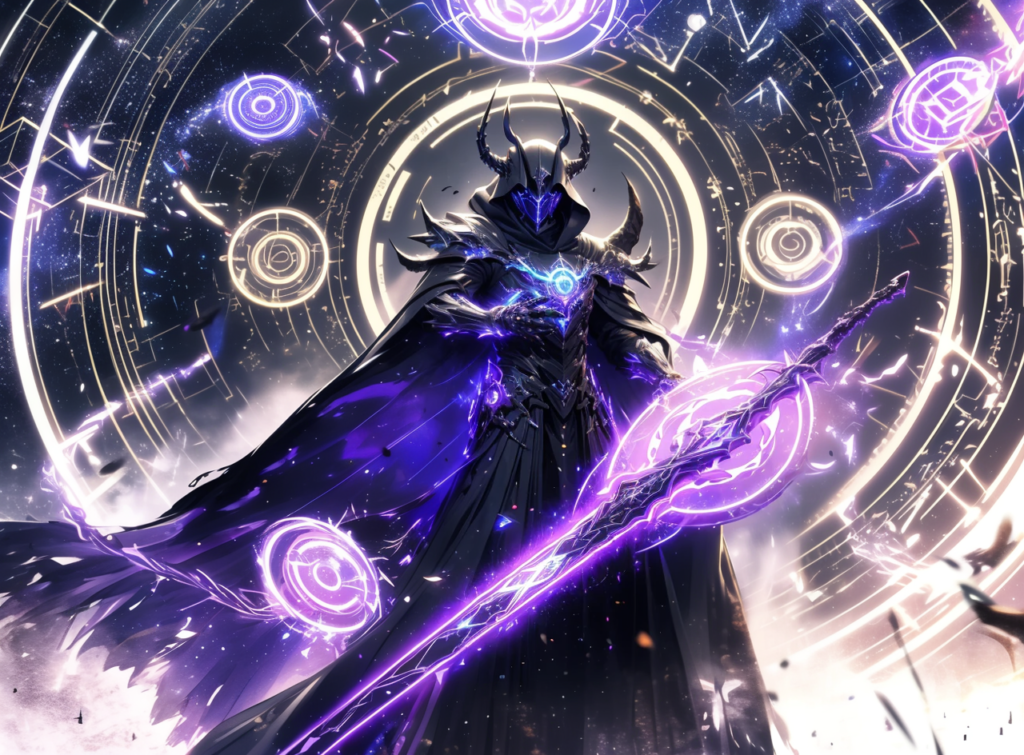
The space around them twisted, as though the grand meta-narrative itself hesitated at their approach. They did not belong. Not to the Deus, nor to the eldervoids. Not to the fractured ruins of what once was, nor the uncertain echoes of what would be.
They were outside it all.
A guardian of something greater than victory or loss. A specter that did not wage war, but ended them.
Dedyme did not move.
There was no need for words, no need for understanding. He had come too far, unraveled too much of himself, to question the nature of the one who stood before him. He had fought gods and dismantled their decrees, stood against titans who dictated the structure of existence, and walked beyond the realms of time and beyond-dimensional reality. He had seen the Void Beyond, had felt it embrace him in its silence, and he had returned—not whole, but transformed.
And yet, even now, the Musō Tensei demanded more.
The spear pulsed in his grasp, not with power, but with absence, as if sensing the finality of this moment. It did not yearn to strike—it did not seek dominion. It only asked the final question:
Will you let go?
The knight lifted their weapon. Not in aggression, not in challenge. It was a blade of geometric impossibility, a lattice of shifting symbols and structures that glowed with the intensity of collapsed stars. And yet, it was not meant for combat. The blade was a message, an answer to the Musō Tensei’s question, an inevitability that Dedyme had known was coming since the moment he had first touched the spear.
The spear that had consumed him. That had rewritten him. That had turned him into something that could not, should not, remain.
Dedyme exhaled.
And then, for the first time, he released the Musō Tensei.
His fingers loosened. His will unfurled. And with that singular act, the unraveling began.
His body did not fall. His form did not shatter. Instead, the very notion of Dedyme became something undefined, as if he had never been drawn into the grand narrative of existence at all. The Musō Tensei did not crash to the ground. It did not fade. It simply ceased to be.
The knight stood motionless, their gaze hidden behind the void-dark visor of their helm. They did not celebrate. They did not mourn. They simply observed, watching as the last traces of Dedyme drifted into the unshaped silence.
And then, as if responding to the culmination of all things, the battlefield itself folded inward.
The ruins, the echoes of Deus, the last remnants of a war that had long since abandoned purpose—all of it was consumed by the void. The silence deepened, swallowing everything until there was nothing left.
Nothing, except the knight.
They turned, stepping through the emptiness, their blade still humming with the echoes of something ancient, something beyond victory or loss. The war had ended—not with conquest, not with destruction, but with the quiet erasure of one who had stepped too far beyond what should be.
And somewhere, in the vast, unwritten silence, the name Dedyme lingered.
Not as a hero. Not as a villain.
But as a whisper.
A testament to those who had once defied the Deus.