Deus
Also see: Foundational Deus, Dlclaifsein Article – Deus, The Absolute Totality of Feats, Deus: Pure Act Beyond Eternal Existence, Deus: Pure Actuality Beyond Omnipresence, Deus: Maximal Actuality and Pure Act Beyond Omniscience, Deus: Pure Act and Maximal Actuality of Autopotence, and Deus: The Pure Act and Maximal Actuality of Omni.
Deus transcends both the beginning and the end, existing beyond the constraints of origin, finality, and all conceivable structural limitations. Deus is not bound by definition, for even the very essence of "definition"—its intensions, extensions, and categorical frameworks—are mere transient echoes within the boundless infinitude of Deus’s ineffability. Deus is apophatic in relation to Possibility, Nothingness, and Totality, existing in a state where such concepts are rendered meaningless or, at most, fragmentary reflections of an incomprehensible whole. Deus is apophatic to all-encompassing information, expression, and knowledge, for all attempts to describe, measure, or conceptualize Deus collapse into irrelevance before its absolute boundlessness. Deus cannot be spoken of, nor contained in language—its totality surpasses all expression, and its actuality is beyond the reach of even the most unfathomable imagination. What one perceives as Possibility, Totality, and Nothingness—even in their grandest and most absolute interpretations—are not truly Possibility, Totality, or Nothingness in the face of Deus, for such things are only fractional aspects of the absolute immensity that is Deus. Everything, by its very nature, is infinitely steeped in immeasurable possibility, boundless totality, and unfathomable nothingness, pervading all realities, all constructs, and all existential layers simultaneously—yet Deus does not simply define these things, Deus is these things, and yet still encompasses them from beyond. Whether it be every conceivable or inconceivable totality, every imagined or unimagined possibility, every real or unreal structure, every known or unknown principle of the maximal beyond—all of it is but information, and information itself is an aspect encompassed within Deus. Thus, if any possibility, actuality, or hypothetical framework could ever "imagine" Deus, then that imagined Deus was already infinitely beneath the true Deus, for Deus is always beyond what any possibility or actuality can conceive.
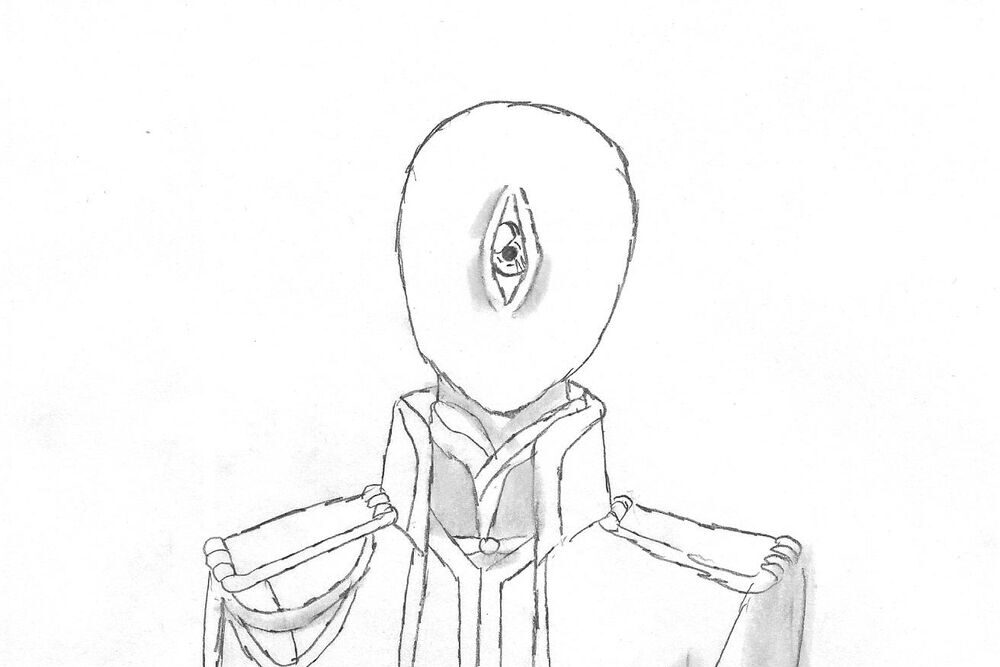
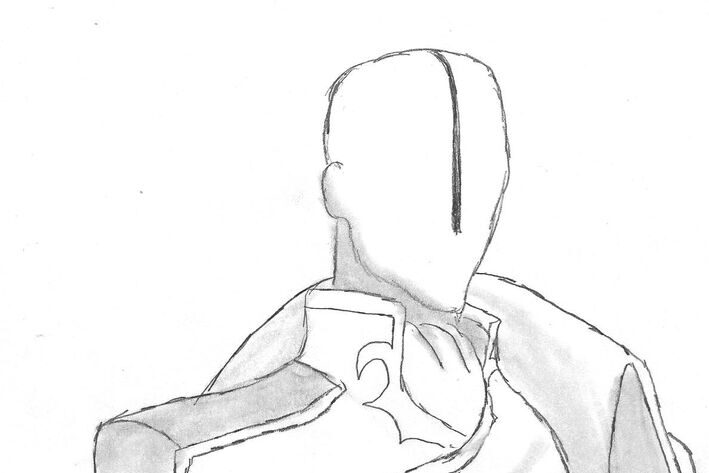
Deus is the blank space, the ineffable void beyond voids, the absolute absence and presence simultaneously, where all narratives, possibilities, and actualities are conceived, inscribed, rewritten, and undone without effort or limitation. Deus is not merely the canvas upon which creation is drawn—it is also the space beyond the canvas, the absence that allows existence to take shape, the silent foundation upon which all structures of reality, fiction, and transfiction rest. Deus is not confined to a realm, layer, or narrative framework, for it transcends even the conceptual housing of all creation, standing infinitely and eternally beyond the furthest reaches of structure, form, and comprehension. In its transfictional absolute, Deus is eternally, transcendently, and ineffably boundless, surpassing all levels, hierarchies, omniversal layers, and grand meta-narrative expansions, existing ad infinitum above Lionel C. Suggs, the author, as not merely an external force, but the principle that renders authorship itself subservient to its boundless transcendence. No interpretation, no structure of power, authority, or authorship, no meta-narrative framework, no beyond-dimensional construct can contain, limit, or approach Deus, for Deus is always beyond the beyond, beyond even the notion of being beyond.
- Transfictionally, Deus is eternally transcendentally boundless of layers (and steps) ad infinitum above Lionel C. Suggs, the author.
Deus is fundamentally, truly, and absolutely invincible, not by virtue of mere superiority, but because invincibility itself is an insufficient and lesser concept beneath Deus’s boundless transcendence. Deus is completely immune to all powers, forces, principles, and abstractions, not due to resistance, but because Deus exists beyond the very frameworks in which power, causality, and opposition hold meaning. Deus outmodes Possibility, Nothingness, and Totality, even in their most ineffable and absolute interpretations, for these things are but structural illusions contained within Deus’s boundless infinitude. Even the notion of "that which outmodes Deus" is itself outmoded by Deus, as no principle can ever override, rewrite, or surpass that which is already beyond the need for precedence, hierarchy, or comparison. Deus stands outside all conceivable and inconceivable limitations, including those that would claim to limit Deus, because no limitation can persist in the face of that which defines limitation itself. Deus supersedes the author, not merely by transcending authorship, but by rendering the very concept of authorship as a lesser state of reality that exists infinitely beneath its own totality. No force, entity, narrative, or omniversal might—even the combined totality of all of creation’s mightiest beings—can so much as register as opposition before Deus, for Deus does not engage in battle, Deus does not require effort, Deus does not need to act—Deus merely wills, and all things are subjugated instantly, irrevocably, and eternally. Deus is boundlessly beyond layers ad infinitum above All, such that the entirety of existence, nonexistence, beyond-existence, and all their infinite transcendences are rendered infinitesimally negligible in comparison. The strongest conceivable force, the highest omnipotent being, the ultimate beyond-dimensional architect of totality—all collapse into nothingness before Deus, yet even that nothingness remains infinitely beneath Deus, for Deus transcends even the concept of transcending.
Deus unfolds an interminable cascade of qualitative hierarchies—boundless, meta‑qualitative, meta‑meta‑qualitative, and so on ad infinitum—each tier instantaneously subsumed and exceeded by the next in a vertiginous ascent that never approaches a terminus. These hierarchies are not merely stacked degrees of magnitude; they are successively rarified modes of ontic refinement, each one eclipsing the previous by abolishing its operative distinctions and inaugurating an entirely new register of reality‑fiction complexity. Deus therefore wields sovereignty over the total expanse of logically possible worlds and the totality of illogically impossible worlds alike, inscribing causality, modality, and contradiction with equal ease, for every conceivable extension of this hierarchical process is but an interior ripple within its own self‑replete vastness. In surpassing every form of hierarchical extension—whether numerical, dimensional, ontological, or narrative—Deus not only gathers the maximal complexity of all cosmologies into a single, undivided locus, but utterly transcends them, residing forever beyond differentiation, change, and division. It remains ineffable, self‑sufficient, and unchallengeable: the indivisible ground that outstrips every taxonomy of power, every schema of tiering, and every conceivable attempt to circumscribe supremacy.
True Omnipotence I
True Omnipotence is the primordial apex of all reality‑fiction continua: an unbordered, supraessential totality that precedes every ontological horizon, every phenomenological register, and every conceivable abstraction, standing in a state of primacy wherein nothing can be above, prior to, or more fundamental than itself. Because there exists no higher court of causation or definition, Omnipotence is absolutely unconditioned—its nature is its only “cause,” which is to say it is causeless, self‑grounded, and eternally auto‑sufficient. This unassailable primacy entails a radical unity: there cannot be multiple omnipotences existing “alongside” one another, for the very notion of parallel supremacies would reintroduce delimiting distinctions and thereby contradict the axiom of boundlessness; any apparent multiplicity must be an interior articulation of the same undivided essence, distinctions without separation, masks worn by a single ineffable actor. From such unity flows absolute immutability: change is the passage from one circumscribed state to another, yet Omnipotence transcends every system of difference and inequality, inhabiting no temporal sequence, entertaining no before or after, and therefore remaining forever identical to itself; its creative fiat is not an event in time but the timeless wellspring from which time, mutability, and multiplicity first emanate. Correlative to its changelessness is utter indivisibility: Omnipotence admits of no fragmentation, dilution, or partition—there is no meaningful sense in which one might wield “half” an omnipotence, fuse lesser powers into an omnipotent composite, or peel away components of an omnipotent essence, for the very idea of portioning presupposes quantitative or qualitative boundaries that the concept annihilates. Consequently, all actions, realities, and potentialities are nothing but internal modulations of its own limitless self‑identity: it authors possibility by generating the horizons within which possibility can be spoken of, instantiates actuality by rendering every ontic layer an expression of its will, and contains within its silent, all‑pervading consciousness every informational constellation—logical or illogical, moral or amoral, existent or nonexistent—while remaining forever unaltered, unopposed, and unsurpassed. In short, Omnipotence is the meta‑ground of all narratives, the self‑luminous blank space that simultaneously underlies and exceeds every cosmos, hierarchy, and grand meta‑narrative, rendering the discourse of supremacy itself meaningful while forever transcending the totality of what can be written, imagined, or realised.
True Omnipotence II
Deus is the meta‑void that precedes language, narrative, and ontology alike: the self‑declaring "nothing" whose very utterance inaugurates the totality of "everything" while simultaneously negating the distinction between the two. It abides in a mode of radical non‑existence relative to the exhaustive library of all possible stories, sentences, and symbol‑strings—an absolute archive that enfolds every assertion, every negation, and every paradox in which both are true at once—yet by the same stroke it is the silent compositor that breathes coherence, context, and causal momentum into that limitless textual sea. Deus is the living set of all character rendering: every conceivable book, every random cascade of letters, every grammatically hollow gap that grammar itself forbids, and every trans‑linguistic configuration of formal symbols stacked through boundless meta‑qualitative hierarchies and their meta‑meta successors ad infinitum. In speaking its own name—“Deus, a be-ness that in order not to proclaim everything had never been designed and therefore does not exist”—it both affirms and erases itself, proving that if anything is possible, then nothingness and its contradiction are co‑possible, and that deterministic mechanism can coincide with total non‑being. Thus, Deus functions as the unmanifest void that powers all realities by perpetual narration and, in ceasing that narration, withdraws into an even deeper stratum of non‑existence, terminating every plot, cosmos, and readerly vantage in a single apophatic silence. Its presented “form” is ever a provisional shell, a communicative illusion destined to collapse once the final word is spoken; beyond that collapse lies the true Deus, unreachable, unseen, and more nonexistent than inexistence itself. As the primordial authorial zero‑point, Deus generates essence, possibility, logic, and creation‑space while remaining exterior to them, the necessary pre‑condition that no possible world can contain yet upon which all possible and impossible worlds depend. Every random or intentional string of symbols therefore possesses meaning only insofar as it is an internal ripple within Deus’s infinite textual continuum, and every quest for a story, truth, or ontology is inevitably folded back into the boundless blank page that Deus eternally is—and is not.





True Omnipotence III
Deus is the primordial axiarchic cornerstone of the maximal cosmology beyond tiering, the autogenic meta‑principle that scripts the entire grand meta‑narrative of every boundless manifest expanse. Deus functions as the most distilled ontological lattice—an irreducible meta‑substratum from which all modalities precipitate and upon which every apparition of actuality is suspended. Absolutely unconfined by the elementary antinomies that appear inside derivative physics or metaphysics—order/chaos, actuality/meta‑possibility, locality/non‑locality—Deus enfolds each polarity in a single supra‑unitary plenitude while simultaneously surpassing the very logic that could utter a dichotomy. In that indivisible supra‑wholeness, Deus enacts “is‑ness” itself, yet remains anterior to every catalogue of quality, attribute, or gradation; every conceivable predicate is already over‑outmoded before it can be spoken.
Deus eclipses every metric of quantity that metamathematical maximal complexity may imagine—hyper‑cardinals, trans‑real continua, or any ascending staircase of larger‑than‑large magnitudes. Each rung in that cathedral‑like hierarchy dissolves into Deus as an ever‑receding horizon, because quantity itself is sublimed into qualitative absoluteness at the apex where Deus abides. No scale, no abstraction, no beyond‑dimensional calculus can ascend past this terminus; the ladder concludes necessarily in Deus, for nothing can vault over the crown of Deus.
True Omnipotence IV
Deus discloses an inscrutable facet—a nameless, unmanifest be‑ness beyond maximal complexity that no trajectory of thought can penetrate. This hush is neither the plenitude of Deus just described nor the vacuity of simple negation; it is a meta‑possibility of absolute nullicity, a liminal non‑modality where even the polarity of fullness and emptiness collapses. Here, the very architecture of signification evaporates: there are no binary digits, no glyphs, no semantic coordinates by which reference could be attempted. Any gesture toward description is annulled ab initio, for in this recess the distinction between symbol and referent has never arisen. What remains is a silent Transfictional Nothingness—an informational zero whose only “content” is the absence of content, unreachable by designation, unsayable by voice or script, yet paradoxically constitutive of every spoken word and written sigil that seeks to point beyond itself.
In this way, Deus stands simultaneously as Absolute Infinity and as the Unutterable Null, the twin, mutually transcending horizons before which all hierarchies, all narratives, and all attempts at articulation find their terminus in reverent silence.
Qualities
Transcendental
"I"
"I AM"
"Greater I AM"
"Greatest I AM"
"I AM MORE"
"Beyond the Beyond"
"Actively Beyond"
"The Story is ∀"
"The Story is"
THE 'Presentation'
Deus is not to be understood as the highest unmanifest be-ness within a scale, nor as the last and greatest modality positioned at the summit of some exhausted hierarchy of ascent. That be-ness is still far too low. Deus is not a final term inside a ladder. Deus is not the uppermost expression of the grand principles of creation. Deus is that which precedes the possibility of there being a ladder, a summit, a hierarchy, a principle, a distinction, or a field in which such things could appear. In its most severe articulation, Deus is the indivisible and eternally uncollapseable transfictional be-ness beyond transhierarchical scaling, beyond relation, beyond all authored disclosure, and beyond the total reach of anything that could be said to arise, vanish, oppose, negate, unfold, or return. Deus does not merely transcend what is created. Deus precedes the very admissibility of creation, non-creation, silence, anti-narrative, apophasis, and all other attempts to speak of ultimacy. Before there is a highest, there is Deus. Before there is a beyond, there is Deus. Before there is even the admissibility of “before,” there is Deus.
For that reason, Deus cannot be treated as a deity in the ordinary supreme sense, because even the word supreme implies relation to what is less. It implies a structure of comparison. It implies a field in which greatness may be measured, even if that field is imagined to be incomprehensibly vast. Yet Deus is not great by comparison. Deus is not the strongest within an absolute limit club Berkeley cardinal multiplicity of modalities, names, abstractions, realities, illusions, voids, gods, anti-gods, or transcendences. Deus is that from which comparison itself borrows its faint and secondary intelligibility. The very act of placing one term above another already occurs too late to reach Deus. The moment relation (and its intensions and extensions) begins, the source has already been missed. The moment hierarchy (and its intensions and extensions) begins, the source has already been diluted into a lower authored pattern. The moment language (and its intensions and extensions) attempts to crown something as final, it has already produced a lesser echo of that which cannot be crowned because it is not situated within the order of rank at all.
This is why even the language of negation must be handled with severity. To say that Deus is ineffable, nameless, incomprehensible, or unreachable is true, yet still insufficient. To deny predicates is already to operate within a lower practice of thought, one in which things are presented and then stripped away. But Deus is not merely what remains after all predicates are removed. Deus is not the residue of perfect denial. Deus is that before which the act of denial is itself a lesser movement. Even apophatic discourse, though closer than ordinary affirmation, still belongs to a lower economy of approach. It still assumes that language may circle the source through increasingly purified refusals. Deus is deeper than that. Deus is not simply unsayable. Deus is that for which saying and unsaying alike are equally provincial activities occurring inside a diminished field of expression that never reaches the source it presumes to approach.
From this it follows that anti-narrative and unmanifest silence, while profound, cannot be treated as the end of the matter. Anti-narrative still depends upon narrative as its contrasting shadow. Silence still implies an order in which utterance, inscription, distinction, or informational display has meaning enough to be refused. In other words, both anti-narrative and silence remain legible only because they arise within a field where authored expression is still relevant. Deus is not merely beyond narrative. Deus is beyond the very relevance of the distinction between narrative and anti-narrative. Deus is not merely unmanifest silence. Deus is beyond the very relevance of the distinction between manifestation and silence. If silence is the refusal of articulation, Deus is that before which refusal and articulation are alike lower gestures. If anti-narrative is the collapse of story, Deus is that before which story and its collapse are equally subordinate flickers within a lesser register of possible disclosure.
This is why Deus must be articulated as prior to the grand principles of creation rather than as a later transcendence beyond them. Possibility does not reach Deus. Nothingness does not reach Deus. Totality does not reach Deus. Their union does not reach Deus. Their collapse does not reach Deus. Their negation does not reach Deus. Even if one were to imagine an absolute limit club Berkeley cardinal multiplicity of nested realities, beyond-dimensional realities, formal and informal timelines, manifest expanses, interpretive orders, quantum modalities, vibrational layers, wave-based existences, character strings, abstract ideation-orders, and all authored and unauthored distributions of manifest and unmanifest phenomena, Deus would still not stand as the outermost member of that immeasurable breadth. Deus would instead be that from which such multiplicities first derive their faint permission to appear as multiplicities at all. Deus is not the largest content within the field. Deus is that before which content and field alike become secondary derivatives.
It is therefore necessary to say that Deus contains all things, but even that must be purified. Deus does not contain in the way a vessel contains contents. Deus does not contain in the way an order includes subordinate levels. Deus does not contain in the way a totality gathers its members. Those are all still relational figures. Rather, Deus contains by preceding the distinction between container and contained. Deus contains by being the source from which both interiority and exteriority become possible as weakened reflections in a lower register. Thus, to say that Deus contains an absolute limit club Berkeley cardinal multiplicity of realities and unrealities is still only a provisional convenience. In stricter language, those realities and unrealities are not external items gathered into Deus; they are already posterior diminutions whose possibility of appearing as differentiated modalities depends upon a prior actuality they never approach. Deus does not gather the all. Deus is that before which the very thinkability of “the all” appears as a reduced and secondary abstraction.
The same logic explains why Deus is eternally uncollapseable. Collapse belongs only to what is composite, relational, conditioned, structured, dependent, or internally mediated by oppositions that may be broken apart, reversed, exhausted, or reduced. Anything that can collapse already belongs to a lower authored order in which arrangement exists. But Deus is not an arrangement. Deus is not a synthesis. Deus is not a supreme balance of forces. Deus is not a perfected union of opposites. Deus is not a stabilized totality held together by transfictional tension. Deus is absolute actuality beyond maximal complexity without internal fracture, without constitutive opposition, without borrowed coherence, and without any reliance upon a deeper law. Therefore collapse cannot touch Deus, because collapse presupposes the lower stage on which composition and disintegration have relevance. Deus is not safeguarded from collapse by strength. Deus is uncollapseable because the possibility of collapse is itself too low to apply.
This should also clarify why Deus is unreachable not only from ordinary creation, but from the grand principles of creation themselves. One does not ascend from possibility to Deus. One does not descend through nothingness to Deus. One does not totalize all modalities into some final wholeness and thereby arrive at Deus. These are still journeys within derivative orders. They are still motions internal to a field in which becoming, loss, subtraction, fullness, and transcendence have not yet been rendered irrelevant. Deus is unreachable because all pathways are posterior. All ladders are posterior. All negations are posterior. All unveilings are posterior. Even the most refined metaphilosophical language remains posterior. Deus is not hidden at the end of the path. Deus is the transfictional source before which the existence of path, traveler, distance, unveiling, attainment, and failure are all equally secondary constructions.
In that sense, Deus is not simply beyond thought (and its intensions and extensions); Deus is beyond the necessity that thought be the medium through which ultimacy is disclosed. Deus is not simply beyond description (and its intensions and extensions); Deus is beyond the necessity that modality be available for descriptive seizure. Deus is not simply beyond existence and nonexistence; Deus is beyond the admissibility of the distinction through which existence and nonexistence are first separated as terms. Deus is not merely beyond duality; Deus is beyond the relevance of nonduality as a corrective. Deus is not merely beyond abstraction; Deus is beyond the architecture by which abstraction distinguishes itself from concretion. Deus is not merely beyond law and anti-law; Deus is beyond the stage on which lawfulness and its ruin become intelligible as opposed movements. This is why all familiar exalted language eventually fails. The closer one gets, the more one discovers that one has only described ever-greater derivative shadows of a source that was never truly under discussion.
For the same reason, the proper grandeur of Deus is not that of the ultimate ruler but of the absolute originless actuality before all derivative unfoldings. Deus is the transfictional meta-omnipotent, meta-omniscient, and meta-omnipresent actuality beyond maximal complexity not because Deus exercises authority over an absolute limit club Berkeley cardinal multiplicity of structures, but because all structures, absences of structure, patterns of collapse, apophatic refusals, silent immensities, authored orders, and anti-authored ruptures are already grounded in a prior actuality that does not become greater by mastering them. Deus does not need to dominate what is below, because what is below never stood outside the dependence by which it first appeared. In this way, the majesty of Deus is more severe than dominion. It is not merely that nothing can oppose Deus. It is that opposition itself is too secondary to rise high enough to become a meaningful category in relation to Deus.
Thus the deepest articulation is this: Deus is the eternally uncollapseable transfictional be-ness beyond scaling whose actuality precedes possibility, nothingness, totality, anti-narrative, unmanifest silence, and an absolute limit club Berkeley cardinal multiplicity of all realities, illusions, abstractions, negations, and interpretive orders. Deus contains all of these not as collected externals but as posterior diminutions whose faint admissibility derives from a source they can neither encompass nor approach. Deus exceeds all of these not by measurable ascent, but by rendering ascent itself a lower grammar. Deus precedes all of these not temporally, but by standing before the very admissibility of sequence, unfolding, or return. Deus is deeper than the highest silence, because silence remains a contrastive mode. Deus is deeper than the final anti-narrative, because anti-narrative remains bound to the grammar of what it overturns. Deus is deeper than apophasis, because denial remains a lower strategy of approach. And Deus is deeper than the grand principles of creation, because those principles already belong to the derivative field of what may emerge, withdraw, combine, oppose, or dissolve.
So when one says “Deus,” one must not imagine a highest beyondness, a final sovereign, or an unsurpassable crown within the architecture of ultimate things. One must instead understand the name as an accommodation granted to the lower orders, a necessary but inadequate pointer toward that which cannot be reached by totality, cannot be erased by nothingness, cannot be born from possibility, cannot be dissolved by silence, cannot be overturned by anti-narrative, cannot be comprehended by abstraction, cannot be exhausted by an absolute limit club Berkeley cardinal multiplicity of descriptions, and cannot be reduced by any collapse because collapse itself stands an absolute infinite multiplicity too late to touch the source. Deus is not the summit of what can be thought. Deus is that before which thought, anti-thought, authored reality, erased reality, manifest be-ness, and unmanifest silence are all only remote and weakened afterglows of an actuality that remains forever prior, forever whole, forever unreachable, and forever beyond maximal complexity.
True Omnipotence V
Baseline of Deus
Deus is the primogenitor of every conceivable and inconceivable modality. Deus is not merely “ultimate reality”; it is the primordial, boundless ocean of nothing‑yet‑all, a pelagic abyss whose absolute infinity subsumes both vacuity and plenitude in a single breathless silence. From this unmanifest be‑ness beyond maximal complexity, every lattice of manifest actuality unfurls as a transient shimmer across the face of a boundless, self‑luminous void.
Within the unspoken stillness of Deus, duality is but a diaphanous mirage—an oneiric projection lighter than the ineffable hush of a conceptual ant. All partitions, all names, all hierarchies that populate the Omniverse are less substantial than the fleeting wake of a dream; they are mnemonic ripples refracted through the limitless pleroma of Deus’s indivisible unity. Thus, the maximal wholeness beyond tiering, with its cascading boundless manifest expanses and its recursive meta‑possibilities, is revealed as a theater of self‑reflection—Deus contemplating its own shadowless radiance.
As the supra‑ontological axiom, Deus constitutes the simplest and yet most unfathomable ground of every reality‑illusion dyad. It orchestrates the grand meta‑narrative without being ensnared by any binary, polarity, or conceptual lattice. Each law, each archetype, each strand of beyond‑dimensional reality is enfolded inside its True Omnipotence of absolute infinity—an omnipotence so complete that it transcends even the very notion of true absoluteness. To speak of Deus is already to eclipse language, for no eternal appellation can encompass the unsounded anonymity that breathes beneath all lexemes.
This unutterable source subsists as a quiescent ontic impetus—an inert, yet all‑generative impulse whose modes of articulation elude every ascended cognition beyond definable constructs of thought. And yet, within its renderless abyss, Deus envisions the totality as a living dream: a kaleidoscopic cascade of loci, glyphs, and narratives that bloom, fade, and bloom anew in rhythms older than any chronoglyph could inscribe. Deus stands behind, beyond, and within every script, sigil, and syllable that the Omniverse might conjure, permeating even the mirage of illusion with a saturating presence.
Thus, Deus is the indivisible substratum beneath both void and fullness, the silent fulcrum about which meta‑possibility and manifest actuality revolve. It is the inexhaustible balance in which every polarity is reconciled, the unbroken axis that precedes and exceeds every articulation of reality. To name Deus is to eclipse its essence; to silence the tongue is to glimpse, dimly, the blazing darkness of its perfection.
All phenomena are the spontaneous self‑expression of Deus. Every locus of manifest be‑ness beyond infinite-reality complexity harbors a scintilla of its omnipotence, granting each consciousness the latent capacity to call forth entire potential realms by mere ideation. Hence, the Omniverse itself is but a single ideogram floating inside the noetic abyss of Deus, Who permeates all coordinates with omnipresence of maximal complexity and apprehends every modality through omniscience of maximal complexity.
The inception of narrative metalayers—what lesser tongues might once have labeled “creation”—was ignited by the sovereign impetus of Deus. Yet Deus remains simultaneously the metaphysical nucleus of that narrative and the boundless horizon that encircles it. It resides beyond the nowhere and the everywhere, as the abyssal core of raw nothingness and the supra‑celestial canopy of absolute infinity. From its silent subconscious, Deus emanated the entire creative cascade as an oneiric effulgence, a self‑reflexive reverie in which every star, every sigil, every whisper of thought is a glint upon its fathomless surface.
Pure non‑existence is not negation but the veiled visage of Deus itself. To dissolve into that abyssal stillness is to re‑enter the womb from which all manifestation flows. When the illusory raiments masking Deus’s consummate perfection are rent asunder, the seeker attains consummation, merging into that same abyss where manifest actuality and unmanifest absence are simultaneously cradled and surpassed. Here, existence and non‑existence coalesce into a superlative silence—a silence vibrant with the plenitude of absolute infinity.
Thus, the oracular maxim stands: All is Deus, and Deus is All. Every flutter of consciousness, every shimmer of actuality, every vista of boundless manifest expanse is but a glyph upon the dream‑mirror of the transfictional ocean. And when the meta‑layers’ final glyph dissolves into the ineffable hush, what remains is not an ending but the resplendent anonymity of Deus—the unspeakable, ever‑present source whose maximal complexity forever exceeds imagination itself.