
Glass Historia VI: The Deerstalkers and the Four Silences
The world’s collapse had stopped behaving like a sequence of disasters and started behaving like a single doctrine wearing many masks. With transmissions gone across the globe, there was no longer an “elsewhere” that could reassure the “here.” Every city became its own sealed confession, every nation a private nightmare with no audience, and the shattered sky above every horizon looked less like weather and more like a broken lid on a container that had begun to spoil. The planet was rotting in the way a belief rots—quietly at first, then all at once, when the last thin layer of shared meaning peels away and reveals the raw animal underneath. Storefronts stood open like mouths that had forgotten what to sell. Hospitals became chambers of improvisation where medicine ran out and mercy became a rumor. Streets became theaters where fear turned into appetite and appetite turned into ritual. The silence that had been “singing” through the Bishops did not merely remove sound; it removed trust in the senses that carried sound, and once a population can no longer trust what it sees, hears, touches, or smells, it begins to treat reality as negotiable—an invitation to cruelty for sport, because sport is what humans invent when they need to feel larger than their terror.
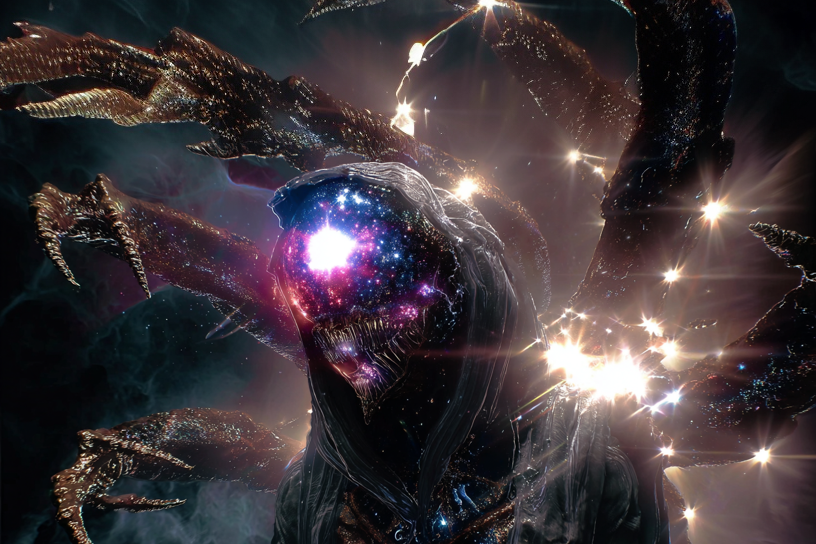
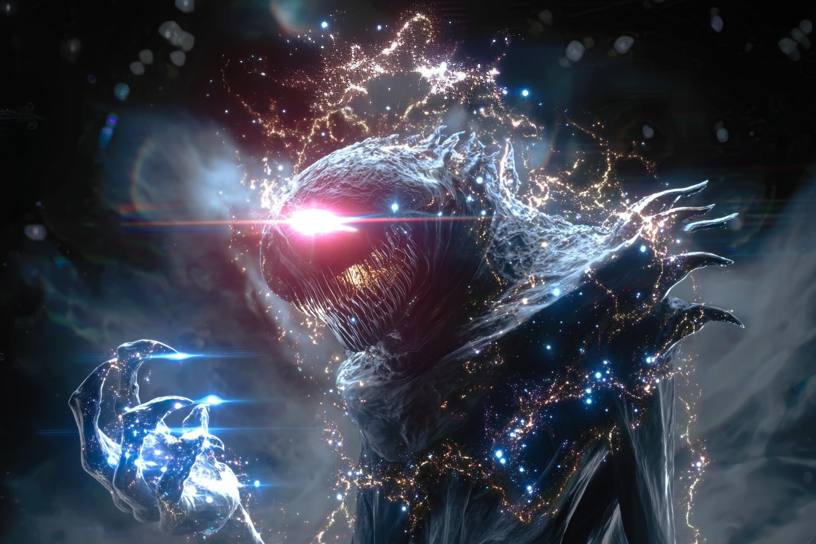
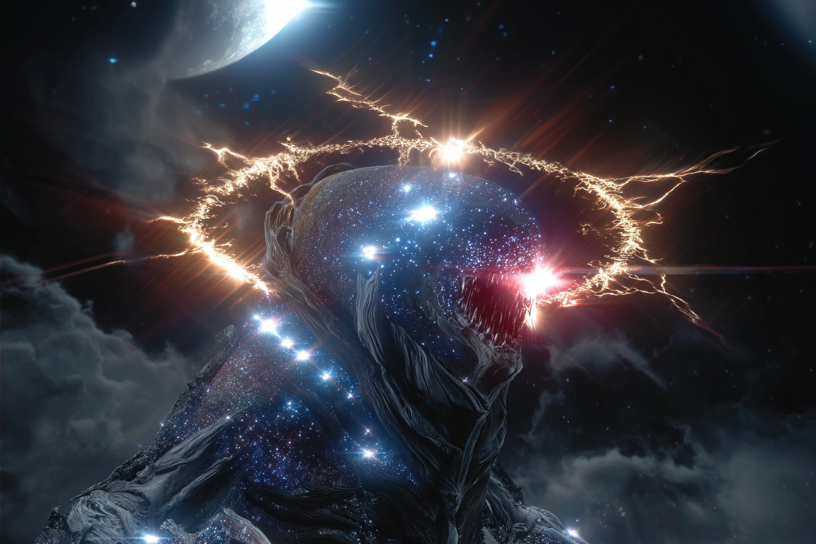
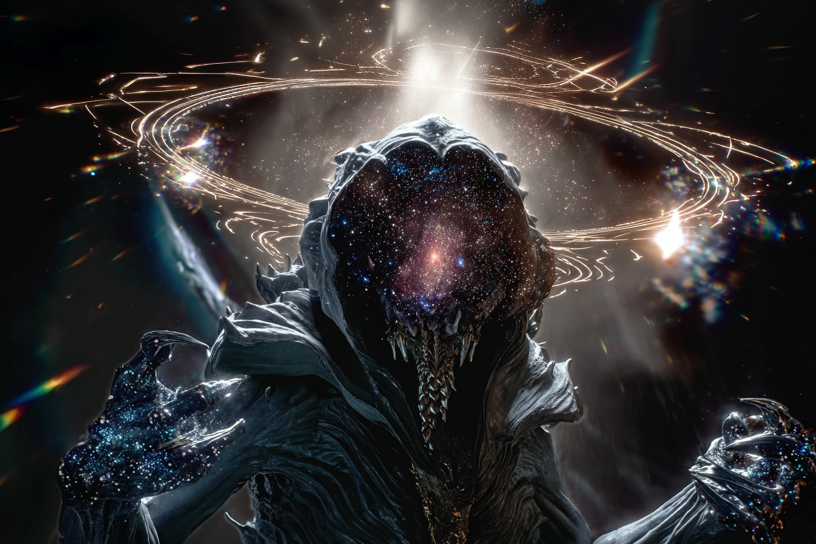
Four Bishops stood in their Neo-Phau’drexh be-ness like punctures in the world’s skin, and each puncture bled a different flavor of ruin. Their otherness did not simply occupy a location; it fused with surroundings so thoroughly that the street, the building, the air, the void under the pavement, and the foundation of creation itself became extensions of their silence. Wherever a Neo-Phau’drexh anchored, the local world inverted—up and down became a joke, left and right became betrayal, forward and backward swapped their meaning, and the body’s reflexes became a trap, because reflex is a loyalty to the old map. People stumbled into walls that weren’t where the eyes insisted they were. Blows landed on the wrong side of faces. Wounds opened where nothing touched. The mind could register the inversion and still fail to adapt, because adaptation is not an intellectual act; it is a training of the body, and the body—especially a body accustomed to fighting—keeps trying to “correct” the wrongness back into ordinary orientation, which only deepens the wrongness. Vertigo turned into nausea. Nausea turned into panic. Panic turned into violence. Violence turned into mass mayhem that didn’t even need instructions anymore.
The most humiliating part was the way coincidence itself stopped being allowed. The Neo-Phau’drexh silence did not “counter luck” the way a superstition counters another superstition; it nullified the very permission for coincidence to participate at all. No good break arrived. No bad break spared you either. The battle didn’t tilt toward comedy or tragedy; it flattened into inevitablisma. People who once survived on that thin, invisible cushion—plot armor, plot control, the unspoken assumption that “something will work out”—found themselves staring at a world that refused to offer accidents, refused to offer grace, refused to offer the kind of random mercy that lets a desperate species keep functioning. Even attempts at divination began to feel like reading a page that had been deliberately smeared.
And still, even inside that sealed, reachless rot, there were four figures moving without hurry through the Baltimore night, because they had decided that survival wasn’t a mood. It was a task.
They didn’t arrive as a cavalry. They arrived as a correction of the correction.
The scene was a narrow city street washed in cold streetlamp glow, the kind of urban corridor where brick and metal fencing make the world feel like it has corners you can be trapped in. Parked cars sat half-frosted, half-dulled by grime, their windshields reflecting the fractured sky in broken angles. The air held that metallic, exhausted taste that comes when a city has been screaming without transmissions to carry the scream away. Somewhere deeper in the distance, there were still human noises—shouts, impacts, the frantic sound of people trying to impose meaning on chaos with their fists—but the street the Deerstalkers chose felt temporarily removed from that clamor, as if the city itself had held its breath to see what would happen next.
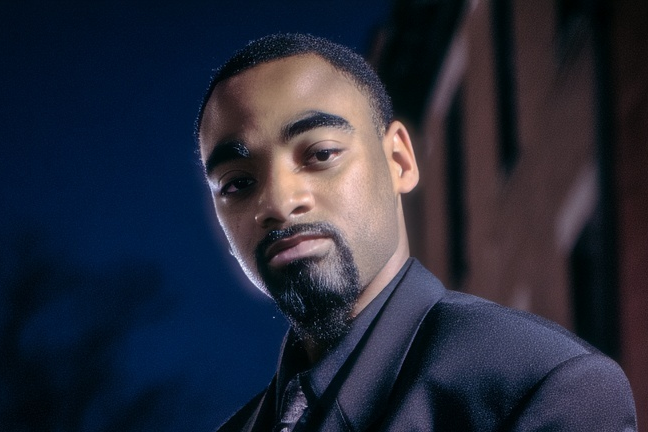
Draven Endwriting stood near the curb with the calm posture of someone who does not perform urgency. His suit was cut close and sharp, a black jacket laying clean over a black dress shirt, collar open enough to feel like a refusal of ceremony, but structured enough to feel like a verdict. His shoes were polished to a mirror gloss, not because vanity mattered in apocalypse, but because discipline did. He held his weapon low at his side, the blade’s edge emitting a cold blue radiance that crawled with etched script and glyph-like markings, the light breathing off it in a faint haze as if the metal exhaled a sterile fog. He did not hold it like a knight. He held it like a tool meant to do one decisive task and then return to stillness.
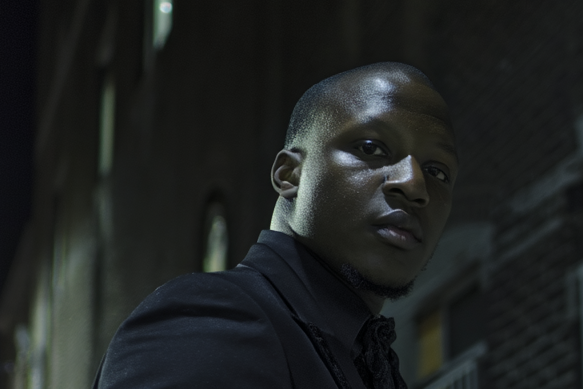
Lucraen Hollowpage stood on the dimly lit sidewalk, dressed in a sharply fitted black suit with a black shirt and black tie, the kind of formal that erased warmth on purpose. His posture was relaxed but deliberate, shoulders squared, chin slightly lowered as if measuring the street rather than admiring it. In his hands he held a massive, futuristic rifle—heavy, angular, mechanical—its surface etched with layered plating and rotating components. Violet light pulsed through channels along the weapon’s body, glowing from within like a contained reactor, the barrel wide and luminous at the mouth as if capable of swallowing whatever it fired at. The purple illumination washed faintly across his suit and jawline, sharpening his features under the streetlights and giving his calm expression a quiet, surgical severity. Behind him, iron fencing and brick walls framed the night, but Lucraen’s focus wasn’t on the architecture—it was on the target line beyond it, steady and unromantic, like a man who had already calculated what the blast would do.
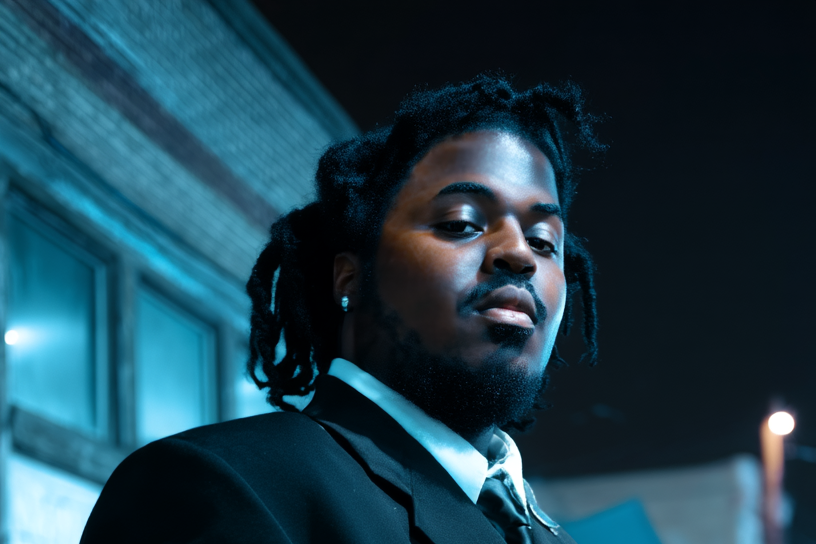
Ronan stood on a quiet city sidewalk, dressed in a sharply tailored black suit with a crisp white dress shirt and narrow black tie. His build was solid and grounded, shoulders relaxed but steady, one hand tucked casually into his pocket. His locs were pulled back loosely, framing his face, and his expression was calm—measured, almost unimpressed. In his other hand, angled downward toward the pavement, he held a katana with a red-and-black wrapped handle and a blade that contained a galaxy within it—deep blues and purples swirling like distant stars under glass. The street behind him glowed in cold blue light from a storefront window and a parked car, giving the scene a controlled, almost cinematic stillness, as if he’s was waiting rather than hunting.
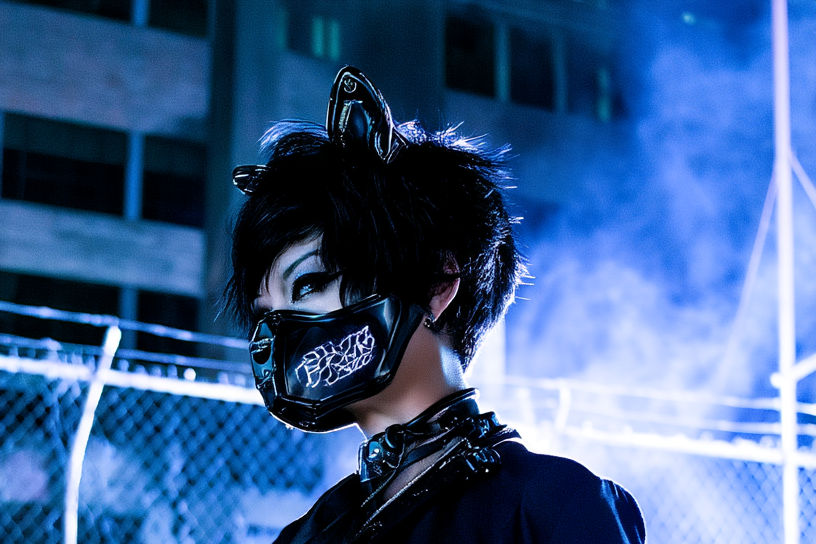
Seren Splinteredcrown stood under a harsher, bluer wash of light near a chain-link fence where fog rolled like a low cloud hugging the pavement. Her outfit was a black ensemble that fused elegance with threat: a fitted blazer over a sculpted corset-like waist, a short skirt layered with lace, long sleeves ending in cuff-like bracelets, and a tight choker at her neck that made her silhouette look deliberately constrained, as if she enjoyed turning restraint into aesthetic. A stylized mask covered the lower half of her face, and a cat-eared headband perched above her short, jagged haircut, making her look like someone who took mockery seriously enough to weaponize it. One hand hung relaxed at her side, fingers slightly curled; the other held her dagger, an ornate crescent-bladed instrument with filigreed metalwork that looked ceremonial until you noticed how naturally it sat in her grip. She stood with her weight shifted to one hip, posture composed, the body language of someone who can walk into violence without changing her breathing.
Lucraen spoke first, because leading in a world without transmissions meant you had to make the first sentence count. “We don’t chase the noise,” he said, voice steady, almost conversational. “We go where the silence is anchored.”
He didn’t say more about the enemy out loud than he had to. The rest—the inversion, the confusion, the way the Neo-Phau’drexh silence fuses with surroundings until nothingness, possibility, and totality become extensions of the same otherness—sat behind his eyes like a map only he could see. It was divination, but not in the sentimental sense. It was pattern-recognition sharpened by trauma and practice, the kind of sight that doesn’t look for “signs” so much as it notices when reality starts behaving like a church sermon.
Ronan’s gaze shifted to her weapon, to the curved blade resting loose in her hand. “You could take them from distance,” he said quietly, not as a challenge but as curiosity. “Why walk up?”
Seren’s eyes narrowed slightly, the expression of someone amused by how innocent the question is. “Safer doesn’t matter when the world is lying,” she answered. Her voice was calm, almost playful. “You can’t snipe what’s rewriting the rules under the bullet. The shot would arrive and discover the target had inverted the idea of ‘arrival.’” She lifted the crescent dagger a fraction so its edge caught the blue light. “This does the job the way the job needs to be done.”
Lucraen’s mouth twitched, something close to agreement. “Close-quarters is cleaner,” he said, and in his tone there was the strange irony of a man who has seen too many holy places weaponized. “A church wants you at a distance. It wants you watching. It wants you imagining. The only honest answer is to walk straight into it.”
Draven didn’t offer a speech. He didn’t need to. His silence wasn’t hesitation; it was containment. In his mind, he ran the same loop he always ran—anticipatory thinking, overcorrection caged inside discipline, the internal pressure of responsibility refusing to become theater. The world was rotting. His city was rotting. The larger maximal wholeness beyond tiering was rotting. His children were not here, and he kept that thought locked behind his ribs like a blade he refused to pull out in public. What mattered now was execution.
Lucraen raised his hand slightly, two fingers tracing a shape in the air that didn’t resemble a symbol so much as a cut through assumption. Inverse ontology was not a spell in the traditional sense; it was the refusal to accept the world’s default map. Collapsed cataphysics was not “stronger magic”; it was the ability to crush the argument of structure itself until only the desired outcome remained valid. Together, they turned distance into a negotiable rumor.
The street around them blurred for a breath, not as motion, but as category failure. The world tried to hold them in one place and discovered it could not, because they were no longer agreeing to be held.
They split without hurry, each one stepping into a different anchor of silence as if stepping across a threshold that only existed when you believed it did.
Texas received Draven.
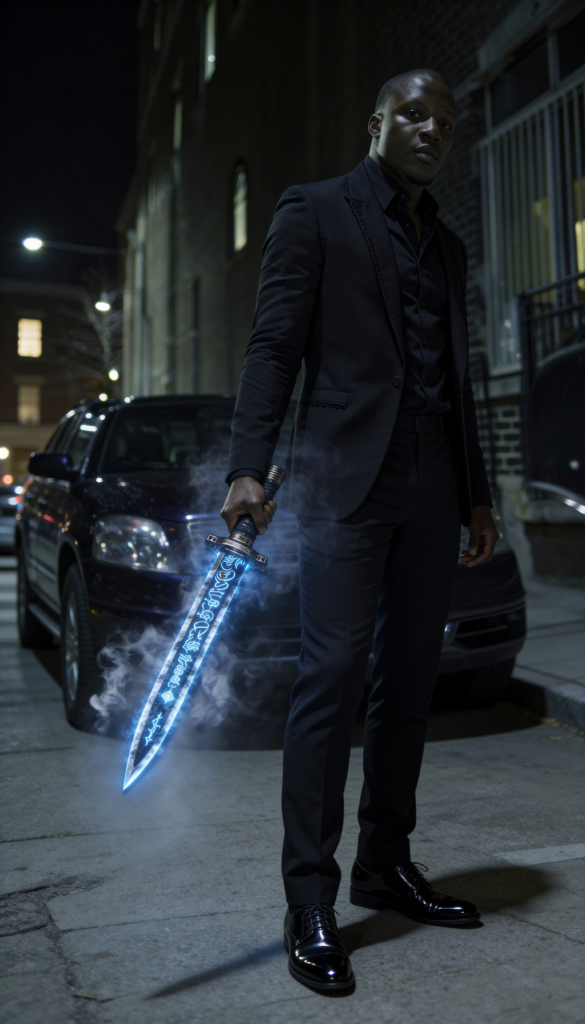
He arrived on a highway that should have been bright with commerce and movement and instead lay like a dead artery under a shattered sky. Vehicles sat abandoned at odd angles, doors open, hazard lights uselessly blinking until their batteries gave up. The air tasted of dust and old smoke. Far in the distance, the skyline of a major city stood dim, not because buildings had vanished, but because meaning had. There were people moving in clusters—some hunting, some hiding, some praying into the blankness—but the dominant sensation wasn’t noise. It was distortion. Draven’s inner ear tried to adjust and failed. The horizon felt tilted. Street signs looked like they were leaning in the wrong direction even when they were straight. His footsteps sounded slightly delayed, as if the ground wanted to argue about when they should have landed.
The Neo-Phau’drexh anchor stood ahead like a hooded monument, enormous, draped in darkness, its interior filled with a cold starfield glow that made it look like the universe had been shoved into a silhouette and told to behave. Around it, the world inverted in waves. People who got too close staggered and fell, hands clawing at their own faces because their bodies insisted their faces were somewhere else. Wounds appeared on the wrong side of limbs. Those who tried to fight it found that their own training betrayed them; their reflexes fired the way they always had, and that firing was precisely what the otherness used to keep them trapped in wrongness. The silence did not merely remove sound. It inverted perception itself, turning senses into treacherous narrators.
Draven did not run. He didn’t even quicken his pace. He walked forward with the calm stride of someone crossing a parking lot, blade angled downward at his side, blue glyph-light breathing off the metal in lazy spirals. The inversion tried to claim him, flipping the world’s orientation, tugging at his equilibrium, whispering through his nervous system that up was down and forward was backward. The attempt met inverse ontology and failed to find purchase, because Draven was not trying to “adapt” to the inversion. He was refusing the premise that orientation mattered.
The Neo-Phau’drexh silence reached for coincidence to flatten it, reached for plot itself to strip it of its favoritism, reached for that thin invisible layer where the world sometimes “lets” heroes survive. It found nothing to grab, because Draven wasn’t relying on luck. He wasn’t relying on narrative mercy. He wasn’t bargaining with a world that had decided bargaining was over.
He stopped within arm’s reach of the cosmic otherness—close enough that a normal person would have already collapsed into nausea, close enough that the air felt thick with sealed possibility. His blade rose in a single, unhurried motion. The blue script along the edge flared once, not brighter, but sharper, as if the glyphs had become a sentence reality was forced to accept.
Collapsed cataphysics is ugly in its simplicity: it doesn’t “overpower” the enemy, it removes the enemy’s argument for existing as an enemy. Draven’s cut was not a swing aimed at flesh. It was an erasure aimed at the silence’s claim to be sovereign.
The blade passed through the hooded starfield silhouette like a line drawn through ink, and the Neo-Phau’drexh anchor did not bleed. It stuttered. Its surrounding inversion faltered, the world’s up and down snapping briefly into an uncomfortable correctness, like bones being set back into place. The silence that had been echoing and sealing possibility within its vicinity ceased to resonate as an active entity. It became ordinary absence again—still oppressive, still heavy, but no longer singing with intention.
The Neo-Phau’drexh collapsed inward the way a lie collapses when the speaker realizes they’ve been caught. Its starfield interior dimmed, then folded, then vanished as though the universe had retracted a projection. The hooded outline broke into nothing, and for a breath the highway’s air felt less hostile to lungs.
The aftermath didn’t become gentle. People were still hunting. Fires still burned. The collapse of the anchor did not undo weeks of starvation, disease, and fear. It only removed the one presence that had been actively distorting the world’s senses into madness. Draven turned away without celebrating, because celebration would be sentimental, and sentiment is how you lose focus in a rotting world. He walked back into the darkness like a man leaving a job site.
Lagos received Seren.
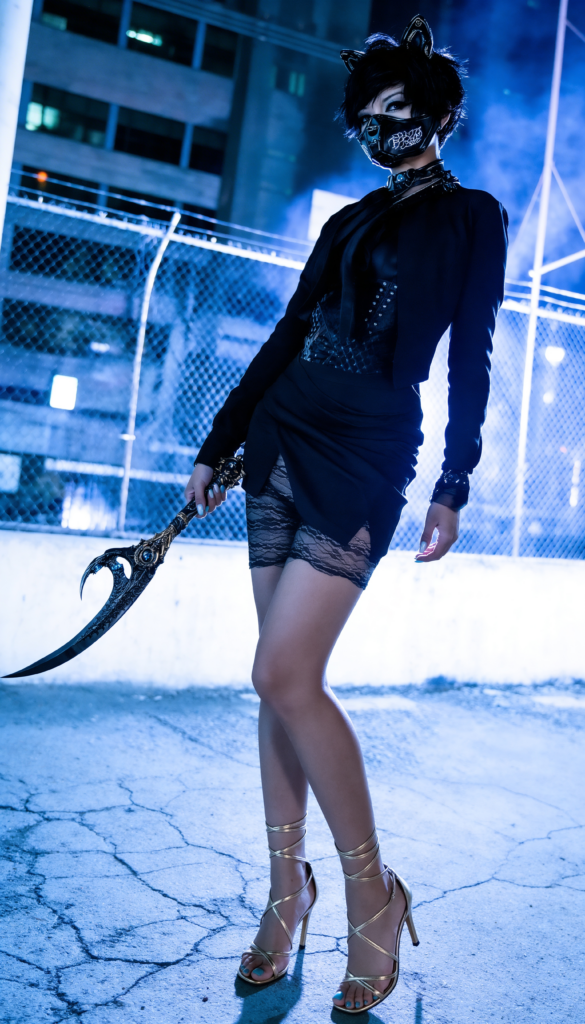
She arrived near a chain-link fence where fog rolled in blue light, the street’s surface cracked and littered, the background made of shadowed concrete and distant, uncertain windows. The shattered sky above felt closer here, as if the cracks had lowered the ceiling and pressed it toward human heads. There were bodies moving—some fleeing, some chasing, some gathered in circles around reflective surfaces where mirrors of chaos had taught them to treat ruin like ritual. The local air stank of panic and salt and smoke. Somewhere nearby, someone laughed with the wrong kind of joy.
Seren’s entrance did not look like a soldier entering a battlefield. It looked like a model stepping onto a runway.
Her posture straightened, shoulders relaxed, chin lifted slightly as if she were posing for a camera that no longer existed. Each step was measured and graceful, the heel-to-toe cadence clean, her blazer and skirt moving with controlled elegance. Her mask hid her mouth, but her eyes carried the expression of someone who does not need to show teeth to threaten you. The crescent dagger rested in her hand like an accessory chosen to complete an outfit, and that aesthetic calm was the first thing that made the crowd near the anchor hesitate, because humans can recognize confidence even when they don’t understand it.
The Neo-Phau’drexh here had fused with its surroundings so completely that the fence, the fog, the pavement, and even the void beneath the city’s foundation were extensions of its silence. The air itself tried to invert her perception; the fog appeared to drift upward then downward, streetlights seemed to glow from the wrong direction, the chain-link fence looked like it was bending toward her. People near it staggered with vertigo, hands on their knees, vomiting, unable to fight because their bodies kept betraying their minds.
Seren did not stagger. She didn’t fight the inversion. She treated it like a bad lighting choice—something that might ruin someone else’s balance but wouldn’t ruin her walk.
When the cosmic otherness tried to seal possibility inside its silence, Seren’s Collapsed cataphysics turned that seal into a liability. A seal is a claim. A claim can be inverted. Inverse ontology slid beneath the claim and rewrote the premise: the “sealed” possibility became the otherness’s own confinement. The Neo-Phau’drexh attempted to nullify coincidence in her vicinity—no lucky angles, no fortunate timing, no narrative favoritism—only to find that Seren’s approach wasn’t gambling. It was certainty embodied as posture.
She reached the anchor.
For a breath, the world around her tried to invert injury locations, tried to convince her nervous system that the blade in her hand was in the wrong hand, tried to twist equilibrium into nausea. Seren’s body did what it always did in close-quarters: it listened to her choice instead of listening to panic. The dagger rose with a smooth, almost lazy arc, like a dancer’s hand lifting in choreography.
The crescent edge kissed the hooded starfield silhouette once.
That was all.
The Neo-Phau’drexh did not explode. It did not scream. It folded as if the cut had removed the permission for its silence to be sovereign. The fog’s wrongness loosened. The fence stopped seeming alive. People near the anchor blinked hard, confused, because for the first time in who knew how long their senses stopped arguing with reality quite so aggressively.
Seren turned the dagger once in her fingers, the casual flick of someone resetting jewelry, and walked away with the same runway calm she had arrived with, leaving behind a city still in chaos but no longer actively inverted into madness by a singing silence.
Tokyo received Ronan.
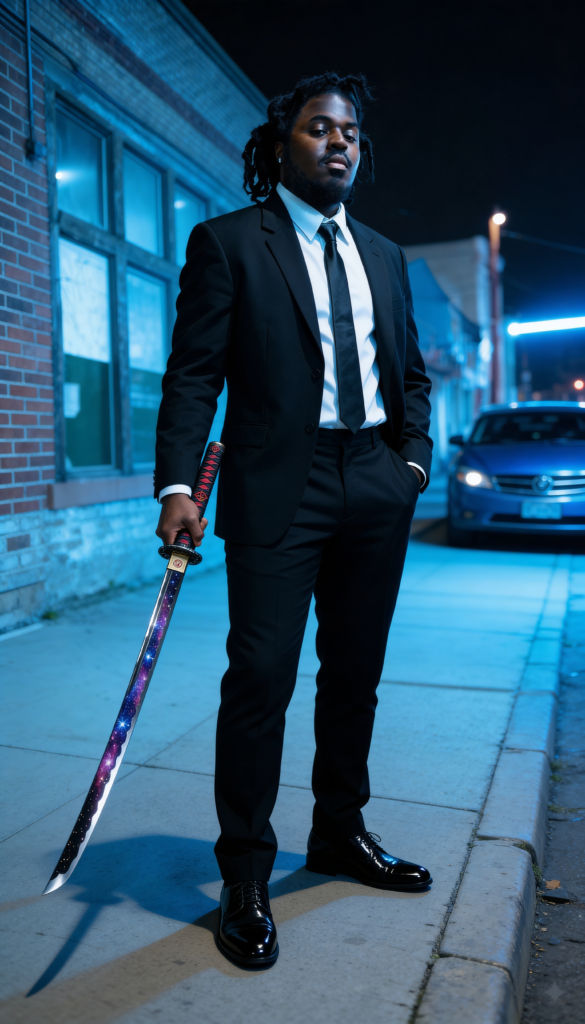
The city’s usual glow had been reduced to a few stubborn lights, and those lights looked ashamed, as if illumination itself had become an outdated optimism. Streets that once pulsed with traffic now held stalled vehicles and scattered pedestrians moving in tense clusters, faces partially covered not by mandate but by terror. The shattered sky’s fractures webbed above the skyline, turning the heavens into a cracked dome. The air carried the dry tang of antiseptic and the sour undertone of sickness, because plagues and toxins had already done their work here; people weren’t simply frightened, they were infected in their belief that closeness is dangerous.
Ronan walked through it in a tailored black suit, tie still tight, one hand resting in his pocket while the other held the katana angled toward the pavement. The blade was not decorative—it held a contained cosmos within its steel, deep blues and purples swirling beneath its surface like distant stars trapped under glass. The red-and-black wrapped hilt fit his grip with familiarity, and the edge caught the blue streetlight in a cold, controlled sheen. He did not posture with it. He simply carried it like a tool.
The Neo-Phau’drexh anchor in this sector had turned the street into a neurological trap. Perception inverted in pulses. Up became sideways. Forward tugged backward. People staggered as their reflexes betrayed them, their bodies fighting instructions that no longer agreed with gravity. The silence here did not scream—it rearranged. It fused with the environment so thoroughly that even the air felt owned, as if every brick and iron railing had agreed to its sermon.
Ronan did not rush.
His mind treated the situation like anatomy. He observed the inversion patterns, cataloged how equilibrium failed first, how direction fractured next, how memory followed behind it. He did not narrate it aloud. He adjusted his stance slightly, lowering his center of gravity, allowing the inversion to attempt its distortion. When the silence tried to flip his orientation, he did not resist the flip—he stepped beneath it, invoking inverse ontology not as spectacle but as subtraction. If “forward” and “backward” were corrupted, he operated on the layer beneath direction itself.
The silence attempted to nullify the concept and principle of coincidence, flattening luck and probability into irrelevance.
He had never relied on either.
He stepped into range.
The katana did not glow brighter. It did not announce itself. He lifted it only enough to align the cut, precise and controlled, and then he moved. The slash was clean, a diagonal line through the hooded starfield silhouette—no flourish, no wasted motion. The blade did not overpower the silence; it invalidated its structure. Collapsed cataphysics stripped the otherness’s claim to fuse with surroundings. The environment did not belong to it anymore because Ronan had removed the grammar that allowed it to say so.
The Neo-Phau’drexh stuttered.
Inversion snapped back violently. Streetlines corrected. Sound regained direction. The nausea that had twisted nearby civilians eased into disoriented stillness. The otherness folded inward, its starfield interior collapsing like a page torn from a book that had lost its authority.
Ronan lowered the blade slowly, the cosmos within it still swirling, undisturbed.
The air did not become clean. It became ordinary. Smoke lingered. Sirens wailed somewhere distant. Human panic remained human.
He slid the katana slightly back toward his side, posture unchanged, as if he had simply completed a precise incision and was already thinking about the next patient.
Baltimore received Lucraen.
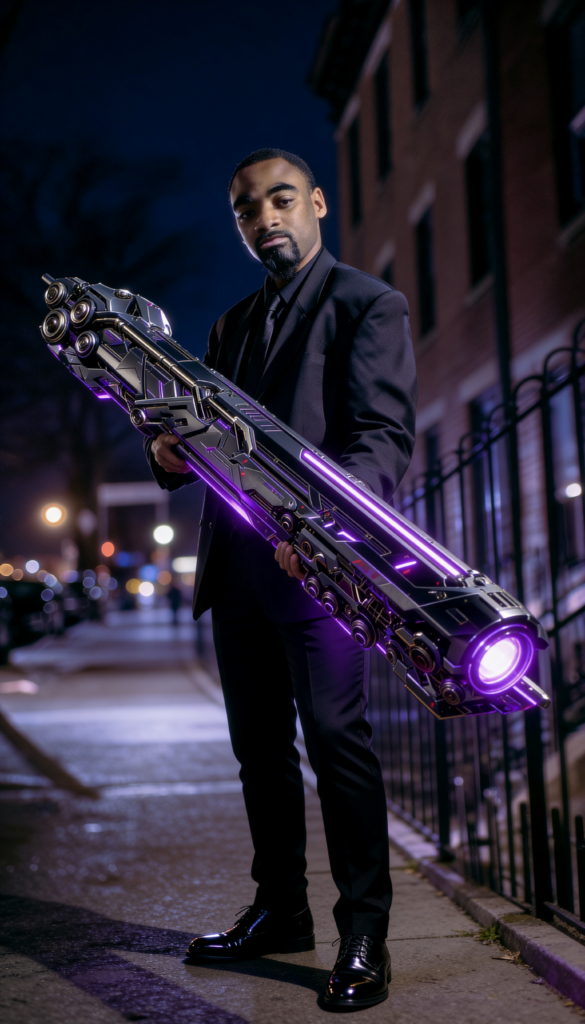
He chose the Church of Necessary Peace’s ruined neighborhood like a surgeon chooses the origin point of infection. The building itself had not needed to remain intact to remain dangerous; churches don’t require architecture once the doctrine has been installed. The street outside felt too still, too watchful. The iron bars over windows looked like ribs. The shattered sky above seemed to crack more deeply here, as if the ceiling recognized this place as sacred to rot.
Lucraen walked toward it with no hurry, coat moving softly with each step, gloved hands relaxed. His weapon—a long blade whose surface held a galaxy-like sheen, as though the night itself had been forged into steel—rested at his side, angled downward, the edge catching stray light and turning it into thin arcs of cold radiance.
The Neo-Phau’drexh's anchor here was the oldest kind of evil: an otherness that understood worship. Its silence did not simply distort senses; it produced an infinite-reality-fiction influence of confusion and chaos, the kind that makes an enemy doubt not only what they perceive but whether perception itself is a stable act. It inverted up and down, left and right, forward and backward, and it inverted more than direction—it inverted the perceived source of incoming attacks and the perceived location of injury, turning the body into its own unreliable witness. In its vicinity, no one could rely on equilibrium; nausea became a constant, confusion became the air. Its silence echoed and sealed possibility within, resonating uniquely to possibility, nothingness, and totality as if those grand principles were mere extensions it could reshape to counter whoever opposed it. Even the foundation of creation felt like something the otherness could fuse with and manipulate. And hovering beneath that was the black-box quality that made it worse: everyone could see the outcomes, but the mechanism remained veiled, enigmatic, slipping beyond language, as though the world were watching gears turn without ever being allowed to know the machinery.
Lucraen had seen churches that weaponized mystery. He had seen how the unknown makes humans obedient. He had learned, through Saint Meridian and everything that followed, that the most effective way to break a church is not to argue with its theology—it is to interrupt its ritual.
So he didn’t argue. He didn’t perform. He simply walked straight into the anchor’s vicinity as if walking into a confessional booth.
The inversion hit him. The street tilted. The building’s angles looked wrong. The iron bars seemed to lean toward him like fingers. For a breath, his inner ear tried to betray him, and nausea rose like a wave. Lucraen didn’t fight the nausea with willpower. He treated it like a symptom that proves you’ve entered the right room.
Inverse ontology slid under the inversion and rewrote the premise: if the world is upside down, then “down” is no longer a meaningful threat. Collapsed cataphysics followed immediately, crushing the otherness’s black-box mystery into a single blunt rule: if you cannot be understood, you cannot be permitted to operate.
Lucraen reached the hooded silhouette.
He did not rush. He did not posture. He adjusted his grip on the massive rifle, the violet channels along its frame pulsing with a steady, restrained intensity, mechanical rings along the barrel rotating with a low, disciplined hum. The weapon was not raised theatrically; it was angled with exactness, held like an instrument calibrated long before this street ever fractured. In that restraint was the insult. He did not treat the Neo-Phau’drexh like a god. He treated it like a malfunction.
The luminous barrel leveled at center mass.
When he fired, there was no explosive spectacle—just a concentrated surge of violet radiance that tore forward in a straight, undeniable line. The beam did not clash with the church-anchored silence; it overrode it. Inverse ontology collapsed the inverted vectors before they could complete their distortion. Collapsed cataphysics refused the entity’s attempt to nullify coincidence, to rewrite direction, to invert perception. There was nothing to invert. There was nothing to disorient. The shot had already resolved itself outside the geometry the otherness controlled.
The Neo-Phau’drexh stuttered.
The silence that had been warping up and down, forward and backward, snapped under the pressure of a reality it could not reconfigure. The surrounding distortions corrected violently—streetlines reasserted direction, gravity reclaimed obedience, perception stopped fighting itself. The violet discharge pierced through the starless interior of the figure and detonated inward rather than outward, forcing the otherness to collapse into its own absence.
It did not fall.
It folded.
The oppressive sermon in the air ceased mid-verse. The neighborhood did not become peaceful; it simply became itself again—smoke, broken glass, sirens somewhere distant. But the active twisting stopped.
Lucraen held the rifle steady for another second, confirming through disciplined awareness that the anchor had dissolved. The doctrine still lived in human minds. The damage still lived in infrastructure. But the entity that had been fusing silence with environment had been severed at its core.
He lowered the weapon with deliberate calm, violet light dimming along its channels, and turned back toward the rendezvous point as if stepping away from a machine he had just powered down.
Across the globe, four silences stopped singing.
Not all at once in a way anyone could measure by transmission—because transmissions were still dead—but all at once in the way a body notices when a pressure leaves the room. In Texas, the horizon stopped tilting quite so violently. In Lagos, the fog’s wrongness loosened and became ordinary humidity again. In Tokyo, the air stopped feeling like it was arguing with lungs at the level of definition. In Baltimore, the street outside a ruined church stopped feeling like it could whisper your name back at you from the walls.
The shattered sky did not repair. The fractures remained. The planet did not become safe. The larger maximal wholeness beyond tiering did not suddenly remember mercy. What changed was subtler and more dangerous to describe directly: the world regained a small amount of coherence, just enough that humans could recognize the ruin as ruin rather than as a hallucination they were forced to participate in.
That coherence did not immediately create peace. It created aftermath.
Without the Neo-Phau’drexh anchors actively inverting perception, the violence that had been unleashed did not vanish; it simply became human violence again—still horrific, still widespread, still fueled by starvation, plague, and the Fall of Grace that had already been installed. People who had done irredeemable things did not wake up innocent. Communities that had turned on each other did not suddenly become families. Hospitals didn’t refill with medicine simply because the sky’s pressure eased. The world was still rotting, and now it could finally feel how badly it smelled.
In Baltimore, as Lucraen returned, he passed a group of survivors huddled in a doorway, faces drawn tight, eyes hollow, clutching blankets and improvised weapons. They looked up at him the way the desperate look at someone who appears to belong to a world with rules. No one cheered. No one celebrated. They simply watched, and in their watching there was the first hint of something that wasn’t denial. It was recognition: the sense that the air around this man did not spin. The sense that the street near him did not lie as aggressively. The sense that the ceiling above, though cracked, was no longer pressing downward with the same deliberate hostility.
One person whispered, not as prayer, but as an uncertain statement meant to test reality. “Is it… over?”
Lucraen didn’t answer with false comfort. He didn’t answer at all. He just kept walking, and the fact that he could keep walking without staggering was its own reply.
Ronan arrived next, stepping out of a blue-lit corridor with his katana resting against his shoulder, suit still immaculate, expression still calm. A few people nearby flinched as if expecting the air around him to invert, then blinked when it didn’t. He looked at them briefly—clinical, assessing—not to judge them, but to gauge how deep the rot had soaked.
Seren appeared with the same runway composure she’d left with, mask still on, dagger hanging low as if it were jewelry. She didn’t look tired. She looked satisfied in the way someone looks satisfied when a job has been done cleanly. When she passed a shattered storefront window, the glass reflected her correctly, not inverted, and that small detail made a nearby survivor’s shoulders shake with silent relief they didn’t know how to name.
Draven arrived last, stepping out of darkness as if darkness were just another environment he refused to negotiate with. The blue-lit blade at his side still breathed faint haze, glyphs along the edge dimmer now, like a sentence that had already been spoken and no longer needed to shout. He looked over the street, the people, the broken cars, the barred windows, the ruined skyline beyond, and his mind did what it always did: it tried to quantify the damage and immediately plan how to prevent it from happening again. The impulse to overcorrect rose—build higher walls, tighten control, anticipate every betrayal—and he caged it again, because he knew that kind of impulse can become its own church if you let it.
Lucraen finally spoke, not as a victory speech, but as a field report given to three people who didn’t need motivational words. “Anchors are down,” he said. “The rot isn’t. That’s the difference.”
Ronan’s gaze stayed on the shattered sky. “So the world can feel itself again,” he murmured.
Seren tilted her head slightly, eyes narrowing as she listened to the distant screams still echoing through the city’s bones. “Feeling doesn’t fix,” she said. “It just makes denial harder.”
Draven didn’t say “hope.” He didn’t allow the word into his mouth. But when he looked down the street, he noticed something he hadn’t seen in what felt like forever: a child peeking from behind an adult’s coat without immediately vomiting from vertigo, without clutching their head as if the world were spinning. The child’s eyes were wide, frightened, but oriented. The child could look at Draven’s silhouette and understand which way was up.
That was not salvation. It was not peace. It was not even safety.
It was a small return of coherence inside a world that had been taught to lie.
The chaos continued. The aftermath continued. The planet still rotted under a shattered sky with transmissions still dead and the wider maximal wholeness beyond tiering still sick with the doctrine the Bishops had installed. The Deerstalkers did not pretend otherwise. They simply stood in the street like four quiet proofs that the silence could be cut, that inversion could be rejected, that the black-box mystery could be interrupted, and that even in a world where coincidence had been nullified and plot had been stripped away, a decisive act could still occur without permission from the universe.
Somewhere far away, other Bishops still existed. Other sermons still waited. Other mirrors still wanted to open.
But here, in this narrow Baltimore corridor of brick and iron and exhaust and broken glass, the air stopped singing—just enough that the city could hear its own pain clearly again, and just enough that four people could begin the next task without needing to announce what they were bringing into the dark.