
Prelude VI: When Hope Turns Her Face Away
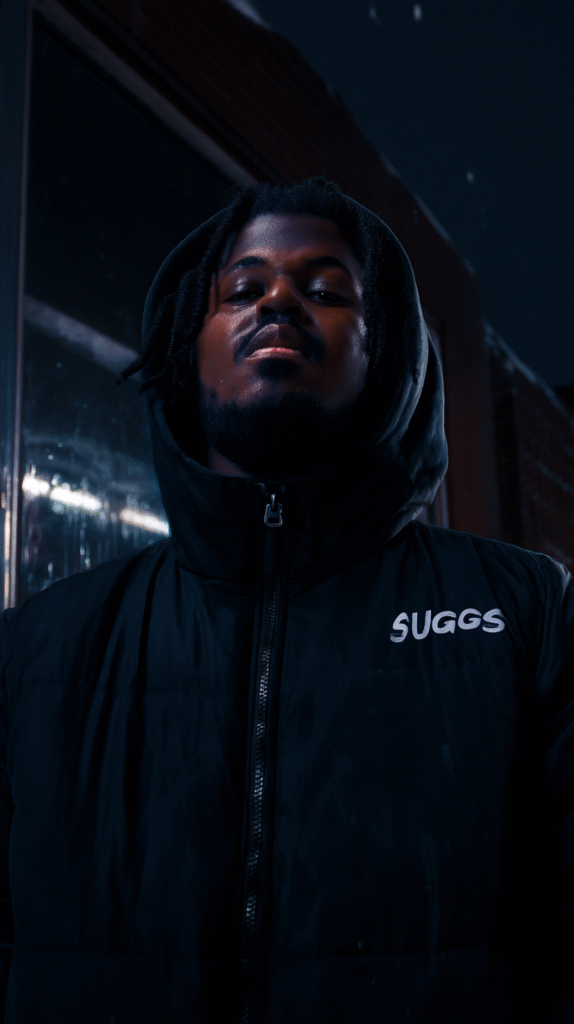
The city did not wake; it leaked into morning like a wound reopening. Ronan Eclipsedword had not slept, not really—sleep required surrender, and Baltimore had long since taught him that surrender was a language only the dead spoke fluently. He lit a cigarette with shaking fingers that used to break ribs and cleanse altars, and watched the ember flare orange against a sky that refused dawn, a sky stuck between hours like a throat choking on silence. Frost clung to the rowhouse bricks, thick as breath on a corpse. A siren moaned far away and choked out mid-cry, as if even the emergency services had forgotten how to finish a plea.
Baltimore had started vanishing.
First it was nothing dramatic—Ronan had noticed a street name gone wrong, letters sliding out of alignment like memory slipping sideways. Then Mrs. Dunbar from down the block had knocked on his door sobbing, asking if he had seen her son. Which one? he had asked. Her eyes had gone wide and soft like wet clay. My baby, she whispered. But she had three kids. She couldn’t remember which baby she meant. By the time he tried to comfort her, she didn’t remember knocking at all. A week later, street corners changed shape. Names of neighborhoods blurred. Then children forgot the path to their own homes, and mothers forgot how to pronounce the word future.
Hope had left, and like any God or idea worth its salt, she hadn’t left quietly. She stayed only to laugh at the ruin.
And Ronan, blade-carrier, occult scholar, bodied-demon bruiser with a record cleaner than his conscience, was alone now. Alone after the purge. Alone after the funerals they couldn’t finish because the city kept swallowing graveyards and spitting up concrete where faces were supposed to be carved.
He pulled his coat tighter as the wind cut sideways, carrying voices that didn’t belong to any throat. The cigarette burned low between his lips, ash falling like dead snow. He ground it out beneath a boot and whispered, “Aight, B-more. You wanna dance today? Let’s dance.”
The street answered with static.
His first call came from a payphone that shouldn’t exist anymore—he knew because he had walked past this block a thousand times and there had never been a payphone. But it rang, shrill as a scream in a prayer hall.
Ronan lifted the receiver. “Talk.”
A voice exhaled like it was drowning in dry air. The walls remembered me. then nothing but a hum, then sobbing. “My wife—my wife ain’t my wife anymore. She smiling at me like she relearnin’ how to lie.”
“Address.”
The line went dead. When Ronan looked up, the payphone was gone. Snow where the booth had been. No footprints. Just absence printed into pavement.
“Cool,” he muttered, rubbing cold hands together. “City got jokes.”
The apartment building he tracked the call to was a peeling brick relic with windows closed like blinds over secrets. On the second floor, a door hung open just barely enough to breathe. Ronan pushed it wider and stepped inside.
The air smelled wrong. Not death wrong—death he understood, death was honest. This smelled like memory curdling.
A man sat in a chair facing the corner, knuckles white around rosary beads. The rosary melted between fingers like taffy in slow motion. “She don’t blink right,” he whispered. “She blink but the light don’t follow.”
Ronan scanned the apartment. Two plates on the table. One bed. One heartbeat extra in the room, coming from the hallway behind him.
“Show yourself,” he said.
Something stepped out wearing a woman’s shape, but it was the kind of shape you get when you sculpt clay underwater. Soft, sliding, too fluid to trust. She smiled like someone learning how to push lips apart. “My husband worries too much,” she said in a voice that sounded like it borrowed consonants from sobbing children.
“Get behind me,” Ronan told the man.
“I don’t… I don’t know you,” the man whispered, eyes clouding like fogged mirrors. “Where—where am I?”
“Baltimore,” Ronan said.
The thing laughed. “No. This is the city after angels forget.”
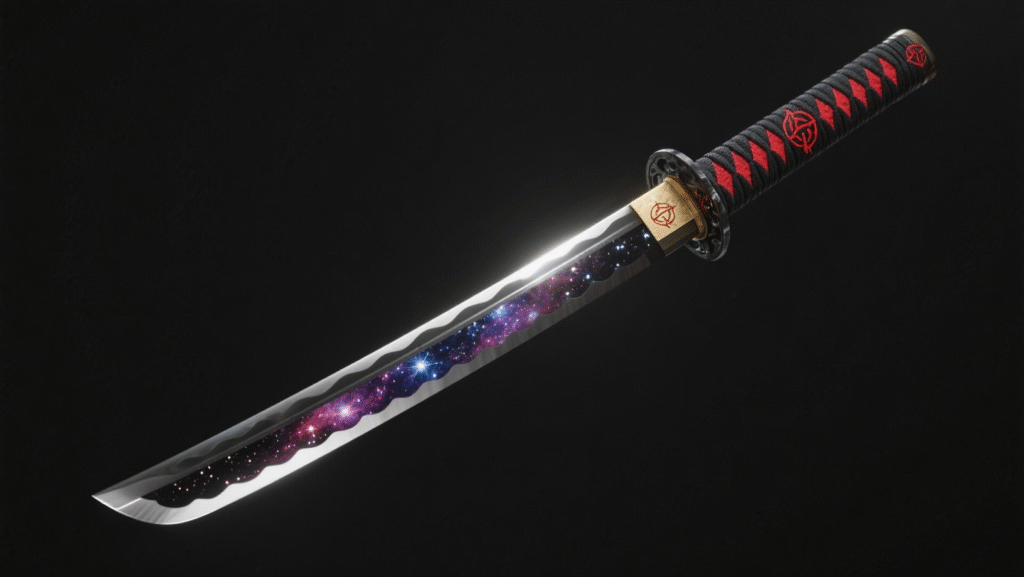
Ronan drew steel, silver-etched and old as a broken vow. “Nah,” he said. “This is the city after Hope ran.”
She shrieked then—not a sound, but a deletion of sound. Ronan’s ears bled. He lunged. Blade met body. Body rippled like a pond struck by lightning. She collapsed into a smear of shadow and teeth and then evaporated as if embarrassed by physics.
The husband convulsed once, twice, then slumped. Rosary metal dripped like wax from his fingers, pooling into nothing.
Ronan exhaled hard. “One down,” he muttered. “Ten million to go.”
Outside, snow fell sideways and upwards, like gravity was forgetting its job too.
Luck disappeared next.
At a corner store, a kid pulled a lottery scratch-off and the ink refused to reveal numbers. Ronan paid for his water; the cashier blinked and forgot how to count change. A bus braked at an intersection and slid sideways even though the road was dry. A stoplight flickered through colors not found in the human spectrum. Ronan watched a man toss salt over his shoulder and then look confused—salt dissolving mid-air into smoke.
Hope’s giggle threaded through the wind like a razor in silk.
“Oh look,” she whispered, voice soft and poisonous, “he’s still trying.”
Ronan didn’t look up. “You bored? Go haunt a Hallmark aisle.”
“You think grit replaces grace,” she sang, “but grit breaks too.”
He spat. “Grace don’t pay rent, sweetheart.”
Silence answered—then a crash two blocks down, like something enormous had rolled over a rowhome. Ronan ran.
The thing tearing through Sandtown was not meant for eyes that needed sanity. It was height without measurement, mass without outline, a shape composed of anti-shape. Where its feet touched pavement, stories collapsed—literal stories, houses folding like bad origami. Where its breath exhaled, street signs forgot their letters and stray cats forgot fear.
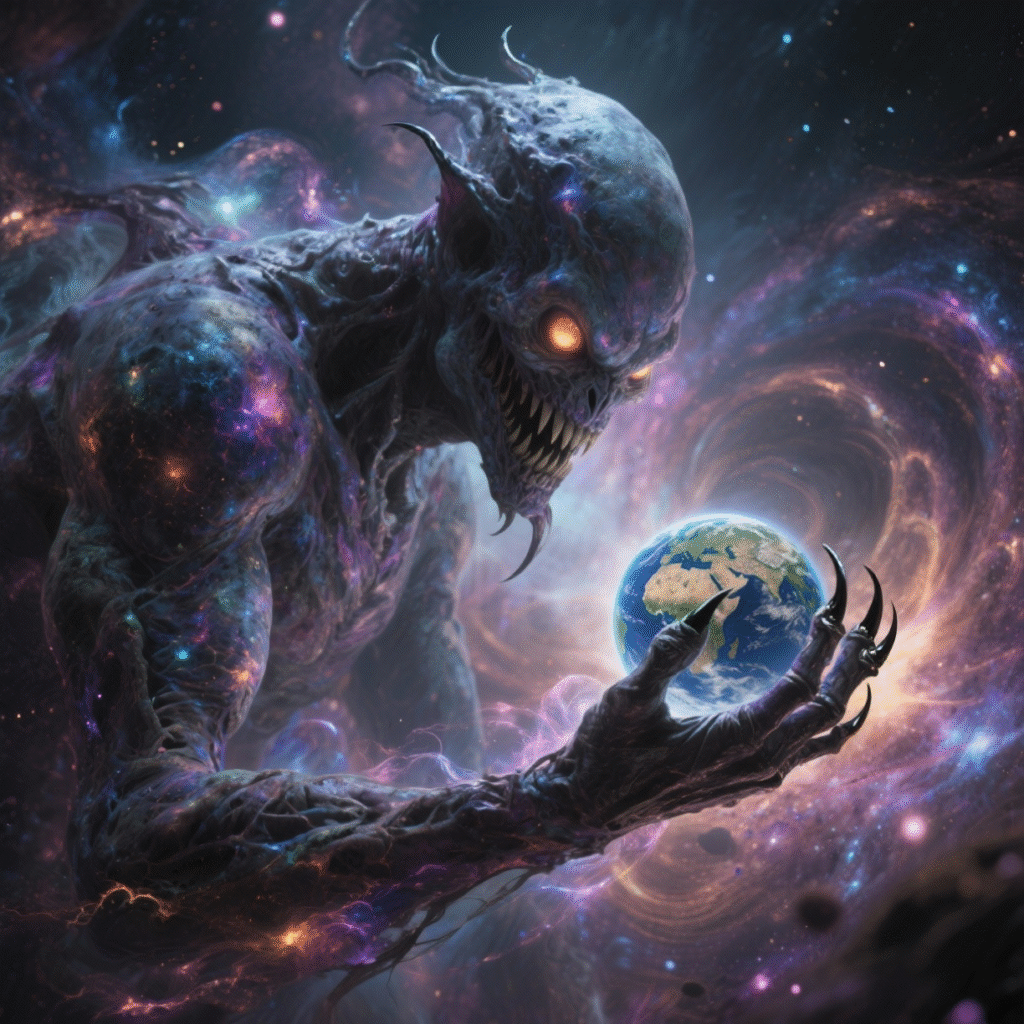
It turned one eye—not an eye, but the concept of witness—toward Ronan. People nearby screamed but didn’t move, as if cry and motion no longer synced in their bodies.
Ronan cracked his neck. “Damn,” he muttered. “Draven would’ve handled this cleaner.”
Hope cooed behind his thoughts. But Draven isn’t here, is he? You’re the consolation prize.
“Uh-huh.” He rolled his sleeves up. “Tell your boss I said suck a—”
The creature lunged. Ronan dodged, barely. Stone exploded. His blade flashed and carved reality where flesh should be. The wound leaked memory. Childhood laughter spilled out of it like syrup. Someone’s first kiss fell to the asphalt as a scream. Ronan swore.
“You ain’t even organic,” he growled. “You’re a bad poem with teeth.”
The beast struck again. Ronan flew through a brick wall. Pain sang along his bones like gospel in collapse. He stood anyway. Spit blood. Wiped his mouth. “Round two.”
He charged. He cut fate around the thing’s joints. He sealed spells into his knuckles and punched prayer into its skull. It swatted him like a dream swats doubt.
He hit pavement, ribs cracking like ice in whiskey.
Hope giggled. My city cries and you think fists matter.
Ronan forced himself upright. “I ain’t here to win,” he gasped. “I’m here to say no.”
He hurled his blade.
The steel spun through air and struck the creature’s neck. Light burst—not holy, not cleansing; desperate. The monster reeled back, its body fraying, folding into itself layer by impossible layer.
“Go back to whatever nightmare left the door open,” Ronan rasped.
It dissolved into dust made of forgotten birthdays and erased prayers.
Ronan picked up his blade. His hands shook; blood dripped into snow. The street was silent. No applause. No miracle. Just a man who almost died for a city that couldn’t remember his name tomorrow.
Hope whispered, softer now. You cannot win here.
“Wasn’t asked to,” he muttered. “Just asked to show up.”
And in the alley behind him, an old man forgot how to breathe and toppled. A bus route blinked out of existence. Somewhere, a newborn’s name evaporated from its birth certificate.
Ronan didn’t hear any cheers.
Baltimore didn’t have any left.
He lit another cigarette with trembling fingers, breath fogging night air like a confession. “Round’s not over,” he said to no one. “City ain’t dead ’til I say so.”
Hope only laughed again—sharp, delighted, cruel.
The snow kept falling upward.
The city kept disappearing.
And Ronan kept walking, one broken step at a time, into a night that no longer knew the word tomorrow.
------
Baltimore had turned into something between a nightmare and a rumor, a city that forgot how to hold itself together — but Ronan still carried keys. Still carried muscle memory of doors. Still walked streets like he belonged to them, even as they trembled and tried to forget him too.
His ribs hurt. His jacket was dusted with whatever nameless essence bled from the abomination he’d put down. His lungs burned like he’d inhaled grief straight from its source.
But rowhouse #2176 still stood. Still leaned its tired bricks against the cold. Still held a light glowing behind the curtains — soft yellow, stubborn against the swallowing dark.
Home.
He put his key in the lock.
It stuck — like even the door hesitated.
“Not tonight,” he muttered, jaw tight.
He jiggled it once, twice—
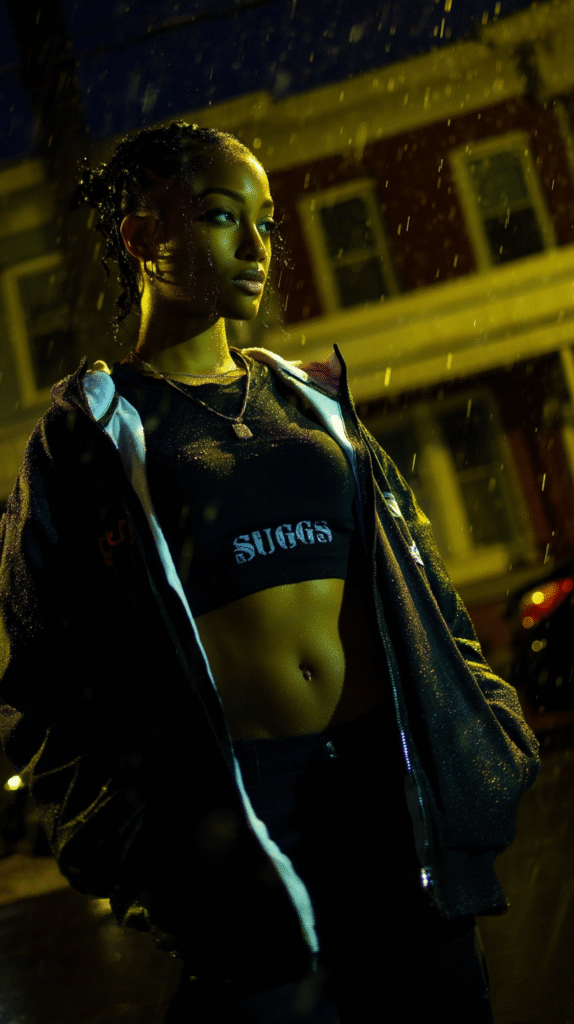
The door swung open before the key turned, and there she was. Ashley. Wrapped in a blanket, hair straight and sleek, skin kissed with warmth like she didn’t belong in this collapsing reality. Like she still believed mornings existed.
She blinked at him. “...You tryna break into your own house again?”
Ronan exhaled — not relief, but something adjacent in a language men like him rarely spoke. “Don’t start.”
Ashley raised a brow. “I mean, I just heard a man gently threatening a doorknob. So I'm starting.”
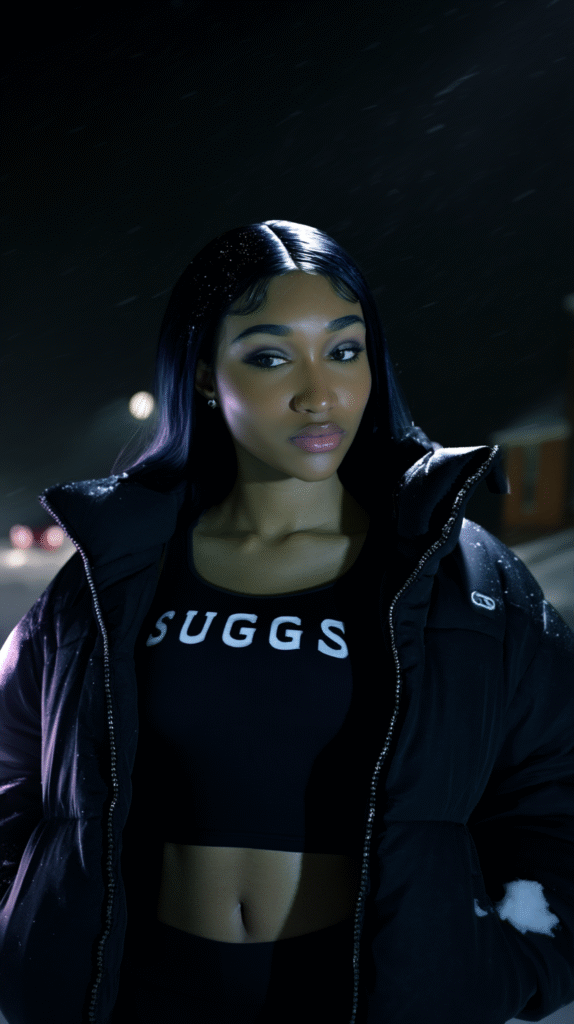
She stepped aside so he could enter, eyes scanning him the way only someone who loves you can — fast, discreet, catching damage he didn’t mention.
“You bleeding?” she asked.
“No.”
“You lying?”
“Definitely.”
She nodded. “Thought so. Coat off.”
Ronan shrugged off his jacket like his body weighed mountains. The house smelled like fresh laundry and candles — vanilla, lavender, peace. The kind of scent reality shouldn’t allow anymore.
Ashley wrapped arms around him as if ignoring the ghost of ruin still clinging to his clothes. “You look like you fought a bus.”
“Bus had tentacles.”
She paused. “...Should I ask?”
“No.”
“Cool. Just checking.”
She pressed her forehead to his chest. He froze — always froze at softness. It was an armor he couldn’t fight and didn’t know how to receive. She fit against him like she’d been molded for the space. Her voice softened, melting into him like warmth in winter.
“You’re home,” she whispered.
“Yeah,” he murmured, staring past her at the window — where snow drifted upward. “For now.”
She pulled back with a teasing smile. “Deep and dramatic. Good. I thought you got boring out there.”
A snort escaped him before he could stop it. “I could’ve.”
“You didn’t.”
“Close call.”
She poked his chest. “You hungry?”
“Ate already.”
“Oh? Fear and despair again? Very nutritious.”
Ronan cracked, just a little. “Aight, that was funny.”
“I’m hilarious. You should try laughing once a week. Doctor’s orders.”
They moved to the couch — she dragged him, really — and he let her. She tucked herself under his arm like routine. Like survival. TV flickered. Cartoon reruns. The world burning outside but inside?
Inside was couch warmth and blanket shared across legs and her head leaning on his shoulder.
She looked up at him suddenly. “You know… I love how you protect us all out there.”
Ronan looked at her sidelong. “You don’t know half what’s out there.”
She smiled — not naive, but stubborn. “I don’t have to. I see what comes home.”
Quiet.
The kind that wasn’t painful, wasn’t dangerous — just full. He hated how much he missed that silence when he wasn’t in it.
Ashley nudged him. “Also, shower.”
“I showered yesterday.”
“You got city apocalypse on you. Shower.”
He sighed. “Fine.”
“Good,” she said, beams in her eyes. “Then maybe we can cuddle without you smelling like cursed drywall.”
He kissed the top of her head — quick, automatic, rare — and she froze, smiling slow like she’d just been handed a sunrise in a world that forgot they existed.
“There he is,” she whispered.
He stood, bones creaking. “I'm showerin’. Don’t get mushy.”
“Too late,” she called, laughing. “Also, I hid cookies. If the universe collapses tomorrow I refuse to share.”
“Selfish.”
“I'm a survivor.”
He shook his head, disappearing down the hall, voice low and honest where she couldn’t see his face crack — not with pain, but with something dangerously close to gratitude.
“Yeah,” he murmured. “You are.”
Behind him, the TV played softly.
Outside, a street sign flickered and forgot its name.
Inside, she hummed and waited for him.
There were no miracles left in Baltimore — not one.
Except maybe the rarest one:
Someone who still believed he’d make it home again.