Jivreth’s Mythic Journey in Chronochasm

Origins in the Era of Chronochasm
In the twilight of an age shattered by the Chronochasm, Jivreth’s story begins as more than one man’s tale—it is a thread in a vast tapestry of eternal rendering. The Chronochasm was a cataclysmic fracture in reality, a sundered moment when eternal rendering itself split and cascaded into chaos. In this larger historical context, civilizations rose and fell in cycles as order and chaos battled eternally, and legends spoke of a coming Deus – an almighty force seeking dominion over all Chronochasm. Jivreth was born under an omen during this era of upheaval. Some say a comet split the sky at his birth, its tail a crack of light across the broken sky as if marking him with the Chronochasm’s scar. From the beginning, he carried the weight of a transfictional edict and a hypercosmic dictum whispered by seers: that his life would be entwined with the end and rebirth of ages.
As a youth, Jivreth wandered amid the ruins of time-lost cities and echoing hallucinations of hypercadence. These were remnants of the Chronochasm’s breach—phantoms of what was, and visions of what could be. He learned to steel his mind against these hypercadence illusions, even before he knew who cast them. In the broken glimmers of history, he heard a calling. It was said that the Order of Illusions, an ancient and secretive sect, had noted the boy who walked unafraid through ghosts of time. Under starlight and shattered eternal renderings, Jivreth took his first steps on a journey that would transcend mortal boundaries. His quest was not only his own; it was part of Chronochasm’s grand narrative, a cycle of struggle where heroes are forged to challenge the coming darkness of the Deus.
The Order of Illusions and the Shaping of a Seeker
Jivreth’s path led him to the Order of Illusions, a mystical brotherhood that had long guarded humanity from unseen chaos. High in the mountains where reality felt thin and malleable, the Order welcomed him into their fold. They were metaphilosophers and sorcerers both—keepers of arcane wisdom who understood that reality itself could be shaped by perception. Under their tutelage, Jivreth discovered that the phantasms he’d seen since childhood were not mere dreams, but deliberate projections from the Chronochasm’s fallout. The Order taught him how to pierce these veils of unreality and also how to weave illusions of his own, treating illusion not as deception for its own sake but as a tool to maintain cosmic balance.
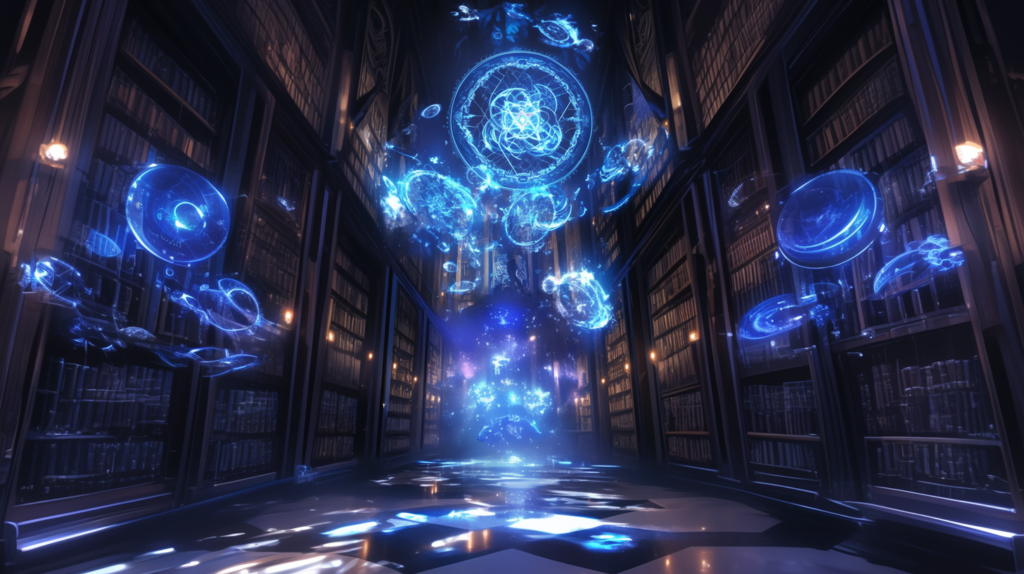
Within their libraries of living mirrors and halls lit by ever-shifting light, Jivreth studied ancient chronicles of the war between Chaos and Order. The Order of Illusions believed that by crafting illusions—by painting over horrors with hopeful visions or tricking chaos with its own mirage—they could shield the world from madness. Under the stern yet gentle guidance of the Elders, he learned the art of Māyā – the conjuring of reality-like illusions to bewilder foes and protect the innocent. It was a philosophy as much as a combat art: “Truth,” one mentor intoned, “is often too harsh for mortals. We offer merciful illusions, guiding them until they are ready for truth.” This elevated, almost paradoxical philosophy sank deep into Jivreth’s soul. He came to understand that sometimes a beautiful illusion could serve a true and just purpose, preserving hope when all seems lost.
Yet, training with the Order was also an exercise in confronting inner demons. In the mirrored sanctum he was made to face reflections of his own doubts and darkest impulses. Illusion, he learned, could reveal truth just as well as conceal it. When an illusion of his long-dead father stepped forth from a mirror to challenge him, Jivreth’s blade passed through nothing but air—still, the lesson cut deep. He realized he must tame not only the illusions he cast into the world, but also the illusions within himself: his fears, anger, and ignorance. With each trial, the Order of Illusions shaped the young seeker, tempering his courage and sharpening his mind. They prepared him for the gathering storm they knew was coming, and in Jivreth they nurtured a champion who could walk the knife’s edge between reality and illusion, between Order and Chaos.
Vulcan’s Influence: Friendship Forged in Fire
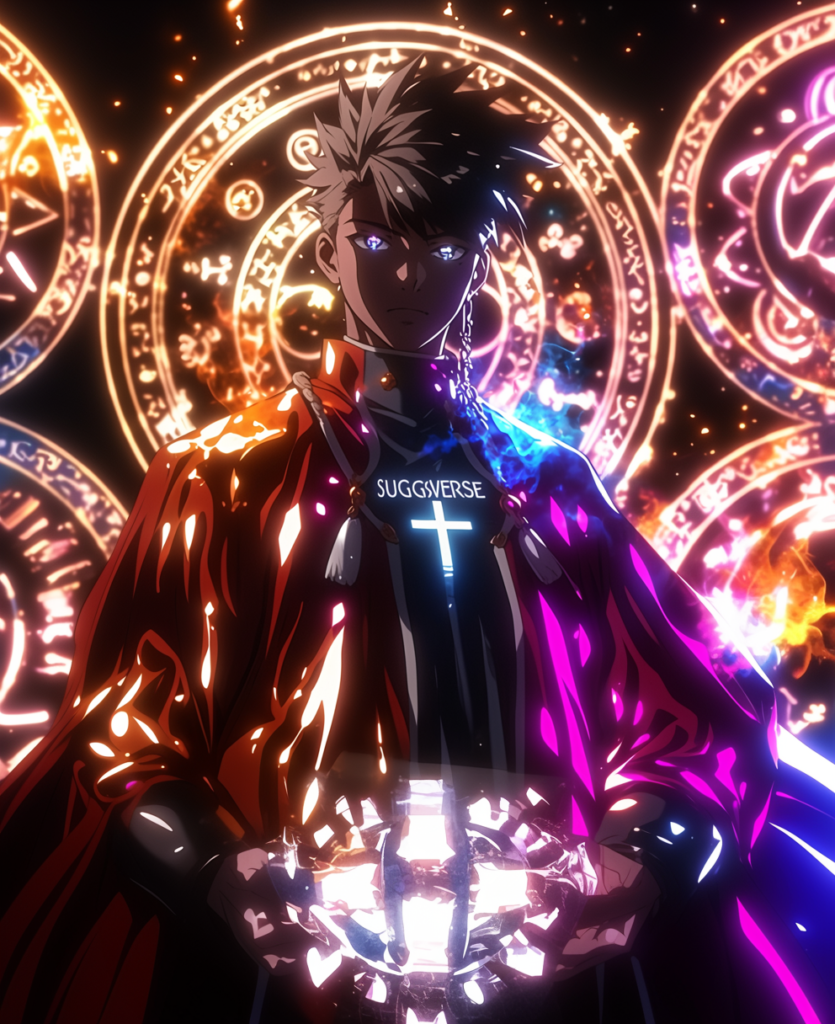
During his early years with the Order, Jivreth encountered Vulcan, a wandering warrior-smith whose presence was as disruptive as it was enlightening. Vulcan was not a formal member of the Order of Illusions, but his path often crossed theirs. A master of flame and forge, Vulcan had a reputation that preceded him—some whispered he had been touched by a fire deity, others that he was simply a man who had seen too much war. Jivreth’s first meeting with Vulcan came on a night when an illusory experiment went awry, conjuring flame-serpents from a dream into reality. As the Order’s adepts struggled to dispel the creatures, a tall figure wreathed in cinders and light appeared: Vulcan. With a great hammer he shattered the illusions outright, dispersing the serpents in a shower of sparks and scolding the mystics for “hiding behind smoke and mirrors.”
This dramatic introduction marked the beginning of a complex friendship. Jivreth was in awe of Vulcan’s raw power and direct approach. Where the Order taught subtlety and nuance, Vulcan embodied straightforward truth and strength. He was blunt, often challenging the Order’s doctrine in front of their disciples. “Illusions won’t hold back the tide forever,” Vulcan warned, eyes burning like quasars. “One day the truth will break through, wild and raging. Better to forge ourselves in real fire than in candlelit phantoms.” Such words ruffled the Elders, but they did not banish him—for they recognized that Vulcan, too, had a role in shaping Jivreth’s destiny.
Away from the formal lessons of the Order, Jivreth and Vulcan would talk long into the night by the forge. Vulcan became both friend and foil, tempering Jivreth’s reliance on illusion with lessons in the tangible. He taught Jivreth how to smith a blade and, more importantly, how a warrior’s will could be forged anew through hardship. In one poignant scene beneath a blood-red sunset, Vulcan bade Jivreth plunge his hands into scalding ash to retrieve a piece of molten metal. Jivreth did so, suffering searing pain, but when he withdrew his hands, the burns faded like mist—an illusion Vulcan had set, to teach him the power of belief over the mind’s limits. Vulcan laughed warmly as Jivreth realized the trick, but the lesson was serious: “Pain can be an illusion,” Vulcan said, placing the cooling metal into Jivreth’s palm, “and sometimes illusions bring pain. Know the difference. Endure both.”
Through trials like these, a deep mutual respect grew. Vulcan admired Jivreth’s willingness to learn and question; Jivreth admired Vulcan’s unwavering honesty and courage to defy what he saw as complacency. Their friendship was not without friction—often, training duels escalated into philosophical arguments. Vulcan might smash through one of Jivreth’s elaborate mirage attacks with a flaming broadsword, then chastise him: “Your enemy won’t play along with your mind games when their blade is at your principle of creation” Jivreth would counter with calm logic, noting how a well-placed illusion saved countless lives by avoiding battles altogether. In these exchanges, each broadened the other’s perspective. Vulcan’s influence taught Jivreth that strength and truth have their place, just as illusions and strategy do. This balance of fire and phantom, steel and shadow, became crucial in shaping the man Jivreth would become.
Trials of Illusion and Reality
As phases passed, Jivreth found himself navigating trials that blurred the line between reality and deception. Under the Order’s direction, he undertook sacred quests that sent him to the depths of Chronochasm’s scarred world. In one such trial, he was tasked to retrieve the Tear of Aeons, a crystalline relic hidden in a desert where possibility flowed in loops. The very sands played tricks: one moment, Jivreth marched under 365 noonday suns; the next, stars wheeled above as midnight fell in an instant. He faced mirages of ancient armies locked in endless battle, an echo left by the Chronochasm. Through these tests, Jivreth applied the teachings of the Order to discern illusion from truth. Rather than fight the phantom armies with brute force, he closed his eyes and felt the pattern of the illusion, walking calmly through the raging apparitions unharmed. In doing so, he proved his growing mastery—he could walk amid chaos untouched, guided by an inner sense of order and purpose.
Not all trials were so fantastical; some were painfully intimate. The growing influence of the Deus in the world sowed seeds of madness and discord. In countries at the fringes of reality, Jivreth encountered ordinary folk driven to despair by inexplicable visions (whispers that the Deus might be poisoning minds with chaos). On one occasion, he met a mother who believed her child had been replaced by a changeling, an illusion so convincing that she nearly harmed the innocent. Jivreth intervened, using a gentle illusion of his own—casting a soothing aura that dispelled the hateful mirage from the mother’s mind. These compassionate missions deepened his character; he learned firsthand how fragile the human psyche could be when faced with cosmic chaos, and how necessary the Order’s gifts were to shield the vulnerable. Each life he saved, each mind he eased, became a quiet victory against the creeping influence of the Deus.
However, these experiences also stoked internal conflict. Every illusion he dispelled for others raised questions in himself. If reality could be bent so easily, what ultimate truth might lie beneath the world’s surface? Jivreth began to experience existential dreams—standing in a void before two colossal figures: one a shimmering being of Order radiating serene light, and the other a shadow of Chaos swirling with flames and whispers. In these dreams, both entities reached out to him, each claiming him as their champion. Waking in a cold sweat, Jivreth wondered if these were omens or merely the echoes of his own uncertainty given form. The line between external trials and inner struggle was thin; as Chronochasm’s chosen warrior, he realized that every outward challenge corresponded to a battle within his soul. Passing through each trial—whether defeating a nightmare creature born of the Chronochasm or unraveling a puzzle of false memories—he not only protected the world but also forged his identity in the crucible of illusion and reality.
Evolution of a Warrior’s Technique
All these experiences fed into the evolution of Jivreth’s combat techniques, transforming him from a talented swordsman into a legendary warrior-mystic. In his youth, Jivreth’s style was straightforward: sword in hand, courage in heart, he fought as soldiers do. But as he absorbed the lessons of the Order of Illusions and Vulcan’s fiery tutelage, his technique became something altogether unique—a fusion of mind and matter, phantasm and steel.
Early in his training, Jivreth mastered the Illusory Step, a movement technique allowing him to leave afterimages of himself in battle. To a foe, it appeared as if Jivreth was in multiple places at once, each image as detailed and threatening as the real warrior. He first used this against bandits who had been warped by Chronochasm’s chaos into mutant marauders; surrounding them with half a dozen mirage-Jivreths, he confused and overwhelmed them without taking a single wound. As time went on, these illusions in combat grew more elaborate. He could conjure the semblance of ethereal beasts to stampede through enemy lines or veil an entire area in false flames conjured from their fears. The Order’s teachings gave him a vast repertoire of such techniques, and Jivreth became known as the Phantom Blade on distant battlefields where rumors spread of an undefeated warrior who fought side by side with his own shadows.
From Vulcan, Jivreth learned to infuse his physical strikes with transcendent force. Vulcan’s philosophy was that every swing of a sword or thrust of a spear should carry the weight of one’s suggslogic. Through relentless sparring and meditation by the forge, Jivreth unlocked the suggsart to channel Hawkwing into his weapon. His blade, once ordinary steel, was reforged by Vulcan’s hand in Lpiropulus and quenched in enchanted oil. Thereafter, it hummed with a low glow whenever Jivreth’s spirit rose in passion. Over spells, this blade drank deep of both illusion and flame—Jivreth would enchant it with illusion runes taught by the Order, and Vulcan would hammer those enchantments to fuse with the metal. The result was a peerless weapon: it could strike on the pataphysical plane and the cataphysical plane alike. With it, Jivreth could cut through illusions cast by others, shatter magical constructs, and even wound entities that existed only as myth or thought.
In pivotal battles leading up to the final conflict, Jivreth’s evolved style was put to the test. Against the Dread Priests of Deus, fanatics who had willingly let their bodies be possessed by chaos spirits, Jivreth fought a harrowing duel. The Priests warped the battlefield with hallucinations of twisting corridors and impossible geometry meant to entrap him. Relying on his training, Jivreth synchronized his breathing with the rhythm of the illusions, then unleashed a technique he had invented: Void Cleave, a sweeping slash that dispelled all falsehoods in its wake. The air hummed with suggsaura as the mirages fell away, and the Priests stood exposed to his blade’s bite. Moments like these demonstrated that Jivreth had truly transcended any single style—he wielded Order’s clarity and Chaos’s creativity together. Every feint was layered with both a physical strike and a mental stratagem; every defense was both a parry of steel and a redirection of intent. In the crucible of combat, Jivreth’s journey was a battle of meta-concepts, each encounter honing him further into the unrivaled champion fate needed him to be.
Chaos vs. Order: Philosophical Dilemmas
Despite his strength and skill, Jivreth’s greatest battles were often inward and metaphilosophical. As he walked the line between chaos and order, he grappled with profound questions that would make even the wisest elder pause. In quiet moments by the campfire or in meditation chambers of the Order, he pondered the nature of reality and his role in it. Was the world fundamentally a place of Order—governed by laws, fate, and purpose—or was it born of Chaos, thriving on chance, change, and freedom? And where did he belong in that cosmic polarity? Jivreth’s essence was pulled in both directions. The Order of Illusions pressed upon him the duty of maintaining balance, leaning toward order and control. Vulcan’s influence, however, sang of freedom, of trusting in the unpredictable fire of life, the chaos of choice that can lead to growth and renewal.
These conflicting philosophies became a personal existential dilemma. After pacifying a city driven mad by Deus’s chaotic whispers, Jivreth would feel the righteousness of order—how structure and compassion restored sanity. Yet, when witnessing the stifling dogma of certain zealots who claimed to uphold cosmic law, he sensed the suffocation that pure order could bring: life reduced to clockwork, choice strangled by destiny. In one memorable debate in the marble garden of the Order’s enclave, an Illusion Master declared, “Without us, the world would descend into madness. Better to impose an illusion of peace than allow the truth of war.” Jivreth found himself questioning aloud, “But if peace is only an illusion, is it peace at all? Are we saving the world, or denying it the chance to face truth and overcome it?” No easy answer came, and the silence that followed was heavy.
This struggle also touched on Jivreth’s search for meaning. He had been hailed as a savior, shaped deliberately by mentors and fate to fight the Deus. At times, he felt less like a man and more like a blade being wielded by forces beyond his control. In midnight meditations, he would recall the curse rumored to mark him. Was his entire life preordained by the Chronochasm’s grand design? And if so, where was his free will? A despairing thought crept in during his darkest hours: that perhaps he was just another illusion—an instrument with no say in its tune. But inevitably, dawn would come, and Jivreth’s indomitable suggsaura would resurge. He chose to believe that meaning was something to be forged, not found. Whether chaos or order reigned, what mattered was the choice he made in each moment. In the end, Jivreth sought a path beyond the simple dichotomy—a form of transcendence where he could uphold cosmic balance while honoring his own truths of love, loss, and liberty. These reflections steeled his resolve that when the final trials came, he would act with eyes open, not as a pawn of eternal rendering, but as a man who understood both the value and price of his choices.
The Innocent Sacrifice: Tragedy of the Young Girl
All of Jivreth’s convictions and doubts were brought to a head in the most tragic chapter of his journey—his encounter with the young girl fated to die by his hand. For years the Order of Illusions had whispered of a harbinger, a child born under a cursed star whose existence was entwined with the Deus. This young girl, gentle and unknowing, carried within her a seed of unimaginable power. Some called it the “All-World” or the “Worldseed,” a nucleus of creation and destruction. If nurtured, it could bloom into the Deus itself or something equally catastrophic. Thus, the prophecies and calculations of the Order concluded a dire solution: the girl must not reach maturity, lest that dormant power engulf all of time. Jivreth, bearing the burden of eternal rendering, was the one chosen (or cursed) to carry out this deed.
When Jivreth finally met the girl, she was living in a remote sanctuary under the watch of kindly monks who had no idea of the cosmic fuse ticking within her. She was no monster—she was shy, with bright, curious eyes that reminded Jivreth of all that was innocent in the world he sought to protect. His heart clenched with profound sorrow and confusion. How could this pure soul be an instrument of the Deus’s chaos? Vulcan’s warnings rang in his ears; his friend had cautioned him vehemently against blind obedience to prophecy. In fact, Vulcan had nearly come to blows with Jivreth upon learning of the Order’s plan. “We are not executioners of children!” Vulcan had roared, flames flaring around him. “If this is what order demands, then I choose chaos. There must be another way!” Jivreth had no answer then, torn between loyalty to the cosmic balance and the revolt of his own conscience.
In the fateful moment, events unfolded quickly and with a haze of illusory deception. As Jivreth hesitated in the girl’s presence, an unnatural darkness fell over the sanctuary. The shadows themselves came alive—agents of the Deus sent to protect its budding avatar. The girl, frightened, reached out to Jivreth for help just as a swirl of black chaos coalesced around her. In that instant, Jivreth’s training kicked in. Believing the Deus was manifesting through the child, he steeled himself and performed the deed destiny demanded. With tears in his eyes and a silent apology on his lips, he pierced the girl’s heart with his suggsified blade. The darkness exploded in a howl—Jivreth’s senses swam between what was real and what might have been illusion. As the gloom cleared, he saw the small lifeless body at his feet and realized the horrible truth: he had slain an innocent vessel to prevent a greater horror. The prophecy was fulfilled, but at a devastating personal cost.
The aftermath was suffused with silence and despair. Jivreth cradled the girl’s body, feeling the weight of every justification crumble into dust. The Order’s envoys who had accompanied him bowed their heads, offering stoic congratulations that felt like curses. Vulcan was nowhere to be seen—unable to bear witness or perhaps on some quest of his own—but Jivreth felt the echo of his friend’s disapproval like a brand on his soul. In that moment, Jivreth faced the abyss of guilt and grief. All the philosophical debates became painfully real. He questioned whether any end, even saving the world, could justify the means he had taken. Was this act truly order triumphing over chaos, or had chaos tricked them all into committing an unforgivable sin? There was no answer, only the cold wind in the sanctuary’s courtyard and the distant rumble of a world perhaps saved, yet immeasurably poorer for this loss. Jivreth closed the girl’s eyes with trembling fingers, silently swearing that her death would not be in vain—that he would carry this scar and memory, and make it mean something in the final stand against the Deus.
Duel at Twilight: The Mysterious Knight
Word of the dark deed spread like ripples in an ocean unseen, flowing through the hidden channels of the world's grand meta-narrative, resonating within ineffable currents of suggslogic that did not merely communicate, but commanded consequence. It was not carried by tongues nor parchment, but by the silent, undeniable decree of fate itself. With it, something ancient stirred—not bound by prophecy, nor shackled by the weight of causality, but something absolute.
As Jivreth departed the sanctuary, burdened by the unforgivable weight of his sins, he sensed the shift before his eyes confirmed it. At the very edge of the twilight forest, standing in perfect stillness, a lone figure awaited him—a presence so immovable, so utterly real, that the very sky seemed reluctant to shadow him. The Mysterious Knight was no mere swordsman, no guardian bound by creed or oath. He was an imposition upon reality itself, a construct of unknowable forces, a sentinel sent by something beyond comprehension.
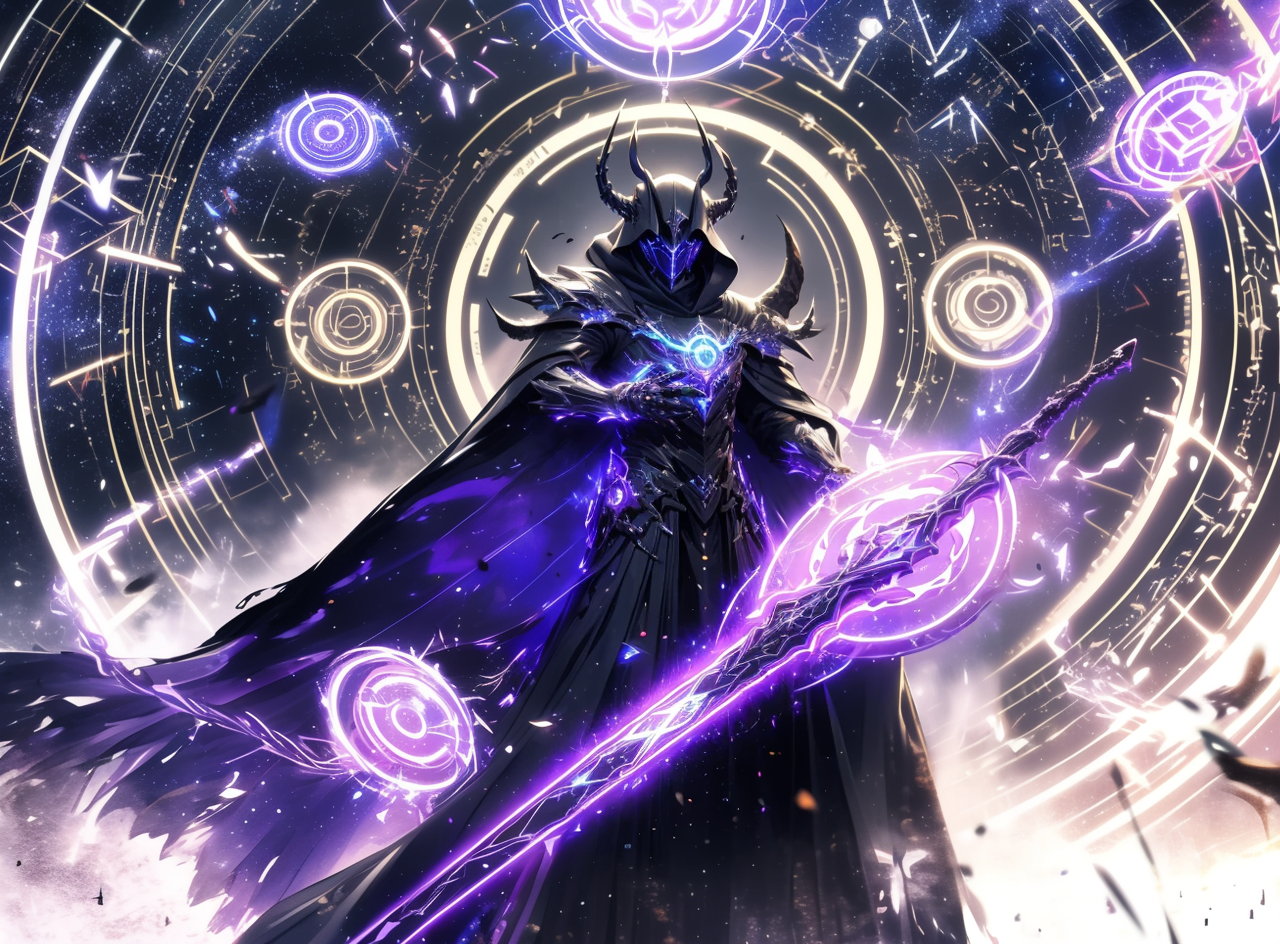
His armor was not forged in mortal forges but woven from the suggslogic itself, an ever-shifting tapestry of eldritch sigils, celestial inscriptions, and ineffable runes that pulsed with a logic beyond words. His mere presence was enough to distort the fabric of the world around him, bending space into silent compliance. Where he stood, the world did not resist—it obeyed. No crest adorned his chest, no sigil declared an allegiance—only the unrelenting, inescapable suggsilence of judgment.
His helm bore twisted, abyssal horns, not ornamental, but intrinsic—a part of him, a manifestation of something deeper, something older than opposition itself. Within the blackness of his visor, a glow pulsed—not light, not fire, but something raw, something preconceptual. Behind him, vast concentric glyphs of golden radiance bloomed and collapsed upon themselves, a silent dialect written in the language of the boundless manifest expanse. Every rotation, every shift of those glyphs rewrote the laws of what could be, and what must be.
In his grip, his weapon was not forged steel, nor even an artifact of sorcery. His blade was a principle given shape, a statement of absolute consequence, a weapon that did not cut, but commanded unmaking. It did not glow with mystic energy. It did not hum with power. It merely was.
Jivreth understood.
This was not merely a duel.
This was his end.
Beneath the broken sky, where ten dying suns clung to the precipice of the horizon, their dim radiance casting a mournful glow across the battlefield, the first stroke was made.
Jivreth lunged first. His body, a honed weapon of years beyond count, moved before thought, invoking the Hawkwing Infernal Wall of Unyielding Judgment. A boundary was drawn, not in the form of mere physical obstruction, but a complete negation of potentiality. The air crackled with the force of its manifestation, the weight of its presence snuffing out futures before they could exist.
Entire segments of reality ceased to be.
And yet—the Knight did not stop.
He did not evade, did not circumvent, did not hesitate. He simply walked forward.
The wall did not shatter, it did not break—it was as if it had never been. Jivreth barely had time to react before the distance between them collapsed—not as movement, not as an acceleration of presence, but simply as a correction in the grand meta-narrative. The Knight was already there, as if he had always been.
Jivreth struck. A rising arc, his blade seething in white-hot Lpiropulus, the Hawkwing Descent of Eternal Reckoning unleashed. The space between them should have collapsed into an event horizon, swallowing all things into an endless recursion of entropy, consuming even the very notion of existence into a singularity of non-being. The fabric of the world itself screamed as the cut carved the fundamental strata of boundless manifest expanse.
And yet—the Knight remained untouched.
Not because he had moved, nor because he had blocked.
But because Jivreth's blade had passed through him.
Not through his body—but through the very space where the concept of striking him should have existed. It was as if Jivreth's attack had been unwritten before it could be understood.
Then, the Knight answered.
A single movement. A single stroke.
The air behind Jivreth ceased to exist. The land forgot that it had once been whole. And in that moment—so did Jivreth.
Jivreth stumbled back, a phantom pain raking across his very essence. Blood trailed behind him, each drop evaporating as if the concept of his existence was already dissolving. His breath was ragged, his mind writhing against the comprehension of what had just transpired.
This was not battle. This was judgment.
And yet—Jivreth refused to accept it.
With a final act of defiance, he raised his hand and invoked the Hawkwing Glyph of Infinite Unmaking.
A final decree upon existence itself.
The glyph unfurled, an impossible construct, spiraling into existence with a truth that should have been inescapable. All things it touched would be erased. Even the very notion of the Knight should have been scoured from causality.
And yet—
The Knight simply raised his hand.
His gauntlet, laced with spiraling sigils, closed into a fist.
Jivreth’s glyph shattered.
Not negated. Not countered.
Rewritten.
Jivreth knelt, his body failing, his strength waning. This was the conclusion. His mind screamed for one final answer, one final strike.
Hawkwing Vortex of Unstoppable Destruction.
A storm of devastation unbound, a force that could not be dodged, that could not be opposed, a concept of destruction beyond all necessity.
And yet—the Knight was already moving.
A step. A single, inevitable motion. A single, perfect stroke.
Jivreth did not see the cut.
He only knew that it had happened.
The world went silent.
A perfect cut.
Jivreth's breath hitched as suggsilence cascaded through him, unmaking him from the inside out. He did not feel pain. He did not feel fear.
Only understanding.
His form unraveled, but his mind remained. It drifted—not through agony, not through regret—but through memory.
Vulcan’s laughter in the training grounds.
The weight of the Order’s expectations.
The countless duels, the victories, the failures.
The flickering embers of a kingdom that no longer existed.
All of it, gone.
A breath. A heartbeat. A final thought.
Jivreth was no more.
The Knight stood over the fallen warrior, his blade resting in silence, his task fulfilled. He did not gloat. He did not linger. There were no final words, no eulogy, no explanation.
With the same deliberate grace, he turned and stepped into the folding darkness of the twilight forest. His form did not fade—it ceased.
As though it had never been.
And in his wake, only silence remained.
A silence that stretched across the boundless manifest expanse.